
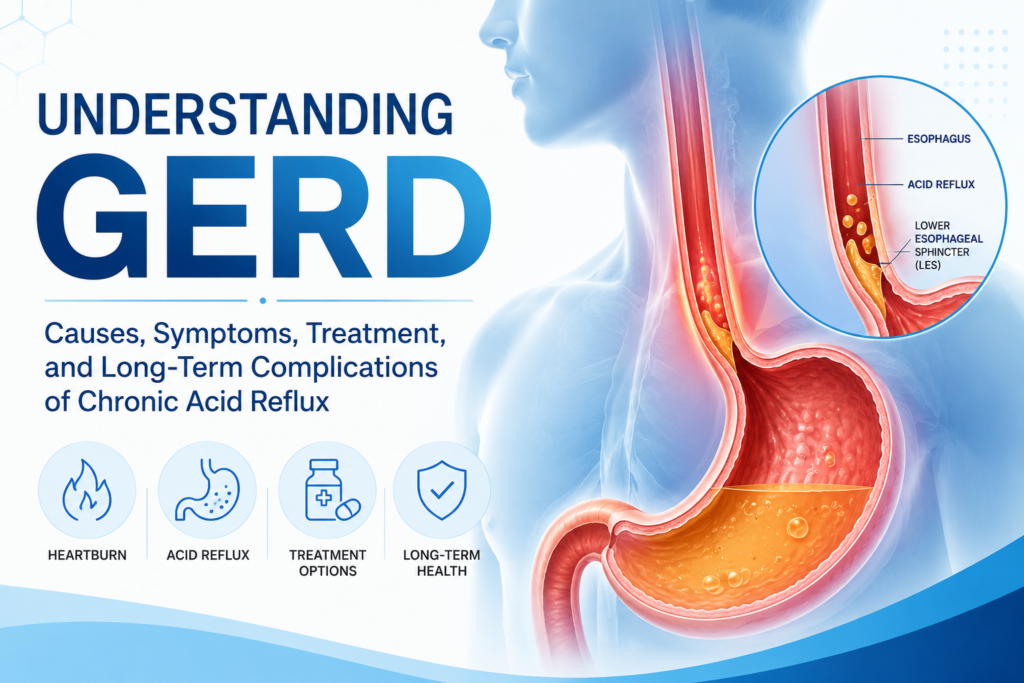
Understanding GERD: Causes, Symptoms, Treatment, and Long-Term Complications of Chronic Acid Reflux
Most people experience heartburn from time to time, especially after a large meal or spicy foods. However, when acid reflux becomes frequent or begins to interfere with daily life, it may be a sign of gastroesophageal reflux disease (GERD).
GERD is one of the most common digestive disorders, affecting millions of adults worldwide. While occasional reflux is usually harmless, untreated GERD can damage the lining of the esophagus and increase the risk of more serious complications over time.
This guide explains what GERD is, why it happens, common symptoms, how it is diagnosed, available treatment options, and steps you can take to reduce symptoms.
What Is GERD?
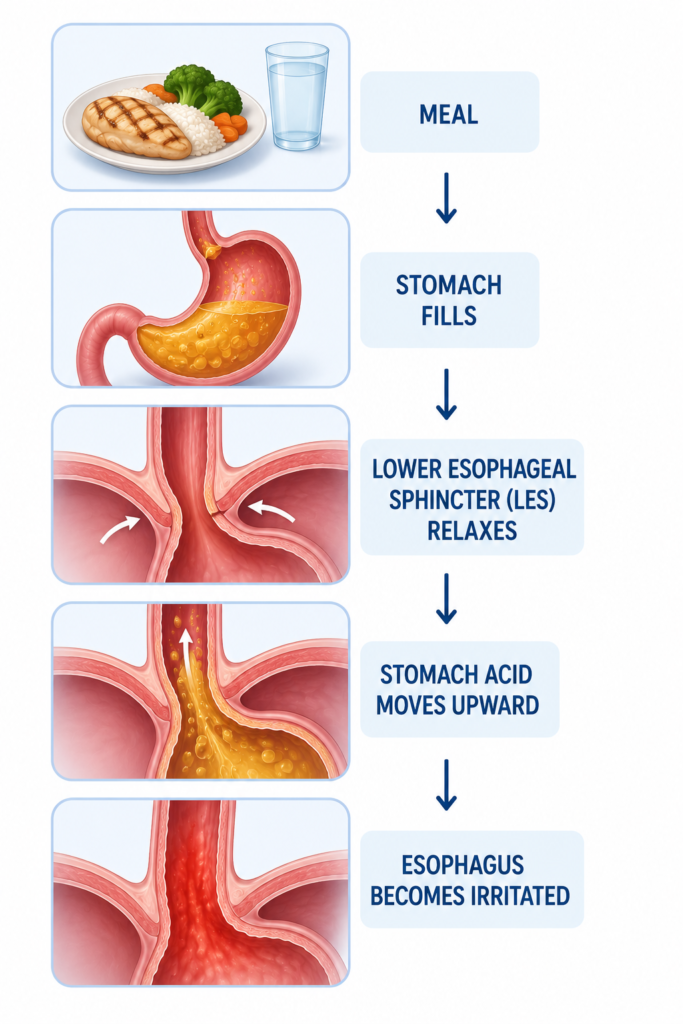
Image shows a flow diagram of gastroesophageal reflux development
GERD (gastroesophageal reflux disease) is a chronic condition in which stomach contents repeatedly flow backward into the esophagus.
Normally, food travels from the mouth into the stomach through the esophagus. A ring of muscle called the lower esophageal sphincter (LES) acts like a valve, opening to allow food into the stomach and then closing to prevent stomach contents from moving back upward.
When the LES becomes weak or relaxes inappropriately, stomach acid and digestive fluids can reflux into the esophagus, causing irritation and inflammation.
Occasional reflux is common. GERD is generally diagnosed when reflux occurs frequently (typically at least twice weekly) or causes complications.
How Common Is GERD?
GERD affects approximately 20% of adults in the United States, making it one of the most common gastrointestinal conditions seen in primary care.
Although it can occur at any age, risk increases with:
- Obesity
- Pregnancy
- Older age
- Smoking
- Certain medications
- Hiatal hernia
What Causes GERD?
Several factors may contribute to GERD.
1. Weak Lower Esophageal Sphincter
The most common cause is a weakened LES that does not close properly after swallowing.
2. Hiatal Hernia
Part of the stomach moves upward through the diaphragm, making reflux more likely.
3. Increased Pressure on the Abdomen
Examples include:
- Obesity
- Pregnancy
- Large meals
- Tight clothing
4. Delayed Stomach Emptying
When food remains in the stomach longer than normal, pressure builds and reflux becomes more likely.
5. Lifestyle Factors
These do not usually cause GERD by themselves but may worsen symptoms:
- Smoking
- Alcohol
- Large evening meals
- Lying down soon after eating
Common Symptoms
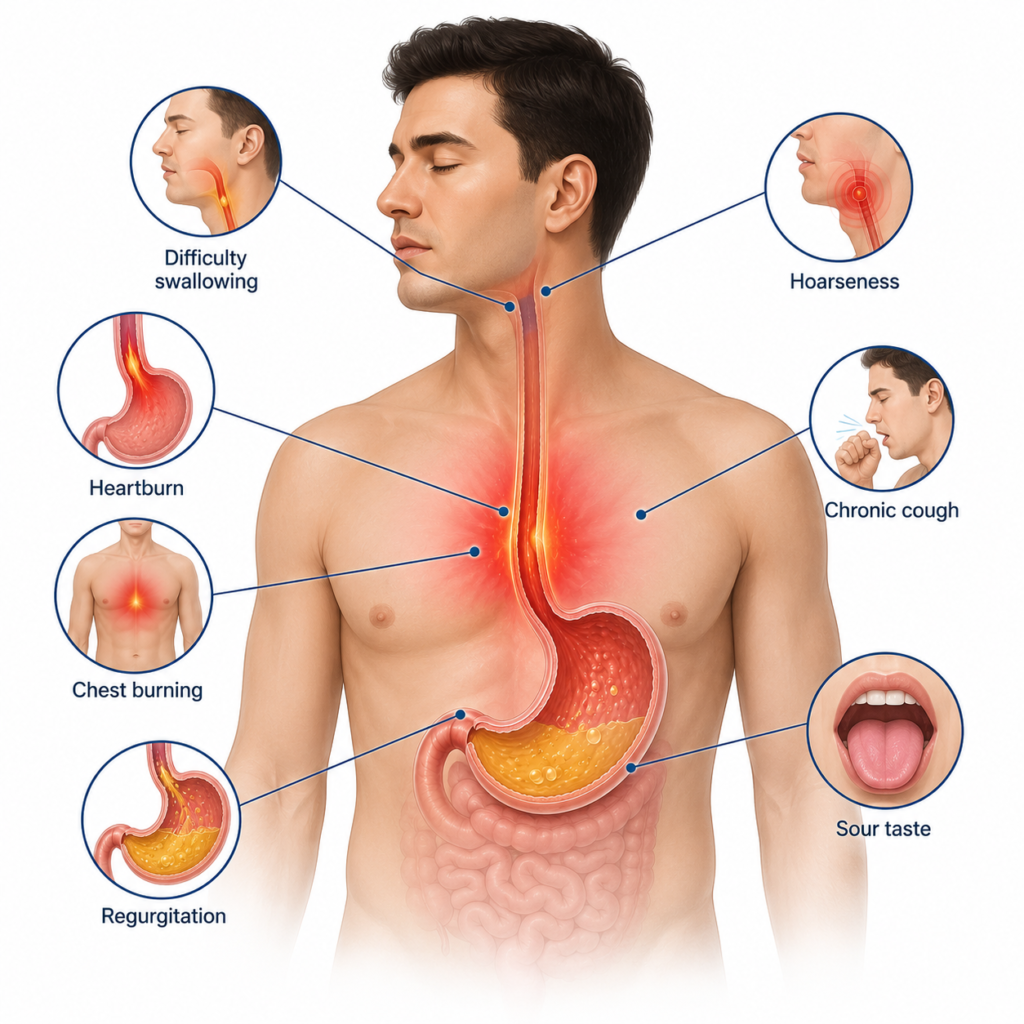
Image shows common symptoms of GERD
Symptoms vary from person to person.
Common symptoms include:
- Heartburn (burning behind the breastbone)
- Sour or bitter taste in the mouth
- Regurgitation of food or stomach acid
- Chest discomfort after meals
- Difficulty swallowing
- Feeling like food gets stuck
- Chronic cough
- Hoarseness
- Frequent throat clearing
- Sore throat
- Bad breath
- Nausea
Symptoms often worsen:
- After eating
- At night
- When lying flat
- After bending over
Symptoms That May Suggest Silent Reflux
Some people have little or no heartburn.
Instead they develop:
- Persistent cough
- Hoarseness
- Chronic throat clearing
- Lump-in-the-throat sensation
- Frequent voice changes
This condition is sometimes called laryngopharyngeal reflux (LPR).
Foods That Commonly Trigger Symptoms
Triggers vary among individuals.
Common examples include:
| Food | Why It May Trigger Symptoms |
|---|---|
| Fatty foods | Slow stomach emptying |
| Fried foods | Increase reflux episodes |
| Chocolate | Relaxes the LES |
| Peppermint | Relaxes the LES |
| Coffee | May worsen symptoms in some people |
| Alcohol | Relaxes the LES |
| Carbonated beverages | Increase stomach pressure |
| Citrus fruits | May irritate inflamed tissue |
| Tomato products | Acidic and commonly trigger heartburn |
| Spicy foods | May worsen burning sensations |
Not everyone needs to avoid every trigger. Identifying personal triggers is often more effective than following highly restrictive diets.
Risk Factors
GERD is more common in people with:
- Obesity
- Pregnancy
- Smoking
- Hiatal hernia
- Diabetes with delayed stomach emptying
- Connective tissue disorders
- Older age
How Is GERD Diagnosed?
Many people are diagnosed based on their symptoms alone.
Additional testing may be recommended if symptoms are severe, persistent, or atypical.
Tests may include:
1. Upper Endoscopy (EGD)
A flexible camera examines the esophagus and stomach for:
- Inflammation
- Ulcers
- Barrett’s esophagus
- Narrowing (strictures)
2. Ambulatory pH Monitoring
Measures acid exposure inside the esophagus over 24 to 96 hours.
3. Esophageal Manometry
Measures muscle contractions and LES function.
4. Barium Swallow
May identify structural abnormalities such as hiatal hernia or narrowing.
Treatment
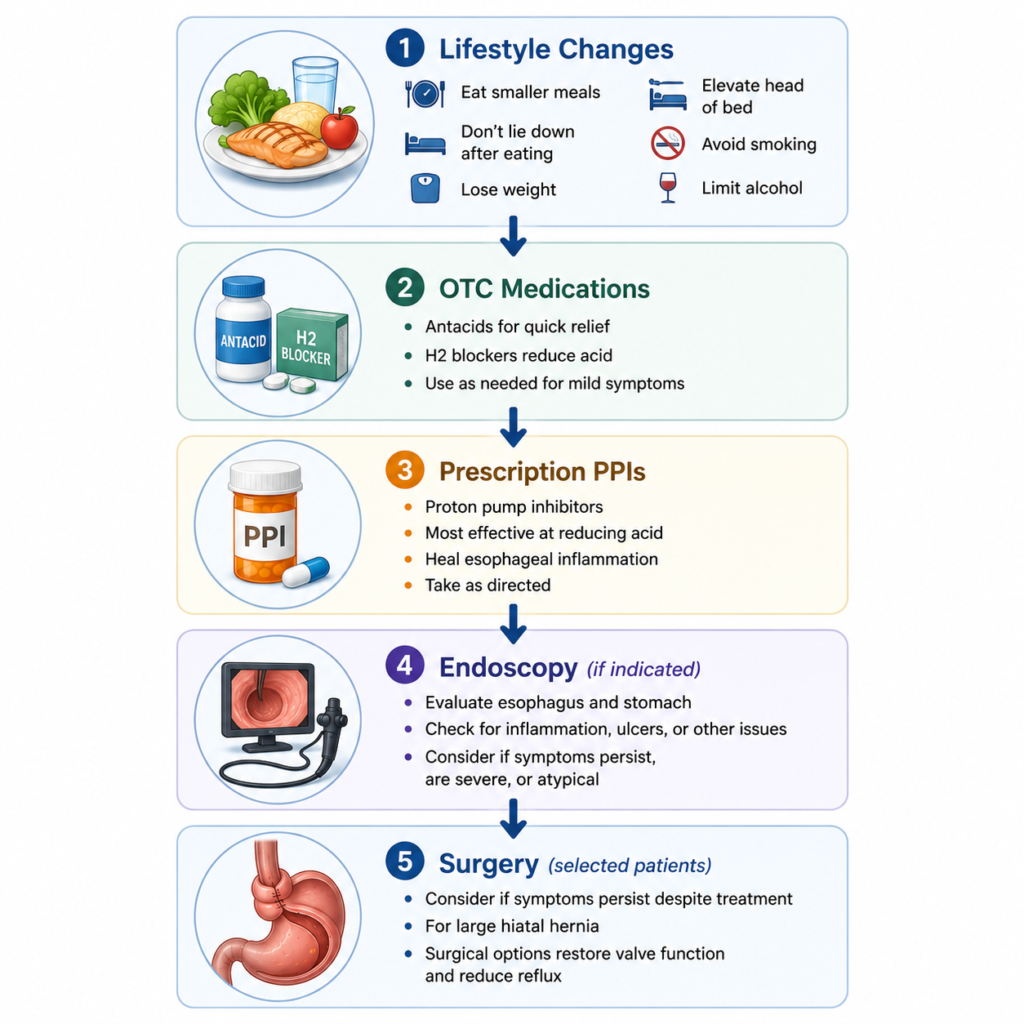
Image shows the treatment options as GERD progresses
Treatment depends on symptom severity.
1. Lifestyle Changes
Lifestyle modifications are often the first step.
These include:
- Losing excess weight
- Eating smaller meals
- Avoiding late-night eating
- Waiting at least 2–3 hours before lying down after meals
- Raising the head of the bed by 6–8 inches for nighttime symptoms
- Avoiding smoking
- Limiting alcohol
- Identifying individual trigger foods
2. Over-the-Counter Medications
Antacids
Examples:
- Calcium carbonate (Tums)
- Magnesium hydroxide
Provide rapid symptom relief but do not heal inflammation.
3. H2 Blockers
Examples:
- Famotidine
- Cimetidine
Reduce stomach acid production for several hours.
4. Proton Pump Inhibitors (PPIs)
Examples:
- Omeprazole
- Pantoprazole
- Esomeprazole
- Lansoprazole
These are the most effective medications for healing erosive esophagitis and controlling GERD symptoms.
PPIs are usually taken 30–60 minutes before breakfast for best effect.
When Is Surgery Considered?
Surgery is reserved for selected patients who:
- Continue to have symptoms despite medication
- Prefer surgery instead of lifelong medication
- Have significant hiatal hernias
- Experience complications of reflux
The most common procedure is fundoplication, which strengthens the lower esophageal sphincter.
Possible Complications
Untreated GERD may lead to:
- Esophagitis
- Esophageal ulcers
- Bleeding
- Esophageal strictures (narrowing caused by scar tissue)
- Barrett’s esophagus
- Increased risk of esophageal adenocarcinoma
Most people with GERD never develop cancer, but long-standing, poorly controlled reflux can increase the risk.
When Should You Seek Medical Attention?
See a healthcare professional if you have:
- Heartburn occurring more than twice per week
- Difficulty swallowing
- Pain when swallowing
- Unexplained weight loss
- Vomiting blood
- Black or tarry stools
- Persistent nausea or vomiting
- Chest pain (especially if accompanied by shortness of breath, sweating, or pain radiating to the arm or jaw)
- Symptoms that do not improve after several weeks of treatment
Call emergency services immediately for severe chest pain that could represent a heart attack.

Is heartburn the same as GERD?
No. Heartburn is a symptom. GERD is a chronic medical condition characterized by frequent or persistent acid reflux.
Can GERD go away?
Some people improve significantly with weight loss, dietary changes, smoking cessation, and medication. Others require long-term management.
Can stress cause GERD?
Stress does not directly cause GERD, but it can worsen symptoms and increase awareness of reflux.
Are proton pump inhibitors safe?
PPIs are generally safe when used appropriately. Long-term use should be periodically reviewed with a healthcare professional to ensure the benefits continue to outweigh potential risks.
Can GERD increase the risk of cancer?
Long-standing GERD can lead to Barrett’s esophagus, which increases the risk of esophageal adenocarcinoma. However, the absolute risk remains low for most individuals.
What Should You Do Next?
Occasional heartburn is common, but frequent reflux should not be ignored. Early treatment can improve symptoms, heal inflammation, and reduce the risk of long-term complications.
If you experience persistent heartburn, difficulty swallowing, unexplained weight loss, bleeding, or symptoms that continue despite lifestyle changes or medication, schedule an evaluation with a healthcare professional. A personalized treatment plan can help control symptoms and protect your esophageal health.
References
Katz PO, Dunbar KB, Schnoll-Sussman FH, et al. ACG Clinical Guideline for the Diagnosis and Management of Gastroesophageal Reflux Disease. American Journal of Gastroenterology. 2022;117(1):27–56. https://journals.lww.com/ajg/fulltext/2022/01000/acg_clinical_guideline_for_the_diagnosis_and.14.aspx
National Institute of Diabetes and Digestive and Kidney Diseases (NIDDK). Symptoms & Causes of GER & GERD. https://www.niddk.nih.gov/health-information/digestive-diseases/acid-reflux-ger-gerd-adults/symptoms-causes
National Institute of Diabetes and Digestive and Kidney Diseases (NIDDK). Treatment for GER & GERD. https://www.niddk.nih.gov/health-information/digestive-diseases/acid-reflux-ger-gerd-adults/treatment
American Gastroenterological Association. Acid Reflux and GERD Patient Information. https://patient.gastro.org/gerd/
MedlinePlus. GERD. https://medlineplus.gov/gerd.html