
Oral Thrush: Symptoms, Causes, Treatment, and Prevention
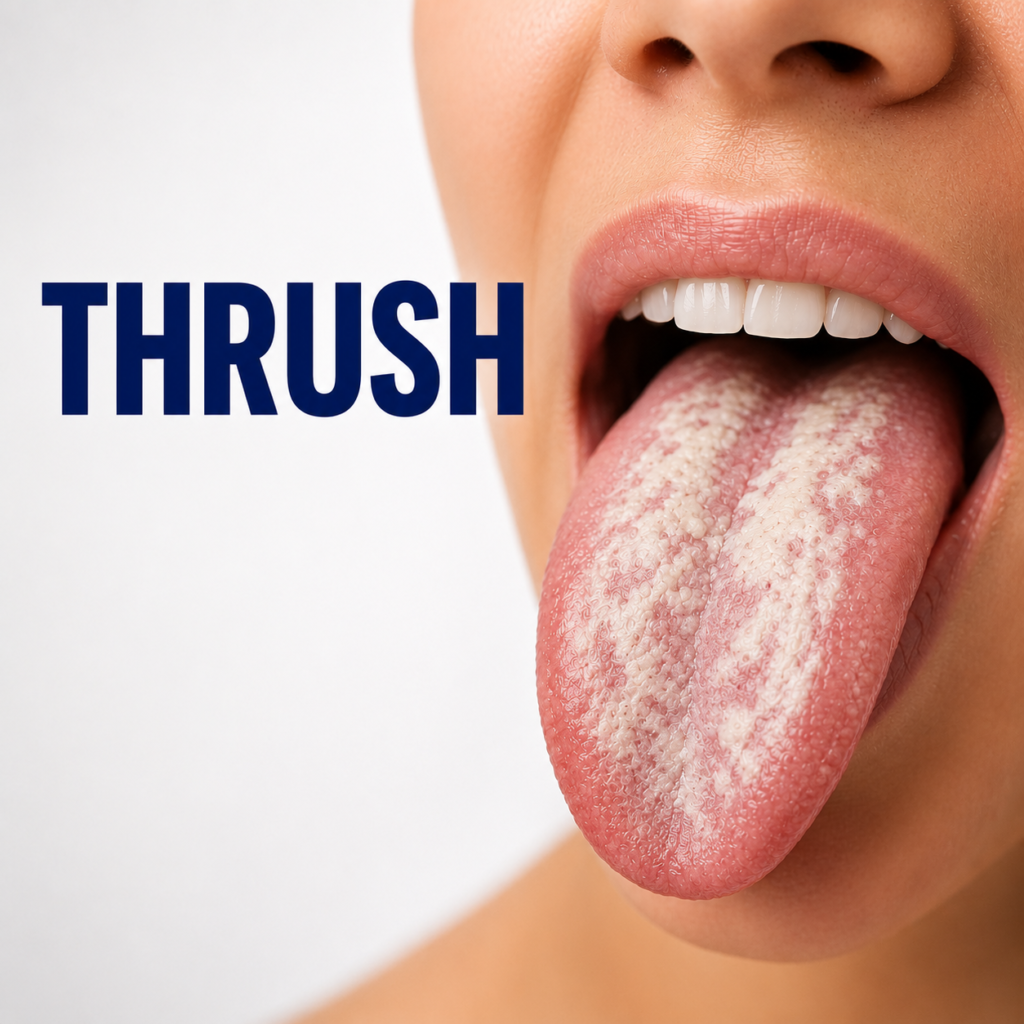
What Is Oral Thrush?
Oral thrush, also called oral candidiasis, is a fungal infection caused by an overgrowth of Candida, a yeast that normally lives in the mouth without causing problems.
When the natural balance of bacteria and yeast is disrupted, Candida can multiply and lead to infection. Oral thrush most commonly affects the:
- Tongue
- Inside of the cheeks
- Roof of the mouth
- Gums
- Tonsils
- Back of the throat
Although oral thrush can affect anyone, it is more common in infants, older adults, and people with weakened immune systems.
Common Symptoms
You may notice:
- Creamy white patches on the tongue or inside the mouth
- Redness or soreness
- Burning sensation
- Pain when eating or swallowing
- Loss of taste
- Cotton-like feeling in the mouth
- Cracking at the corners of the mouth (angular cheilitis)
- Bleeding if the white patches are scraped
In severe cases, the infection may spread into the esophagus, causing painful swallowing.
Oral Thrush at a Glance
| Mild Thrush | More Severe Thrush |
|---|---|
| White patches limited to the mouth | Extensive patches throughout the mouth |
| Mild soreness | Significant pain with eating or swallowing |
| Responds to topical medication | May require oral antifungal medication |
| Usually resolves within 1–2 weeks | May recur if the underlying cause is not addressed |
Did You Know?
Candida normally lives in the mouths of many healthy people without causing infection. Thrush develops when something disrupts the normal balance of microorganisms, allowing the yeast to overgrow.
What Causes Oral Thrush?
Several factors can allow Candida to grow excessively.
Common causes include:
- Recent antibiotic use
- Inhaled corticosteroid medications (such as asthma inhalers)
- Poorly controlled diabetes
- Dry mouth
- Wearing dentures, especially overnight
- Smoking
- Cancer treatment
- HIV or other conditions that weaken the immune system
Infants commonly develop thrush because their immune systems are still developing.
Who Is More Likely to Develop Oral Thrush?
Your risk is higher if you:
- Are an infant
- Are over age 65
- Wear dentures
- Have diabetes
- Use inhaled steroid medications
- Recently took antibiotics
- Have a weakened immune system
- Have dry mouth
- Smoke
How Is Oral Thrush Treated?
Treatment depends on the severity of the infection and the underlying cause.
| Treatment | How It Helps |
| Nystatin oral suspension | Common first-line antifungal treatment |
| Clotrimazole lozenges | Treats mild infections |
| Oral fluconazole | Used for more extensive or persistent infections |
| Good oral hygiene | Reduces yeast buildup |
| Denture cleaning and removal overnight | Prevents reinfection |
| Rinsing the mouth after steroid inhaler use | Helps prevent recurrence |
Most healthy adults improve within one to two weeks after starting treatment.
How Can You Prevent Oral Thrush?
You can reduce your risk by:
| Prevention Tips |
| Brush and floss your teeth daily |
| Clean dentures every day and remove them at night |
| Rinse your mouth after using an inhaled corticosteroid |
| Control blood sugar if you have diabetes |
| Avoid smoking |
| Stay well hydrated |
| Visit your dentist regularly |
Myths vs. Facts
| Myth | Fact |
| Thrush only affects babies. | Adults can also develop oral thrush, especially if they have certain risk factors. |
| White patches can simply be brushed away. | Scraping the patches may cause pain or bleeding and does not treat the infection. |
| Poor oral hygiene is the only cause. | Medications, diabetes, dentures, and weakened immunity also increase the risk. |
| Thrush always spreads from person to person. | Most cases result from overgrowth of yeast already present in the mouth. |
When Should You See a Healthcare Provider?
Schedule an appointment if you:
- Develop white patches inside your mouth
- Have pain or difficulty swallowing
- Symptoms last longer than two weeks
- Thrush keeps returning
- You have diabetes or a weakened immune system
- Your baby has persistent thrush or difficulty feeding
Recurrent thrush in otherwise healthy adults may be a sign of an underlying medical condition and should be evaluated.
Frequently Asked Questions
Is oral thrush contagious?
Most healthy adults are unlikely to catch thrush through casual contact. However, it can spread more easily among infants, breastfeeding mothers, and people with weakened immune systems.
How long does treatment take?
Most infections improve within one to two weeks after starting antifungal medication.
Can oral thrush go away on its own?
Mild cases occasionally improve, but most people benefit from antifungal treatment, especially if symptoms are uncomfortable or persistent.
How can I prevent thrush if I use an asthma inhaler?
Rinse your mouth with water and spit it out after every use of an inhaled corticosteroid to reduce the risk of yeast overgrowth.
What Should You Do Next?
If you notice white patches, soreness, or burning inside your mouth, schedule an evaluation with a healthcare provider or dentist. Early treatment usually clears the infection quickly and can help identify underlying conditions—such as diabetes, dry mouth, or medication side effects—that may increase your risk of recurrent thrush.
References
Mayo Clinic. Oral Thrush: Symptoms and Causes
https://www.mayoclinic.org/diseases-conditions/oral-thrush/symptoms-causes/syc-20353533
Mayo Clinic. Oral Thrush: Diagnosis and Treatment
https://www.mayoclinic.org/diseases-conditions/oral-thrush/diagnosis-treatment/drc-20353539
DermNet NZ. Oral Candidiasis
https://dermnetnz.org/topics/oral-candidiasis
Cleveland Clinic. Thrush: Symptoms, Causes & Treatment
https://my.clevelandclinic.org/health/diseases/10956-thrush
MedlinePlus Medical Encyclopedia. Thrush in Children and Adults
https://medlineplus.gov/ency/article/000626.htm