
Hemorrhoids: Symptoms, Causes, Treatment, and Prevention
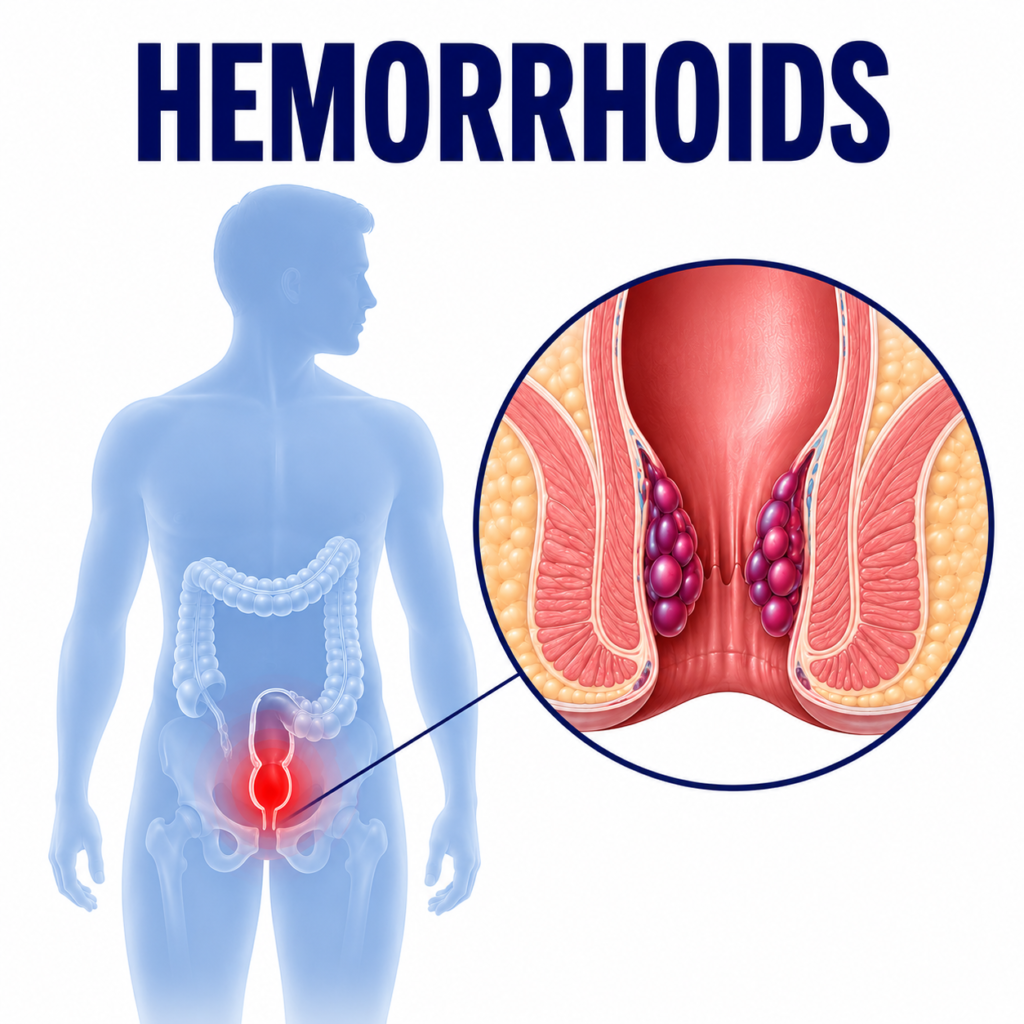
What Are Hemorrhoids?
Hemorrhoids are swollen veins located in the lower rectum or around the anus.
There are two main types:
- Internal hemorrhoids: Located inside the rectum and usually painless, but they may bleed.
- External hemorrhoids: Located under the skin around the anus and may cause pain, itching, or swelling.
- Thrombosed hemorrhoids: An external hemorrhoid that develops a blood clot, causing sudden, severe pain and swelling.
Common Symptoms
Symptoms depend on the type of hemorrhoid and may include:
- Bright red blood on the toilet paper or in the toilet
- Itching around the anus
- Pain or discomfort
- Swelling near the anus
- A lump near the anus
- Mucus discharge
- Feeling of incomplete bowel emptying
- Painful bowel movements (especially with external or thrombosed hemorrhoids)
Hemorrhoids at a Glance
| Mild Hemorrhoids | More Severe Hemorrhoids |
|---|---|
| Mild itching | Significant pain |
| Small amount of bleeding | Larger amounts of bleeding |
| Improve with home care | Persistent symptoms despite treatment |
| Little swelling | Large prolapsed or thrombosed hemorrhoids |
Did You Know?
Nearly 1 in 20 Americans has symptomatic hemorrhoids, and the condition becomes more common with age.
What Causes Hemorrhoids?
Hemorrhoids develop when pressure increases in the veins of the lower rectum.
Common causes include:
- Straining during bowel movements
- Chronic constipation
- Chronic diarrhea
- Sitting on the toilet for prolonged periods
- Pregnancy
- Obesity
- Heavy lifting
- Eating a low-fiber diet
As people age, the tissues supporting these veins naturally weaken, increasing the likelihood of hemorrhoids.
Who Is More Likely to Develop Hemorrhoids?
Your risk is higher if you:
- Are over age 50
- Have chronic constipation
- Have chronic diarrhea
- Are pregnant
- Are overweight or obese
- Frequently lift heavy objects
- Spend long periods sitting on the toilet
- Eat a low-fiber diet
How Are Hemorrhoids Treated?
Treatment depends on symptom severity.
| Treatment | How It Helps |
| High-fiber diet | Softens stools and reduces straining |
| Fiber supplements (psyllium or methylcellulose) | Helps prevent constipation |
| Drinking plenty of water | Keeps stools soft |
| Warm sitz baths | Relieve pain and swelling |
| Over-the-counter creams or suppositories | Reduce itching and discomfort |
| Oral pain relievers | Help relieve pain |
| Rubber band ligation | Treats symptomatic internal hemorrhoids |
| Surgery (hemorrhoidectomy) | Reserved for severe or recurrent hemorrhoids |
Most mild hemorrhoids improve within several days to a week with conservative treatment. Persistent or severe cases may require office procedures or surgery.
How Can You Prevent Hemorrhoids?
The best way to prevent hemorrhoids is to avoid straining during bowel movements.
| Prevention Tips |
| Eat plenty of fruits, vegetables, and whole grains |
| Drink adequate water throughout the day |
| Exercise regularly |
| Avoid delaying bowel movements |
| Avoid sitting on the toilet for long periods |
| Don’t strain during bowel movements |
| Maintain a healthy weight |
Myths vs. Facts
| Myth | Fact |
| Hemorrhoids are always painful. | Internal hemorrhoids often cause painless bleeding. |
| All rectal bleeding is caused by hemorrhoids. | Rectal bleeding can also be caused by more serious conditions and should be evaluated if persistent. |
| Sitting on cold surfaces causes hemorrhoids. | Hemorrhoids develop from increased pressure on rectal veins, not from cold surfaces. |
| Surgery is always needed. | Most hemorrhoids improve with lifestyle changes and conservative treatment. |
When Should You See a Healthcare Provider?
Schedule an appointment if you:
- Have rectal bleeding
- Continue having symptoms after one week of home treatment
- Have recurrent hemorrhoids
- Develop severe pain or a rapidly enlarging lump
- Have significant swelling
- Notice changes in your bowel habits
Seek immediate medical attention if you experience:
- Heavy rectal bleeding
- Dizziness or fainting with bleeding
- Black or tarry stools
- Severe rectal pain with fever
Although hemorrhoids are common, rectal bleeding should never automatically be assumed to be caused by hemorrhoids, especially if you are over age 45 or have other concerning symptoms.
Frequently Asked Questions
Do hemorrhoids go away on their own?
Many mild hemorrhoids improve within several days with increased fiber, hydration, and avoiding straining.
Can hemorrhoids cause bleeding?
Yes. Internal hemorrhoids commonly cause painless bright red bleeding during bowel movements.
Can hemorrhoids come back?
Yes. Without lifestyle changes, hemorrhoids frequently recur.
What’s the difference between hemorrhoids and an anal fissure?
Hemorrhoids are swollen veins. An anal fissure is a tear in the lining of the anus that typically causes sharp pain during bowel movements.
What Should You Do Next?
If you develop rectal itching, pain, or bright red bleeding during bowel movements, increase your fiber and water intake and avoid straining. If symptoms persist for more than a week, recur frequently, or you experience significant bleeding or severe pain, schedule an evaluation with a healthcare provider. Early treatment can improve symptoms and help rule out other conditions that can also cause rectal bleeding.
References
-
Mayo Clinic. Hemorrhoids: Symptoms and Causes
https://www.mayoclinic.org/diseases-conditions/hemorrhoids/symptoms-causes/syc-20360268
-
Mayo Clinic. Hemorrhoids: Diagnosis and Treatment
https://www.mayoclinic.org/diseases-conditions/hemorrhoids/diagnosis-treatment/drc-20360280
-
National Institute of Diabetes and Digestive and Kidney Diseases. Hemorrhoids
https://www.niddk.nih.gov/health-information/digestive-diseases/hemorrhoids
-
Cleveland Clinic. Hemorrhoids
https://my.clevelandclinic.org/health/diseases/15120-hemorrhoids
-
American Society of Colon and Rectal Surgeons. Hemorrhoids
https://fascrs.org/patients/diseases-and-conditions/a-z/hemorrhoids