
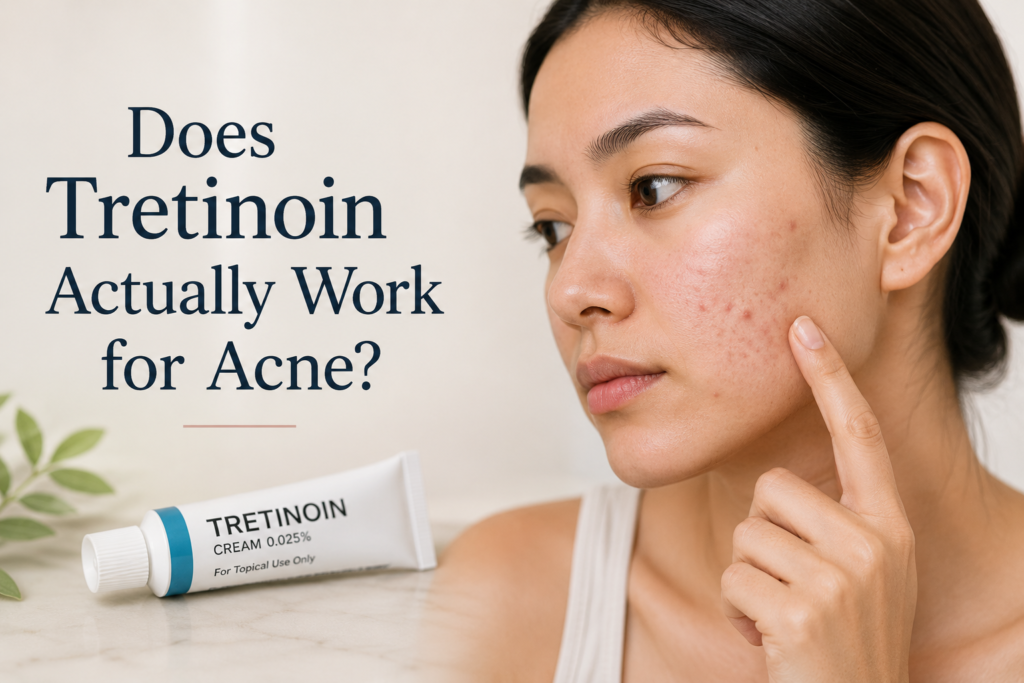
Does Tretinoin Actually Work for Acne?
If you’ve searched for acne treatments online, you’ve probably come across tretinoin. Some people call it a “miracle cream,” while others stop using it because their skin becomes dry or seems to get worse before it gets better.
So, does tretinoin actually work?
For many people with acne, the answer is yes. Tretinoin is one of the most studied topical acne medications available and has been helping treat acne for decades. Knowing what to expect and using it correctly can make a big difference in your results.
What Is Tretinoin?
Tretinoin is a prescription topical retinoid derived from vitamin A. It works by speeding up the normal turnover of skin cells, helping prevent pores from becoming clogged.
Unlike spot treatments that only treat existing pimples, tretinoin helps prevent new acne from forming.
It is commonly prescribed for:
• Blackheads
• Whiteheads
• Mild to moderate inflammatory acne
• Acne prevention
• Acne-related dark spots
• Fine lines and sun-damaged skin (in some cases)
Common brand names include:
• Retin-A®
• Altreno®
• Atralin®
• Avita®
Generic tretinoin is also widely available.
How Does Tretinoin Work?
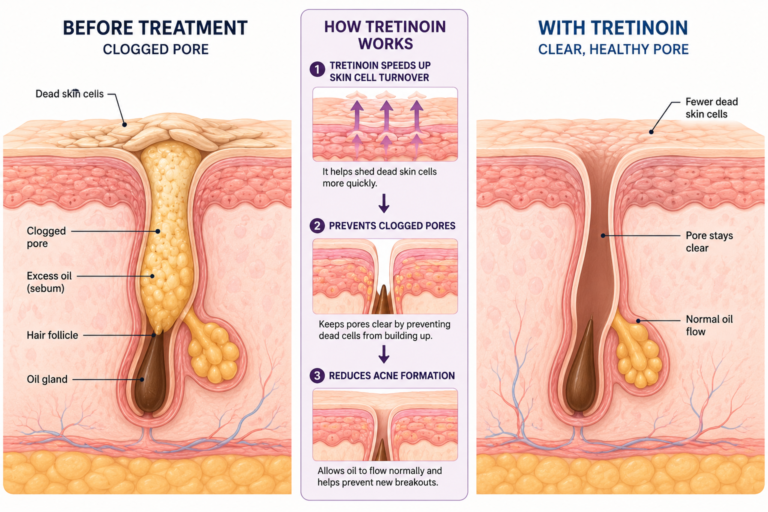
Acne begins when dead skin cells and oil block hair follicles.
Tretinoin works by:
✓ Increasing skin cell turnover
✓ Preventing clogged pores
✓ Reducing blackheads and whiteheads
✓ Decreasing the formation of new pimples
✓ Helping fade post-inflammatory hyperpigmentation over time
Rather than treating individual pimples, tretinoin helps address one of the underlying causes of acne.
Does It Actually Work?
Yes.
Multiple clinical studies have shown that tretinoin significantly reduces acne lesions when used consistently.
Most people notice:
• Fewer clogged pores
• Fewer new breakouts
• Smoother skin texture
• Less acne over several months
The best results usually occur when tretinoin is used consistently rather than only during breakouts.
How Long Does It Take to Work?
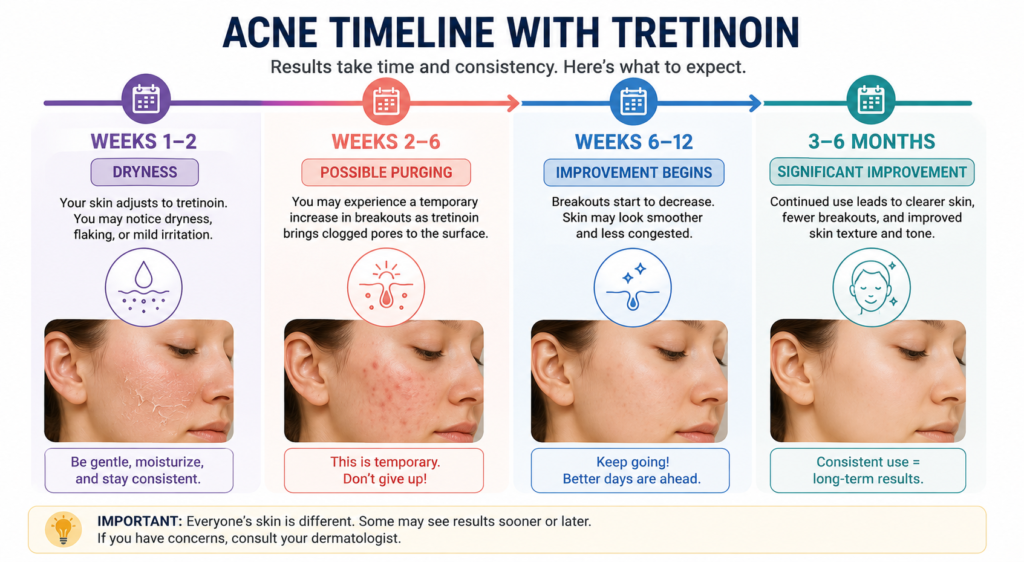
Patience is important.
Typical timeline:
Weeks 1–2
Skin may become dry, flaky, or irritated.
Weeks 2–6
Some people experience a temporary increase in breakouts (“purging”).
Weeks 6–12
Many begin noticing fewer pimples and smoother skin.
3–6 months
More significant improvement is often seen with continued use.
Stopping treatment too early is one of the most common reasons people think tretinoin “doesn’t work.”
Why Does Acne Sometimes Get Worse First?
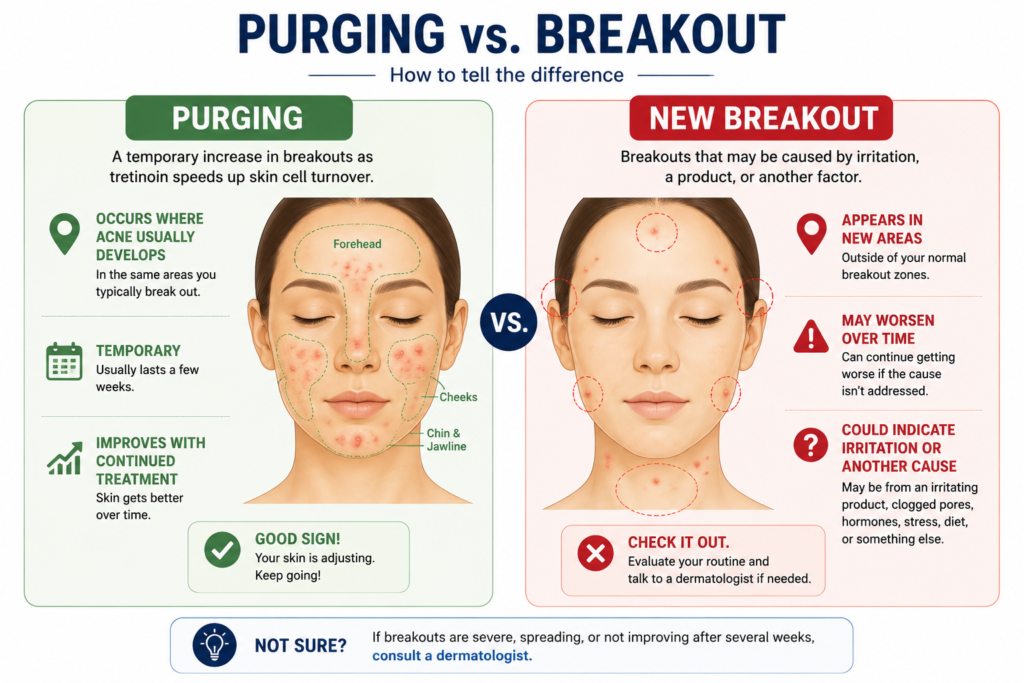
This temporary worsening is called retinoid purging.
Because tretinoin speeds up skin cell turnover, clogged pores that were already developing beneath the skin may surface more quickly.
Purging usually:
• Occurs in areas where acne commonly appears
• Lasts several weeks
• Improves with continued treatment
If acne becomes severe, spreads to new areas, or continues worsening for several months, it’s worth discussing with a healthcare professional.
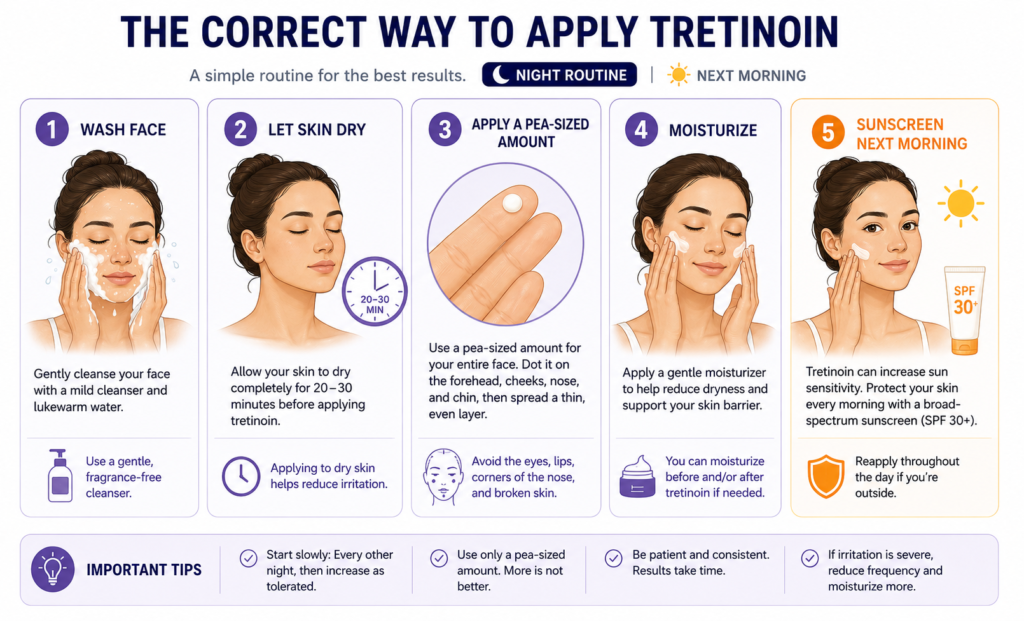
How to Use Tretinoin Correctly
Common Side Effects
Many side effects improve as the skin adjusts.
Common side effects include:
• Dryness
• Peeling
• Redness
• Mild burning
• Increased sun sensitivity
These are usually temporary and do not necessarily mean the medication is harming your skin.
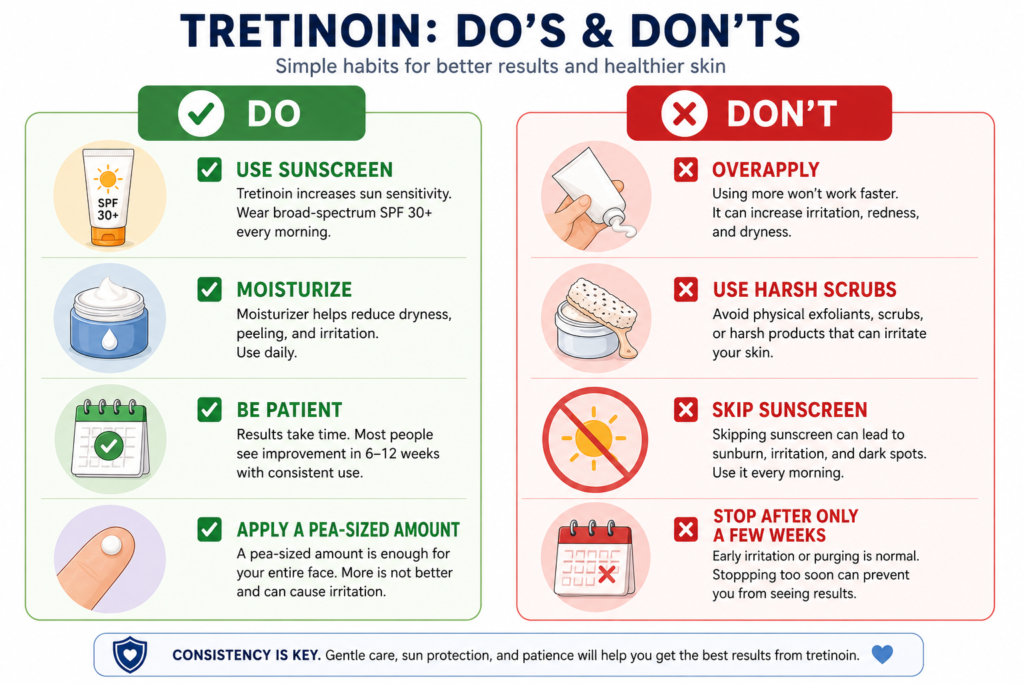
Tips to Reduce Irritation
If your skin becomes irritated:
• Apply moisturizer before or after tretinoin (“sandwich method”).
• Start with every-other-night application.
• Use a gentle, fragrance-free cleanser.
• Avoid harsh scrubs and exfoliants.
• Avoid alcohol-based toners.
• Wear sunscreen daily.
Many people can gradually increase to nightly use as their skin adapts.
Who Should Avoid Tretinoin?
Tretinoin may not be appropriate for everyone.
Talk with your healthcare professional if you:
• Are pregnant or planning pregnancy
• Have severe eczema or another skin condition affecting the treatment area
• Experience significant irritation despite adjusting how you use it
Your clinician can help determine whether tretinoin or another treatment is more appropriate.
Frequently Asked Questions
Can I use tretinoin every night?
Many people eventually use it nightly, but some need to start more slowly to reduce irritation.
Does tretinoin permanently cure acne?
No. It helps control acne while you continue using it. Acne may return if treatment is stopped.
Can I use moisturizer with tretinoin?
Yes. Moisturizer is encouraged and can help reduce dryness and peeling.
Should I wear sunscreen?
Yes. Tretinoin can make your skin more sensitive to sunlight, so daily sunscreen is recommended.
Is over-the-counter retinol the same thing?
No. Retinol and retinaldehyde are related ingredients but are generally less potent than prescription tretinoin.
What Should You Do Next?
Tretinoin is one of the most effective topical treatments for acne, but it requires patience and consistent use. Temporary irritation or purging is common during the first several weeks, and results often take two to three months to become noticeable. If you’re considering tretinoin or are having trouble tolerating it, a healthcare professional can help determine whether it’s the right treatment for your skin and recommend ways to minimize side effects.