

Why Is My Skin So Itchy?
Itchy skin can be frustrating, distracting, and sometimes difficult to ignore. For some people, it’s caused by something as simple as dry skin, while for others it may be a sign of an allergic reaction, a skin condition, an infection, or even an underlying medical problem.
Most cases of itchy skin are not serious, but persistent or severe itching deserves attention. Understanding the possible causes can help you know when simple self-care may be enough and when it’s time to seek medical evaluation.
What Is Itchy Skin?
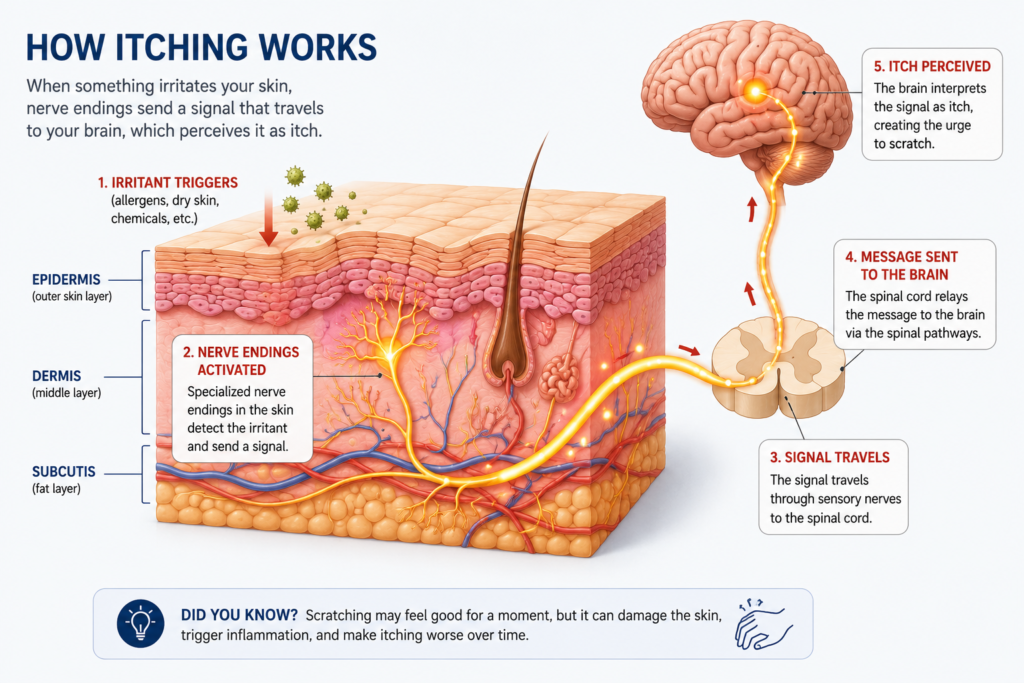
Itchy skin, also called pruritus, is an uncomfortable sensation that creates the urge to scratch.
Itching may affect:
• A small patch of skin
• One arm or leg
• The scalp
• The entire body
It may occur with or without a visible rash.
Common Causes of Itchy Skin
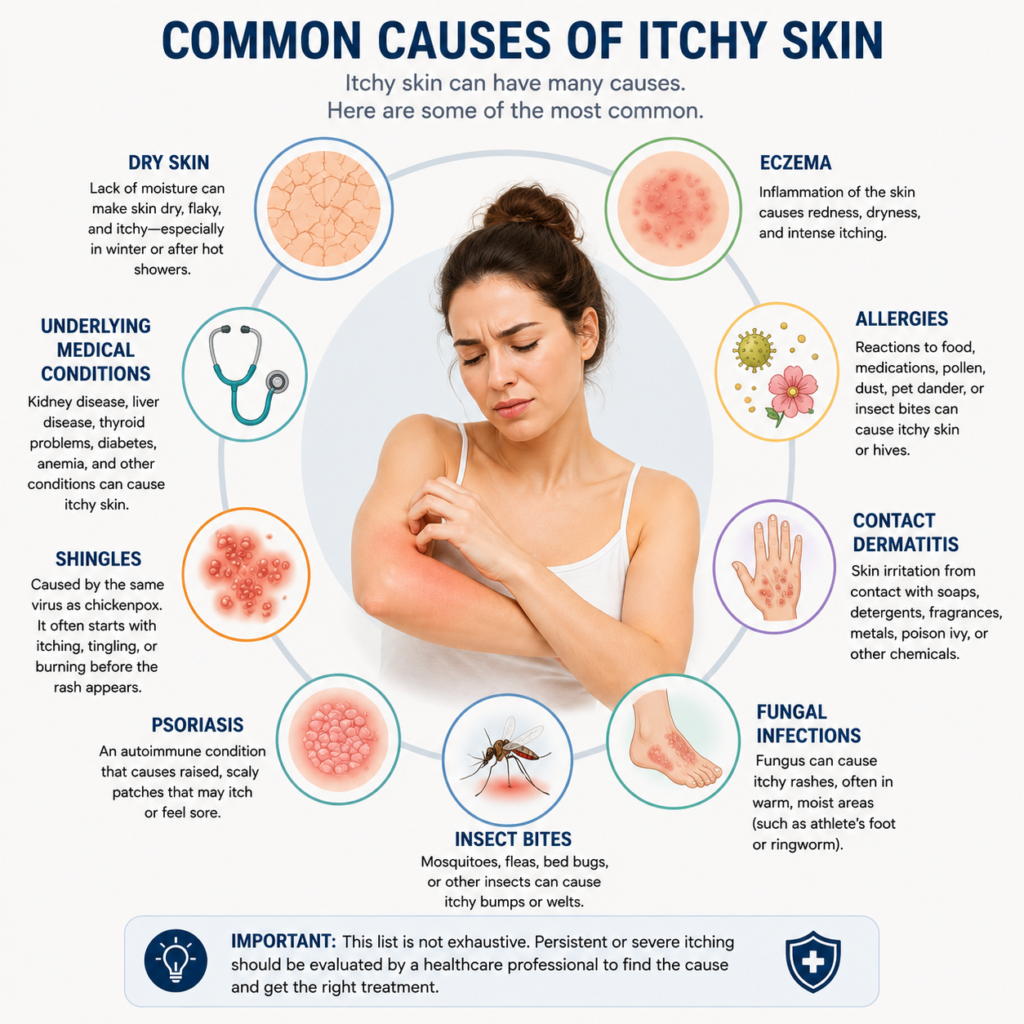
Many different conditions can cause itching.
The most common include:
Dry Skin (Xerosis)
Dry skin is one of the leading causes of itching, especially during winter months or in dry climates.
You may notice:
• Flaky skin
• Rough texture
• Tightness
• Fine cracks
Dry skin often worsens after hot showers or frequent handwashing.
Eczema (Atopic Dermatitis)
Eczema causes inflammation of the skin and is well known for intense itching.
Symptoms may include:
• Dry patches
• Redness
• Cracking
• Thickened skin from repeated scratching
Contact Dermatitis
Sometimes the skin reacts after touching an irritating substance.
Common triggers include:
• Soaps
• Detergents
• Fragrances
• Jewelry containing nickel
• Poison ivy
• Cleaning products
Allergic Reactions
Food allergies, medications, insect bites, and environmental allergens may trigger itching.
Some allergic reactions also cause:
• Hives
• Swelling
• Redness
Fungal Infections
Fungal infections commonly cause itching in warm, moist areas.
Examples include:
• Athlete’s foot
• Ringworm
• Jock itch
These infections often produce a characteristic rash.
Insect Bites
Mosquitoes, fleas, bed bugs, and other insects can leave itchy bumps that may last several days.
Psoriasis
Psoriasis causes thick, scaly plaques that may itch, although itching is usually less intense than with eczema.
Shingles
Shingles often begins with burning, tingling, or itching before the rash appears.
Can Itchy Skin Be Caused by Something Other Than the Skin?
Yes.
Sometimes itching is related to an underlying medical condition rather than a skin disorder.
Examples include:
• Kidney disease
• Liver disease
• Thyroid disorders
• Iron deficiency
• Diabetes
• Pregnancy
• Certain medications
• Nerve disorders
In these cases, itching may occur without an obvious rash.
Why Does Scratching Make It Worse?
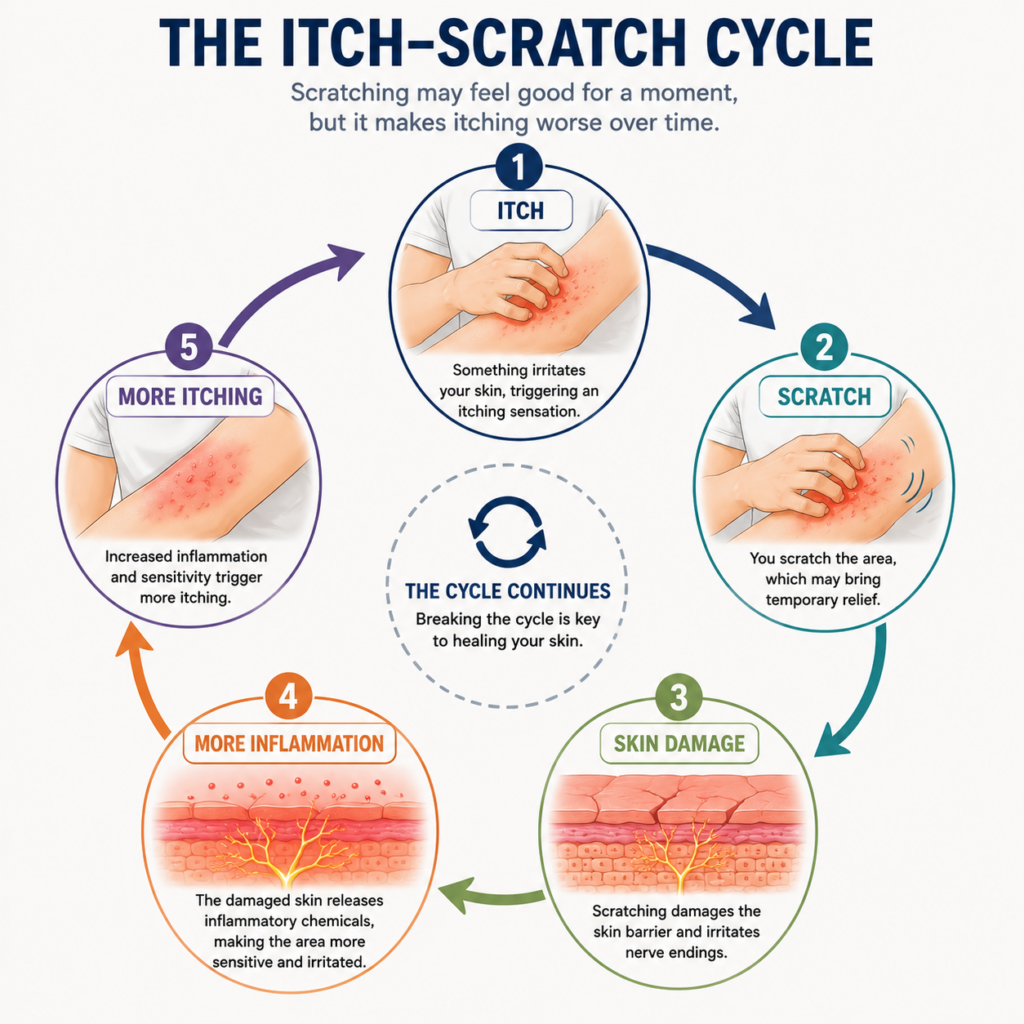
Scratching temporarily relieves itching by stimulating pain receptors.
However, frequent scratching can:
• Damage the skin barrier
• Increase inflammation
• Lead to infection
• Create an “itch-scratch cycle,” where scratching causes even more itching
Breaking this cycle is often an important part of treatment.
How Can You Help Relieve Itchy Skin?

When Should You See a Healthcare Professional?
Schedule an evaluation if:
• Itching lasts longer than two weeks
• It keeps you awake at night
• It affects large areas of your body
• You develop a rash that continues spreading
• Moisturizers and gentle skin care do not help
• You notice signs of infection such as pus, warmth, increasing pain, or fever
Medical evaluation is especially important if itching occurs without an obvious skin problem or is accompanied by other symptoms such as weight loss, jaundice, swollen lymph nodes, or persistent fatigue.
Frequently Asked Questions
Can dry skin really cause severe itching?
Yes. Dry skin is one of the most common causes of itching, especially in older adults and during colder weather.
Why do I itch more at night?
Body temperature naturally changes overnight, and there are fewer distractions while trying to sleep, making itching feel more noticeable. Some skin conditions, including eczema, also tend to worsen at night.
Is itchy skin always caused by allergies?
No. While allergies are one possible cause, itching is more commonly related to dry skin, eczema, infections, irritation, or other skin conditions.
Can stress make itching worse?
Yes. Stress can worsen many skin conditions, including eczema and psoriasis, and may increase the sensation of itching even without causing a rash.
Can itching occur without a rash?
Yes. Dry skin, certain medications, nerve-related conditions, and some medical disorders can cause itching without visible skin changes.
What Should You Do Next?
Occasional itching is common and is often related to dry skin or mild irritation. However, persistent itching, severe discomfort, or itching that occurs with a widespread rash or other symptoms should not be ignored. Identifying the underlying cause is the first step toward finding effective treatment. If your symptoms continue despite good skin care or interfere with your daily life, consider being evaluated by a healthcare professional.