
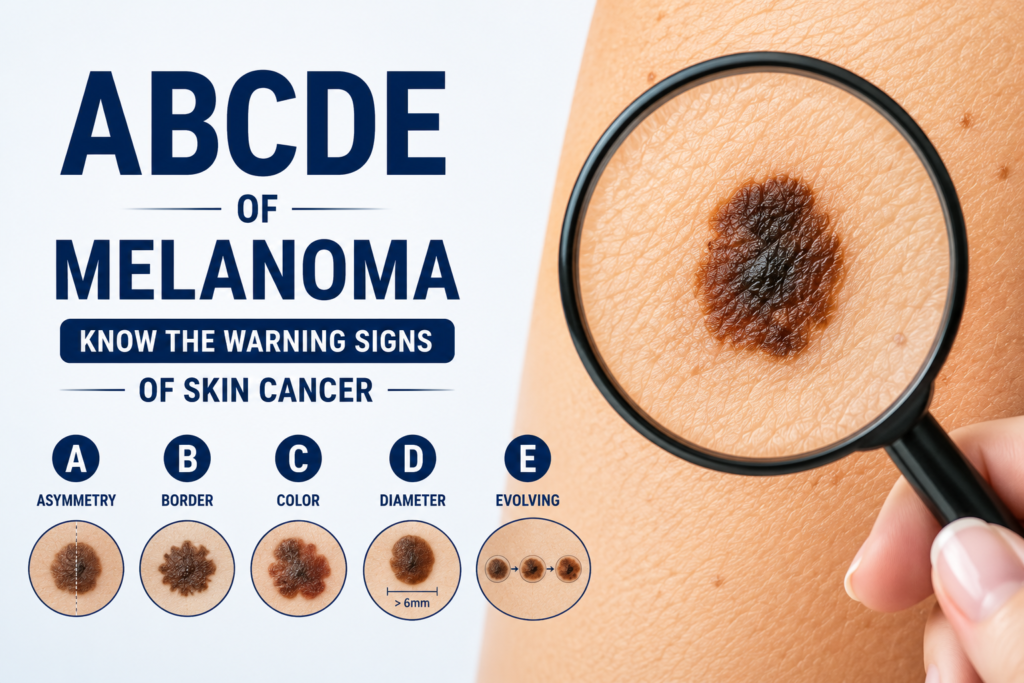
What Is Melanoma?
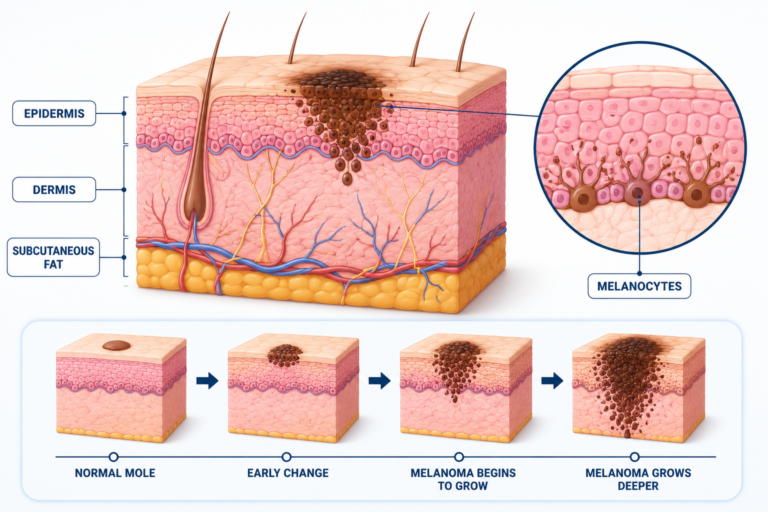
Melanoma is a type of skin cancer that develops from melanocytes, the cells responsible for producing melanin, the pigment that gives skin its color.
Although melanoma accounts for a small percentage of skin cancers, it causes most skin cancer deaths because it is more likely to spread to other parts of the body if not detected early.
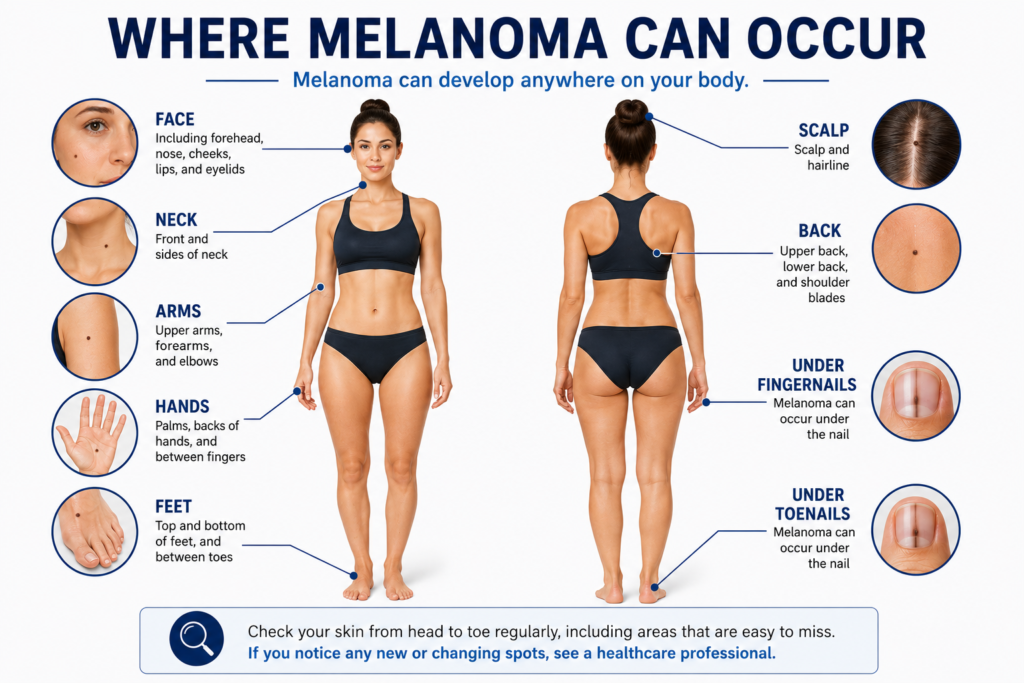
Melanoma can occur anywhere on the skin, including areas that receive little sun exposure. It may also develop beneath a fingernail or toenail, on the soles of the feet, or even inside the mouth or eye.
Risk factors include:
• Frequent sun exposure
• History of blistering sunburns
• Tanning bed use
• Fair skin
• Large number of moles
• Family history of melanoma
• Previous melanoma or other skin cancers
Why Early Detection Matters
Melanoma often begins as a small change in the skin.
When diagnosed before it spreads, treatment is usually straightforward and highly successful. Once melanoma invades deeper layers of the skin or spreads to lymph nodes or other organs, treatment becomes much more complex.
Performing regular skin self-examinations can help you notice changes early.
The ABCDE Rule
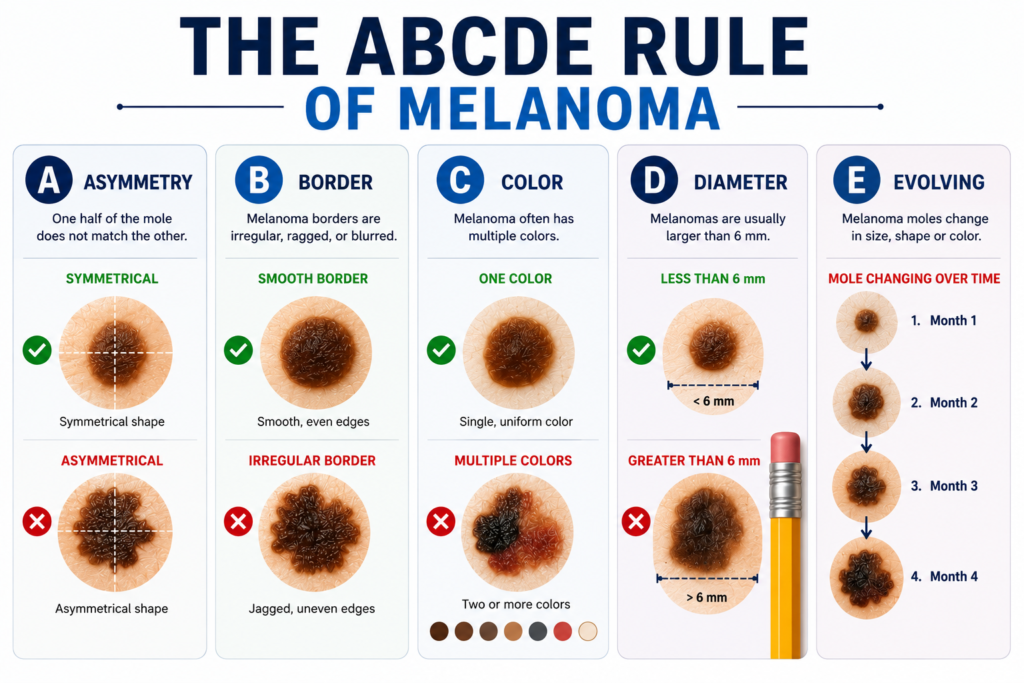
The ABCDE rule is a simple checklist that helps identify moles that deserve medical evaluation.
A — Asymmetry
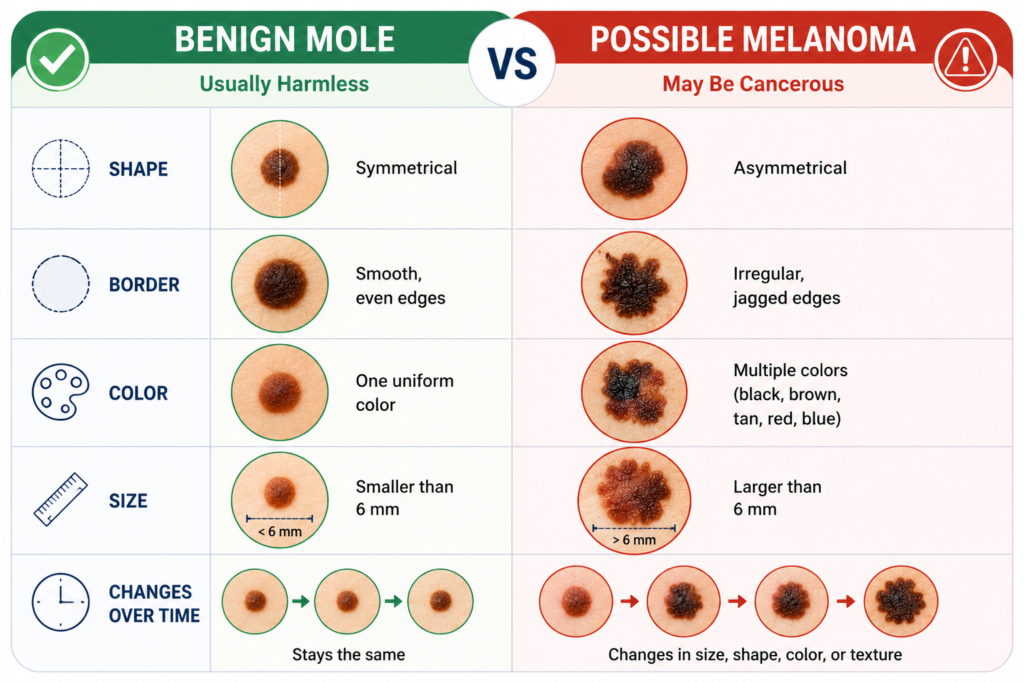
Healthy moles are usually symmetrical.
A suspicious mole may have one half that looks different from the other.
Examples include:
• One side larger than the other
• Uneven shape
• Irregular outline
Ask yourself:
“If I folded the mole in half, would both sides match?”
B — Border
Benign moles usually have smooth, clearly defined borders.
Melanoma may have:
• Ragged edges
• Blurred borders
• Notched appearance
• Uneven outline
Instead of a neat circle or oval, the edges may appear to fade into the surrounding skin.
C — Color
Most harmless moles are one uniform color.
Melanoma often contains multiple colors, including:
• Light brown
• Dark brown
• Black
• Red
• White
• Blue
Different shades within the same mole should be evaluated.
D — Diameter
Melanomas are often larger than 6 millimeters (about the size of a pencil eraser), although some may be smaller.
Any growing mole, regardless of size, deserves attention.
Remember:
Small melanomas can still be dangerous.
E — Evolving
This is often considered the most important warning sign.
A mole that changes over weeks or months should be examined.
Changes may include:
• Growing larger
• Changing color
• Becoming raised
• Bleeding
• Itching
• Crusting
• Developing pain
Even if a mole appears otherwise normal, any noticeable change is worth discussing with a healthcare professional.
Other Warning Signs
Not every melanoma follows the ABCDE rule.
Additional concerning signs include:
• A sore that will not heal
• A new dark spot appearing in adulthood
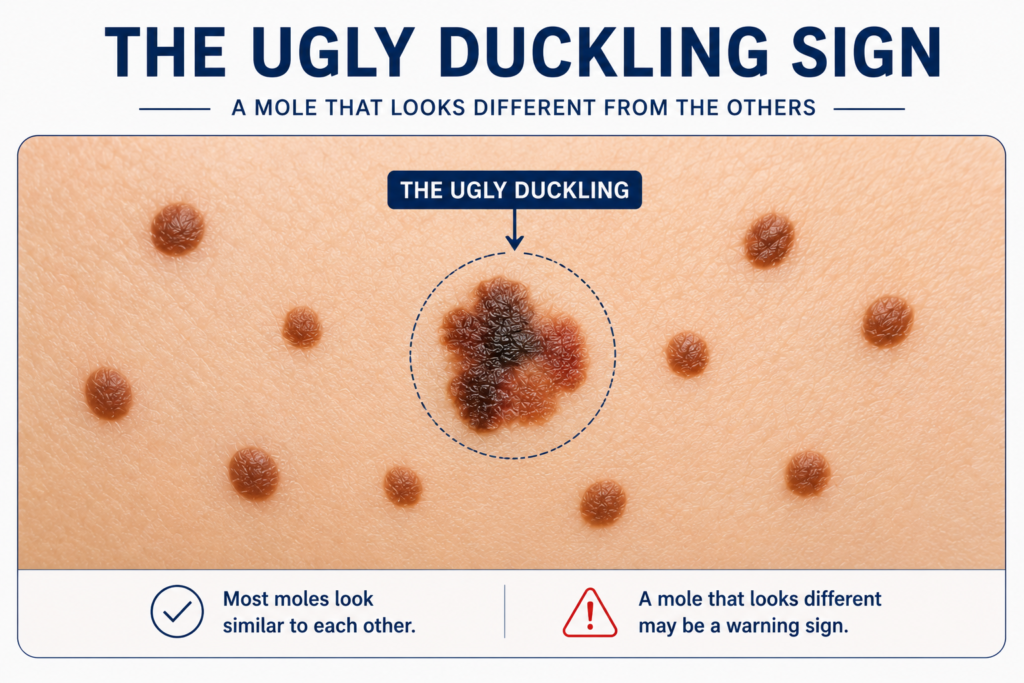
• A mole that looks very different from your other moles (“ugly duckling” sign)
• Bleeding without injury
• Persistent itching
• Tenderness
• Rapid enlargement
Melanoma can also develop under fingernails or toenails as a dark streak.
How Often Should You Check Your Skin?
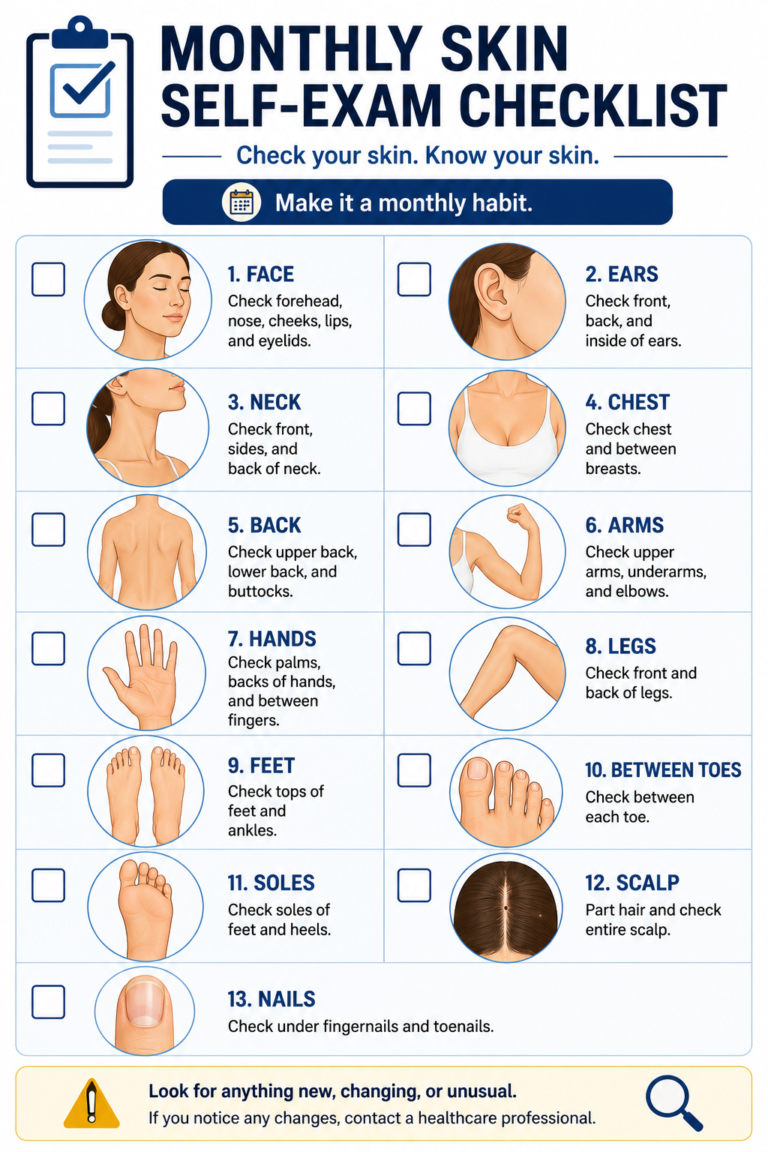
A monthly skin self-examination is recommended for many adults, especially those with increased risk factors.
When checking your skin:
• Use a full-length mirror.
• Examine your scalp using a comb or hair dryer.
• Look between your fingers and toes.
• Check the soles of your feet.
• Examine your back with a hand mirror or ask someone to help.
Taking photographs of moles can make it easier to notice subtle changes over time.
When Should You See a Healthcare Professional?
Schedule an evaluation if you notice:
• Any ABCDE warning sign
• A mole that changes over time
• A new mole appearing after age 30
• Bleeding or ulcerated lesions
• A spot that does not heal
• A mole that looks different from all your others
Your healthcare professional may recommend a skin examination and, if needed, a biopsy to determine whether the lesion is cancerous.
Frequently Asked Questions
Are all irregular moles melanoma?
No. Many atypical moles are benign. However, only a medical evaluation can determine whether a suspicious mole requires further testing.
Can melanoma develop without sun exposure?
Yes. Although ultraviolet radiation increases risk, melanoma can occur on areas rarely exposed to sunlight.
Is melanoma only found in older adults?
No. Melanoma can occur at any age and is one of the more common cancers diagnosed in younger adults.
Can darker skin develop melanoma?
Yes. While melanoma is less common in people with darker skin, it can still occur and may appear on the palms, soles, or beneath the nails.
What Should You Do Next?
Checking your skin regularly is one of the simplest ways to detect melanoma early. If you notice a mole that is changing, has irregular features, or simply looks different from the rest, don’t ignore it. Early evaluation can make a significant difference in treatment outcomes.
If you’re ever unsure whether a mole is concerning, it’s always safer to have it examined by a healthcare professional rather than waiting for additional changes.