
Tick Bite Prophylaxis: When Antibiotics May Help Prevent Lyme Disease
What Is Tick Bite Prophylaxis?
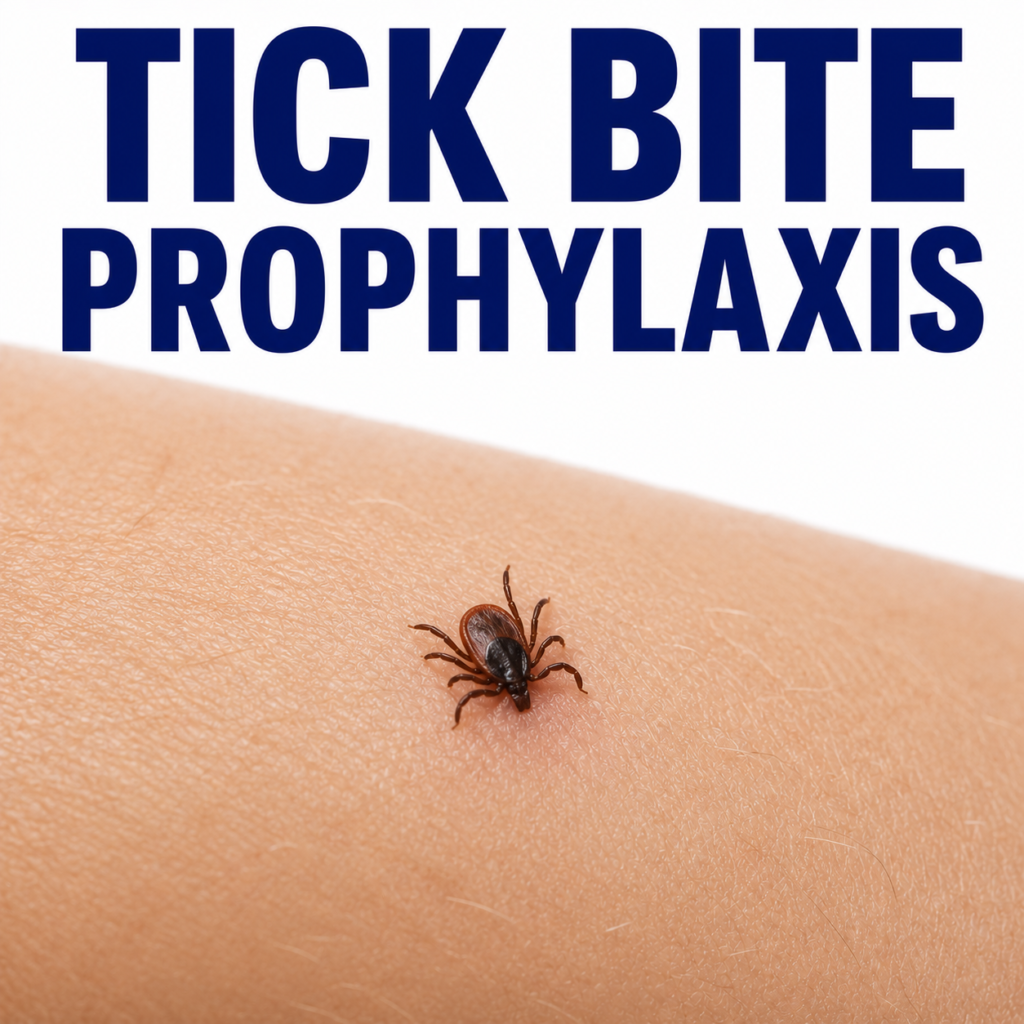
Tick bite prophylaxis refers to taking an antibiotic after a high risk tick bite to reduce the chance of developing Lyme disease.
Preventive antibiotics are not recommended for every tick bite. They are used only when specific criteria are met because most tick bites do not transmit Lyme disease.
What Should You Do After a Tick Bite?
If you find a tick attached to your skin:
- Remove it as soon as possible using fine tipped tweezers.
- Grasp the tick close to the skin.
- Pull upward with steady, even pressure.
- Clean the bite area with soap and water or rubbing alcohol.
- Do not crush the tick with your fingers.
Avoid using petroleum jelly, nail polish, heat, or other home remedies to remove a tick because these methods are not recommended.
Tick Bite Prophylaxis at a Glance
| Preventive Antibiotics Usually Recommended | Preventive Antibiotics Usually Not Recommended |
|---|---|
| Blacklegged (deer) tick | Tick is not a blacklegged tick |
| Tick attached for at least 36 hours | Tick attached for less than 36 hours or duration is clearly short |
| Tick removed within the last 72 hours | More than 72 hours since removal |
| Bite occurred in an area where Lyme disease is common | Bite occurred in a low risk area |
| Doxycycline is safe for the patient | Allergy, certain pregnancy situations, or other contraindications |
All of these criteria should generally be met before preventive antibiotics are recommended.
Did You Know?
Removing an attached tick as soon as possible greatly reduces the chance of Lyme disease because transmission usually requires the tick to remain attached for an extended period.
When Are Preventive Antibiotics Recommended?
Your healthcare provider may recommend a single dose of doxycycline if:
- The tick is an Ixodes (blacklegged or deer) tick
- The tick was attached for 36 hours or longer
- The tick was removed within the past 72 hours
- The bite occurred in an area where Lyme disease is common
- Doxycycline is safe for you
If any of these conditions are not met, careful observation is usually recommended instead of antibiotics.
Who Is More Likely to Benefit From Prophylaxis?
You may benefit if you:
- Were bitten in the Northeast, Mid Atlantic, or Upper Midwest where Lyme disease is common
- Removed an engorged blacklegged tick
- Seek medical care within 72 hours after removing the tick
- Have no reason to avoid doxycycline
Preventive antibiotics are not recommended to prevent other tick borne illnesses such as anaplasmosis, babesiosis, ehrlichiosis, or Rocky Mountain spotted fever.
What Symptoms Should You Watch For?
Even if you receive preventive antibiotics, monitor for symptoms over the next several weeks.
Watch for:
- Expanding rash, especially a bull’s eye rash
- Fever
- Chills
- Fatigue
- Headache
- Muscle aches
- Joint pain
- Swollen lymph nodes
These symptoms should prompt evaluation by a healthcare provider because Lyme disease can still occur despite prophylaxis.
How Can You Help Prevent Tick Bites?
| Prevention Tips |
| Wear long sleeves and long pants in wooded or grassy areas |
| Use an EPA registered insect repellent |
| Treat clothing and gear with permethrin |
| Stay on cleared trails |
| Check your body, clothing, children, and pets for ticks after spending time outdoors |
| Shower soon after coming indoors |
| Remove attached ticks promptly |
Preventing tick bites remains the most effective way to avoid Lyme disease.
Myths vs. Facts
| Myth | Fact |
| Every tick bite requires antibiotics. | Most tick bites do not require preventive antibiotics. |
| All ticks carry Lyme disease. | Only certain blacklegged ticks can transmit the bacteria that causes Lyme disease. |
| If there is no rash, I cannot have Lyme disease. | Some people with Lyme disease never develop the classic bull’s eye rash. |
| A tick must be burned or covered with petroleum jelly before removal. | Prompt removal with fine tipped tweezers is the safest and recommended method. |
When Should You See a Healthcare Provider?
Schedule an appointment if you:
- Remove an engorged blacklegged tick
- Think the tick was attached for more than 36 hours
- Live in or visited an area where Lyme disease is common
- Develop a rash or flu like symptoms within several weeks after a tick bite
- Are unsure whether the tick requires preventive treatment
Seek urgent medical care if you develop:
- Facial weakness
- Severe headache with neck stiffness
- Chest pain or fainting
- Shortness of breath
- Confusion
These symptoms may indicate complications or another serious tick borne illness.
Frequently Asked Questions
Should everyone receive antibiotics after a tick bite?
No. Preventive antibiotics are recommended only for certain high risk blacklegged tick bites that meet specific criteria.
Can antibiotics prevent all tick borne diseases?
No. Preventive doxycycline is intended only to reduce the risk of Lyme disease. It has not been shown to prevent diseases such as Rocky Mountain spotted fever, ehrlichiosis, babesiosis, or anaplasmosis.
Should I save the tick?
If possible, placing the tick in a sealed container or clear plastic bag may help with identification, although testing the tick itself is not routinely recommended.
Can I get Lyme disease if I took preventive doxycycline?
Yes. Preventive treatment lowers the risk but does not eliminate it completely. Continue watching for symptoms during the following several weeks.
What Should You Do Next?
If you discover a tick attached to your skin, remove it promptly and note when it was removed. If you believe it was a blacklegged tick attached for at least 36 hours and it has been less than 72 hours since removal, contact a healthcare provider promptly to determine whether preventive doxycycline is appropriate. Continue monitoring for rash, fever, or flu like symptoms for several weeks after any tick bite.
References
Centers for Disease Control and Prevention. Preventing Lyme Disease
https://www.cdc.gov/lyme/prevention/
Centers for Disease Control and Prevention. Treatment and Intervention for Lyme Disease
https://www.cdc.gov/lyme/treatment/
Centers for Disease Control and Prevention. Lyme Disease Prophylaxis After Tick Bite (Clinical Poster)
https://www.cdc.gov/lyme/media/pdfs/Lyme-Disease-Prophylaxis-After-Tick-Bite-Poster.pdf
Centers for Disease Control and Prevention. Tickborne Diseases of the United States: A Reference Manual for Healthcare Providers
https://www.cdc.gov/ticks/media/pdfs/2025/03/tickborne-diseases-manual-508.pdf
Mayo Clinic. Lyme Disease: Symptoms and Causes
https://www.mayoclinic.org/diseases-conditions/lyme-disease/symptoms-causes/syc-20374651