
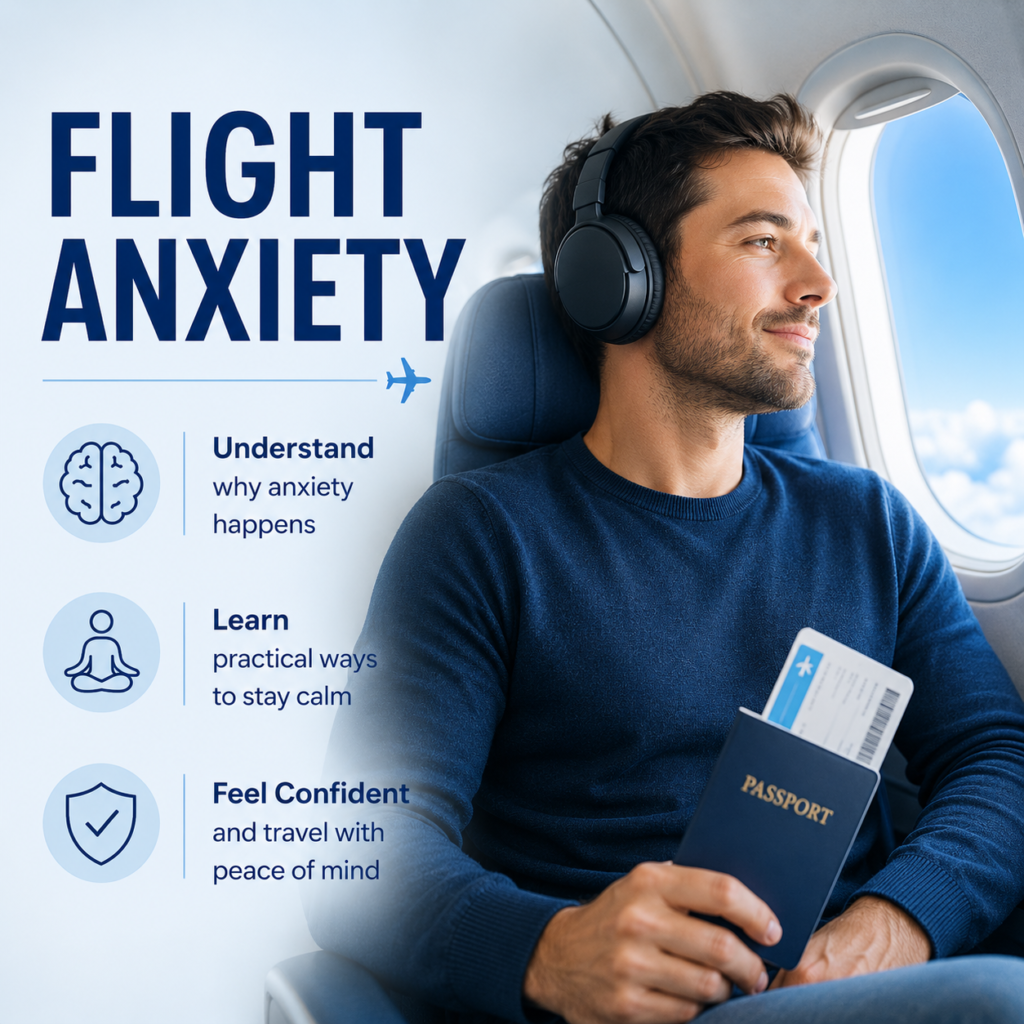
Flight Anxiety: Understanding the Fear of Flying and How to Manage It
For many people, flying is an exciting part of traveling. For others, it can cause intense worry, panic, or even prevent them from taking trips altogether. Flight anxiety, also called a fear of flying or aviophobia, ranges from mild nervousness before takeoff to severe panic attacks that make boarding an aircraft feel impossible.
The good news is that flight anxiety is common and highly manageable. Learning why it happens and using practical coping strategies can help make air travel more comfortable and less stressful.
What Is Flight Anxiety?
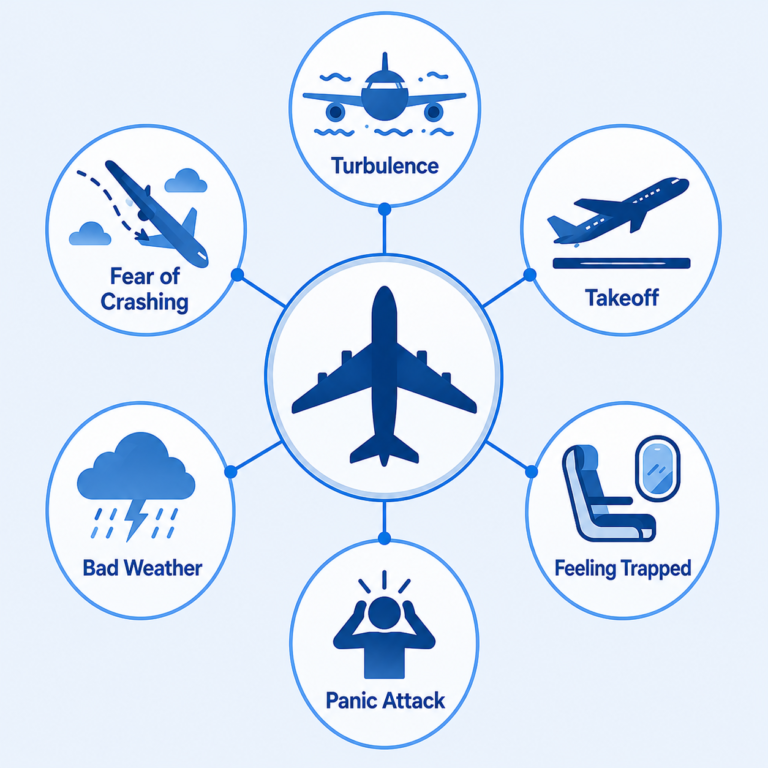
Image shows various of treatment options for hormonal acne
Flight anxiety is a fear or intense nervousness related to air travel. It may involve fear of:
- Crashing
- Turbulence
- Heights
- Feeling trapped
- Panic attacks during the flight
- Losing control
- Medical emergencies while in the air
Some people are anxious only during takeoff or turbulence, while others begin worrying days or even weeks before their trip.
How Common Is It?
Fear of flying is one of the most common specific phobias.
Studies suggest that approximately 25% to 40% of adults experience some degree of flight anxiety, although only a smaller percentage have severe symptoms that significantly interfere with travel.
Symptoms of Flight Anxiety
Symptoms can begin before arriving at the airport or during the flight.
Physical Symptoms
- Rapid heartbeat
- Sweating
- Shaking
- Shortness of breath
- Chest tightness
- Nausea
- Dizziness
- Upset stomach
- Muscle tension
Emotional Symptoms
- Feeling overwhelmed
- Fear of dying
- Fear of losing control
- Irritability
- Restlessness
- Feeling trapped
- Constant worry
Why Does Flight Anxiety Happen?
Several factors may contribute.
| Cause | Examples |
|---|---|
| Fear of crashes | Worry about aviation accidents |
| Turbulence | Misinterpreting normal aircraft movement as danger |
| Claustrophobia | Feeling confined in the cabin |
| Fear of heights | Anxiety about being far above the ground |
| Previous bad experience | Past turbulent flight or panic attack |
| Generalized anxiety | Anxiety extending beyond flying |
| Loss of control | Being unable to leave the aircraft |
Is Flying Actually Safe?
Commercial aviation is one of the safest forms of transportation.
Modern aircraft undergo extensive maintenance, pilots receive rigorous training, and multiple safety systems are built into every flight. Turbulence, while uncomfortable, is a normal part of flying and rarely poses a danger to a properly operated commercial aircraft.
Understanding these facts can help put anxious thoughts into perspective.
Tips to Reduce Flight Anxiety
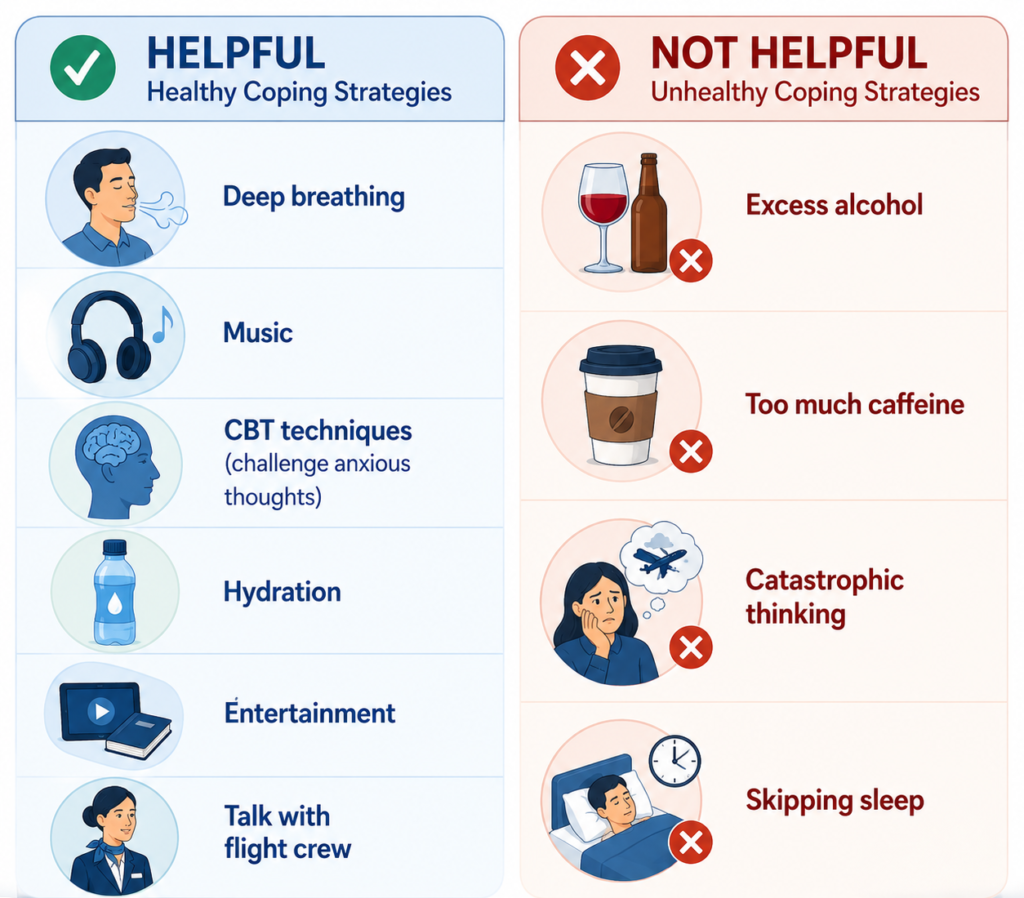
Image shows tips to help and avoid before and during flight
Before Your Flight
Preparing ahead of time can reduce uncertainty and help you feel more in control.
Consider these strategies:
- Book nonstop flights when possible.
- Choose a seat where you feel most comfortable.
- Arrive at the airport early.
- Get adequate sleep the night before.
- Eat a light meal before traveling.
- Stay hydrated.
- Avoid excessive caffeine and alcohol.
During the Flight
Helpful coping techniques include:
1. Controlled Breathing
Try slow breathing:
- Inhale for 4 seconds
- Hold for 2 seconds
- Exhale for 6 seconds
Repeat several times.
2. Progressive Muscle Relaxation
Slowly tighten and relax muscle groups from your feet to your shoulders to reduce physical tension.
3. Distraction
Bring activities such as:
- Movies
- Music
- Podcasts
- Books
- Crossword puzzles
- Games
Keeping your mind occupied can reduce anxious thoughts.
4. Challenge Anxious Thoughts
Remind yourself:
- Turbulence is expected.
- Pilots are trained for changing weather conditions.
- Commercial aviation has an excellent safety record.
- Anxiety does not mean danger is present.
Can Medication Help?
Some people benefit from medication, particularly if their anxiety is severe or occurs despite other coping strategies.
Your healthcare provider may recommend:
- Anti-anxiety medications for occasional use
- Certain antidepressants for persistent anxiety disorders
These medications should only be taken under medical supervision. If prescribed for flight anxiety, it’s important to try the medication before your travel day so you know how it affects you. Avoid combining anti-anxiety medications with alcohol.
Should You Drink Alcohol?
Although alcohol may seem relaxing, it can:
- Increase dehydration
- Worsen sleep quality
- Increase anxiety after its effects wear off
- Interact with anxiety medications
- Reduce alertness during emergencies
Alcohol is generally not recommended as a treatment for flight anxiety.
Therapy for Fear of Flying
Many people experience long-term improvement through therapy.
Common approaches include:
- Cognitive behavioral therapy (CBT)
- Exposure therapy
- Virtual reality exposure therapy
- Relaxation training
- Mindfulness techniques
Some airlines and medical centers also offer fear-of-flying courses.
When Should You Talk to Your Healthcare Provider?
Consider seeking medical advice if:
- You avoid travel because of fear.
- Panic attacks occur during flights.
- Anxiety affects work or family life.
- Self-help strategies are not enough.
- You think medication may be appropriate.
Flight Anxiety Coping Checklist
☐ Get enough sleep before your trip
☐ Arrive early at the airport
☐ Stay hydrated
☐ Limit caffeine and alcohol
☐ Practice deep breathing
☐ Download movies or music
☐ Remind yourself that turbulence is normal
☐ Discuss medication with your healthcare provider if needed
When Should You Seek Immediate Medical Care?
Seek medical attention if you experience:
- Chest pain that could indicate a heart problem
- Severe shortness of breath unrelated to anxiety
- Loss of consciousness
- Persistent confusion
- Symptoms that continue well after the anxiety episode has resolved
These symptoms should not automatically be assumed to be caused by anxiety.
If fear of flying is preventing you from traveling or causing significant distress, talk with your healthcare provider. Many people benefit from a combination of education, relaxation techniques, therapy, and, in some cases, medication. With the right approach, flight anxiety can often be managed successfully, allowing you to travel with greater confidence and peace of mind.
References
American Psychiatric Association. Specific Phobia. https://www.psychiatry.org/patients-families/specific-phobia
National Institute of Mental Health. Aviophobia. https://www.apa.org/monitor/2025/09/aviophobia-fear-flying