
Nicotine Dependence: Symptoms, Treatment, and Recovery
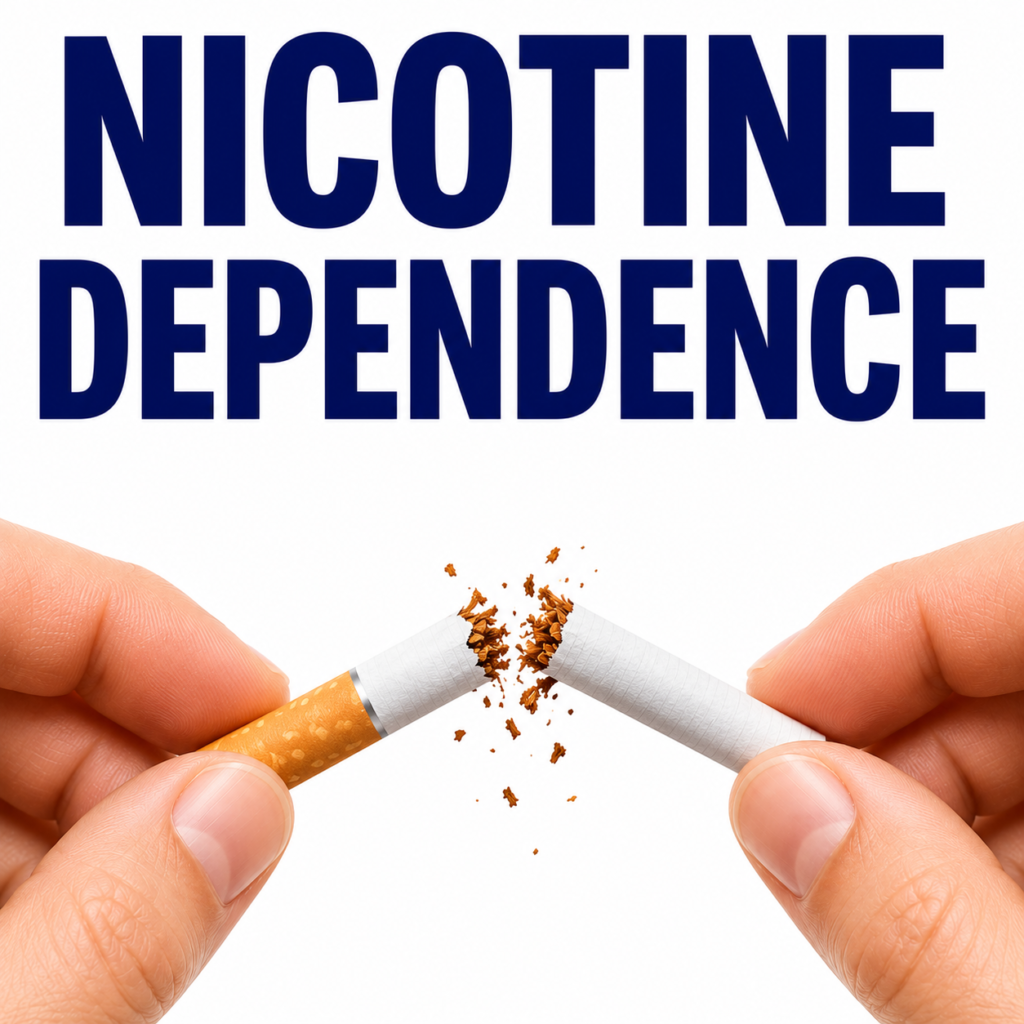
What Is Nicotine Dependence?
Nicotine dependence is a chronic medical condition in which your body craves nicotine and you have difficulty stopping its use.
Nicotine rapidly reaches the brain, where it stimulates the release of dopamine, a chemical involved in pleasure and reward. Over time, the brain adapts to nicotine, making it increasingly difficult to quit without experiencing withdrawal symptoms.
Nicotine dependence can occur from:
- Cigarettes
- Cigars
- Pipes
- Smokeless tobacco
- Electronic cigarettes and vaping products
- Nicotine pouches and other nicotine containing products
Common Signs and Symptoms
You may have nicotine dependence if you:
- Feel strong cravings for nicotine
- Smoke or use nicotine shortly after waking up
- Continue using nicotine despite health problems
- Have difficulty quitting despite repeated attempts
- Experience withdrawal symptoms when trying to stop
- Avoid places where you cannot use nicotine
Common nicotine withdrawal symptoms include:
- Irritability
- Anxiety
- Difficulty concentrating
- Restlessness
- Trouble sleeping
- Increased appetite
- Depressed mood
- Strong cravings for nicotine
Nicotine Dependence at a Glance
| Mild Dependence | More Severe Dependence |
|---|---|
| Occasional cravings | Frequent or constant cravings |
| Can delay nicotine use | Uses nicotine soon after waking |
| Few withdrawal symptoms | Significant withdrawal symptoms |
| Easier to quit | Often requires medication and counseling |
Did You Know?
Nicotine dependence is considered a chronic, relapsing medical condition, similar to many other chronic diseases. Many people make several quit attempts before quitting successfully, and each attempt provides valuable experience for future success.
What Causes Nicotine Dependence?
Nicotine reaches the brain within seconds after inhalation or absorption.
Repeated nicotine exposure changes the brain’s reward pathways, leading to:
- Increased nicotine tolerance
- Frequent cravings
- Withdrawal symptoms when nicotine levels fall
- Habit formation linked to daily routines
Common triggers include:
- Drinking coffee
- Driving
- Stress
- Alcohol
- Social situations
- Taking work breaks
Who Is More Likely to Develop Nicotine Dependence?
Your risk is higher if you:
- Started smoking or vaping at a young age
- Have family members who use tobacco
- Live with people who smoke
- Have untreated anxiety or depression
- Are exposed to frequent smoking cues or triggers
Anyone who regularly uses nicotine products can develop dependence.
How Is Nicotine Dependence Treated?
The most effective treatment combines behavioral counseling with medication.
| Treatment | How It Helps |
| Nicotine patch | Provides steady nicotine to reduce withdrawal |
| Nicotine gum or lozenges | Controls breakthrough cravings |
| Nicotine inhaler or nasal spray | Prescription nicotine replacement options |
| Varenicline | Reduces cravings and decreases the rewarding effects of nicotine |
| Bupropion SR | Reduces withdrawal symptoms and cravings |
| Individual or group counseling | Helps identify triggers and build coping skills |
| Telephone quitlines and digital programs | Provide coaching and ongoing support |
Using medication together with counseling is more effective than either approach alone.
How Can You Overcome Nicotine Dependence?
| Helpful Strategies |
| Set a quit date |
| Identify situations that trigger nicotine use |
| Remove tobacco and vaping products from your environment |
| Use medications exactly as prescribed |
| Stay physically active |
| Ask family and friends for support |
| Use a quitline or smoking cessation program |
| Learn from setbacks instead of giving up |
Recovery often takes time, and occasional setbacks do not mean treatment has failed.
Myths vs. Facts
| Myth | Fact |
| Nicotine dependence is simply a lack of willpower. | Nicotine dependence is a medical condition caused by changes in the brain. |
| Quitting “cold turkey” is the only successful way to quit. | Many people are more successful when they use medication and counseling together. |
| If I relapse, I’ll never quit. | Most successful former smokers made multiple quit attempts before quitting permanently. |
| Nicotine replacement therapy simply replaces one addiction with another. | Nicotine replacement therapy safely reduces withdrawal symptoms and helps many people quit successfully. |
When Should You See a Healthcare Provider?
Schedule an appointment if you:
- Want help quitting nicotine
- Have been unable to quit after several attempts
- Experience severe withdrawal symptoms
- Smoke or vape during pregnancy
- Have heart or lung disease and continue using nicotine
- Want to discuss prescription medications
Your healthcare provider can help create a personalized quit plan and recommend medications and counseling that improve your chances of success.
Frequently Asked Questions
Is nicotine dependence a disease?
Yes. Nicotine dependence is recognized as a chronic medical condition that affects brain chemistry and often requires ongoing treatment.
How long does nicotine withdrawal last?
Withdrawal symptoms usually begin within the first day after quitting, often peak during the first several days, and gradually improve over the following weeks, although cravings may last longer.
Can I quit without medication?
Some people do, but medications combined with counseling significantly improve the chances of long term success.
Is vaping less addictive than cigarettes?
Many vaping products deliver enough nicotine to cause or maintain nicotine dependence. People who vape can experience the same withdrawal symptoms and cravings seen with cigarette smoking.
What Should You Do Next?
If you think you have nicotine dependence, know that effective treatments are available. Talk with your healthcare provider about creating a quit plan that includes counseling, medication, or both. Every attempt to quit brings you closer to becoming nicotine free, and quitting at any age provides meaningful health benefits.
References
Mayo Clinic. Nicotine Dependence: Symptoms and Causes
https://www.mayoclinic.org/diseases-conditions/nicotine-dependence/symptoms-causes/syc-20351584
Mayo Clinic. Nicotine Dependence: Diagnosis and Treatment
https://www.mayoclinic.org/diseases-conditions/nicotine-dependence/diagnosis-treatment/drc-20351590
Centers for Disease Control and Prevention. Clinical Interventions to Treat Tobacco Use and Dependence Among Adults
https://www.cdc.gov/tobacco/hcp/patient-care-settings/clinical.html
Centers for Disease Control and Prevention. How to Quit Smoking
https://www.cdc.gov/tobacco/about/how-to-quit.html
Mayo Clinic. Quitting Smoking: 10 Ways to Resist Tobacco Cravings
https://www.mayoclinic.org/diseases-conditions/nicotine-dependence/in-depth/nicotine-craving/art-20045454