
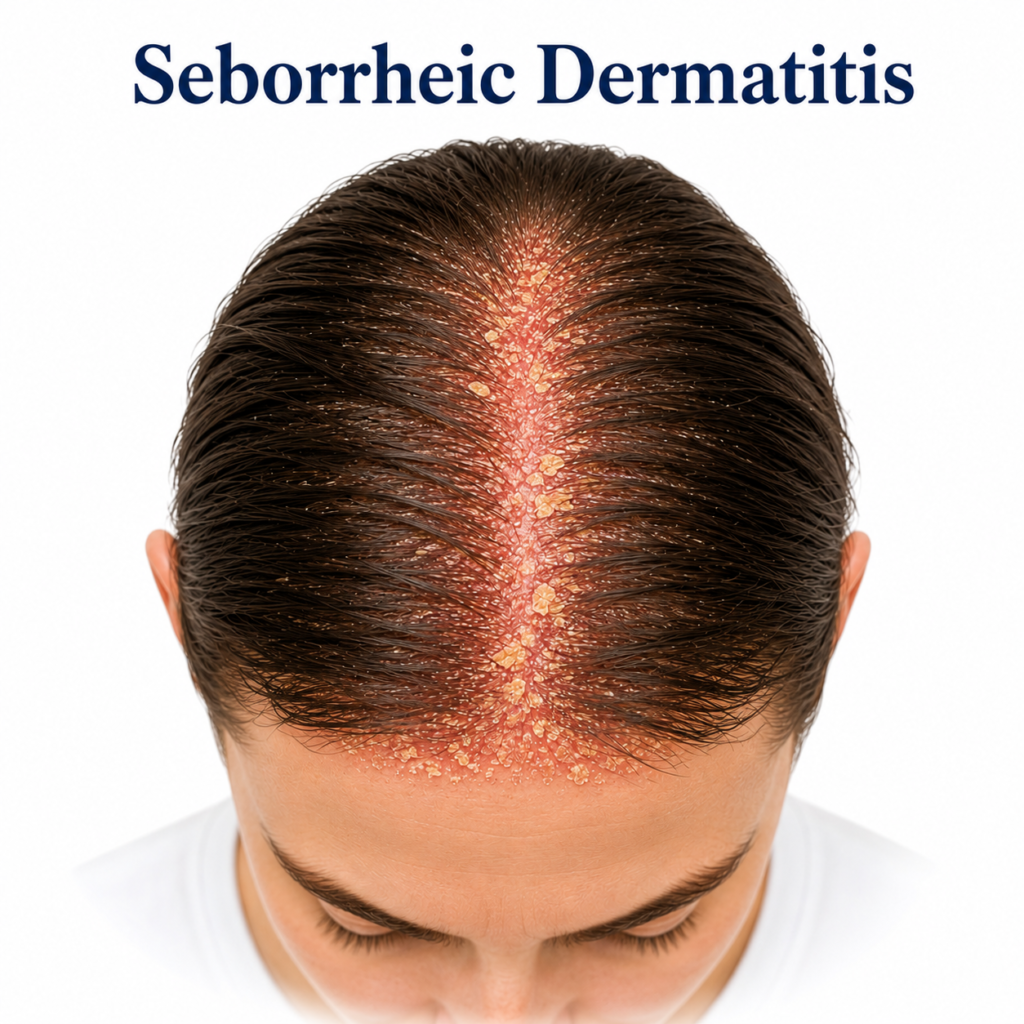
Seborrheic Dermatitis Explained: Why It Happens and How to Treat It
Seborrheic dermatitis is a common, long-term inflammatory skin condition that causes redness, flaking, and greasy scales. It most often affects areas of the body that contain many oil-producing (sebaceous) glands, including the scalp, face, ears, chest, and upper back.
Many people mistake seborrheic dermatitis for simple dandruff or dry skin, but it is actually a chronic condition that tends to come and go over time. While there is no permanent cure, effective treatments can usually keep symptoms well controlled.
What Is Seborrheic Dermatitis?
Seborrheic dermatitis is an inflammatory skin disorder believed to result from a combination of:
• Overgrowth of a naturally occurring skin yeast called Malassezia
• Increased oil (sebum) production
• Individual immune system responses
• Genetic susceptibility
It is not contagious, does not result from poor hygiene, and cannot be spread to others.
On the scalp, mild seborrheic dermatitis appears as dandruff. More severe cases can cause thick scales, redness, itching, and inflammation.
Common Symptoms
Symptoms vary from mild to severe and often fluctuate over time.
Common symptoms include:
• White or yellow flaky scales
• Greasy-looking skin
• Red patches
• Itching
• Burning sensation
• Scalp tenderness
• Crusting
• Thick plaques in severe cases
Symptoms often worsen during:
• Winter months
• Stress
• Illness
• Sleep deprivation
• Hormonal changes
Where Does It Occur?
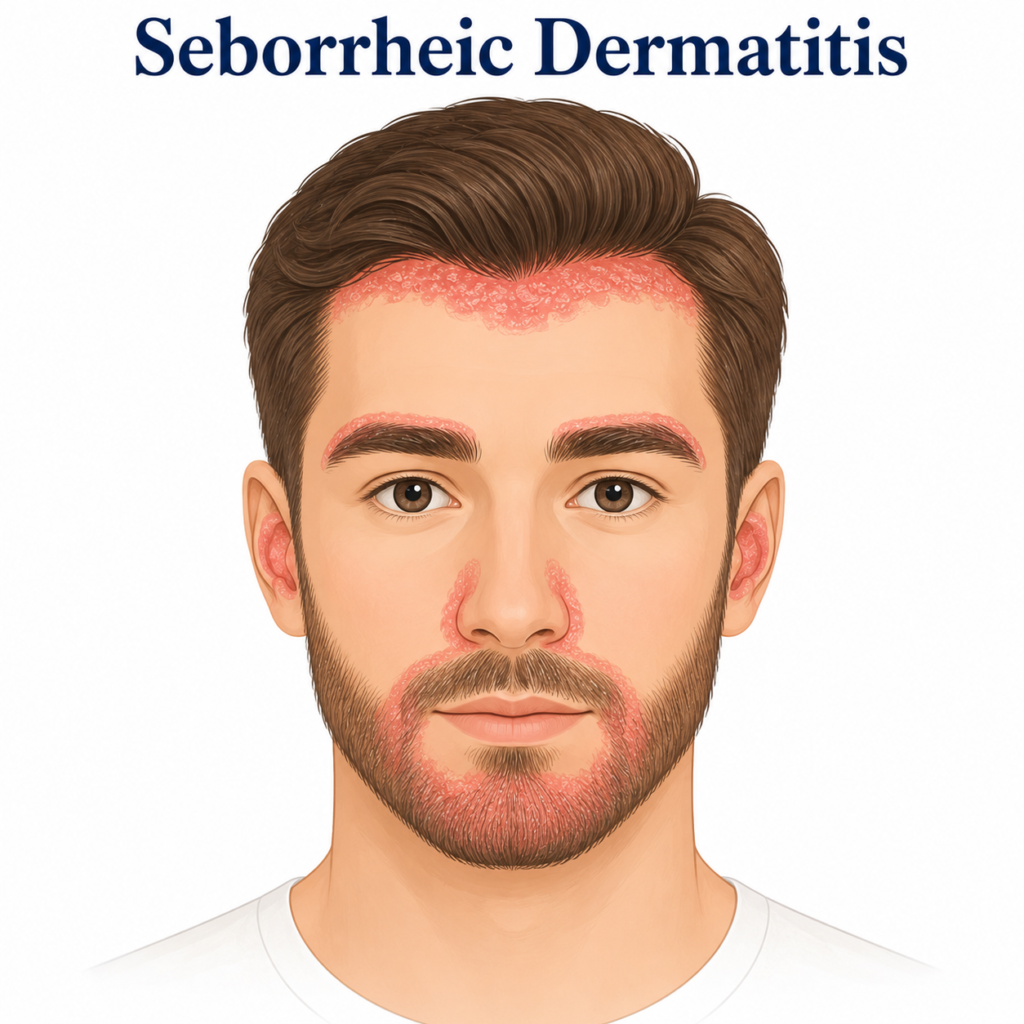
Image of common distribution of seborrheic dermatitis of face
Seborrheic dermatitis commonly affects oily areas of the body.
Typical locations include:
1. Scalp
The most common location.
May appear as:
• Dandruff
• Thick scalp plaques
• Itchy scalp
• Greasy scales
2. Eyebrows
Flaking between and around the eyebrows.
3. Sides of the Nose
Redness and scaling around the nasal folds.
4. Behind the Ears
Cracking, redness, and flaky skin.
5. Beard Area
Flakes and redness beneath facial hair.
6. Chest
Pink or red scaly patches over the upper chest.
7. Upper Back
Occasionally affects the shoulder blades and upper back.
What Causes Seborrheic Dermatitis?
The exact cause is unknown, but several factors contribute.
Malassezia Yeast
A normal yeast that lives on healthy skin.
In susceptible individuals, the immune system reacts to the yeast, causing inflammation.
Excess Oil Production
Seborrheic dermatitis develops most often in oily areas of the skin.
Immune Response
The immune system appears to overreact to normal skin organisms.
Genetics
It often runs in families.
Risk Factors
Anyone can develop seborrheic dermatitis, but it is more common in:
• Infants (cradle cap)
• Adults between 30 and 60 years old
• Men
• People with oily skin
• Those with a family history
• Individuals with neurological disorders
• People living with HIV
• Patients taking certain medications
Is It the Same as Dandruff?
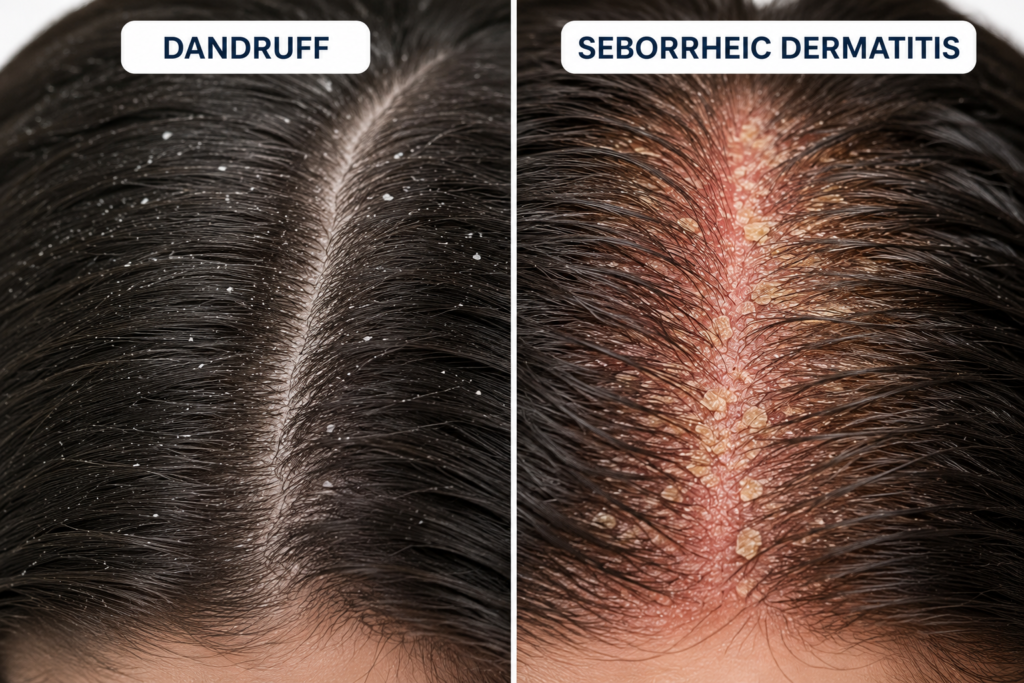
Image shows difference of dandruff and seborrheic dermatitis
Not exactly.
Dandruff is considered the mildest form of seborrheic dermatitis.
| Dandruff | Seborrheic Dermatitis |
|---|---|
| Mild flaking | Flaking plus redness |
| Usually scalp only | May affect face and body |
| Minimal inflammation | Significant inflammation |
| Mild itching | Moderate to severe itching |
| No skin redness | Red patches common |
Seborrheic Dermatitis vs. Psoriasis
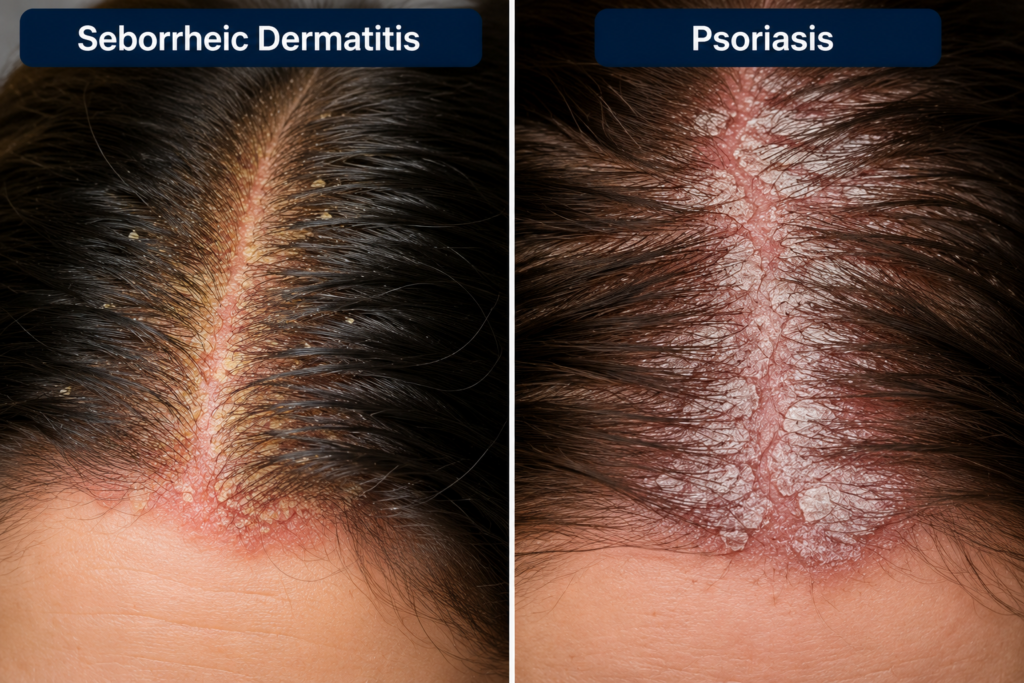
Image shows difference of seborrheic dermatitis and psoriasis of scalp
These conditions may appear similar.
| Seborrheic Dermatitis | Psoriasis |
|---|---|
| Greasy yellow scales | Thick silvery scales |
| Ill-defined borders | Well-defined plaques |
| Usually oily skin | Dry plaques |
| Common around nose and eyebrows | Often elbows and knees |
| Usually less thick | Thick raised plaques |
Some people have sebopsoriasis, which combines features of both conditions.
How Is It Diagnosed?
A healthcare professional can usually diagnose seborrheic dermatitis by examining the skin.
Additional testing is rarely needed unless another condition is suspected.
Occasionally a skin scraping or biopsy may be recommended if the diagnosis is uncertain.
Treatment
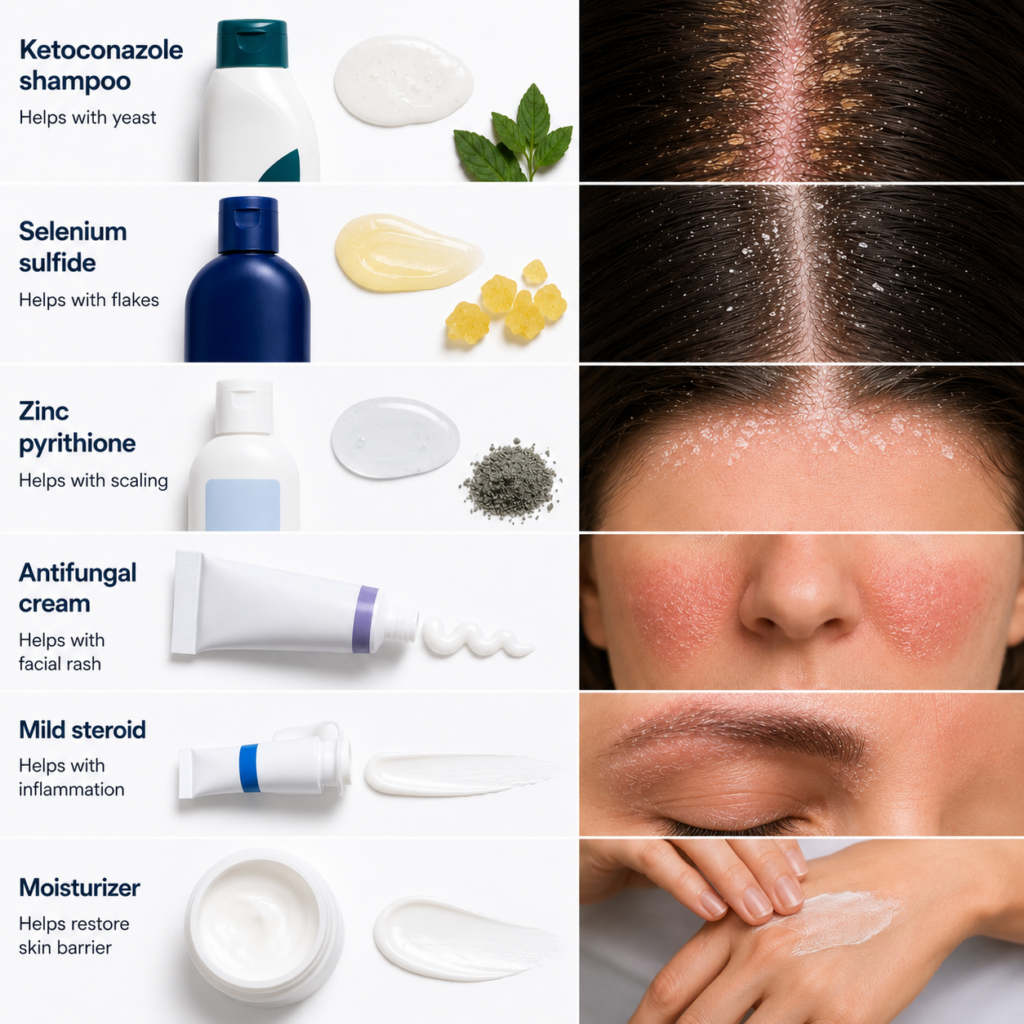
Image of treatment options
Treatment depends on the location and severity.
Since seborrheic dermatitis is chronic, treatment focuses on controlling symptoms rather than curing the condition.
1. Medicated Shampoos
Often the first treatment for scalp involvement.
Common ingredients include:
• Ketoconazole
• Selenium sulfide
• Zinc pyrithione
• Coal tar
• Salicylic acid
Many people alternate between two different medicated shampoos for better long-term control.
2. Antifungal Creams
These reduce Malassezia yeast on the skin.
Examples include:
• Ketoconazole cream
• Ciclopirox cream
These are commonly used for facial involvement.
3. Topical Corticosteroids
Low-potency steroid creams can reduce redness and itching during flare-ups.
Because prolonged use may cause skin thinning, they should only be used for short periods under medical guidance.
4. Calcineurin Inhibitors
Prescription medications such as tacrolimus or pimecrolimus may be recommended for sensitive areas like the face and eyelids, especially when repeated steroid use is not appropriate.
5. Moisturizers
Gentle moisturizers help restore the skin barrier and reduce irritation.
Choose fragrance-free products designed for sensitive skin.
Daily Skin Care Tips
Good skin care can reduce flare-ups.
Helpful habits include:
• Wash affected areas gently
• Use lukewarm instead of hot water
• Avoid harsh soaps
• Use fragrance-free moisturizers
• Shampoo regularly
• Avoid scratching
• Manage stress
• Get adequate sleep
Can Diet Affect Seborrheic Dermatitis?
There is no specific diet proven to cure seborrheic dermatitis.
However, some people notice improvement by eating a balanced diet rich in:
• Fruits
• Vegetables
• Whole grains
• Omega-3 fatty acids
Limiting excess alcohol and highly processed foods may also support overall skin health, although evidence is limited.
Possible Complications
Most complications are mild but can include:
• Secondary bacterial infection from scratching
• Hair shedding due to scalp inflammation
• Skin irritation from treatments
• Sleep disturbance from itching
• Reduced self-confidence
Hair loss related to seborrheic dermatitis is usually temporary and improves once inflammation is controlled.
Can It Be Prevented?
Seborrheic dermatitis cannot usually be prevented completely.
However, you can reduce flare-ups by:
• Using medicated shampoo as directed
• Keeping the scalp clean
• Managing stress
• Avoiding harsh skin products
• Treating symptoms early
• Following your treatment plan consistently
When Should You See a Healthcare Provider?
Seek medical evaluation if:
• Symptoms are severe
• Over-the-counter treatments have not helped after several weeks
• The rash is spreading
• There is pain, pus, or signs of infection
• Large areas of the body are affected
• Symptoms interfere with sleep or daily life
• The diagnosis is uncertain

Frequently Asked Questions
Is seborrheic dermatitis contagious?
No. It cannot be spread from one person to another.
Is it caused by poor hygiene?
No. Cleanliness does not cause or prevent seborrheic dermatitis, although regular cleansing may help reduce symptoms.
Will I always have it?
Many people experience recurrent flare-ups over months or years. Symptoms often improve with consistent treatment.
Can seborrheic dermatitis cause permanent hair loss?
No. Hair loss is usually temporary and related to inflammation or scratching. Hair typically grows back once the condition is under control.
Is dandruff the same thing?
Dandruff is considered a mild form of seborrheic dermatitis that mainly affects the scalp.
Key Takeaways
• Seborrheic dermatitis is a common chronic inflammatory skin condition.
• It commonly affects the scalp, face, ears, chest, and upper back.
• Symptoms include greasy flakes, redness, itching, and scaling.
• It is linked to an inflammatory response to Malassezia yeast and excess oil production.
• Medicated shampoos, antifungal creams, and anti-inflammatory treatments are highly effective for most people.
• Regular skin care and maintenance treatment help reduce future flare-ups.
What Should You Do Next?
If you have persistent dandruff, scalp itching, or recurring red, flaky skin around your face or scalp, schedule an evaluation with your healthcare provider or a dermatologist. Early diagnosis can help rule out other skin conditions and identify the most effective treatment plan. Although seborrheic dermatitis often comes and goes, consistent treatment and good skin care can significantly reduce symptoms and improve quality of life.
References
American Academy of Dermatology. Seborrheic dermatitis: Overview. https://www.aad.org/public/diseases/a-z/seborrheic-dermatitis-overview
National Eczema Association. Seborrheic Dermatitis. https://nationaleczema.org/types-of-eczema/seborrheic-dermatitis/
Mayo Clinic. Seborrheic dermatitis: Symptoms and causes. https://www.mayoclinic.org/diseases-conditions/seborrheic-dermatitis