
Athlete's Foot: Symptoms, Causes, Treatment, and Prevention
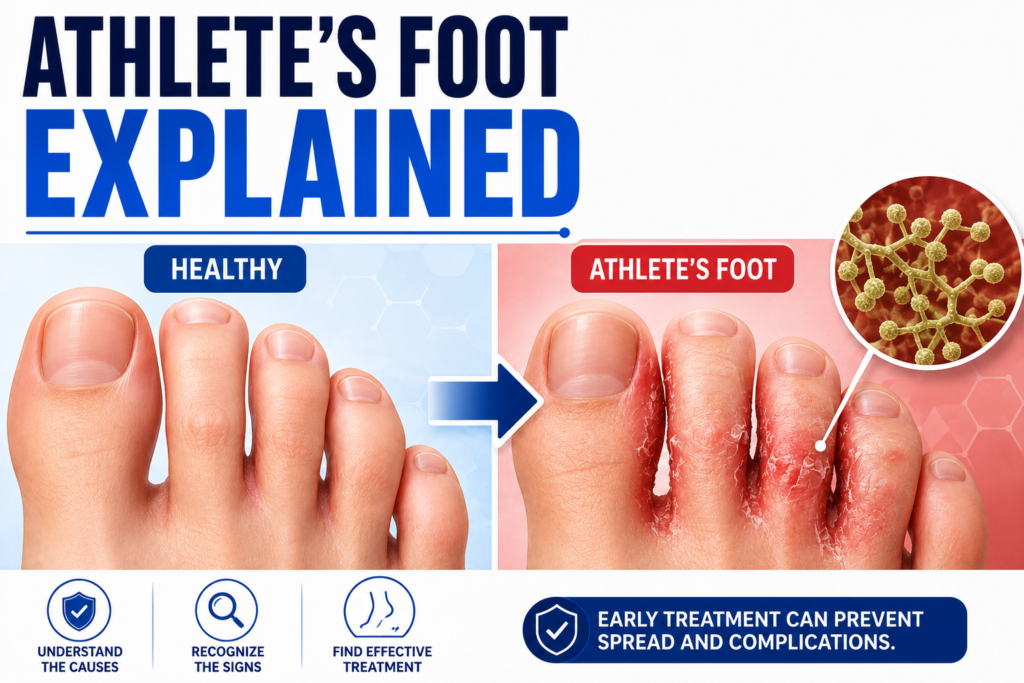
What Is Athlete’s Foot?
Athlete’s foot, also called tinea pedis, is a fungal infection of the skin on the feet.
It is caused by fungi called dermatophytes, which thrive in warm, moist environments.
Although the infection commonly starts between the toes, it can also spread to the soles, sides of the feet, and even the toenails if left untreated.
Common Symptoms
Symptoms may include:
- Itching between the toes
- Burning or stinging sensation
- Redness
- Peeling or flaky skin
- Cracked skin
- Dry, scaly patches on the soles
- Small blisters in some people
Symptoms often affect both feet but may begin on just one.
Athlete’s Foot at a Glance
| Mild Infection | More Severe Infection |
|---|---|
| Mild itching | Intense itching or burning |
| Slight peeling | Cracked or bleeding skin |
| Small area affected | Infection spreads across the foot |
| Responds quickly to treatment | May spread to the toenails or hands |
Did You Know?
The fungus that causes athlete’s foot can survive on locker room floors, gym showers, pool decks, socks, and shoes. Walking barefoot in these areas increases your risk of infection.
How Do You Get Athlete’s Foot?
The fungus spreads through direct contact with infected skin or contaminated surfaces.
Common places where it spreads include:
- Locker rooms
- Public showers
- Swimming pools
- Shared towels
- Shoes and socks
Warm, sweaty feet create an ideal environment for fungal growth.
Who Is More Likely to Get Athlete’s Foot?
Your risk is higher if you:
- Wear tight shoes for long periods
- Have sweaty feet
- Walk barefoot in public locker rooms or showers
- Share shoes or towels
- Have diabetes
- Have a weakened immune system
How Is Athlete’s Foot Treated?
Most uncomplicated infections improve with antifungal medications.
| Treatment | Examples |
| Antifungal creams | Terbinafine, clotrimazole |
| Antifungal sprays | Several over-the-counter options |
| Antifungal powders | Help keep feet dry while treating infection |
| Oral antifungal medication | Reserved for severe or persistent infections |
Even if symptoms improve quickly, continue treatment for the full recommended course to reduce the chance of recurrence.
How Can You Prevent Athlete’s Foot?
Simple daily habits can reduce your risk.
| Prevention Tips |
| Keep your feet clean and dry |
| Dry carefully between your toes after bathing |
| Change socks daily or when they become damp |
| Wear breathable shoes |
| Rotate shoes to allow them to dry completely |
| Wear sandals in public showers and locker rooms |
| Do not share shoes, socks, or towels |
Myths vs. Facts
| Myth | Fact |
| Only athletes get athlete’s foot. | Anyone can develop athlete’s foot. |
| Athlete’s foot goes away on its own. | Most infections require antifungal treatment. |
| Once treated, it never comes back. | Reinfection is common without good foot hygiene. |
| Dry skin always means athlete’s foot. | Eczema, psoriasis, and other skin conditions can look similar. |
When Should You See a Healthcare Provider?
Schedule an appointment if you:
- Have diabetes and develop a foot rash
- Notice increasing redness, swelling, or drainage
- Develop severe pain
- Do not improve after two to four weeks of treatment
- Think the infection has spread to your toenails
- Have frequent recurring infections
These situations may require prescription medication or evaluation for another skin condition.
Frequently Asked Questions
Is athlete’s foot contagious?
Yes. The fungus can spread through direct skin contact or contaminated surfaces.
Can athlete’s foot spread to my toenails?
Yes. If left untreated, the fungus may infect the toenails, making treatment more difficult.
Can I continue exercising?
Yes. However, keep your feet clean and dry, wear breathable footwear, and avoid walking barefoot in shared areas.
Can I prevent it from coming back?
Yes. Keeping your feet dry, changing socks regularly, and wearing sandals in public showers can greatly reduce your risk of recurrence.
What Should You Do Next?
If you notice itching, peeling, or burning between your toes, treating athlete’s foot early usually leads to faster improvement and helps prevent the infection from spreading. If symptoms are severe, keep returning, or involve your toenails, schedule an evaluation with a healthcare provider to discuss additional treatment options.
References
Merck Manual Consumer Version. Athlete’s Foot (Tinea Pedis)
https://www.merckmanuals.com/home/skin-disorders/fungal-skin-infections/athlete-s-foot-tinea-pedis
DermNet NZ. Tinea Pedis (Athlete’s Foot)
https://dermnetnz.org/topics/tinea-pedis
Cleveland Clinic. Athlete’s Foot (Tinea Pedis)
https://my.clevelandclinic.org/health/diseases/22139-athletes-foot-tinea-pedis