
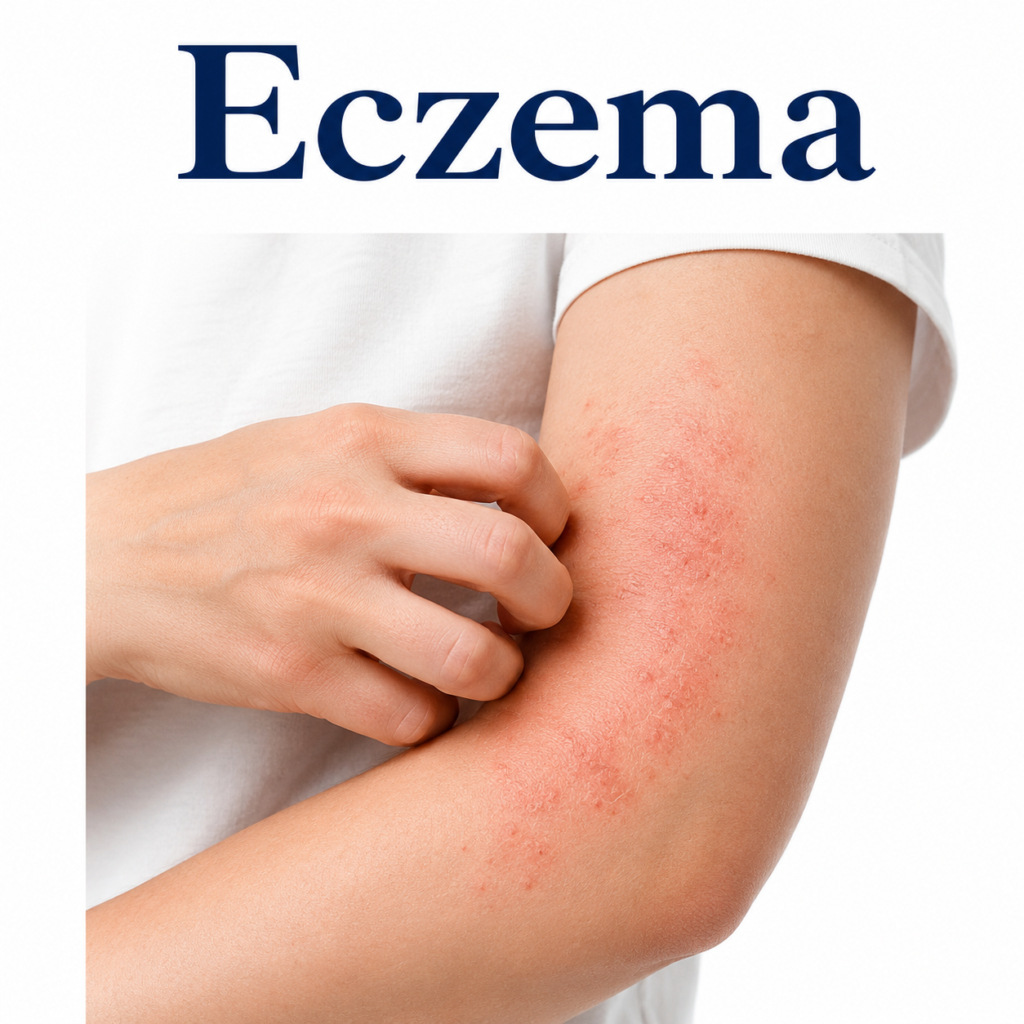
Eczema Explained: A Complete Guide to Atopic Dermatitis
Eczema, also known as atopic dermatitis, is one of the most common skin conditions worldwide. It causes dry, itchy, inflamed skin and often follows a pattern of flare-ups followed by periods of improvement. Although eczema is more common in children, it can develop at any age and may persist into adulthood.
While there is currently no cure for eczema, many people successfully control their symptoms through proper skin care, avoiding triggers, and using medications when needed. Understanding your condition can help reduce flare-ups and improve your quality of life.
What Is Eczema?
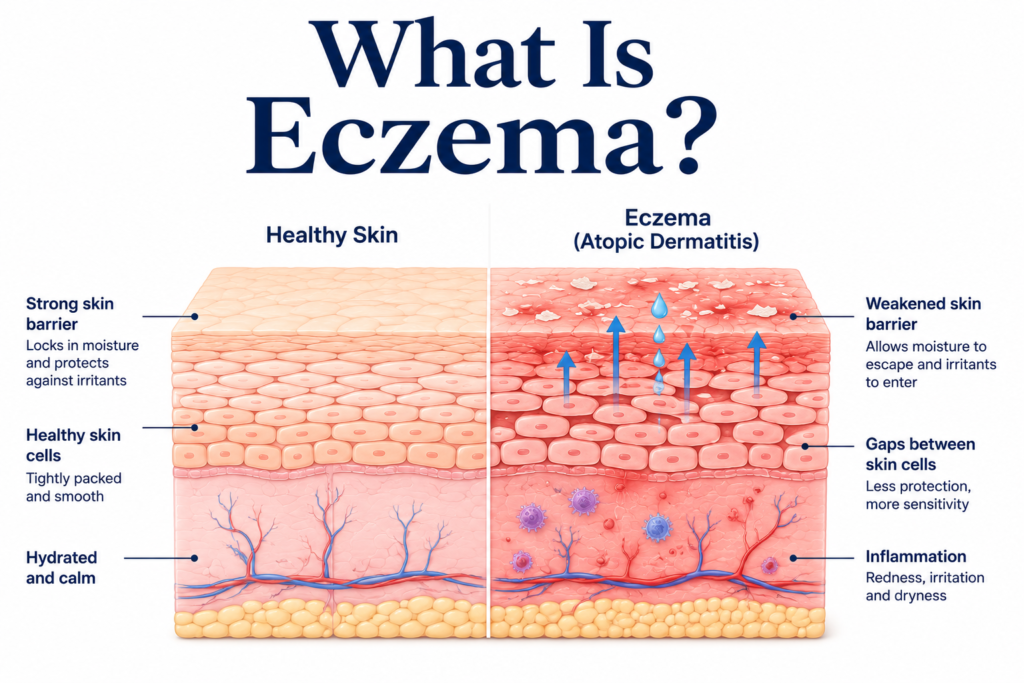
Image of layers of healthy skin compared to atopic dermatitis
Eczema is a chronic inflammatory skin condition that weakens the skin’s natural protective barrier. This allows moisture to escape while making the skin more vulnerable to irritants, allergens, and bacteria.
The result is skin that becomes:
- Dry
- Itchy
- Red or inflamed
- Sensitive
- Prone to cracking
The itching can become severe, leading to scratching that further damages the skin and creates a cycle known as the itch-scratch cycle.
Common Symptoms
Symptoms vary depending on age and severity but commonly include:
- Dry skin
- Intense itching (often worse at night)
- Red, pink, or darker patches depending on skin tone
- Rough or scaly skin
- Thickened skin from repeated scratching
- Small bumps that may leak fluid
- Crusting after scratching
- Cracked or painful skin
- Increased skin sensitivity
Symptoms usually occur in episodes called flare-ups, followed by periods when the skin is relatively calm.
Common Locations
Infants
- Face
- Scalp
- Cheeks
- Outer arms and legs
Children
- Elbows
- Behind the knees
- Wrists
- Ankles
- Neck
Adults
- Hands
- Face
- Eyelids
- Neck
- Elbows
- Knees
- Feet
Hand eczema is especially common among healthcare workers, hairdressers, food service workers, and others who frequently wash their hands.
What Causes Eczema?
There is no single cause. Eczema develops from a combination of:
Genetics
Many people inherit changes in the skin barrier that make it easier for moisture to escape.
Immune System
The immune system overreacts to normal environmental exposures, causing inflammation.
Environmental Factors
Many everyday exposures can trigger flare-ups.
Common Triggers
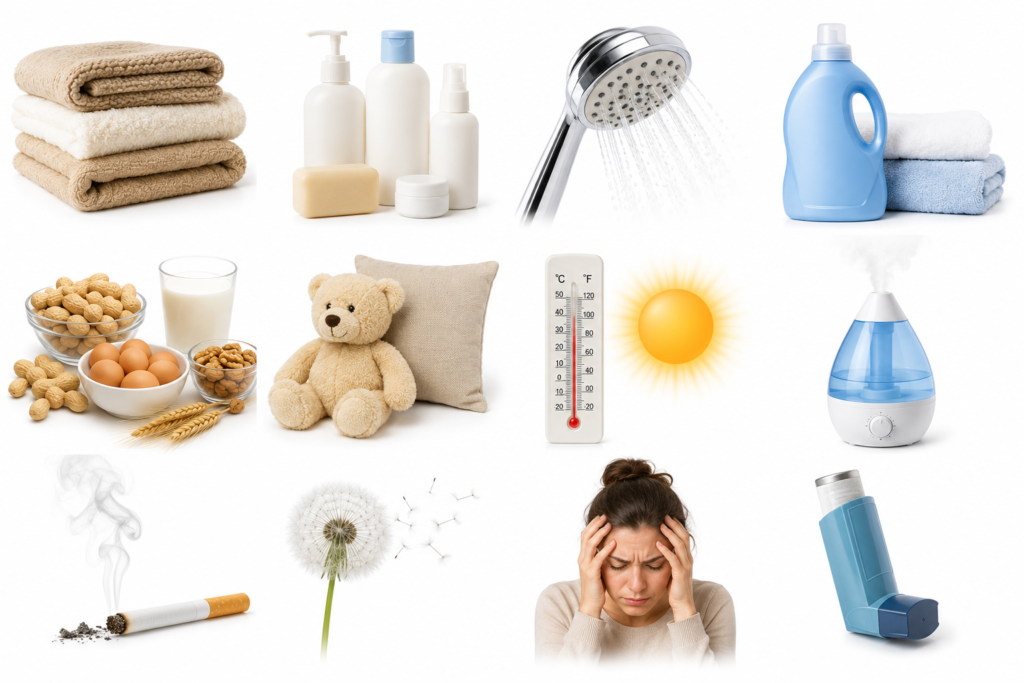
Image of common triggers of atopic dermatitis
Common triggers include:
- Dry weather
- Cold temperatures
- Hot showers
- Low humidity
- Harsh soaps
- Fragranced products
- Wool clothing
- Sweat
- Stress
- Dust mites
- Pet dander
- Pollen
- Cigarette smoke
- Skin infections
Every person has different triggers.
Is Eczema Contagious?
No.
Eczema cannot be spread from person to person through touch.
Who Is at Higher Risk?
Risk factors include:
- Family history of eczema
- Asthma
- Seasonal allergies (hay fever)
- Food allergies
- Sensitive skin
- Living in dry climates
These conditions often occur together and are known as the atopic triad.
How Is Eczema Diagnosed?
Most cases are diagnosed through:
- Medical history
- Physical examination
- Pattern and location of the rash
There is no specific blood test that confirms eczema.
If allergies are suspected, your healthcare provider may recommend allergy testing or patch testing.
Treatment Options
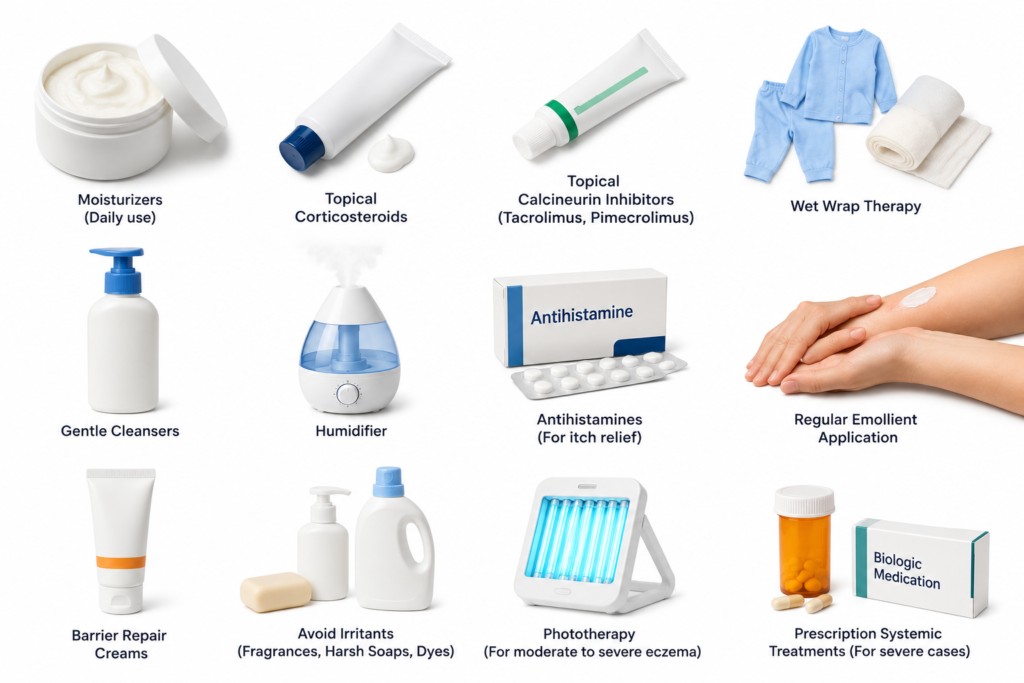
Image of treatment options for atopic dermatitis
1. Moisturizers
Daily moisturization is the foundation of eczema treatment.
Look for:
- Thick creams
- Ointments
- Fragrance-free products
- Ceramide-containing moisturizers
Apply moisturizer:
- After bathing
- Before bedtime
- Several times daily if needed
2. Topical Corticosteroids
These prescription or over-the-counter creams reduce inflammation during flare-ups.
Examples include:
- Hydrocortisone
- Triamcinolone
- Betamethasone
- Clobetasol (for severe cases)
They should be used as directed because prolonged use, especially on delicate skin, can cause side effects.
3. Topical Non-Steroid Medications
These may be recommended for long-term management or sensitive areas.
Examples include:
- Tacrolimus
- Pimecrolimus
- Crisaborole
- Roflumilast
4. Oral Medications
For moderate or severe eczema, your healthcare provider may recommend medications that reduce immune system activity.
Examples include:
- Oral corticosteroids (short-term use only)
- Janus kinase (JAK) inhibitors
- Other immunosuppressive medications
5. Biologic Therapy
For severe eczema that does not respond to standard treatment, biologic medications such as dupilumab or tralokinumab may significantly reduce inflammation and itching.
6. Itch Relief
Helpful strategies include:
- Cold compresses
- Moisturizers
- Oral antihistamines (primarily if itching interferes with sleep)
- Keeping fingernails short
- Avoiding scratching
Daily Skin Care Tips
Good skin care can greatly reduce flare-ups.
✔ Take short, lukewarm showers.
✔ Use fragrance-free cleansers.
✔ Moisturize within three minutes after bathing.
✔ Wear soft cotton clothing.
✔ Avoid overheating.
✔ Use fragrance-free laundry detergent.
✔ Keep indoor humidity comfortable during winter.
✔ Manage stress when possible.
Can Diet Affect Eczema?
For most adults, food does not directly cause eczema.
Some people with confirmed food allergies may notice worsening symptoms after certain foods, but eliminating foods without medical guidance is generally not recommended because it can lead to unnecessary dietary restrictions.
Possible Complications
Without proper treatment, eczema can lead to:
- Skin infections
- Thickened skin (lichenification)
- Sleep disturbances
- Anxiety or depression
- Reduced quality of life
- Hand disability in severe hand eczema
Can Eczema Be Prevented?
While eczema cannot always be prevented, flare-ups can often be reduced.
Helpful habits include:
- Moisturizing every day
- Avoiding known triggers
- Using gentle skin care products
- Treating flare-ups early
- Maintaining good skin hydration
When Should You Seek Medical Attention?
Contact a healthcare provider if:
- The rash is spreading rapidly.
- The skin becomes painful, warm, or swollen.
- You notice pus, yellow crusting, or signs of infection.
- Itching prevents you from sleeping.
- Over-the-counter treatments are not helping.
- The rash covers a large portion of your body.
- You develop fever along with worsening skin symptoms.
Seek emergency medical care if you experience difficulty breathing, facial swelling, or signs of a severe allergic reaction.
Key Takeaways
- Eczema is a chronic inflammatory skin condition that causes dry, itchy, and inflamed skin.
- Daily moisturizing is the most important part of treatment.
- Identifying and avoiding personal triggers can reduce flare-ups.
- Prescription medications may be needed for moderate or severe eczema.
- Most people can successfully manage eczema with a combination of good skin care and appropriate treatment.
What Should You Do Next?
If you have persistent itching, recurring rashes, or dry skin that does not improve with regular moisturizers, schedule an evaluation with a healthcare provider. Early treatment can help control symptoms, reduce flare-ups, and prevent complications such as skin infections and chronic skin thickening.
References
American Academy of Dermatology. Eczema (Atopic Dermatitis): Overview.
https://www.aad.org/public/diseases/eczemaNational Eczema Association. Eczema Resource Center.
https://nationaleczema.org/eczema/American Academy of Pediatrics. Atopic Dermatitis in Children: Treatment and Skin Care. (HealthyChildren.org)
https://www.healthychildren.org/English/health-issues/conditions/skin/Pages/Eczema.aspxNational Institute of Arthritis and Musculoskeletal and Skin Diseases. Atopic Dermatitis.
https://www.niams.nih.gov/health-topics/atopic-dermatitis