
Performance Anxiety: Symptoms, Causes, and Treatment
What Is Performance Anxiety?
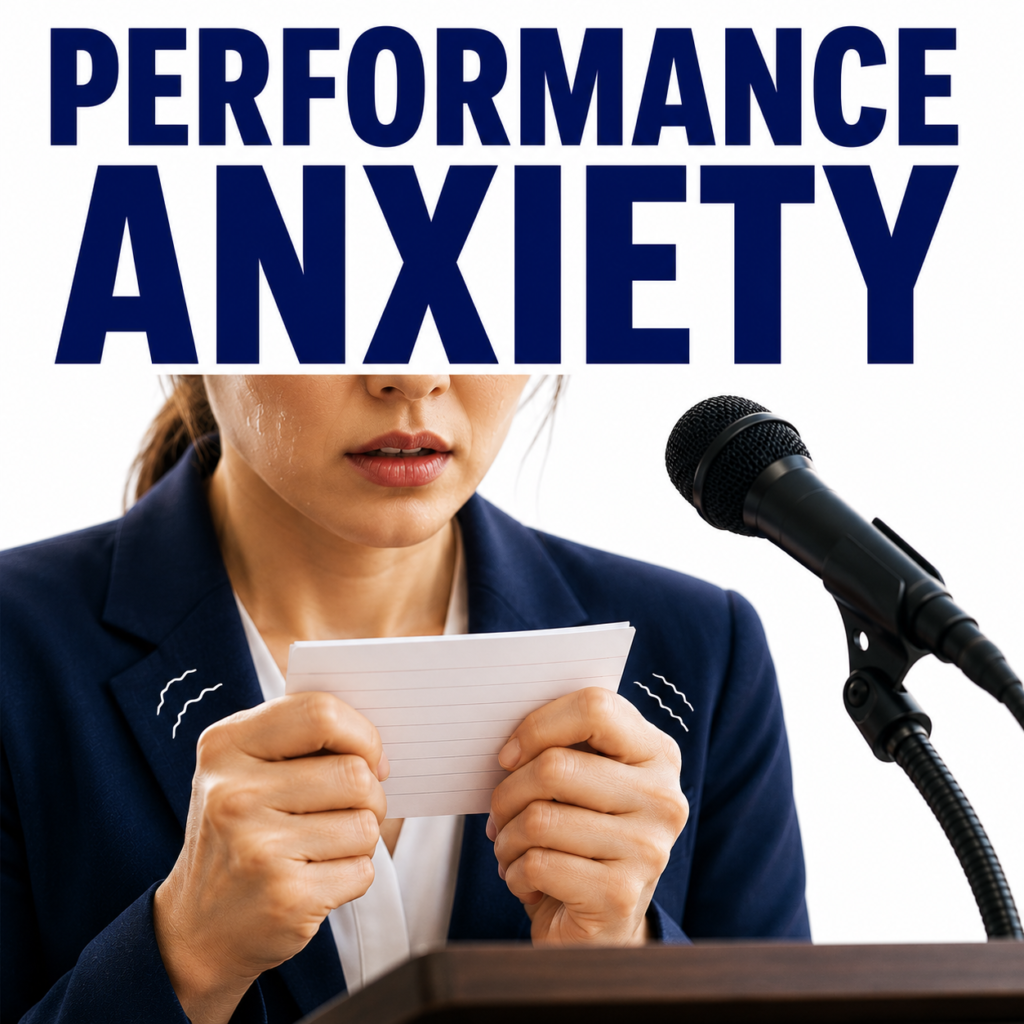
Performance anxiety is a type of situational anxiety that occurs when you must perform in front of other people.
Common situations include:
- Public speaking
- Work presentations
- Job interviews
- Musical performances
- Acting
- Athletic competitions
- Test taking
- Giving a speech at a wedding or other event
Performance anxiety can range from mild nervousness to overwhelming fear that interferes with your ability to perform. It is considered a form of social anxiety that is limited to specific performance situations.
Common Symptoms
Symptoms usually begin minutes to hours before the event.
Physical symptoms include:
- Racing heartbeat
- Shaking or trembling
- Sweating
- Dry mouth
- Nausea
- Upset stomach
- Shortness of breath
- Feeling flushed
- Shaky voice
Emotional symptoms include:
- Fear of making mistakes
- Worry about being judged
- Difficulty concentrating
- Feeling overwhelmed
- Wanting to avoid the event
Performance Anxiety at a Glance
| Mild Anxiety | More Severe Anxiety |
|---|---|
| Mild nervousness | Panic before performances |
| Symptoms improve after starting | Difficulty completing the task |
| Little effect on daily life | Avoids presentations or speaking opportunities |
| Temporary discomfort | Significant impact on work or school |
Did You Know?
Many experienced speakers, musicians, actors, and athletes still experience performance anxiety. A moderate amount of nervousness can actually improve focus and performance for some people.
What Causes Performance Anxiety?
Performance anxiety develops from the body’s normal fight or flight response.
When you anticipate being evaluated, your brain releases stress hormones such as adrenaline, which can cause:
- Faster heart rate
- Sweating
- Trembling
- Muscle tension
- Rapid breathing
Common triggers include:
- Fear of embarrassment
- Fear of making mistakes
- Perfectionism
- Previous negative experiences
- High pressure situations
- Lack of preparation
Who Is More Likely to Experience Performance Anxiety?
You may be more likely to experience performance anxiety if you:
- Have social anxiety disorder
- Have generalized anxiety
- Are naturally perfectionistic
- Have experienced a previous embarrassing performance
- Are under significant stress
- Are new to public speaking or performing
How Is Performance Anxiety Treated?
Treatment depends on how severe the anxiety is and how often it occurs.
| Treatment | How It Helps |
| Cognitive behavioral therapy (CBT) | Changes anxious thought patterns |
| Exposure therapy | Builds confidence through gradual practice |
| Relaxation and breathing exercises | Reduces physical symptoms |
| Public speaking practice | Improves confidence through repetition |
| Toastmasters or similar groups | Provides structured speaking experience |
| Beta blockers for selected patients | Reduce physical symptoms such as shaking and rapid heartbeat before specific events |
| Treatment for underlying social anxiety | Helps people with more generalized anxiety symptoms |
Beta blockers are sometimes prescribed only for specific performance situations, such as giving an important presentation or speech. They reduce physical symptoms like tremor and rapid heartbeat but do not treat the underlying anxiety itself.
How Can You Reduce Performance Anxiety?
| Helpful Strategies |
| Prepare thoroughly |
| Practice your presentation several times |
| Visit the venue beforehand if possible |
| Use slow, deep breathing before speaking |
| Focus on your message rather than yourself |
| Accept that small mistakes are normal |
| Gain experience through repeated practice |
| Get adequate sleep before your event |
| Limit excessive caffeine before important performances |
Myths vs. Facts
| Myth | Fact |
| Confident speakers never get nervous. | Even experienced speakers often feel nervous before presenting. |
| Anxiety means you’ll perform poorly. | Mild anxiety can improve focus and energy. |
| Avoiding presentations makes anxiety disappear. | Avoidance often makes performance anxiety worse over time. |
| Medication is always necessary. | Many people improve with practice, CBT, and exposure techniques alone. |
When Should You See a Healthcare Provider?
Schedule an appointment if you:
- Regularly avoid presentations or speaking opportunities
- Performance anxiety affects your job or education
- Anxiety causes panic attacks
- Physical symptoms are severe
- Self help strategies have not been effective
- You would like to discuss medication for occasional high pressure situations
A healthcare provider can determine whether your symptoms represent isolated performance anxiety or a broader anxiety disorder and recommend appropriate treatment.
Frequently Asked Questions
Is performance anxiety the same as social anxiety disorder?
Not always. Performance anxiety is often limited to specific situations, while social anxiety disorder affects many different social interactions.
Can beta blockers help?
For some people, yes. Healthcare providers sometimes prescribe beta blockers before important speeches or performances to reduce physical symptoms such as trembling and a racing heart. They are not appropriate for everyone and require medical evaluation.
What is the best treatment?
Cognitive behavioral therapy, repeated practice, and gradual exposure have the strongest evidence for long term improvement. Medication may be helpful for selected individuals.
Will performance anxiety ever go away?
Many people experience significant improvement with practice, experience, and appropriate treatment. Even professional performers often continue to feel some nervousness before important events.
What Should You Do Next?
If performance anxiety is interfering with presentations, interviews, performances, or other important events, talk with your healthcare provider. Effective treatments such as cognitive behavioral therapy, structured practice, relaxation techniques, and, in some cases, medication can help you perform with greater confidence and reduce anxiety over time.
References
Mayo Clinic. Fear of Public Speaking: How Can I Overcome It?
https://www.mayoclinic.org/diseases-conditions/specific-phobias/expert-answers/fear-of-public-speaking/faq-20058416
National Institute of Mental Health. Social Anxiety Disorder: More Than Just Shyness
https://www.nimh.nih.gov/health/publications/social-anxiety-disorder-more-than-just-shyness
Mayo Clinic. Social Anxiety Disorder: Diagnosis and Treatment
https://www.mayoclinic.org/diseases-conditions/social-anxiety-disorder/diagnosis-treatment/drc-20353567
National Institute of Mental Health. Mental Health Medications
https://www.nimh.nih.gov/health/topics/mental-health-medications