
Acute Gout: Sudden Joint Pain, Symptoms, and Treatment
What Is Acute Gout?
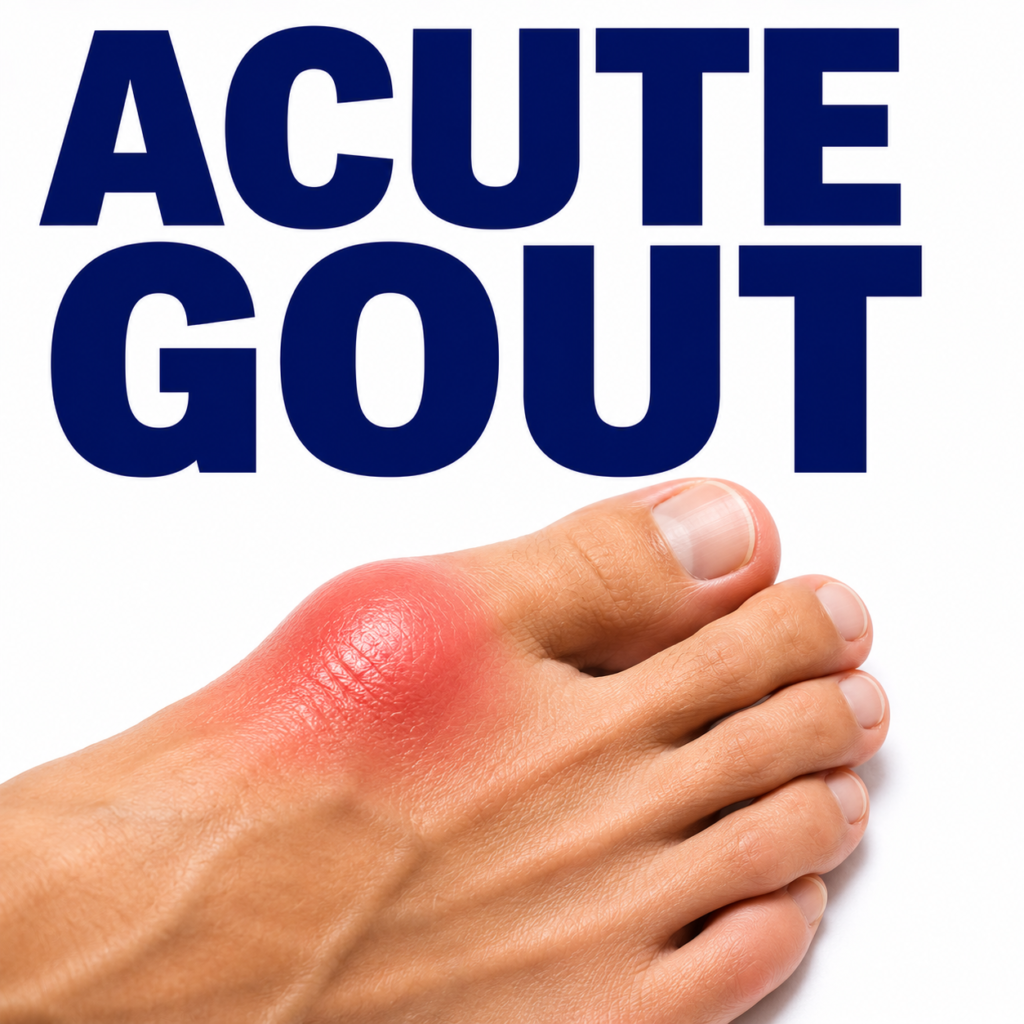
Acute gout is a sudden, painful inflammation of a joint caused by the body’s immune response to uric acid crystals that have formed inside the joint.
When uric acid levels become too high, crystals can develop over time. During a gout flare, the immune system reacts to these crystals, causing rapid inflammation, swelling, redness, and severe pain. (mayoclinic.org)
What Does an Acute Gout Attack Feel Like?
Symptoms usually begin suddenly and often reach their worst within several hours.
Common symptoms include:
- Severe joint pain
- Swelling
- Redness
- Warmth over the joint
- Extreme tenderness
- Difficulty moving the joint
The pain is often described as sharp, throbbing, or crushing. Many people report that even light touch, such as clothing or a bedsheet, is extremely painful. (mayoclinic.org)
Which Joints Are Commonly Affected?
Although gout can affect almost any joint, the most common locations include:
- Base of the big toe
- Ankle
- Foot
- Knee
- Wrist
- Elbow
- Fingers
Most acute attacks affect only one joint at a time.
Did You Know?
About half of all first gout attacks occur at the base of the big toe, a condition called podagra. (American College of Rheumatology)
What Can Trigger an Acute Gout Attack?
A flare may occur after:
- Drinking alcohol, especially beer or liquor
- Eating large amounts of red meat or organ meats
- Eating certain seafood such as anchovies, sardines, mussels, scallops, trout, or tuna
- Becoming dehydrated
- Recent surgery or illness
- Physical stress
- Starting or stopping certain medications
- Rapid weight loss
Sometimes a flare occurs without an obvious trigger. (mayoclinic.org)
Acute Gout at a Glance
| Mild Flare | Severe Flare |
|---|---|
| Moderate pain | Intense pain that may prevent walking |
| Mild swelling | Marked swelling and redness |
| Able to move the joint | Very limited movement |
| Symptoms improve within a few days | Symptoms may last one to two weeks without treatment |
How Is Acute Gout Diagnosed?
Your healthcare provider may diagnose acute gout using:
- Medical history
- Physical examination
- Joint fluid analysis to identify uric acid crystals
- Blood tests
- Ultrasound
- X rays when needed
Joint fluid analysis is the most accurate way to confirm gout. (mayoclinic.org)
How Is an Acute Gout Attack Treated?
Treatment works best when started within the first 24 hours of symptoms.
Common treatments include:
| Treatment | Purpose |
| Nonsteroidal anti inflammatory drugs (NSAIDs) | Reduce pain and inflammation |
| Colchicine | Decreases inflammation caused by uric acid crystals |
| Corticosteroids | Used when NSAIDs or colchicine are not appropriate |
| Ice packs | Help reduce pain and swelling |
| Rest and elevation | Reduce discomfort while the joint heals |
Continue taking any prescribed uric acid lowering medication unless your healthcare provider tells you otherwise. Stopping these medications during a flare may increase the risk of future attacks. (American College of Rheumatology)
What Can You Do at Home?
While waiting for medical evaluation:
- Rest the affected joint
- Apply ice for 15 to 20 minutes several times daily
- Drink plenty of water unless you have been told to limit fluids
- Avoid alcohol
- Avoid foods high in purines during the flare
- Take medications exactly as prescribed
Myths vs. Facts
| Myth | Fact |
| Gout always affects the big toe. | The big toe is the most common location, but many joints can be affected. |
| The pain will disappear without treatment. | Some attacks improve on their own, but treatment shortens the flare and relieves pain more quickly. |
| High uric acid alone means you have gout. | Many people have elevated uric acid without ever developing gout. |
| Only older adults get gout. | Gout can occur in adults of many ages, especially those with certain risk factors. |
When Should You See a Healthcare Provider?
Schedule an appointment as soon as possible if you:
- Have your first gout attack
- Develop sudden severe joint pain
- Have repeated gout flares
- Are unsure whether the pain is gout or another condition
Seek immediate medical care if you have:
- Fever with a swollen joint
- Chills
- Severe redness spreading around the joint
- Inability to bear weight because of severe pain
These symptoms could indicate a joint infection, which requires emergency treatment. (mayoclinic.org)
Frequently Asked Questions
How long does an acute gout attack last?
Without treatment, a flare may last several days to two weeks. Early treatment usually shortens the attack. (mayoclinic.org)
Should I continue taking allopurinol during a gout attack?
Yes. If you are already taking allopurinol or another uric acid lowering medication, continue taking it unless your healthcare provider instructs you otherwise. (American College of Rheumatology)
Can I walk during a gout flare?
Limit activity if walking worsens the pain. Resting the affected joint often helps reduce discomfort until treatment begins to work.
Can an acute gout attack come back?
Yes. Without lowering uric acid levels, many people experience repeated flares over time. Your healthcare provider may recommend long term treatment after the acute attack resolves.
What Should You Do Next?
If you develop sudden, severe joint pain, especially in the big toe, ankle, or foot, seek medical evaluation promptly. Starting treatment within the first 24 hours can reduce pain, shorten the attack, and help you recover more quickly. If you experience recurrent gout flares, talk with your healthcare provider about long term strategies to prevent future attacks.
References
Mayo Clinic. Gout: Symptoms and Causes
https://www.mayoclinic.org/diseases-conditions/gout/symptoms-causes/syc-20372897
Mayo Clinic. Gout: Diagnosis and Treatment
https://www.mayoclinic.org/diseases-conditions/gout/diagnosis-treatment/drc-20372903
American College of Rheumatology. Gout
https://rheumatology.org/patients/gout
Centers for Disease Control and Prevention. Gout
https://www.cdc.gov/arthritis/gout/