
Halitosis (Bad Breath): Causes, Treatment, and Prevention
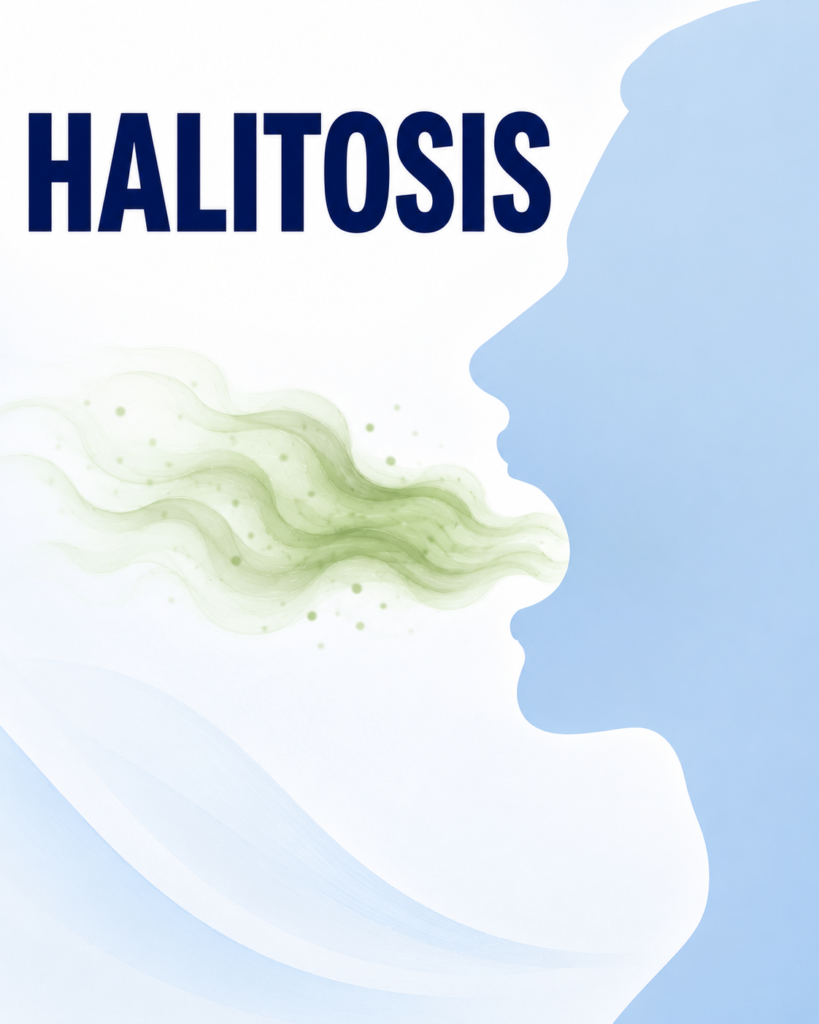
What Is Halitosis?
Halitosis is the medical term for persistent bad breath.
Most cases result from bacteria in the mouth that break down food particles and produce foul-smelling sulfur compounds. Poor oral hygiene, gum disease, tongue coating, and dry mouth are among the most common causes.
Occasional bad breath after eating foods like garlic or onions is normal and usually temporary.
Common Symptoms
You may notice:
- Persistent unpleasant breath odor
- A bad taste in your mouth
- Dry mouth
- White or yellow coating on the tongue
- Thick saliva
- Bad breath despite brushing your teeth
Sometimes, other people notice the odor before you do.
Halitosis at a Glance
| Temporary Bad Breath | Chronic Halitosis |
|---|---|
| Occurs after certain foods | Persists most days |
| Improves with brushing | Returns quickly after brushing |
| Lasts a few hours | Lasts for weeks or months |
| Usually harmless | May indicate an oral or medical condition |
Did You Know?
About 80–90% of persistent bad breath originates in the mouth, most commonly from bacteria on the tongue, gum disease, or poor oral hygiene.
What Causes Halitosis?
Common causes include:
- Poor oral hygiene
- Bacteria on the back of the tongue
- Gum disease (gingivitis or periodontitis)
- Dry mouth
- Tooth decay
- Food trapped between teeth
- Smoking or tobacco use
- Garlic, onions, alcohol, and certain foods
Less common causes include:
- Chronic sinus infections
- Tonsil stones
- Acid reflux (GERD)
- Diabetes
- Kidney disease
- Liver disease
Most chronic bad breath is related to oral health rather than stomach problems.
Who Is More Likely to Develop Halitosis?
Your risk is higher if you:
- Brush or floss infrequently
- Have gum disease
- Have dry mouth
- Smoke or use tobacco
- Wear dentures
- Take medications that reduce saliva production
- Have untreated dental cavities
How Is Halitosis Treated?
Treatment depends on the underlying cause.
| Treatment | How It Helps |
| Brushing twice daily | Removes plaque and bacteria |
| Daily flossing | Removes food and plaque between teeth |
| Tongue brushing or tongue scraping | Removes odor-causing bacteria |
| Regular dental cleanings | Treats gum disease and plaque buildup |
| Drinking more water | Helps relieve dry mouth |
| Sugar-free gum | Stimulates saliva production |
| Treating underlying medical conditions | Addresses non-dental causes of bad breath |
Most people improve significantly after addressing the underlying cause rather than simply masking the odor with mints or mouthwash.
How Can You Prevent Halitosis?
Good oral hygiene is the best prevention.
| Prevention Tips |
| Brush your teeth twice daily |
| Floss every day |
| Brush or scrape your tongue |
| Drink plenty of water |
| Avoid tobacco products |
| Visit your dentist regularly |
| Replace your toothbrush every 3–4 months |
| Clean dentures daily if you wear them |
Myths vs. Facts
| Myth | Fact |
| Bad breath always comes from the stomach. | Most cases originate in the mouth. |
| Mouthwash cures chronic bad breath. | Mouthwash may temporarily reduce odor but does not treat the underlying cause. |
| Only poor brushing causes halitosis. | Dry mouth, gum disease, medications, and medical conditions can also contribute. |
| If you can’t smell your own breath, you don’t have bad breath. | Many people become accustomed to their own breath odor and may not notice it. |
When Should You See a Healthcare Provider?
Schedule an appointment if you:
- Have bad breath that persists despite good oral hygiene
- Notice bleeding gums or loose teeth
- Have a persistent dry mouth
- Develop mouth sores that do not heal
- Have difficulty swallowing
- Experience bad breath along with unexplained weight loss, persistent reflux, or chronic sinus symptoms
A dentist can evaluate common oral causes, while your primary care provider may investigate medical causes if your oral examination is normal.
Frequently Asked Questions
Does mouthwash cure bad breath?
No. Mouthwash may temporarily reduce odor, but treating the underlying cause is necessary for long-term improvement.
Can dry mouth cause bad breath?
Yes. Saliva helps wash away bacteria, so reduced saliva production often contributes to chronic halitosis.
Is bad breath always caused by poor oral hygiene?
No. Although poor oral hygiene is a common cause, medical conditions, medications, sinus disease, and dry mouth may also contribute.
Should I scrape my tongue?
Yes. Tongue scraping or brushing can reduce bacteria that commonly produce unpleasant odors.
What Should You Do Next?
If you have persistent bad breath, start by improving your oral hygiene with regular brushing, flossing, and tongue cleaning. If the odor continues despite these measures, schedule an evaluation with your dentist. If no dental cause is found, your healthcare provider can determine whether an underlying medical condition may be contributing.
References
Cleveland Clinic. Bad Breath (Halitosis)
https://my.clevelandclinic.org/health/diseases/17771-bad-breath-halitosis
Merck Manual Consumer Version. Bad Breath (Halitosis)
https://www.merckmanuals.com/home/mouth-and-dental-disorders/symptoms-of-oral-and-dental-disorders/bad-breath
American Dental Association. Mouthrinse (Mouthwash)
https://www.ada.org/resources/ada-library/oral-health-topics/mouthrinse-mouthwash
National Institute of Dental and Craniofacial Research. Oral Hygiene
https://www.nidcr.nih.gov/health-info/oral-hygiene