
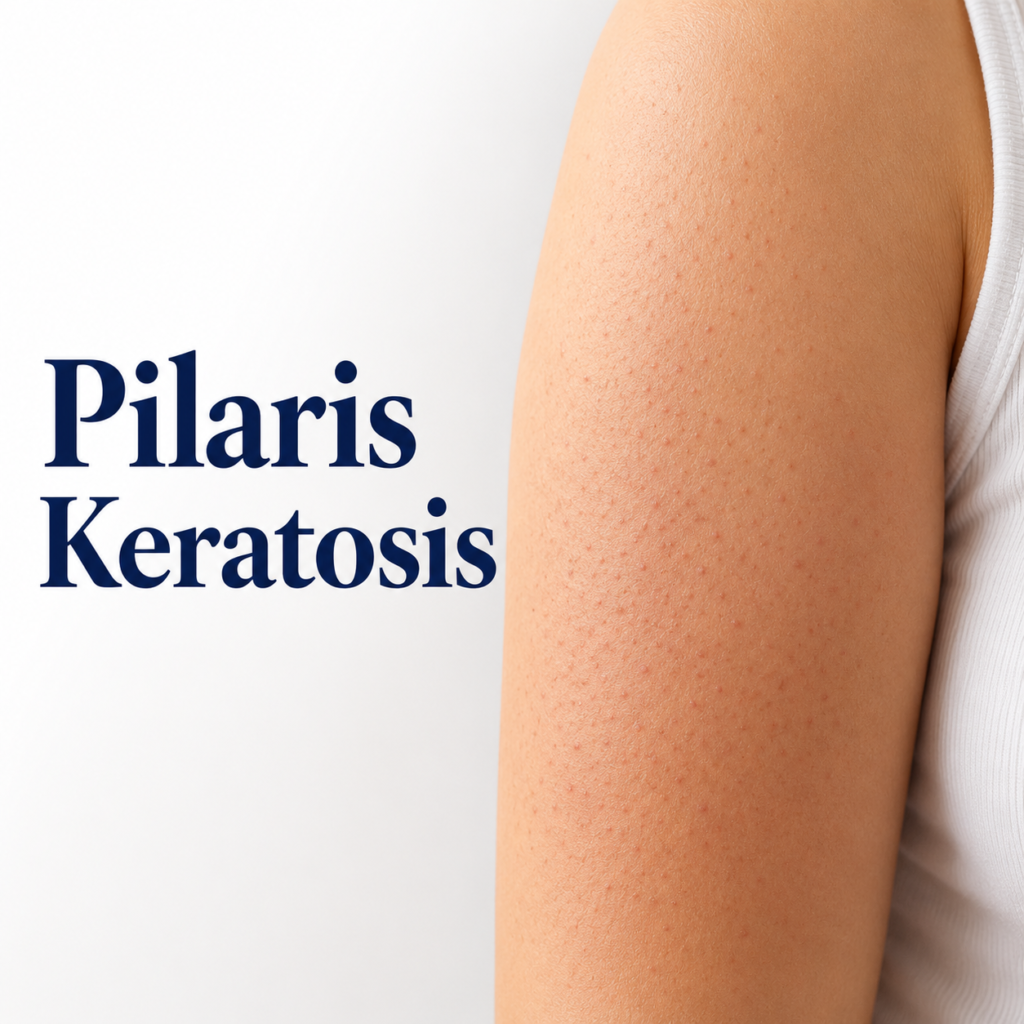
Keratosis Pilaris: Symptoms, Causes, Treatment & Prevention
Keratosis pilaris is one of the most common skin conditions, affecting millions of children and adults. It causes tiny, rough bumps that often develop on the upper arms, thighs, cheeks, or buttocks, giving the skin a texture similar to sandpaper or “chicken skin.”
Although keratosis pilaris is completely harmless and not contagious, many people find it frustrating because of its appearance and rough texture. While there is no permanent cure, regular skin care and moisturizers containing specific ingredients can significantly improve the condition.
What Is Keratosis Pilaris?
Keratosis pilaris (KP) is a benign skin condition caused by a buildup of keratin, a protein that helps protect the skin.
Normally, keratin lines the hair follicles. In keratosis pilaris, excess keratin plugs the openings of the hair follicles, creating small, rough bumps on the skin.
The condition does not damage the skin or hair follicles permanently and is not considered dangerous.
What Does Keratosis Pilaris Look Like?
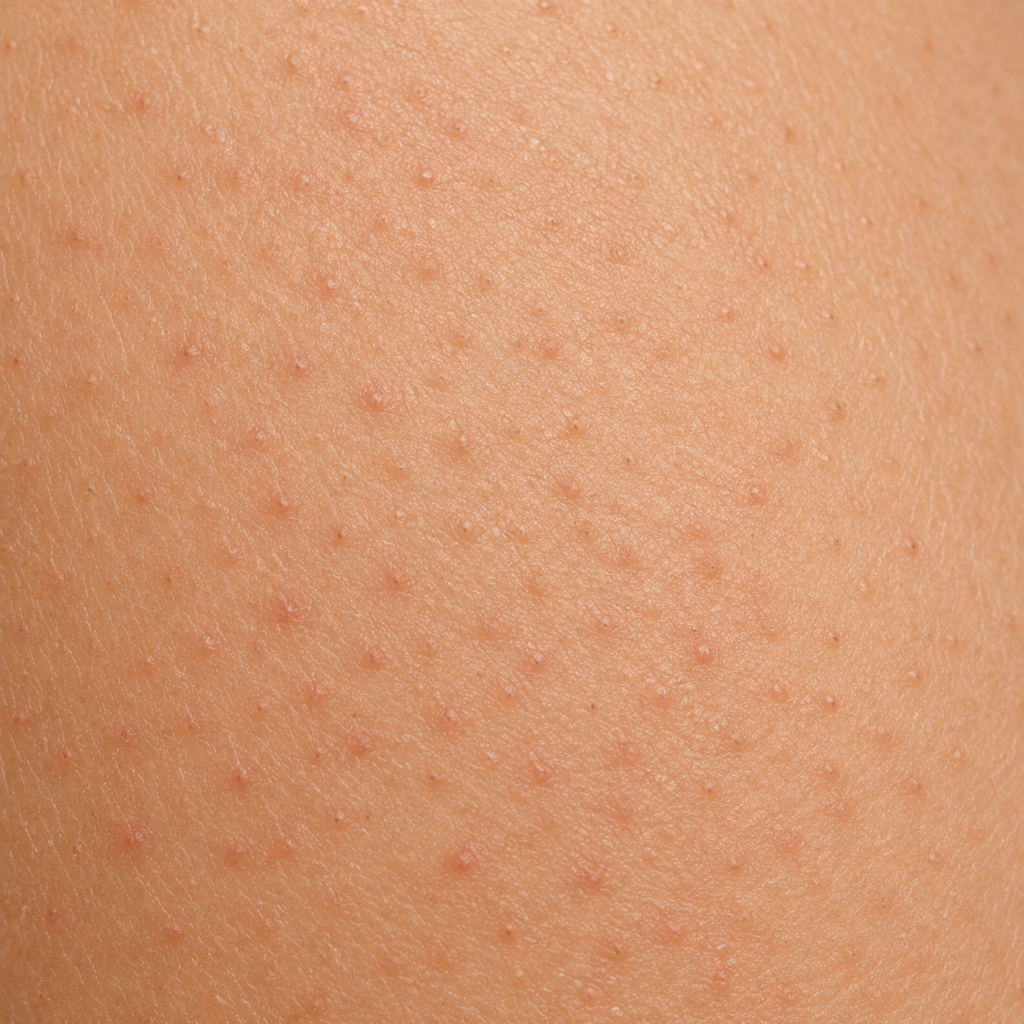
Close up of the appearance of keratosis pilaris
Keratosis pilaris often appears as:
- Tiny rough bumps
- Skin-colored, white, red, or brown bumps depending on skin tone
- Dry or rough patches
- Mild redness surrounding the bumps
- A sandpaper-like texture
Many people notice the bumps more than they see them.
Common Symptoms
Symptoms may include:
- Rough, dry skin
- Small painless bumps
- Mild itching
- Mild redness
- Dryness that worsens during winter
- Cosmetic concerns due to skin texture
The bumps usually do not hurt and rarely become infected.
Where Does It Occur?
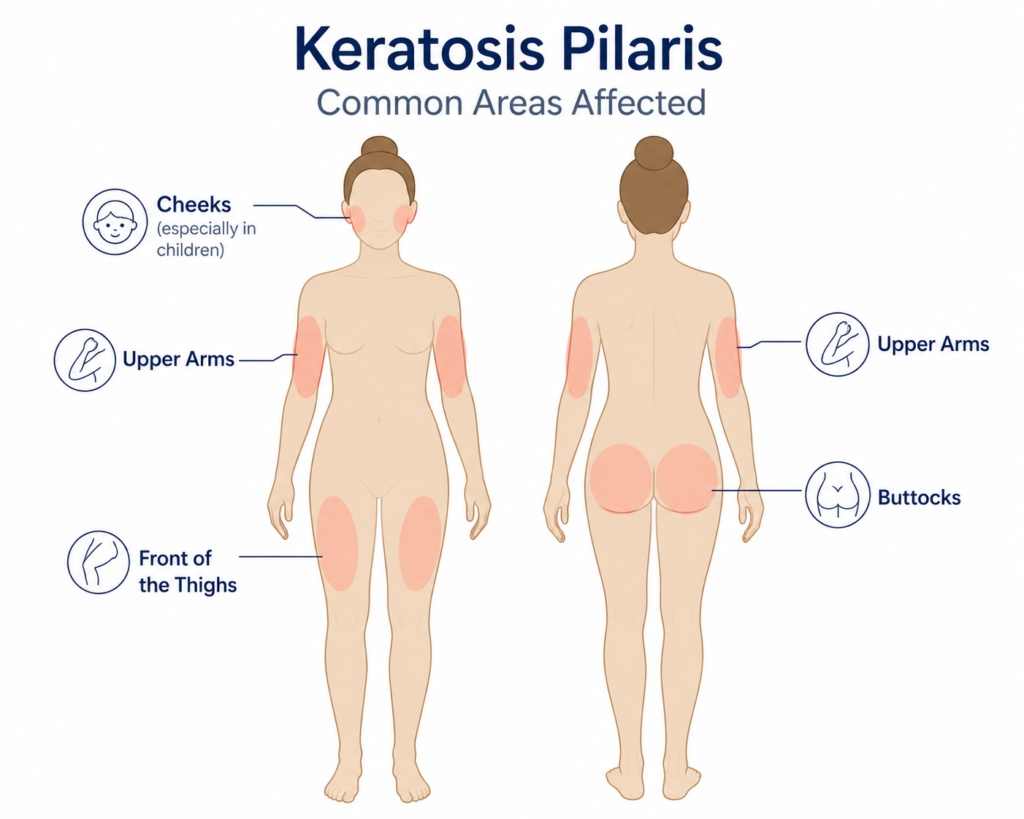
Image of typical distribution of keratosis pilaris
Keratosis pilaris most commonly affects:
- Upper arms
- Front of the thighs
- Buttocks
- Cheeks (especially in children)
Less commonly, it may occur on:
- Forearms
- Lower legs
It does not usually affect the palms of the hands or soles of the feet.
What Causes Keratosis Pilaris?
The exact reason some people develop keratosis pilaris is not fully understood.
The condition occurs when excess keratin blocks the openings of hair follicles.
It often runs in families and may be associated with inherited skin characteristics.
Who Is at Higher Risk?
Keratosis pilaris is more common in:
- Children
- Teenagers
- Young adults
- People with dry skin
- Individuals with eczema (atopic dermatitis)
- People with a family history of keratosis pilaris
- Individuals with asthma or seasonal allergies
Symptoms often improve with age.
Is Keratosis Pilaris Contagious?
No.
Keratosis pilaris cannot spread through skin contact or sharing towels, clothing, or personal items.
How Is It Diagnosed?
Healthcare providers usually diagnose keratosis pilaris by examining the skin.
No blood tests or biopsies are typically necessary.
Conditions That Can Look Similar
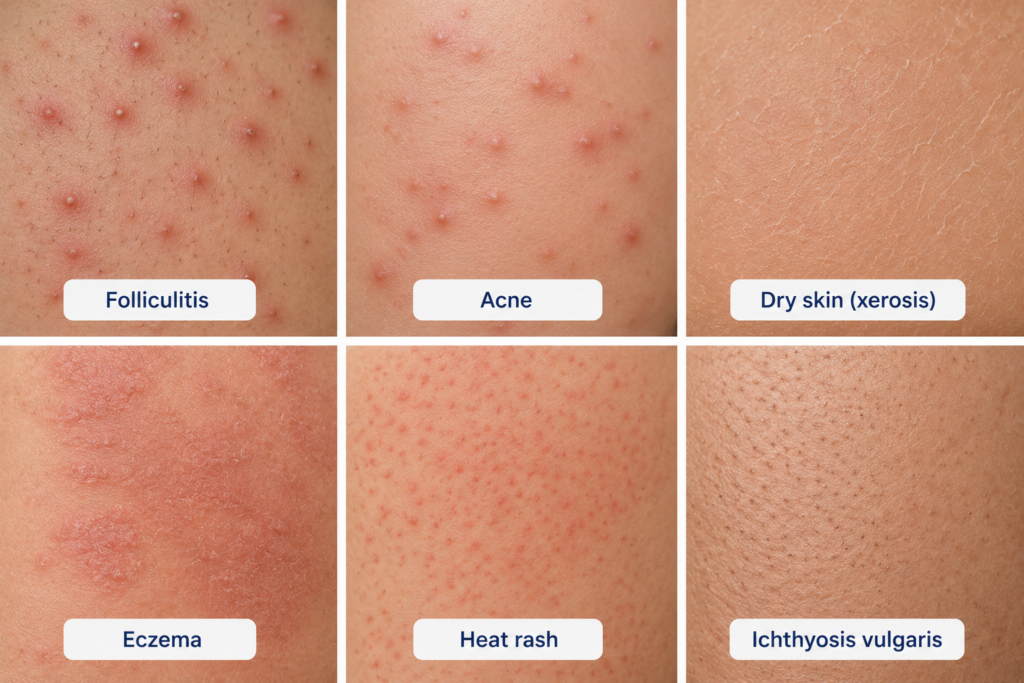
Image of close up of other conditions similar to keratosis pilaris
Several conditions may resemble keratosis pilaris, including:
- Folliculitis
- Acne
- Dry skin (xerosis)
- Eczema
- Heat rash
- Ichthyosis vulgaris
A healthcare provider can usually distinguish these conditions during a skin examination.
Treatment
Keratosis pilaris is harmless and does not require treatment unless the appearance or rough texture is bothersome.
Improvement often requires consistent skin care over several weeks or months.
1. Daily Moisturizers
Moisturizing is the most important treatment.
Products that contain the following ingredients are often most effective:
- Urea
- Lactic acid
- Glycolic acid
- Salicylic acid
- Ceramides
These ingredients help soften rough skin and remove excess keratin.
2. Gentle Exfoliation
Gentle exfoliation may improve skin texture.
Options include:
- Soft washcloths
- Mild chemical exfoliants
- Alpha hydroxy acids (AHAs)
- Beta hydroxy acids (BHAs)
Avoid aggressive scrubbing, which can worsen irritation.
3. Prescription Medications
If over-the-counter products are not effective, your healthcare provider may recommend:
- Topical retinoids (such as tretinoin or adapalene)
- Stronger keratolytic creams
These medications help normalize skin cell turnover and reduce follicular plugging.
Daily Skin Care Tips
To help improve keratosis pilaris:
✔ Take short, lukewarm showers.
✔ Use fragrance-free cleansers.
✔ Apply moisturizer immediately after bathing.
✔ Avoid harsh soaps.
✔ Use a humidifier during dry weather if needed.
✔ Wear sunscreen on exposed areas.
✔ Avoid picking or squeezing the bumps.
Can Lifestyle Changes Help?
Lifestyle changes cannot cure keratosis pilaris, but they may reduce dryness and improve the skin’s appearance.
Helpful habits include:
- Staying well hydrated
- Moisturizing consistently
- Avoiding prolonged hot showers
- Using gentle skincare products
Possible Complications
Keratosis pilaris is generally harmless.
Occasionally, it may lead to:
- Persistent dry skin
- Skin discoloration after inflammation
- Mild scarring from picking
- Cosmetic concerns that affect self-confidence
Can It Be Prevented?
There is no known way to prevent keratosis pilaris because it is largely determined by genetics.
However, regular skin care can reduce symptoms and prevent worsening.
When Should You Seek Medical Attention?
Schedule an evaluation if:
- The rash becomes painful.
- The bumps contain pus or drain fluid.
- The affected area becomes increasingly red or swollen.
- Over-the-counter treatments are not helping after several months.
- You are unsure whether the bumps are keratosis pilaris or another skin condition.

Frequently Asked Questions
Is keratosis pilaris dangerous?
No. It is a harmless condition that does not increase the risk of skin cancer or other serious diseases.
Is keratosis pilaris the same as acne?
No. Although both conditions involve hair follicles, keratosis pilaris is caused by keratin plugging the follicles rather than inflammation related to acne.
Will keratosis pilaris go away?
Many people notice significant improvement as they get older, especially after adolescence or early adulthood. However, some continue to have symptoms throughout life.
Can I scrub the bumps away?
No. Vigorous scrubbing usually irritates the skin and may make the condition appear worse.
Does diet affect keratosis pilaris?
There is currently no strong evidence that specific foods cause or improve keratosis pilaris.
Key Takeaways
- Keratosis pilaris is a common, harmless skin condition caused by excess keratin plugging hair follicles.
- It most commonly affects the upper arms, thighs, cheeks, and buttocks.
- Daily moisturizers containing urea, lactic acid, salicylic acid, or ceramides are often the most effective treatment.
- Gentle skin care is more effective than aggressive scrubbing.
- Symptoms often improve with age, although regular skin care may still be needed.
What Should You Do Next?
If rough, persistent bumps are bothering you or you’re unsure whether your skin changes are due to keratosis pilaris or another condition, schedule an evaluation with a healthcare provider. An accurate diagnosis can help you choose the most effective skincare products and determine whether prescription treatment is appropriate.
References
American Academy of Dermatology. Keratosis Pilaris: Overview, Diagnosis, and Treatment. https://www.aad.org/public/diseases/a-z/keratosis-pilaris-overview
DermNet NZ. Keratosis Pilaris. https://dermnetnz.org/topics/keratosis-pilaris
Mayo Clinic. Keratosis Pilaris. https://www.mayoclinic.org/diseases-conditions/keratosis-pilaris