
Melasma: Causes, Treatment, and How to Prevent It from Worsening
What Is Melasma?
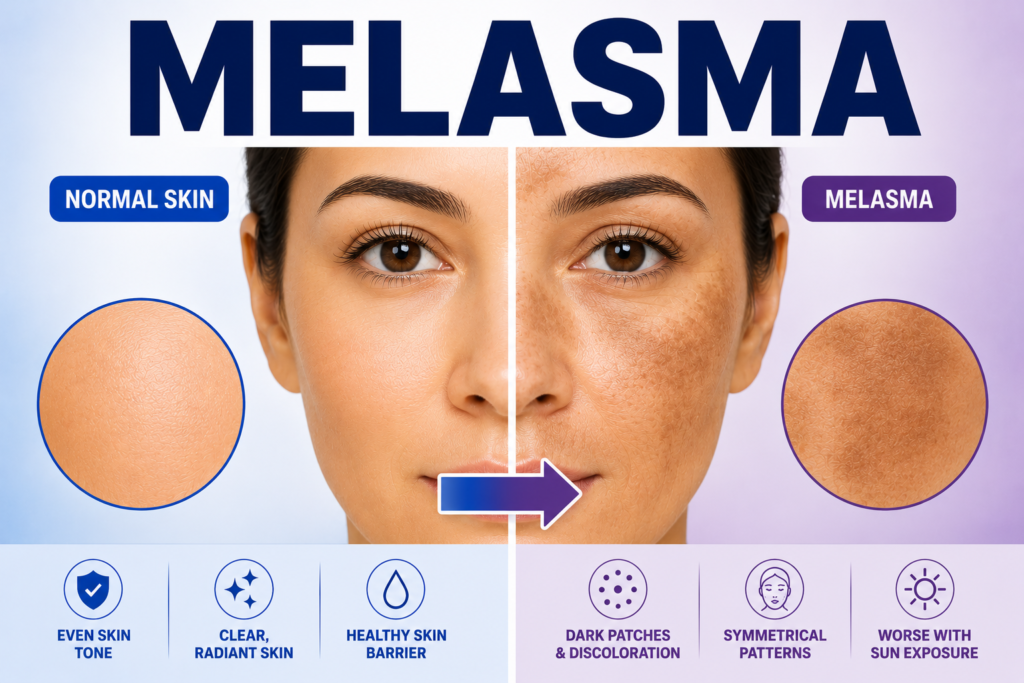
Melasma is a skin condition that causes symmetrical patches of brown, gray-brown, or tan discoloration on the skin.
It most commonly affects the:
- Cheeks
- Forehead
- Upper lip
- Nose
- Chin
Melasma occurs when skin cells called melanocytes produce excess pigment (melanin).
The condition is not contagious and does not increase the risk of skin cancer.
Common Symptoms
You may notice:
- Flat patches of darker skin
- Symmetrical discoloration on both sides of the face
- Brown, gray-brown, or tan patches
- Darkening after sun exposure
- No pain, itching, or other symptoms in most cases
Melasma usually develops gradually over weeks to months.
Melasma at a Glance
| Mild Melasma | More Extensive Melasma |
|---|---|
| Small areas of discoloration | Larger patches involving multiple facial areas |
| Light brown color | Dark brown or gray-brown color |
| Improves with treatment | More resistant to treatment |
| Minimal cosmetic concern | More noticeable pigmentation |
Did You Know?
Even a few minutes of ultraviolet (UV) light or visible light exposure can stimulate pigment production and worsen melasma. That’s why daily sunscreen use is considered one of the most important parts of treatment.
What Causes Melasma?
Melasma develops when pigment-producing cells become overactive.
Common triggers include:
- Sun exposure
- Pregnancy (“the mask of pregnancy”)
- Birth control pills
- Hormone replacement therapy
- Family history
- Certain medications
- Heat exposure
- Visible light exposure
Many people have more than one trigger.
Who Is More Likely to Develop Melasma?
Your risk is higher if you:
- Are female
- Have medium to darker skin tones
- Have a family history of melasma
- Are pregnant
- Use hormonal birth control
- Spend significant time outdoors
- Live in sunny climates
How Is Melasma Treated?
Treatment often requires patience because pigment fades slowly.
| Treatment | How It Helps |
| Daily broad-spectrum sunscreen (SPF 30 or higher) | Prevents further pigment formation |
| Sun-protective clothing and hats | Reduces UV exposure |
| Hydroquinone | Lightens excess pigment |
| Azelaic acid | Helps reduce pigmentation |
| Tretinoin | Increases skin cell turnover |
| Triple combination cream | Combines multiple prescription medications |
| Chemical peels or laser treatments | May improve resistant cases under dermatologist supervision |
Several months of treatment may be needed before noticeable improvement occurs.
How Can You Help Prevent Melasma?
Daily sun protection is the most effective strategy.
Helpful habits include:
- Apply broad-spectrum sunscreen every morning.
- Reapply sunscreen every two hours when outdoors.
- Wear a wide-brimmed hat.
- Seek shade during peak sunlight hours.
- Wear sunglasses when outdoors.
- Avoid unnecessary tanning.
- Discuss hormonal medications with your healthcare provider if melasma develops after starting them.
When Should You See a Healthcare Provider?
Schedule an appointment if you:
- Develop new facial pigmentation that changes rapidly
- Notice dark patches with irregular borders or multiple colors
- Have pigmentation that does not improve despite sun protection
- Want to discuss prescription treatment options
- Are unsure whether the discoloration is melasma or another skin condition
A dermatologist can confirm the diagnosis and recommend appropriate treatment.
Frequently Asked Questions
Is melasma permanent?
Not always. Many people experience improvement with treatment, although recurrence is common if sun protection is not maintained.
Does pregnancy cause melasma?
Yes. Hormonal changes during pregnancy are one of the most common triggers.
Can over-the-counter products help?
Some products containing niacinamide, vitamin C, or azelaic acid may help mild cases, but prescription medications are often more effective.
Does sunscreen really make a difference?
Yes. Daily sunscreen use is one of the most effective ways to prevent melasma from worsening and to improve treatment results.
What Should You Do Next?
If you notice dark patches developing on your face, start using a broad-spectrum sunscreen every day and avoid unnecessary sun exposure. If the discoloration persists or becomes more noticeable, a healthcare provider or dermatologist can confirm the diagnosis and discuss treatments that may help lighten the affected areas.
References
American Academy of Dermatology Association. Melasma: Diagnosis and Treatment
https://www.aad.org/public/diseases/a-z/melasma-treatment
American Academy of Dermatology Association. Melasma: Overview
https://www.aad.org/public/diseases/a-z/melasma-overview
DermNet NZ. Melasma
https://dermnetnz.org/topics/melasma
Mayo Clinic. Melasma: Symptoms and Causes
https://www.mayoclinic.org/diseases-conditions/melasma
Cleveland Clinic. Melasma
https://my.clevelandclinic.org/health/diseases/21454-melasma