
Jock Itch: Symptoms, Causes, Treatment, and Prevention
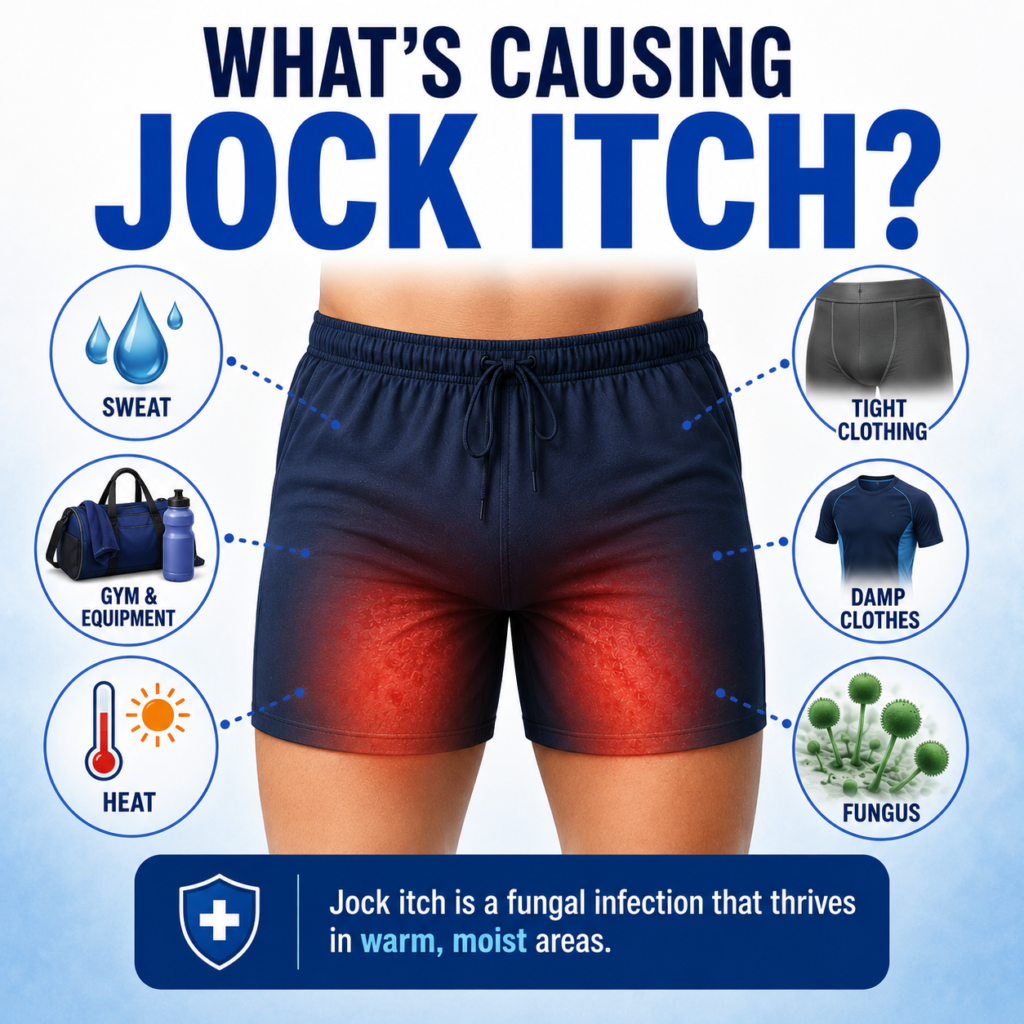
What Is Jock Itch?
Jock itch, also called tinea cruris, is a fungal infection of the skin in the groin area.
It is caused by dermatophytes, the same group of fungi responsible for athlete’s foot and ringworm.
The fungus thrives in warm, moist areas of the body, making the groin especially vulnerable.
Jock itch usually affects the:
- Inner thighs
- Groin folds
- Buttocks
The infection usually does not involve the scrotum or penis, which can help distinguish it from other skin conditions.
Common Symptoms
Symptoms may include:
- Intense itching
- Burning sensation
- Red or reddish-brown rash
- Scaly or flaky skin
- Raised, well-defined border around the rash
- Rash that spreads outward over time
Symptoms often worsen with sweating or exercise.
Jock Itch at a Glance
| Mild Infection | More Severe Infection |
|---|---|
| Mild itching | Intense itching or burning |
| Small rash | Rash spreads across the groin or thighs |
| Improves with over-the-counter treatment | Persistent or recurrent infection |
| Minimal discomfort | Skin cracking or significant irritation |
Did You Know?
Jock itch often develops after athlete’s foot because the fungus can spread from the feet to the groin through towels, clothing, or by putting on underwear after touching infected feet.
What Causes Jock Itch?
Jock itch develops when dermatophyte fungi multiply on warm, moist skin.
The infection can spread through:
- Direct skin-to-skin contact
- Shared towels or clothing
- Contaminated gym equipment
- Contact with infected feet or socks
Sweating and tight clothing create an ideal environment for fungal growth.
Who Is More Likely to Get Jock Itch?
Your risk is higher if you:
- Sweat heavily
- Exercise frequently
- Wear tight-fitting clothing
- Live in a hot or humid climate
- Have athlete’s foot
- Have diabetes
- Have a weakened immune system
How Is Jock Itch Treated?
Most cases improve with antifungal medications.
| Treatment | Examples |
| Antifungal creams | Terbinafine, clotrimazole, miconazole |
| Antifungal sprays | Helpful for larger affected areas |
| Antifungal powders | Reduce moisture while treating infection |
| Oral antifungal medication | Reserved for severe, widespread, or persistent infections |
Continue treatment for the full recommended course, even if the rash improves sooner.
How Can You Prevent Jock Itch?
Good hygiene and moisture control can reduce your risk.
| Prevention Tips |
| Keep the groin clean and dry |
| Shower after exercise |
| Dry thoroughly before getting dressed |
| Wear loose-fitting, breathable underwear |
| Change sweaty clothing promptly |
| Treat athlete’s foot promptly |
| Avoid sharing towels or clothing |
Myths vs. Facts
| Myth | Fact |
| Only athletes get jock itch. | Anyone can develop jock itch. |
| Poor hygiene is the only cause. | Warm, moist skin and fungal exposure are the main causes. |
| Steroid creams cure jock itch. | Steroids alone can actually worsen fungal infections. |
| Once treated, it never returns. | Reinfection is common without preventive measures. |
When Should You See a Healthcare Provider?
Schedule an appointment if you:
- Do not improve after two weeks of antifungal treatment
- Have a rash that continues to spread
- Develop severe pain, swelling, or drainage
- Have diabetes or a weakened immune system
- Experience frequent recurrences
- Are unsure whether the rash is a fungal infection
These situations may require prescription medication or evaluation for another skin condition.
Frequently Asked Questions
Is jock itch contagious?
Yes. It can spread through direct skin contact or shared personal items such as towels and clothing.
Can women get jock itch?
Yes. Although it is more common in men, women can also develop jock itch.
Can I exercise if I have jock itch?
Yes, but shower afterward, dry the area well, and change into clean, dry clothing as soon as possible.
Can jock itch come back?
Yes. Keeping the area clean and dry and treating athlete’s foot promptly can help reduce the risk of recurrence.
What Should You Do Next?
If you notice an itchy, red rash in the groin area, starting antifungal treatment early often leads to faster improvement and helps prevent the infection from spreading. If symptoms do not improve, keep coming back, or become severe, schedule an evaluation with a healthcare provider to confirm the diagnosis and discuss additional treatment options.
References
-
Centers for Disease Control and Prevention. Ringworm (Includes Jock Itch)
https://www.cdc.gov/ringworm/
-
DermNet NZ. Tinea Cruris (Jock Itch)
https://dermnetnz.org/topics/tinea-cruris
-
Merck Manual Consumer Version. Jock Itch (Tinea Cruris)
https://www.merckmanuals.com/home/skin-disorders/fungal-skin-infections/jock-itch-tinea-cruris
-
Cleveland Clinic. Jock Itch (Tinea Cruris)
https://my.clevelandclinic.org/health/diseases/22105-jock-itch