
Nausea and Vomiting: Causes, Treatment, and When to Seek Medical Care
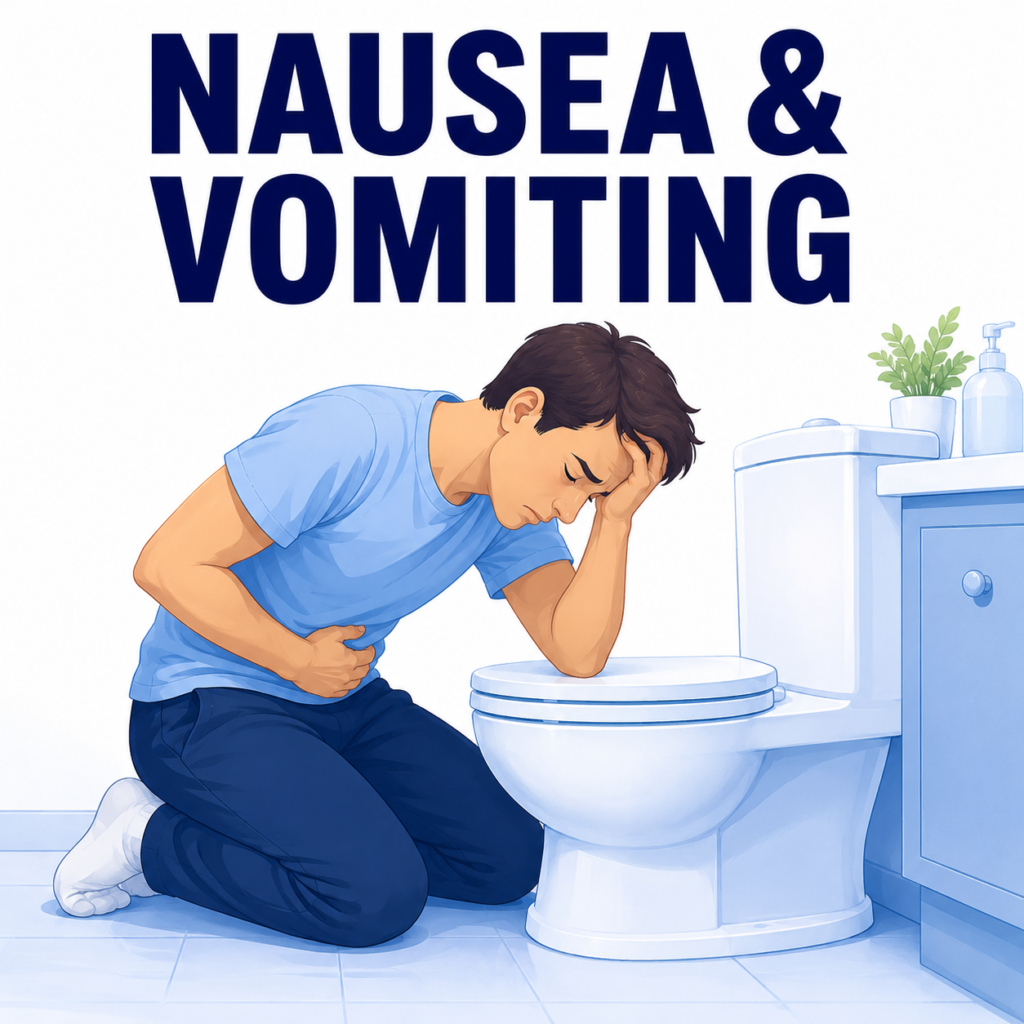
What Are Nausea and Vomiting?
Nausea is the unpleasant sensation that you may need to vomit.
Vomiting is the forceful emptying of stomach contents through the mouth.
Although they often occur together, nausea can happen without vomiting, and vomiting can occur without significant nausea.
These symptoms are not diseases themselves—they are signs that something else is affecting your digestive system or another part of your body.
Common Symptoms
Depending on the cause, you may experience:
- Upset stomach
- Feeling like you need to vomit
- Vomiting food or liquids
- Loss of appetite
- Abdominal discomfort or cramping
- Dizziness
- Fatigue
- Signs of dehydration, such as dry mouth or dark urine
Other symptoms, such as diarrhea, fever, headache, or abdominal pain, may help identify the underlying cause.
Nausea and Vomiting at a Glance
| Mild Illness | More Serious Illness |
|---|---|
| Improves within 24–48 hours | Lasts several days or continues worsening |
| Able to keep some fluids down | Unable to keep fluids down |
| Mild dehydration or none | Moderate to severe dehydration |
| Symptoms gradually improve | Severe pain, blood in vomit, or neurologic symptoms |
Did You Know?
Dehydration is often the biggest concern with repeated vomiting. Taking small, frequent sips of fluids is usually better tolerated than drinking large amounts at once. Oral rehydration solutions can help replace both fluids and electrolytes.
What Causes Nausea and Vomiting?
There are many possible causes.
Common causes include:
- Viral gastroenteritis (“stomach flu”)
- Food poisoning
- Motion sickness
- Pregnancy (morning sickness)
- Migraine headaches
- Certain medications
- Acid reflux (GERD)
- Anxiety
- Alcohol use
Less common but more serious causes include:
- Appendicitis
- Gallbladder disease
- Intestinal blockage
- Pancreatitis
- Concussion or head injury
- Diabetic ketoacidosis
- Heart attack (especially in women and older adults)
The cause often depends on your age, other symptoms, and how long the nausea and vomiting have been present.
Who Is More Likely to Experience Nausea and Vomiting?
Your risk is higher if you:
- Have recently been around someone with a stomach virus
- Eat contaminated food
- Are pregnant
- Have migraines
- Take medications such as chemotherapy, opioids, or certain antibiotics
- Have motion sickness
- Have underlying digestive disorders
How Are Nausea and Vomiting Treated?
Treatment depends on the underlying cause.
| Treatment | How It Helps |
| Small, frequent sips of water or oral rehydration solution | Prevents dehydration |
| Oral rehydration solutions (such as Pedialyte®) | Replaces fluids and electrolytes |
| Bland foods (bananas, rice, applesauce, toast, crackers) | Easier to tolerate once vomiting improves |
| Rest | Helps recovery |
| Prescription anti-nausea medications | Used when appropriate based on the cause |
| Treatment of the underlying illness | Resolves the symptoms |
Avoid fatty, greasy, spicy, or highly seasoned foods until you are feeling better. Alcohol and caffeine may also worsen symptoms.
How Can You Help Prevent Nausea and Vomiting?
Prevention depends on the cause.
| Prevention Tips |
| Wash your hands frequently |
| Practice safe food handling |
| Stay well hydrated |
| Avoid foods that trigger nausea |
| Limit alcohol intake |
| Take motion sickness medication before travel if recommended |
| Eat small meals during pregnancy if morning sickness occurs |
| Take medications exactly as prescribed |
When Should You See a Healthcare Provider?
Schedule an appointment if you:
- Vomiting lasts more than 48 hours
- Nausea lasts longer than a few days without improvement
- You cannot keep fluids down
- You develop signs of dehydration
- You lose weight unintentionally
- Symptoms keep recurring
Seek emergency medical care immediately if you have:
- Vomit containing blood or material that looks like coffee grounds
- Bright green vomit
- Severe abdominal pain
- Chest pain
- Confusion or difficulty staying awake
- Severe headache with neck stiffness
- Signs of severe dehydration (very little urine, dizziness, fainting)
- Vomiting after a head injury
Frequently Asked Questions
What should I drink if I’m vomiting?
Take small, frequent sips of water or an oral rehydration solution. Drinking too much at once may trigger more vomiting.
When can I start eating again?
Once vomiting has stopped, begin with small amounts of bland, easy-to-digest foods such as crackers, toast, rice, bananas, or applesauce.
Is vomiting always contagious?
No. Some causes, such as viral gastroenteritis, are contagious, while others, such as pregnancy, migraines, or medication side effects, are not.
When should I worry about dehydration?
Seek medical attention if you have very dark urine, urinate very little, feel dizzy when standing, have a dry mouth, or cannot keep fluids down.
What Should You Do Next?
If you develop nausea or vomiting, focus first on preventing dehydration by taking small sips of fluids and gradually returning to bland foods as tolerated. If symptoms persist, you cannot keep fluids down, or you develop severe pain, bloody vomit, or signs of dehydration, seek prompt medical evaluation. Early treatment can help identify the underlying cause and prevent complications.
References
Mayo Clinic. Nausea and Vomiting: Symptoms
https://www.mayoclinic.org/symptoms/nausea/basics/definition/sym-20050736
Merck Manual Consumer Version. Nausea and Vomiting in Adults
https://www.merckmanuals.com/home/digestive-disorders/symptoms-of-digestive-disorders/nausea-and-vomiting-in-adults
National Institute of Diabetes and Digestive and Kidney Diseases. Symptoms & Causes of Food Poisoning
https://www.niddk.nih.gov/health-information/digestive-diseases/food-poisoning/symptoms-causesg