

Motion Sickness Prevention: How to Avoid Nausea While Traveling
Whether you’re traveling by car, airplane, boat, train, or amusement ride, motion sickness can cause nausea, dizziness, and vomiting that may interfere with your trip. While some people rarely experience symptoms, others become sick even during short journeys.
Fortunately, motion sickness is often preventable. Understanding what causes it and using simple strategies before and during travel can greatly reduce your chances of becoming ill.
What Is Motion Sickness?
Motion sickness occurs when your brain receives conflicting information from your eyes, inner ears, and muscles about movement.
For example, when reading in a moving car, your inner ear senses motion, but your eyes remain focused on a stationary page. This mismatch confuses the brain and can trigger motion sickness symptoms.
Motion sickness can occur during:
- Car travel
- Air travel
- Boat or cruise travel
- Train travel
- Bus travel
- Virtual reality experiences
- Amusement park rides
Who Is More Likely to Get Motion Sickness?
Anyone can develop motion sickness, but some people are more susceptible.
Risk factors include:
- Previous motion sickness
- Migraine headaches
- Pregnancy
- Inner ear disorders
- Family history of motion sickness
- Anxiety
- Traveling on rough seas or winding roads
Children between the ages of 2 and 12 years are also commonly affected, although many outgrow it with age.
Common Symptoms
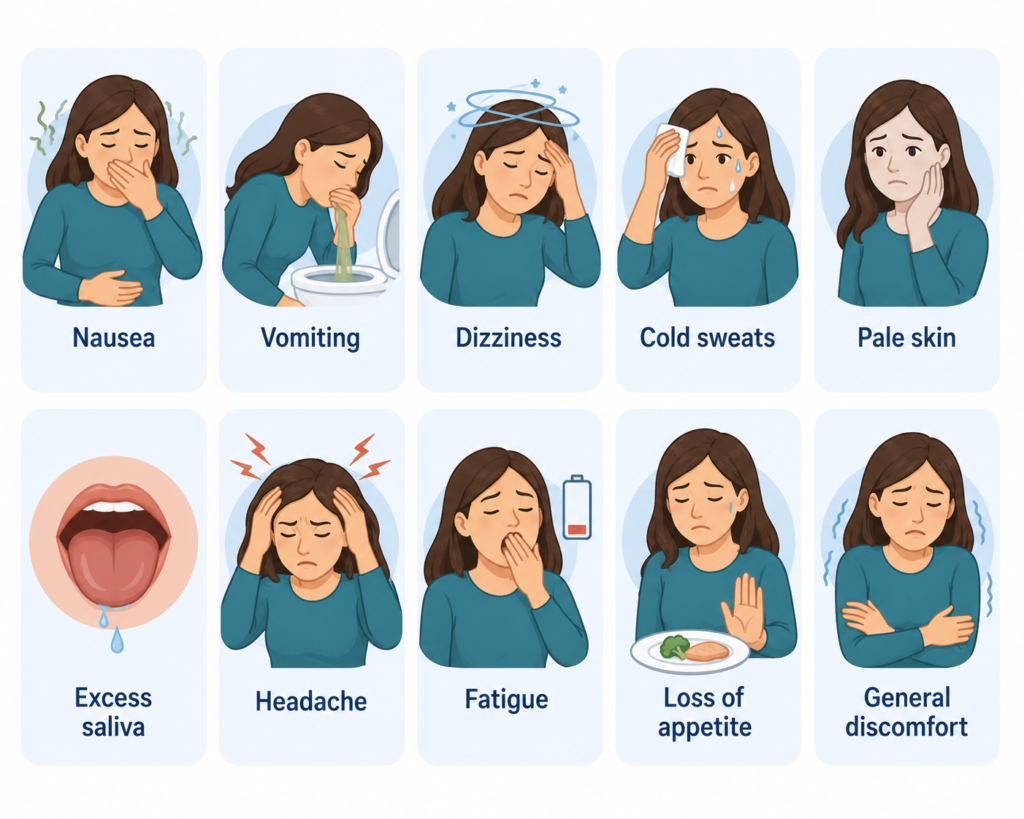
Image of common symptoms of motion sickness
Symptoms often begin gradually and may worsen if movement continues.
Common symptoms include:
- Nausea
- Vomiting
- Dizziness
- Cold sweats
- Pale skin
- Excessive saliva
- Fatigue
- Headache
- Loss of appetite
- General discomfort
Symptoms usually improve after the motion stops.
How to Prevent Motion Sickness
Many simple measures can significantly reduce your risk.
1. Choose the Best Seat
Where you sit can make a difference.
In a car
- Sit in the front passenger seat.
- Look through the windshield rather than to the side.
On an airplane
- Choose a seat over the wings, where movement is least noticeable.
On a boat
- Stay near the middle of the ship on a lower deck.
- Face forward and focus on the horizon.
On a train
- Sit facing the direction of travel when possible.
2. Look at the Horizon
Keeping your eyes focused on a stable point in the distance helps your brain match what your inner ear is sensing.
Avoid:
- Reading
- Looking at your phone
- Using a tablet or laptop
- Watching videos
3. Keep Fresh Air Flowing
Fresh air may reduce nausea.
Try to:
- Open a window in the car
- Aim air vents toward your face
- Spend time on deck if you’re on a boat
4. Avoid Heavy Meals Before Travel
Large, greasy, or spicy meals may increase nausea.
Instead:
- Eat a light meal
- Choose bland foods
- Stay hydrated
- Limit alcohol
5. Stay Hydrated
Drink water regularly before and during travel.
Dehydration can worsen dizziness and nausea.
6. Limit Strong Odors
Perfume, smoke, gasoline, and certain foods may worsen symptoms in sensitive individuals.
7. Motion Sickness Medications
Several medications can help prevent symptoms.
Most work best when taken 30 to 60 minutes before travel.
Antihistamines
Common options include:
- Dimenhydrinate
- Meclizine
These medications can be very effective but often cause:
- Drowsiness
- Dry mouth
- Blurred vision
Avoid driving or operating machinery if they make you sleepy.
Scopolamine Patch
A prescription scopolamine patch is one of the most effective options for preventing motion sickness, especially during cruises or long trips.
The patch is typically applied behind the ear at least 4 hours before travel and provides protection for up to 72 hours.
Possible side effects include:
- Dry mouth
- Blurred vision
- Drowsiness
- Dizziness
It is not appropriate for everyone, so speak with your healthcare provider before using it.
Do Natural Remedies Work?
Some people find relief with non-medication approaches.
Examples include:
- Ginger
- Acupressure wristbands
- Controlled breathing
- Looking at the horizon
- Fresh air
Scientific evidence for these methods varies, and they may not work for everyone.
Motion Sickness in Children
Children frequently develop motion sickness during car rides.
Helpful strategies include:
- Have them look out the front window.
- Avoid books, tablets, and phones.
- Keep the car cool.
- Offer light snacks instead of heavy meals.
- Plan frequent breaks on long trips.
Always follow age-specific dosing instructions before giving children motion sickness medications.
When Should You See a Healthcare Provider?
Most motion sickness is harmless.
However, seek medical evaluation if:
- Symptoms are severe or frequent.
- Vomiting leads to dehydration.
- Symptoms continue long after travel ends.
- Motion sickness suddenly develops in adulthood without an obvious trigger.
- You experience hearing loss, severe headaches, weakness, or vision changes.
These symptoms may suggest another medical condition rather than simple motion sickness.
Quick Prevention Checklist
| Before Travel | ✓ |
|---|---|
| Choose the best seat | ☐ |
| Eat a light meal | ☐ |
| Stay hydrated | ☐ |
| Take medication if needed | ☐ |
| Avoid alcohol | ☐ |
| Bring ginger or acupressure bands if helpful | ☐ |
| During Travel | ✓ |
| Look at the horizon | ☐ |
| Avoid reading or screens | ☐ |
| Get fresh air | ☐ |
| Stay hydrated | ☐ |
| Take breaks on long drives | ☐ |
What Should You Do Next?
If you frequently experience motion sickness, planning ahead can make travel much more comfortable. Simple changes such as choosing the right seat, staying hydrated, avoiding screens, and using preventive medications when appropriate can significantly reduce symptoms. If motion sickness is severe, persistent, or interferes with daily activities, talk with your healthcare provider about the most appropriate treatment options.
References
Centers for Disease Control and Prevention. Motion Sickness. https://wwwnc.cdc.gov/travel/page/motion-sickness
Centers for Disease Control and Prevention. CDC Yellow Book: Motion Sickness. https://www.cdc.gov/yellow-book/
Mayo Clinic. Motion sickness: Symptoms and causes. https://www.mayoclinic.org/diseases-conditions/motion-sickness/
Merck Manual Consumer Version. Motion sickness. https://www.merckmanuals.com/home