
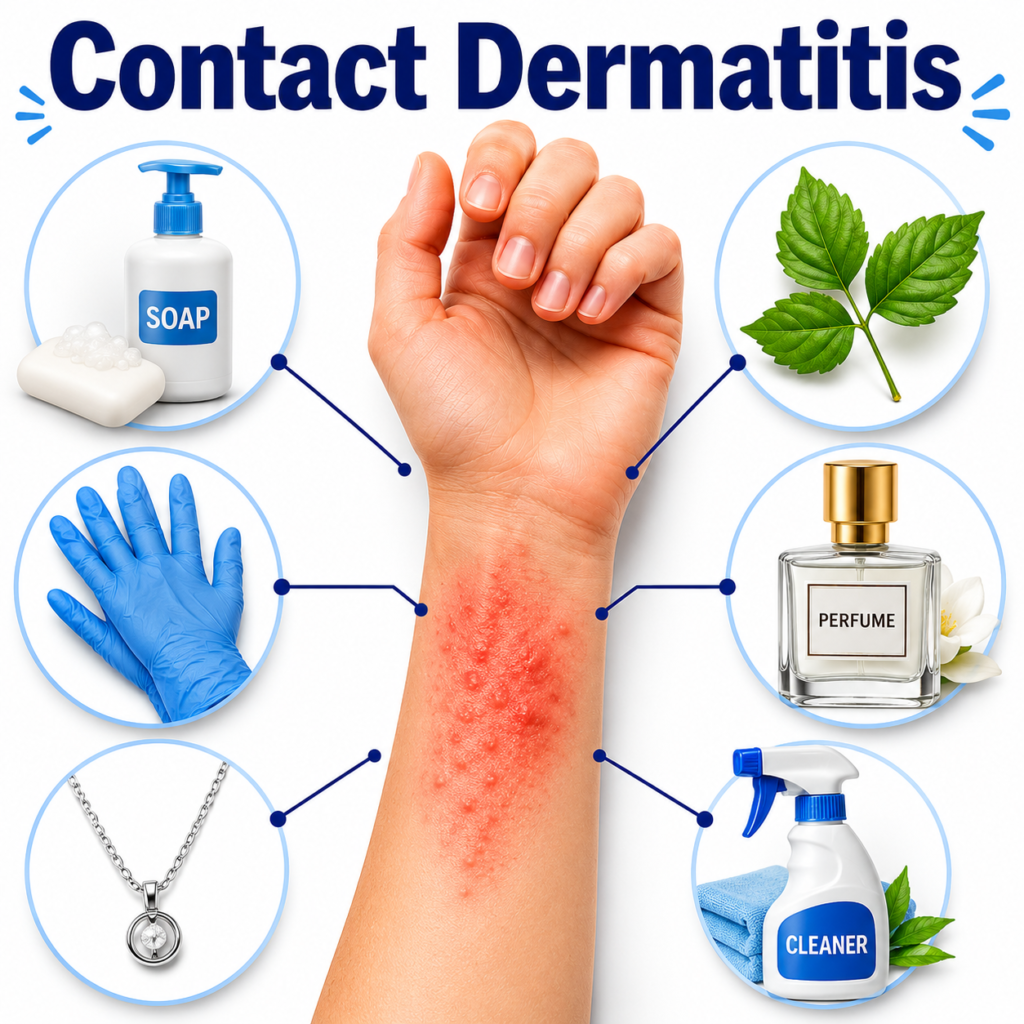
Contact Dermatitis: Recognizing, Treating, and Preventing Skin Reactions
An itchy, red rash that appears after touching a new soap, plant, cosmetic, or piece of jewelry may be more than simple skin irritation. Contact dermatitis is one of the most common skin conditions and occurs when the skin reacts to a substance that either irritates it or triggers an allergic response.
Most cases improve once the offending substance is identified and avoided. Knowing the difference between irritant and allergic contact dermatitis can help you prevent future flare-ups and choose the most effective treatment.
What Is Contact Dermatitis?
Contact dermatitis is inflammation of the skin caused by direct contact with an irritating substance or an allergen.
It is not contagious, and you cannot spread it to another person through skin contact.
There are two main types:
1. Irritant Contact Dermatitis
This is the most common form.
It develops when a substance directly damages the skin’s protective barrier. The reaction may occur after a single exposure to a strong irritant or after repeated exposure to milder irritants.
2. Allergic Contact Dermatitis
This occurs when the immune system develops an allergy to a specific substance. Once sensitized, even small amounts of the allergen can trigger a rash after future exposures.
What Causes Contact Dermatitis?
Common Irritants
- Soaps
- Detergents
- Household cleaners
- Hand sanitizers
- Bleach
- Solvents
- Frequent hand washing
- Shampoos
- Disinfectants
- Cement
- Fiberglass
Common Allergens
- Poison ivy
- Poison oak
- Poison sumac
- Nickel jewelry
- Fragrances
- Preservatives in cosmetics
- Hair dye
- Latex
- Certain topical antibiotics, such as neomycin
- Adhesives in bandages
- Rubber chemicals
Risk Factors
You may be more likely to develop contact dermatitis if you:
- Have eczema
- Work in healthcare
- Frequently wash your hands
- Work with cleaning products or chemicals
- Garden or spend time outdoors
- Wear costume jewelry
- Frequently use cosmetics or skin care products
- Work in construction, food service, or hair styling
Common Symptoms
Symptoms depend on the cause and severity of the reaction.
They may include:
- Red rash
- Itching
- Burning
- Dry skin
- Cracked skin
- Swelling
- Tenderness
- Small bumps
- Blisters
- Oozing fluid
- Crusting
- Thickened skin with chronic exposure
The rash usually develops only where the skin came into contact with the offending substance.
Where Does Contact Dermatitis Occur?
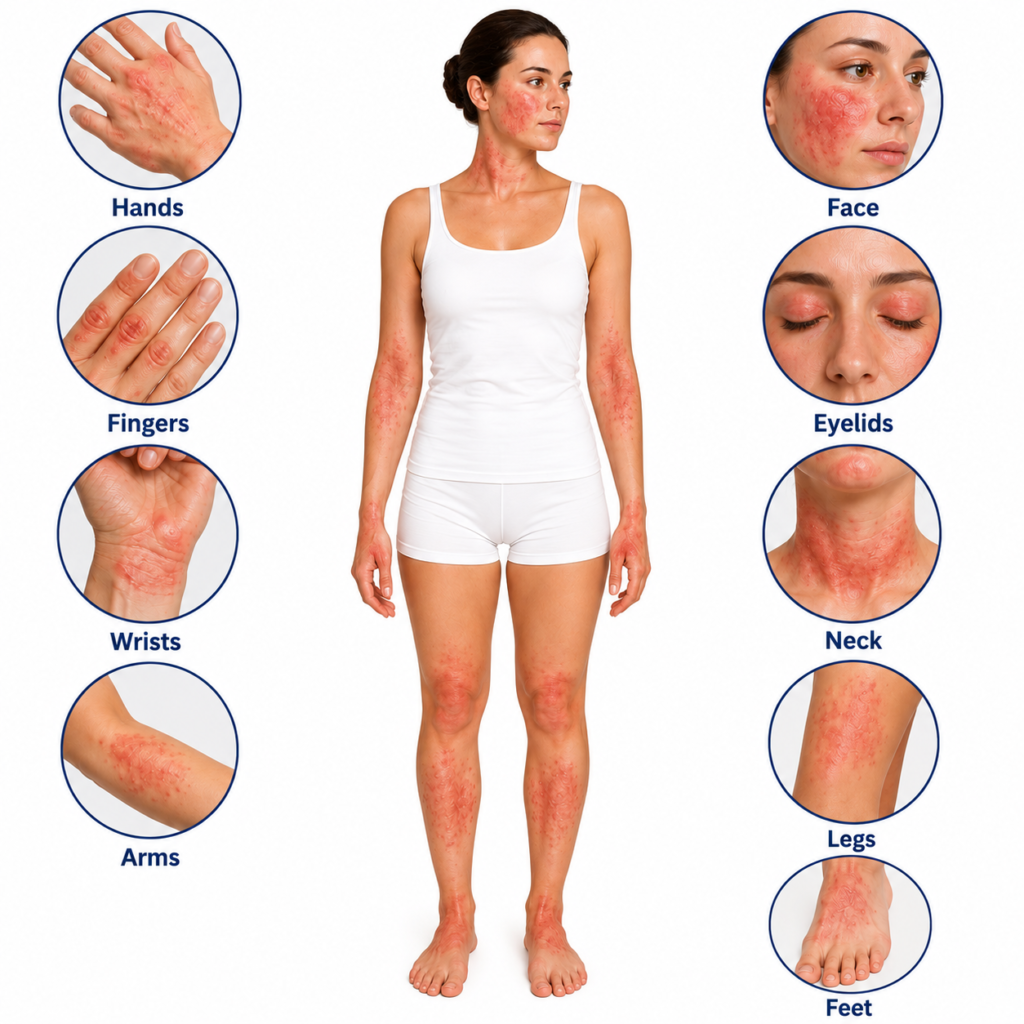
Image depicts common location of contact dermatitis
Common locations include:
- Hands
- Fingers
- Wrists
- Face
- Eyelids
- Neck
- Arms
- Legs
- Feet
The location often provides clues about the trigger.
Irritant vs. Allergic Contact Dermatitis
| Irritant Contact Dermatitis | Allergic Contact Dermatitis |
|---|---|
| Most common type | Less common |
| Skin barrier is damaged | Immune system reaction |
| Can occur after first exposure | Requires prior sensitization |
| Burning often more prominent | Itching often more prominent |
| Limited to areas of contact | May spread beyond the contact area |
How Contact Dermatitis Develops
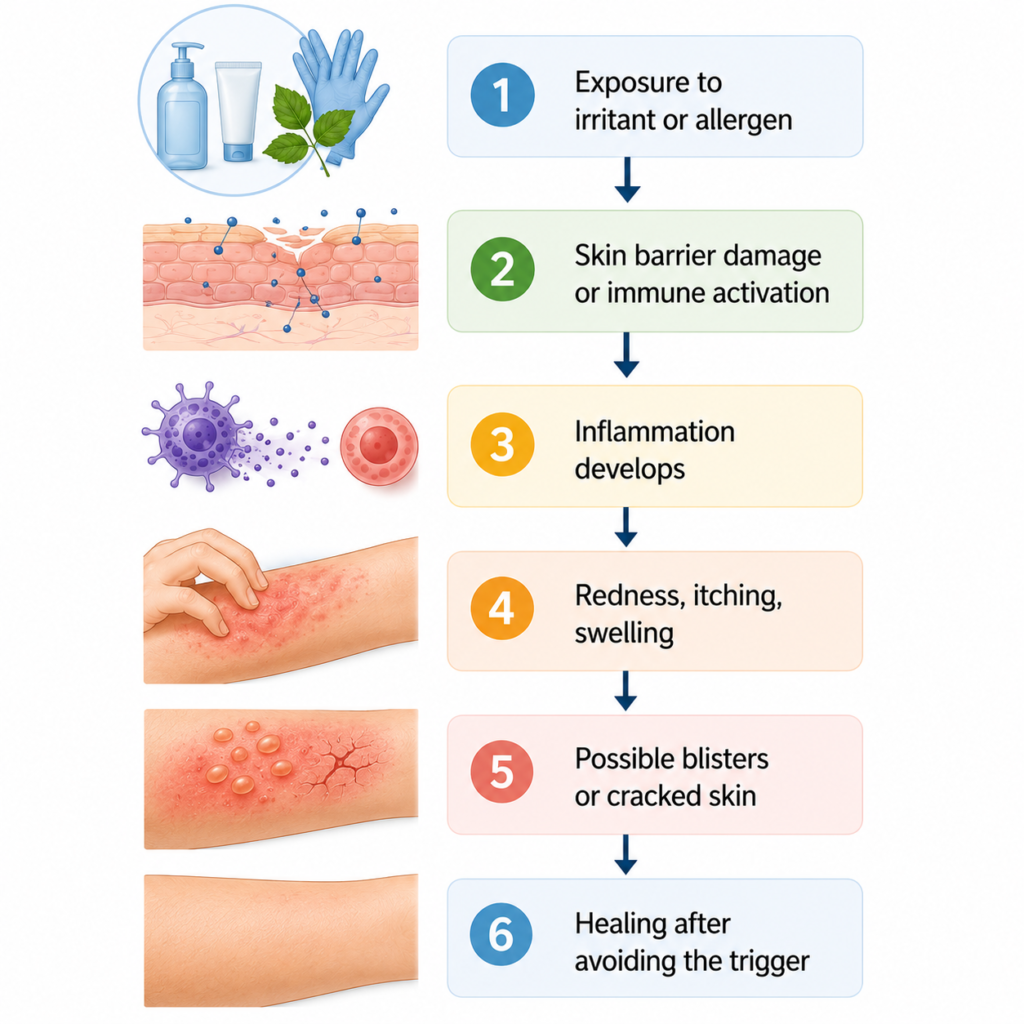
Image depicts the development of contact dermatitis
How Is Contact Dermatitis Diagnosed?
Diagnosis is usually based on:
- Medical history
- Recent exposures
- Appearance of the rash
- Distribution of the rash
If the trigger is unclear or symptoms continue to recur, your healthcare provider may recommend:
- Patch testing to identify allergens
- Referral to a dermatologist or allergist
Patch testing differs from skin prick testing because it evaluates delayed allergic reactions rather than immediate allergies.
Treatment Options
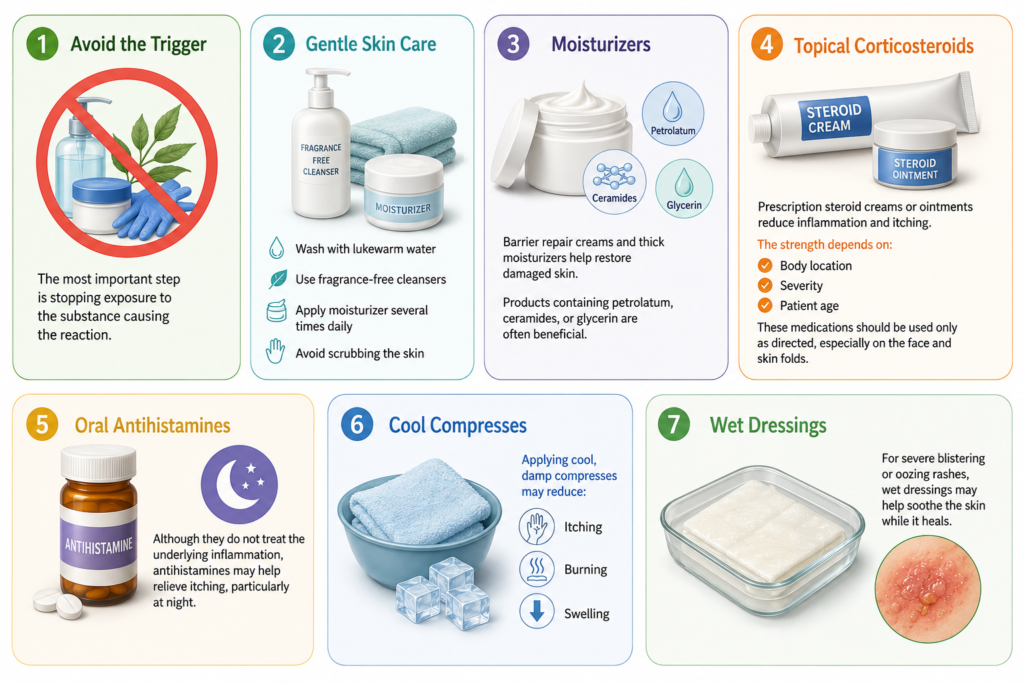
Image depicts various treatment options for contact dermatitis
Treatment depends on the severity of the rash and whether the cause is irritant or allergic.
1. Avoid the Trigger
The most important step is stopping exposure to the substance causing the reaction.
2. Gentle Skin Care
- Wash with lukewarm water
- Use fragrance-free cleansers
- Apply moisturizer several times daily
- Avoid scrubbing the skin
3. Moisturizers
Barrier repair creams and thick moisturizers help restore damaged skin.
Products containing:
- Petrolatum
- Ceramides
- Glycerin
are often beneficial.
4. Topical Corticosteroids
Prescription steroid creams or ointments reduce inflammation and itching.
The strength depends on:
- Body location
- Severity
- Patient age
These medications should be used only as directed, especially on the face and skin folds.
5. Oral Antihistamines
Although they do not treat the underlying inflammation, antihistamines may help relieve itching, particularly at night.
6. Cool Compresses
Applying cool, damp compresses may reduce:
- Itching
- Burning
- Swelling
7. Wet Dressings
For severe blistering or oozing rashes, wet dressings may help soothe the skin while it heals.
Poison Ivy and Related Plants
Poison ivy, poison oak, and poison sumac contain an oily resin called urushiol.
If exposed:
- Wash the skin as soon as possible
- Wash clothing and shoes
- Bathe pets that may have contacted the plants
- Avoid scratching blisters
The fluid inside poison ivy blisters does not spread the rash. New areas usually appear because of delayed absorption or continued exposure to urushiol.
Possible Complications
Most cases heal without permanent damage.
Complications may include:
- Secondary bacterial skin infection
- Chronic eczema
- Thickened skin
- Skin discoloration after healing
- Sleep disruption from itching
Prevention
You can reduce your risk by:
- Identifying personal triggers
- Wearing protective gloves
- Moisturizing regularly
- Choosing fragrance-free skin care products
- Avoiding nickel-containing jewelry if allergic
- Washing skin after outdoor activities
- Using protective clothing when gardening
- Reading ingredient labels on cosmetics
When Should You See a Healthcare Provider?
Seek medical care if:
- The rash is severe
- The rash continues to spread
- Symptoms do not improve after one to two weeks
- The rash affects your face or genitals
- Blisters become extensive
- You suspect a skin infection
- The trigger is unknown or keeps recurring
Seek Emergency Medical Care Immediately If
Seek emergency care if you experience:
- Difficulty breathing
- Swelling of the face, lips, tongue, or throat
- Widespread hives with trouble breathing
- Signs of a severe allergic reaction
- High fever with a rapidly spreading rash
What Should You Do Next?
Most cases of contact dermatitis improve once the offending substance is identified and avoided. If your rash is severe, keeps returning, or does not improve with appropriate skin care and treatment, consult a healthcare provider. Identifying the trigger early can help prevent future flare-ups and protect your skin’s natural barrier.
References
- American Academy of Dermatology. Contact Dermatitis: Overview. https://www.aad.org/public/diseases/eczema/types/contact-dermatitis
- National Eczema Association. Contact Dermatitis. https://nationaleczema.org/types-of-eczema/contact-dermatitis/
- American Academy of Family Physicians. Diagnosis and Management of Contact Dermatitis. https://www.aafp.org/pubs/afp/issues/2010/0801/p249.html
- Mayo Clinic. Contact Dermatitis. https://www.mayoclinic.org/diseases-conditions/contact-dermatitis/symptoms-causes/syc-20352742