
Pain During Sex: Possible Causes
Pain during sex, also known as dyspareunia, is a common symptom that affects many women at some point in their lives. While occasional discomfort may occur for a variety of reasons, persistent or recurrent pain is not considered normal and may signal an underlying medical condition.
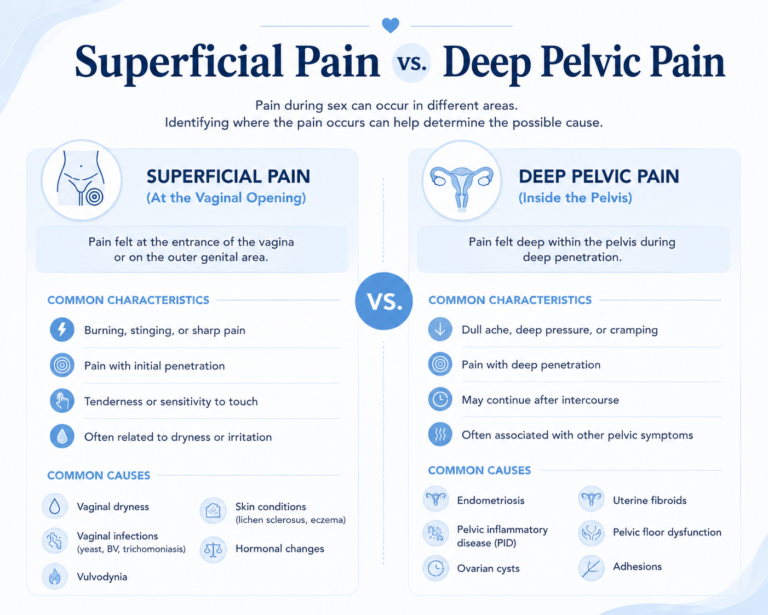
Pain can occur at the vaginal opening, deeper inside the pelvis, or both. Identifying the location and timing of the pain can help healthcare professionals determine the underlying cause.
This guide reviews common causes of painful intercourse, how it is evaluated, and when to seek medical attention.
What Is Pain During Sex?
Pain during sex refers to persistent or recurring discomfort experienced before, during, or after vaginal intercourse.
The pain may be:
• At the vaginal opening
• Deep inside the pelvis
• Sharp, burning, aching, or cramping
• Mild or severe
Some women experience pain only occasionally, while others develop symptoms that interfere with intimacy and quality of life.
Common Symptoms
Symptoms may include:
• Burning during penetration
• Pain at the vaginal opening
• Deep pelvic pain
• Vaginal dryness
• Tightness of the pelvic muscles
• Pain that continues after intercourse
• Bleeding after intercourse
Common Causes of Pain During Sex
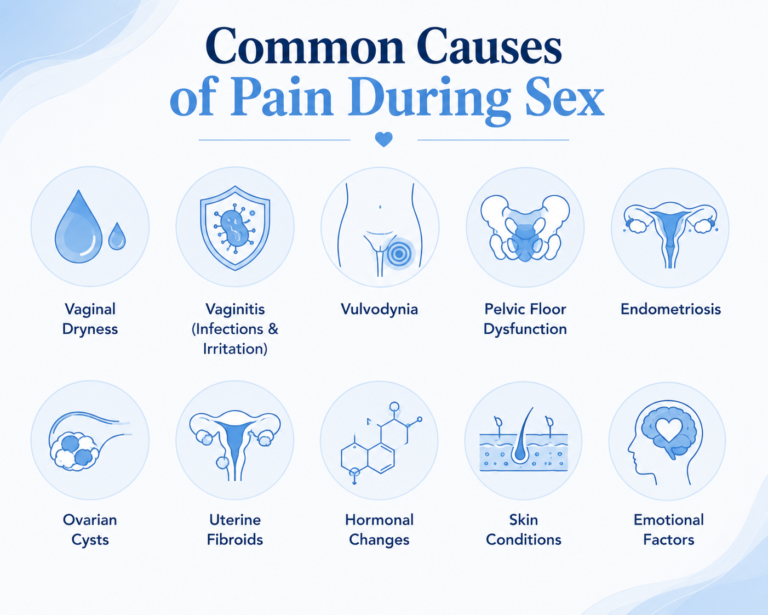
Vaginal Dryness
Insufficient lubrication is one of the most common causes of painful intercourse.
Dryness may occur because of:
• Menopause
• Breastfeeding
• Certain medications
• Hormonal changes
• Inadequate arousal
Vaginitis
Inflammation of the vagina from infections or irritation can make intercourse painful.
Examples include:
• Bacterial vaginosis
• Yeast infection
• Trichomoniasis
• Irritant vaginitis
Vulvodynia
Vulvodynia is chronic pain affecting the vulva without an obvious infection or skin disease.
Pain may be:
• Burning
• Stinging
• Rawness
• Pain with light touch
Pelvic Floor Dysfunction
Overly tight pelvic floor muscles may make penetration painful.
Symptoms may include:
• Muscle tightness
• Difficulty with penetration
• Pelvic pressure
• Pain after intercourse
Endometriosis
Endometriosis can cause deep pelvic pain during intercourse.
Other symptoms may include:
• Painful periods
• Chronic pelvic pain
• Infertility
Ovarian Cysts
Certain ovarian cysts may contribute to deep pelvic pain, particularly during intercourse.
Uterine Fibroids
Fibroids may cause:
• Deep pelvic discomfort
• Heavy menstrual bleeding
• Pelvic pressure
Hormonal Changes
Declining estrogen levels after menopause or during breastfeeding can lead to thinning of vaginal tissues and reduced lubrication.
Skin Conditions
Certain skin disorders affecting the vulva may cause pain.
Examples include:
• Lichen sclerosus
• Lichen planus
• Eczema
Emotional Factors
Stress, anxiety, past trauma, and relationship concerns may contribute to painful intercourse in some individuals.
Pain is real regardless of whether physical, emotional, or multiple factors contribute.
Common Causes at a Glance
| Cause | Typical Symptoms |
|---|---|
| Vaginal dryness | Burning, friction, discomfort |
| Vaginitis | Itching, discharge, odor, burning |
| Vulvodynia | Burning or stinging pain at the vaginal opening |
| Pelvic floor dysfunction | Muscle tightness, painful penetration |
| Endometriosis | Deep pelvic pain |
| Ovarian cyst | Deep pelvic discomfort |
| Fibroids | Pelvic pressure, heavy bleeding |
| Skin conditions | Itching, pain, skin changes |
How Is Pain During Sex Evaluated?
A healthcare professional may review your symptoms, medical history, medications, and perform an examination when appropriate.
Depending on your symptoms, additional evaluation may include:
Laboratory Testing
Testing may be recommended to evaluate for:
• Vaginal infections
• Sexually transmitted infections
• Hormonal changes
Imaging
When deeper pelvic pain is present, imaging such as a pelvic ultrasound may be recommended to evaluate for ovarian cysts, fibroids, or other pelvic conditions.
The evaluation is individualized based on the location of the pain, associated symptoms, age, and medical history.
Management Options
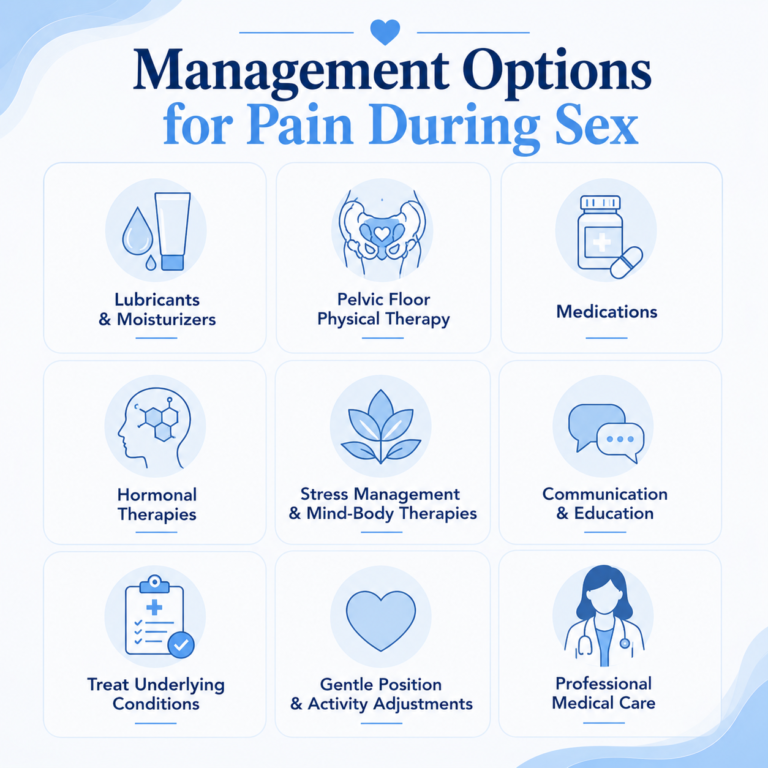
Management depends on the underlying cause.
Possible options may include:
• Treating vaginal infections
• Vaginal moisturizers or lubricants
• Pelvic floor physical therapy
• Topical medications
• Hormonal therapy when appropriate
• Oral medications for chronic pain conditions
• Counseling or cognitive behavioral therapy when emotional factors contribute
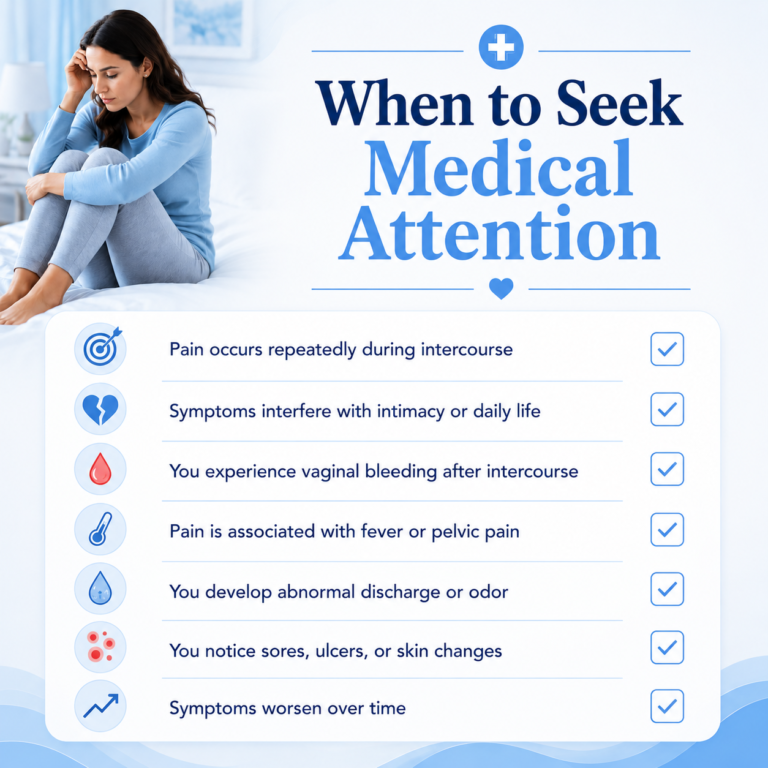
When Should You Seek Medical Attention?
Key Takeaway
Pain during sex is common, but it should not be considered a normal part of life. Many medical conditions—including vaginal dryness, infections, pelvic floor dysfunction, endometriosis, and vulvodynia—can contribute to painful intercourse. Identifying the underlying cause is the first step toward effective management and improving quality of life.
What Should You Do Next?
If pain during sex is persistent, worsening, or affecting your quality of life, consider discussing your symptoms with a healthcare professional. A thorough evaluation can help identify the underlying cause and guide appropriate treatment options.
References
- American College of Obstetricians and Gynecologists (ACOG): When Sex Is Painful
- American College of Obstetricians and Gynecologists (ACOG): Dyspareunia
- Office on Women’s Health: Pain During Sex
- Mayo Clinic: Painful Intercourse (Dyspareunia)
- Cleveland Clinic: Dyspareunia
- The Menopause Society: Genitourinary Syndrome of Menopause