

New Study Links Vitamins A and D to Better Lung Health in People With Asthma
Published July 2026
A new study suggests that vitamins A and D may play an important role in lung health for people living with asthma. Researchers found that higher blood levels of these vitamins were associated with better lung function, and in adults, vitamin D was also linked to slower biological aging of the lungs.
While the findings are encouraging, the study does not prove that taking vitamin supplements will improve asthma. Instead, it highlights an important area for future research and suggests that maintaining adequate vitamin levels may be beneficial as part of overall health.
What Did the Study Find?
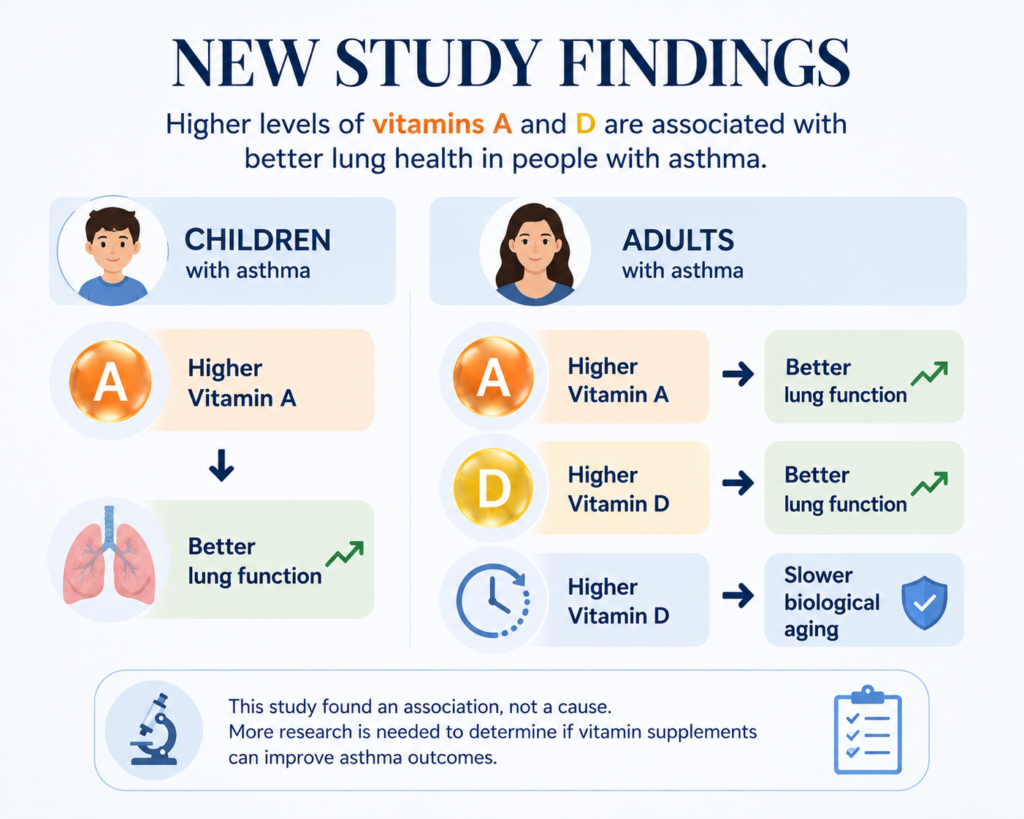
Image shows an overview of the findings from the new clinical study
Researchers analyzed data from more than 2,200 people with asthma, including:
- 1,165 children
- 1,041 adults
The study found that:
- Higher vitamin A levels were associated with better lung function in both children and adults.
- Higher vitamin D levels were associated with better lung function in adults.
- Adults with sufficient vitamin D levels also showed signs of slower biological (epigenetic) aging, suggesting healthier aging of lung tissue.
Why Are Vitamins A and D Important?
Both vitamins play important roles in the body beyond supporting vision and bone health.
Vitamin A
Vitamin A helps:
- Maintain healthy airway tissues
- Support immune function
- Regulate inflammation
- Promote normal lung development
Good dietary sources include:
- Carrots
- Sweet potatoes
- Spinach
- Eggs
- Milk
- Liver
Vitamin D
Vitamin D helps:
- Regulate the immune system
- Reduce excessive inflammation
- Support normal lung function
- Maintain healthy bones and muscles
Vitamin D is produced naturally when skin is exposed to sunlight and can also be obtained from:
- Fatty fish
- Fortified dairy products
- Fortified cereals
- Supplements (when appropriate)
How Might These Vitamins Affect Asthma?
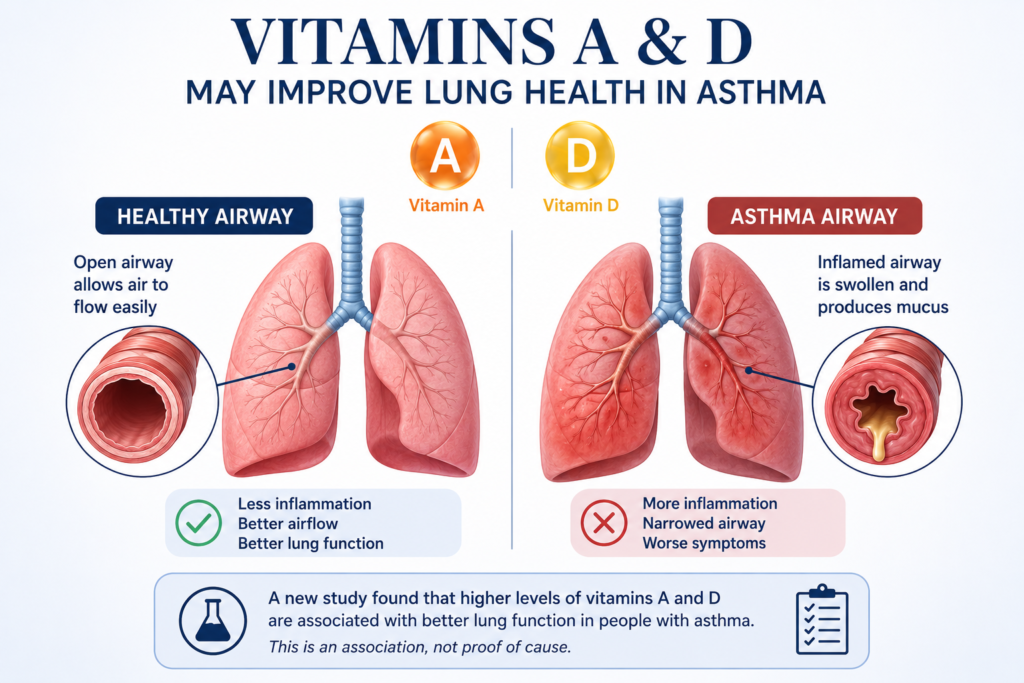
Image shows how vitamin A & D may improve lung health
The researchers looked beyond vitamin levels and studied how these nutrients influence gene activity.
They identified 248 genes involved in:
- Airway inflammation
- Lung development
- Immune regulation
- Cellular repair
The study also found that vitamins A and D appear to affect epigenetic mechanisms, including DNA methylation and microRNA activity. These processes help determine how genes are turned on or off without changing the underlying DNA sequence. These findings may help explain why higher vitamin levels were linked to better lung function.
Does This Mean You Should Start Taking Supplements?
Not necessarily.
This was an observational study, meaning researchers found an association but could not prove that vitamins caused the improvements in lung function.
People with higher vitamin levels may also have:
- Healthier diets
- More outdoor activity
- Better overall health
- Other lifestyle factors that improve asthma
Randomized clinical trials are still needed to determine whether vitamin A or vitamin D supplements can directly improve asthma outcomes. Experts accompanying the study cautioned against changing treatment recommendations based on this study alone.
What This Means for People With Asthma
The findings suggest that maintaining adequate vitamin A and vitamin D levels may be one part of supporting overall lung health.
If you have asthma, consider discussing with your healthcare provider whether testing for vitamin deficiencies is appropriate, particularly if you have risk factors for low vitamin D or poor nutrition.
These vitamins should not replace proven asthma treatments such as inhaled corticosteroids or other prescribed medications.
Bottom Line
This new research adds to growing evidence that nutrition may influence lung health.
Researchers found that people with asthma who had higher blood levels of vitamin A—and, in adults, vitamin D—tended to have better lung function. Adults with higher vitamin D levels also showed evidence of slower biological aging. Although these results are promising, more research is needed before vitamin supplementation can be recommended specifically to improve asthma.
References
BMJ Group press release: Higher vitamin A levels linked to better lung function in kids and adults with asthma
Thorax: The impact of vitamins A and D on lung function and regulatory epigenetics in adult and childhood asthma
PubMed: The impact of vitamins A and D on lung function and regulatory epigenetics in adult and childhood asthma