
Tinea Versicolor: Symptoms, Causes, Treatment, and Prevention
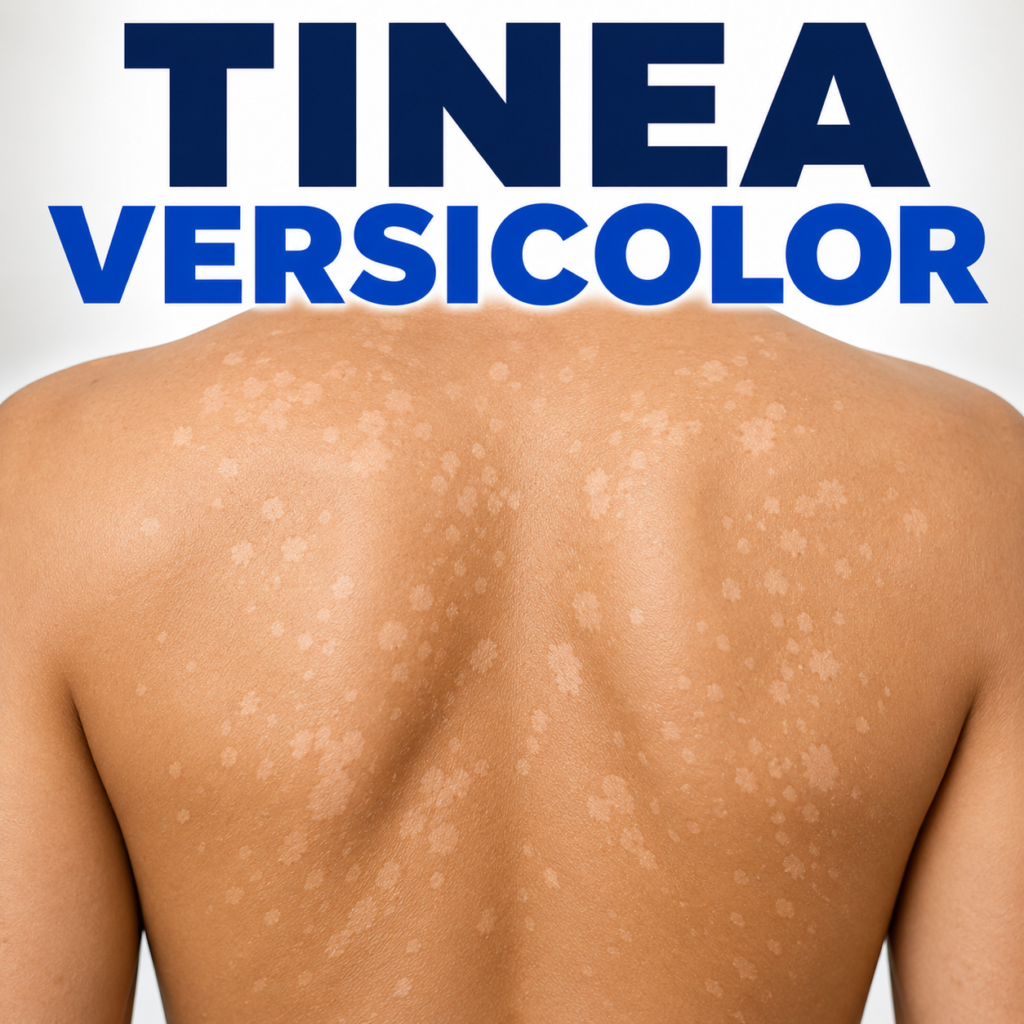
What Is Tinea Versicolor?
Tinea versicolor, also called pityriasis versicolor, is a common fungal skin infection caused by an overgrowth of a naturally occurring yeast called Malassezia.
This yeast normally lives on everyone’s skin without causing problems. However, when it grows excessively, it interferes with normal skin pigmentation, leading to patches of discoloration.
Tinea versicolor is not contagious and cannot be spread from person to person.
Common Symptoms
You may notice:
- White, tan, pink, salmon-colored, or brown patches
- Fine scaling of the skin
- Mild itching
- Patches that become more noticeable after sun exposure
- Spots that slowly enlarge and may join together
The rash most commonly appears on the:
- Chest
- Back
- Shoulders
- Neck
- Upper arms
Tinea Versicolor at a Glance
| Mild Infection | More Extensive Infection |
|---|---|
| A few small patches | Large patches covering much of the trunk |
| Minimal scaling | More noticeable scaling |
| Little or no itching | Mild itching |
| Responds well to topical treatment | May require prescription oral medication |
Did You Know?
Even after the fungus has been successfully treated, your skin color may take several weeks or even months to return to normal. The discoloration does not mean the infection is still active.
What Causes Tinea Versicolor?
The condition develops when Malassezia yeast grows out of control.
Factors that increase the risk include:
- Hot, humid weather
- Heavy sweating
- Oily skin
- Hormonal changes
- A weakened immune system
Although it is called “tinea,” it is caused by yeast, not the dermatophyte fungi that cause ringworm or athlete’s foot.
Who Is More Likely to Develop Tinea Versicolor?
Your risk is higher if you:
- Are a teenager or young adult
- Live in a warm, humid climate
- Sweat heavily
- Have oily skin
- Have a weakened immune system
The condition is more common during the summer months.
How Is Tinea Versicolor Treated?
Treatment depends on how extensive the rash is.
| Treatment | How It Helps |
| Selenium sulfide shampoo | Reduces yeast overgrowth |
| Ketoconazole shampoo | Kills the yeast |
| Topical antifungal creams (clotrimazole, miconazole, terbinafine) | Treat localized infections |
| Prescription oral antifungal medications | Used for widespread or recurrent infections |
For many people, medicated shampoos are applied to the affected skin, left on for several minutes, and then rinsed off.
Because recurrence is common, some people benefit from preventive treatment during warm weather.
How Can You Prevent Tinea Versicolor?
While it cannot always be prevented, you can reduce your risk by:
| Prevention Tips |
| Keep your skin as cool and dry as possible |
| Shower after heavy sweating |
| Wear lightweight, breathable clothing |
| Avoid excessive heat and humidity when possible |
| Use preventive medicated shampoo if recommended by your healthcare provider |
| Avoid oily skin products if they worsen your symptoms |
Myths vs. Facts
| Myth | Fact |
| Tinea versicolor is contagious. | It cannot spread from person to person. |
| The white patches mean the fungus is still active. | Skin color often takes months to normalize after treatment. |
| Poor hygiene causes tinea versicolor. | It results from overgrowth of yeast that normally lives on everyone’s skin. |
| Once treated, it never comes back. | Recurrence is common, especially in warm, humid climates. |
When Should You See a Healthcare Provider?
Schedule an appointment if you:
- Have widespread patches of discoloration
- Do not improve after using over-the-counter antifungal treatments
- Continue having frequent recurrences
- Are unsure whether the rash is tinea versicolor or another skin condition
- Have a weakened immune system
A healthcare provider can usually diagnose tinea versicolor by examining your skin and may use a Wood’s lamp or skin scraping if the diagnosis is uncertain.
Frequently Asked Questions
Is tinea versicolor contagious?
No. The yeast normally lives on everyone’s skin and cannot be spread through casual contact.
Why doesn’t my skin color return immediately?
The yeast disrupts normal pigment production. Even after treatment, your skin may need several weeks or months to regain its usual color.
Can tinea versicolor come back?
Yes. Recurrence is common, particularly during warm, humid weather.
Can I go swimming?
Yes. Swimming does not spread the condition to others, although chlorinated water does not treat the infection.
What Should You Do Next?
If you notice patches of skin that are lighter or darker than the surrounding skin, especially on your chest, back, or shoulders, consider using an over-the-counter antifungal shampoo or cream. If the rash is widespread, keeps returning, or does not improve after treatment, schedule an evaluation with a healthcare provider to confirm the diagnosis and discuss prescription treatment options.
References
-
American Academy of Dermatology Association. Tinea Versicolor: Overview
https://www.aad.org/public/diseases/a-z/tinea-versicolor-overview
-
American Academy of Dermatology Association. Tinea Versicolor: Diagnosis and Treatment
https://www.aad.org/public/diseases/a-z/tinea-versicolor-treatment
-
DermNet NZ. Pityriasis Versicolor
https://dermnetnz.org/topics/pityriasis-versicolor
-
Mayo Clinic. Tinea Versicolor: Symptoms and Causes
https://www.mayoclinic.org/diseases-conditions/tinea-versicolor/symptoms-causes/syc-20378385
-
Merck Manual Consumer Version. Tinea Versicolor
https://www.merckmanuals.com/home/skin-disorders/fungal-skin-infections/tinea-versicolor