
Rosacea: Symptoms, Causes, Treatment, and Prevention
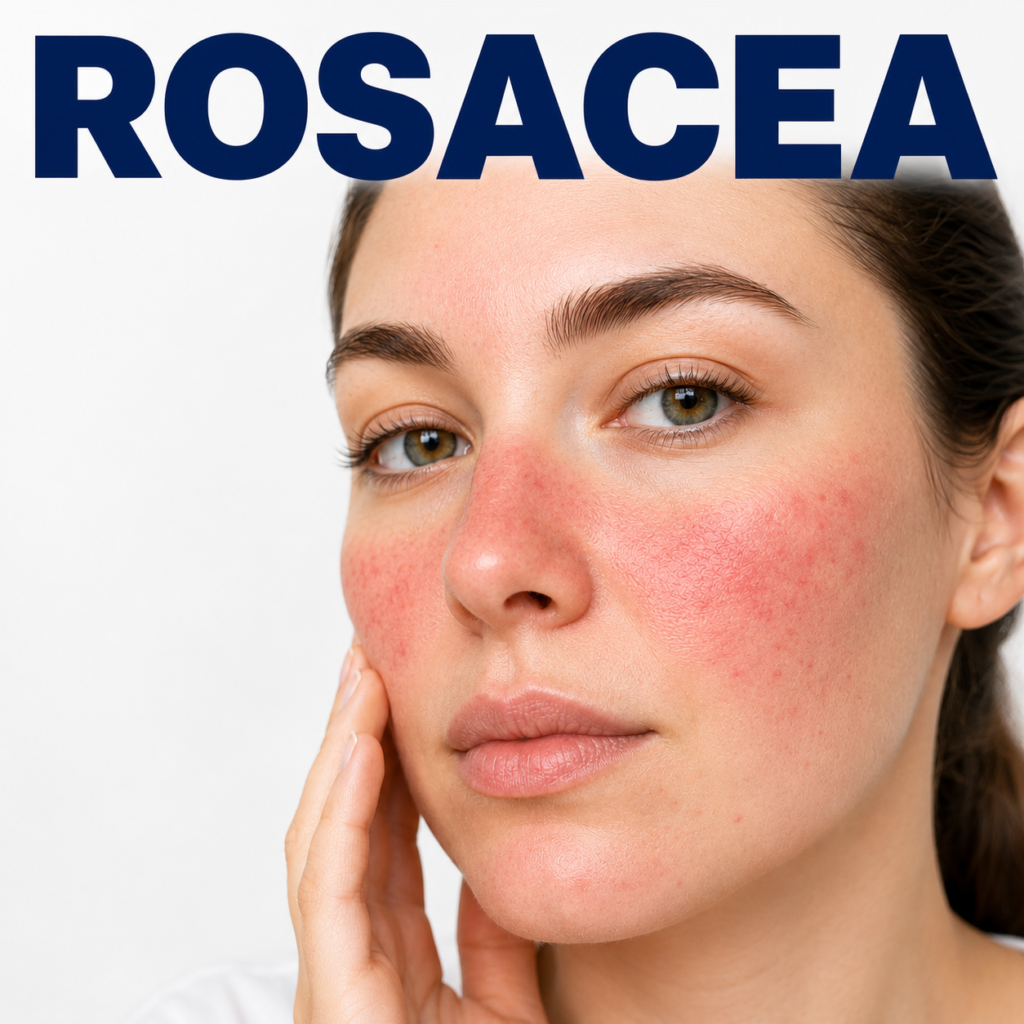
What Is Rosacea?
Rosacea is a long-term skin condition that primarily affects the central face, including the:
- Cheeks
- Nose
- Chin
- Forehead
Some people also develop eye symptoms, known as ocular rosacea, which can cause dry, irritated, or bloodshot eyes.
Rosacea is not contagious and is not caused by poor hygiene.
Common Symptoms
Symptoms may include:
- Frequent flushing or blushing
- Persistent facial redness
- Visible small blood vessels (spider veins)
- Acne-like bumps or pimples
- Burning or stinging sensation
- Sensitive skin
- Dry, rough skin
- Thickened skin on the nose (more common in advanced cases)
- Dry, irritated, or watery eyes
Symptoms often come and go in episodes called flare-ups.
Rosacea at a Glance
| Mild Rosacea | More Advanced Rosacea |
|---|---|
| Occasional flushing | Persistent facial redness |
| Few acne-like bumps | Numerous bumps and pustules |
| Mild skin sensitivity | Visible blood vessels |
| Easily controlled with trigger avoidance | May require prescription medication or laser therapy |
Did You Know?
Rosacea often begins with occasional flushing. Without treatment, symptoms may become more persistent and more difficult to control over time.
What Causes Rosacea?
The exact cause is unknown, but experts believe rosacea develops from a combination of:
- Genetics
- An overactive immune response
- Increased skin sensitivity
- Environmental triggers
Rosacea is not caused by poor hygiene or an infection.
Common Rosacea Triggers
Triggers vary from person to person but commonly include:
- Sun exposure
- Hot weather
- Cold wind
- Emotional stress
- Exercise
- Hot drinks
- Alcohol
- Spicy foods
- Certain skin care products
Keeping a symptom diary may help identify your personal triggers.
Who Is More Likely to Develop Rosacea?
Your risk is higher if you:
- Are between 30 and 50 years old
- Have fair skin
- Have a family history of rosacea
- Flush or blush easily
- Are female (although severe nose thickening is more common in men)
Rosacea can occur in people of all skin tones.
How Is Rosacea Treated?
Treatment depends on the symptoms and severity.
| Treatment | How It Helps |
| Gentle skin care | Reduces irritation |
| Daily sunscreen (SPF 30 or higher) | Prevents flare-ups |
| Topical metronidazole | Reduces inflammation |
| Topical azelaic acid | Improves redness and bumps |
| Topical ivermectin | Treats inflammatory bumps |
| Oral doxycycline | Helps moderate to severe inflammation |
| Laser or light therapy | Reduces visible blood vessels and persistent redness |
Most people benefit from combining medication with trigger avoidance and proper skin care.
How Can You Help Prevent Flare-Ups?
Although rosacea cannot be prevented completely, you can reduce flare-ups by:
| Prevention Tips |
| Wear sunscreen every day |
| Use gentle fragrance-free skin care products |
| Moisturize regularly |
| Avoid overheating |
| Identify and avoid personal triggers |
| Limit alcohol if it triggers symptoms |
| Protect your face from wind and extreme temperatures |
Myths vs. Facts
| Myth | Fact |
| Rosacea is simply adult acne. | Rosacea is a separate chronic inflammatory skin condition. |
| Rosacea is contagious. | It cannot spread from person to person. |
| Drinking alcohol causes rosacea. | Alcohol may trigger flare-ups but does not cause the condition. |
| Nothing can be done for rosacea. | Treatments and trigger avoidance can significantly improve symptoms. |
When Should You See a Healthcare Provider?
Schedule an appointment if you:
- Have persistent facial redness
- Frequently develop acne-like bumps that do not improve with acne treatments
- Notice burning, stinging, or increased skin sensitivity
- Develop eye irritation along with facial redness
- Notice thickening of the skin on your nose
- Have worsening symptoms despite avoiding triggers
Early treatment may help prevent rosacea from becoming more severe.
Frequently Asked Questions
Is rosacea curable?
No. Rosacea is a chronic condition, but treatment can effectively control symptoms and reduce flare-ups.
Is rosacea the same as acne?
No. While rosacea may cause acne-like bumps, it is a different condition and requires different treatment.
Can makeup make rosacea worse?
Some cosmetics may irritate sensitive skin. Fragrance-free, non-comedogenic products are generally recommended.
Will rosacea continue to worsen?
Not necessarily. Many people successfully control rosacea with proper skin care, trigger avoidance, and prescribed treatments.
What Should You Do Next?
If you have persistent facial redness, frequent flushing, or acne-like bumps that don’t respond to traditional acne treatments, schedule an evaluation with a healthcare provider or dermatologist. Early diagnosis and treatment can help control symptoms, reduce flare-ups, and prevent long-term skin changes.
References
-
American Academy of Dermatology Association. Rosacea: Overview
https://www.aad.org/public/diseases/rosacea/what-is/overview
-
American Academy of Dermatology Association. Rosacea: Signs and Symptoms
https://www.aad.org/public/diseases/rosacea/what-is/symptoms
-
American Academy of Dermatology Association. Rosacea: Diagnosis and Treatment
https://www.aad.org/public/diseases/rosacea/treatment/diagnosis-treat
-
DermNet NZ. Rosacea
https://dermnetnz.org/topics/rosacea
-
Mayo Clinic. Rosacea: Symptoms and Causes
https://www.mayoclinic.org/diseases-conditions/rosacea/symptoms-causes/syc-20353815