
Scabies: Symptoms, Causes, Treatment, and Prevention
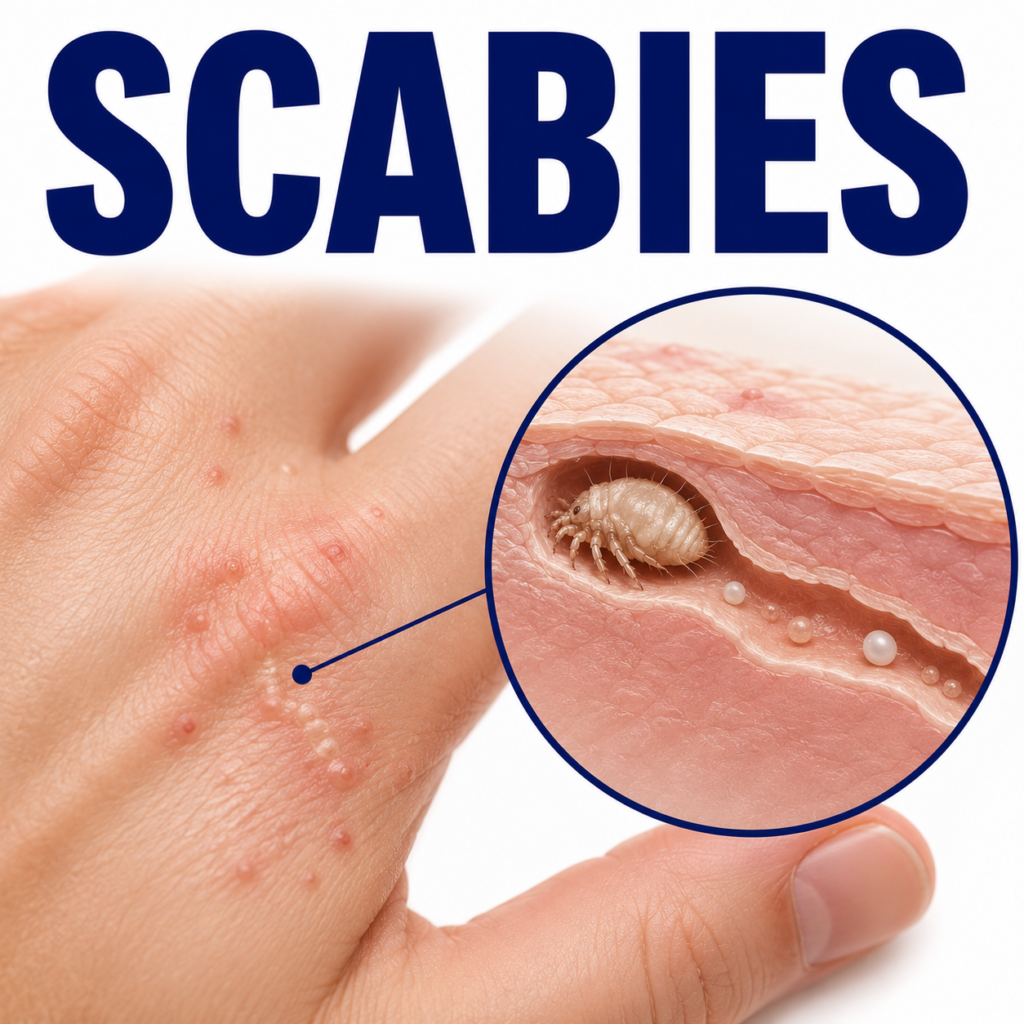
What Is Scabies?
Scabies is a skin infestation caused by the human itch mite (Sarcoptes scabiei var. hominis).
The microscopic mites burrow into the upper layer of the skin, where they live and lay eggs. Your immune system reacts to the mites and their waste products, causing intense itching and a rash.
Scabies is common worldwide and can affect people of any age, race, or socioeconomic background.
Common Symptoms
Symptoms usually develop 3 to 6 weeks after the first infestation but may appear within a few days in someone who has had scabies before.
Common symptoms include:
- Intense itching that is often worse at night
- Small red bumps or pimple like rash
- Thin, wavy burrow lines on the skin
- Crusting from scratching
- Sores that develop from repeated scratching
Common areas affected include:
- Between the fingers
- Wrists
- Elbows
- Armpits
- Waistline
- Buttocks
- Genital area
- Around the nipples
In infants and young children, the face, scalp, palms, and soles of the feet may also be involved.
Scabies at a Glance
| Typical Scabies | Crusted Scabies |
|---|---|
| Intense itching | May have little itching despite severe infestation |
| Relatively few mites | Thousands to millions of mites |
| Small rash and burrows | Thick crusted plaques |
| Common in healthy individuals | More common in people with weakened immune systems |
Did You Know?
A person with scabies usually has only 10 to 15 mites on their body, yet the itching can be severe because it is caused by an allergic reaction to the mites rather than the number of mites present.
How Does Scabies Spread?
Scabies spreads mainly through prolonged, direct skin to skin contact with an infected person.
Less commonly, it can spread by sharing:
- Bedding
- Clothing
- Towels
A brief handshake or hug usually does not spread scabies. Pets do not spread human scabies because they are affected by different mites.
Who Is More Likely to Get Scabies?
Your risk is higher if you:
- Live in the same household as someone with scabies
- Have prolonged close physical contact with an infected person
- Live in crowded settings
- Live in nursing homes or long term care facilities
- Stay in correctional facilities or shelters
- Have a weakened immune system
Anyone can develop scabies regardless of personal hygiene.
How Is Scabies Treated?
Scabies requires prescription medication. Over the counter products have not been approved to treat human scabies.
| Treatment | How It Helps |
| Permethrin 5% cream | First line treatment that kills mites |
| Oral ivermectin | Used in selected patients or severe cases |
| Antihistamines | Help reduce itching |
| Topical steroid creams | Relieve inflammation after treatment when appropriate |
| Antibiotics | Used only if scratching leads to a bacterial skin infection |
Everyone living in the household or anyone with prolonged skin contact should usually be treated at the same time to prevent reinfestation.
How Can You Help Prevent Scabies?
Preventing reinfestation is just as important as treating the skin.
| Prevention Tips |
| Treat all household members and close contacts at the same time |
| Wash clothing, bedding, and towels used within the previous three days in hot water and dry on high heat |
| Seal items that cannot be washed in a plastic bag for at least 72 hours to one week |
| Avoid prolonged skin to skin contact until treatment is completed |
| Follow treatment instructions exactly as prescribed |
Scabies mites generally survive only 2 to 3 days away from human skin.
Myths vs. Facts
| Myth | Fact |
| Scabies is caused by poor hygiene. | Anyone can get scabies regardless of cleanliness. |
| Pets spread human scabies. | Human scabies is caused by a different mite than the one that causes mange in animals. |
| Over the counter creams cure scabies. | Prescription medications are needed because no over the counter treatments are approved for human scabies. |
| The itching stops immediately after treatment. | Itching may continue for several weeks even after the mites have been successfully eliminated. |
When Should You See a Healthcare Provider?
Schedule an appointment if you:
- Develop severe itching that is worse at night
- Notice a rash with burrow like lines
- Have close contact with someone diagnosed with scabies
- Continue itching more than four weeks after treatment
- Develop new burrows or new rash after treatment
Seek prompt medical attention if you develop fever, increasing redness, swelling, drainage, or worsening pain, as these may indicate a bacterial skin infection from scratching.
Frequently Asked Questions
Can I get scabies from my dog or cat?
No. Pets can develop mange from different mites, but they do not spread human scabies.
Why am I still itchy after treatment?
The allergic reaction to the mites may continue for several weeks even after successful treatment.
Can I return to work or school?
Most people can return to work, school, or childcare the day after starting appropriate treatment.
Does everyone in my home need treatment?
Usually yes. Household members and close physical contacts are often treated at the same time to prevent reinfestation.
What Should You Do Next?
If you develop severe nighttime itching or a rash after close contact with someone who has scabies, schedule an evaluation promptly. Early treatment helps relieve symptoms, prevents spreading the infestation to others, and reduces the chance of reinfestation. Be sure to follow treatment instructions carefully and treat close household contacts when recommended.
References
-
Centers for Disease Control and Prevention. About Scabies
https://www.cdc.gov/scabies/
-
Centers for Disease Control and Prevention. Symptoms of Scabies
https://www.cdc.gov/scabies/signs-symptoms/
-
Centers for Disease Control and Prevention. Treatment of Scabies
https://www.cdc.gov/scabies/treatment/
-
Centers for Disease Control and Prevention. Preventing Scabies
https://www.cdc.gov/scabies/prevention/
-
Cleveland Clinic. Scabies
https://my.clevelandclinic.org/health/diseases/4567-scabies