
Head Lice: Symptoms, Causes, Treatment, and Prevention
What Are Head Lice?
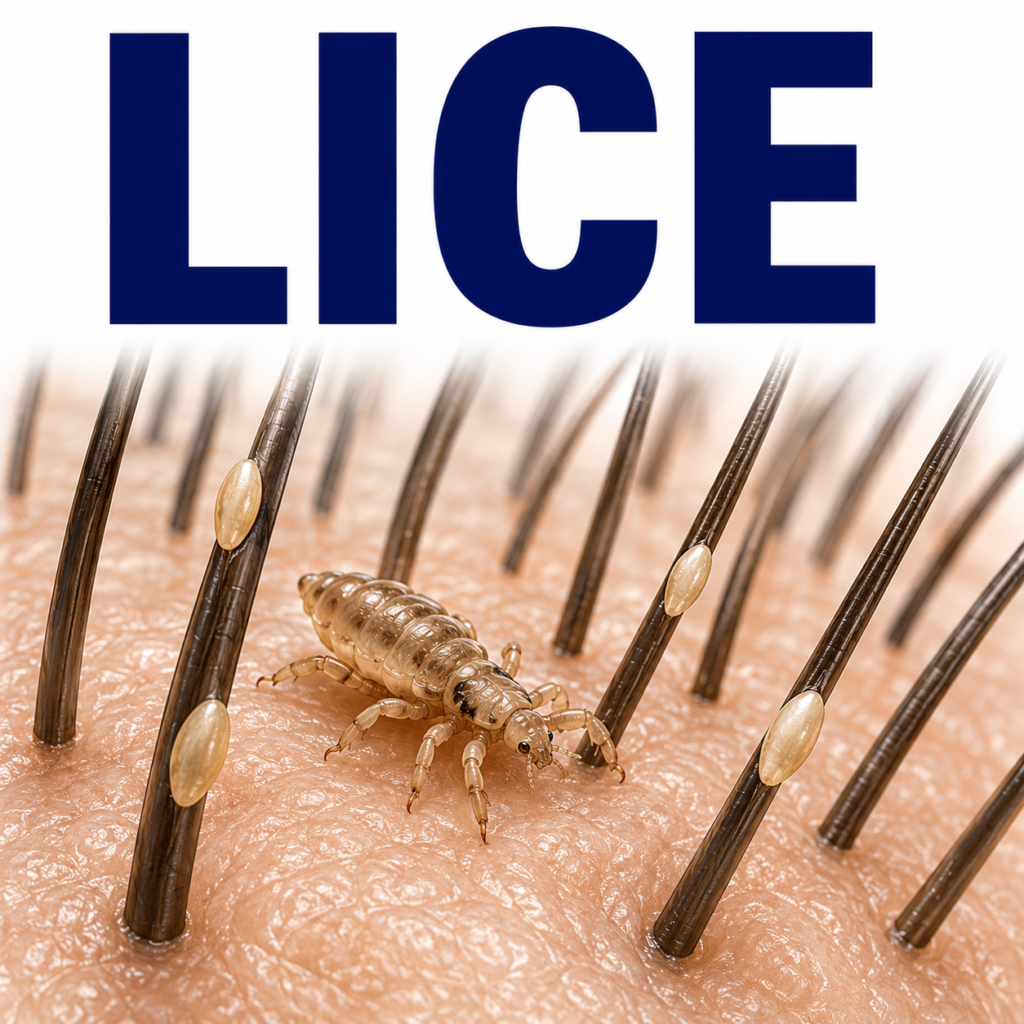
Head lice, also called Pediculus humanus capitis, are small insects that live on the scalp and hair.
Adult lice are about the size of a sesame seed. They lay eggs, called nits, which attach firmly to the hair shaft close to the scalp.
Head lice survive by feeding on small amounts of human blood several times each day. They cannot fly or jump. They spread by crawling from one person’s hair to another.
Common Symptoms
Some people have no symptoms at first.
When symptoms occur, they may include:
- Itching of the scalp
- A tickling feeling or sensation of something moving in the hair
- Small sores from scratching
- Difficulty sleeping because lice are more active in the dark
- Visible lice or nits attached to the hair
Itching may not begin until four to six weeks after the first infestation because it is caused by an allergic reaction to lice bites.
Head Lice at a Glance
| Mild Infestation | More Extensive Infestation |
|---|---|
| Few live lice | Numerous live lice |
| Mild itching | Significant itching |
| Few nits | Many nits close to the scalp |
| Minimal scratching | Sores from frequent scratching |
Did You Know?
Having head lice has nothing to do with cleanliness. Lice can affect anyone, and they often spread among children through close head to head contact during play. They do not spread disease.
How Do Head Lice Spread?
Head lice spread mainly through direct head to head contact.
Less commonly, they may spread by sharing:
- Hats
- Hair brushes
- Combs
- Hair accessories
- Helmets
- Towels
- Pillows
Pets do not spread head lice to people.
Who Is More Likely to Get Head Lice?
Your risk is higher if you:
- Are a preschool or elementary school aged child
- Live with someone who has head lice
- Have frequent close head to head contact with others
- Participate in sleepovers or group activities
Anyone can develop head lice regardless of hair length, cleanliness, or socioeconomic status.
How Are Head Lice Treated?
Treatment should begin when live lice are found.
| Treatment | How It Helps |
| Permethrin 1% lotion | Common over the counter treatment |
| Pyrethrin based products | Kill live lice |
| Prescription medications | Used if over the counter treatments fail or resistance is suspected |
| Fine toothed lice comb | Removes lice and nits |
| Repeat treatment when recommended | Kills newly hatched lice for products that do not kill eggs |
Household members with active infestations should be treated at the same time to reduce the risk of reinfestation.
How Can You Help Prevent Head Lice?
You can reduce your risk by:
| Prevention Tips |
| Avoid head to head contact during play |
| Do not share hats, brushes, combs, or hair accessories |
| Check household members if someone is diagnosed with lice |
| Wash recently worn clothing, bedding, and hats in hot water |
| Vacuum furniture and carpets if needed |
| Follow treatment instructions carefully |
Routine spraying of the home or use of insecticide sprays is not recommended because it provides little benefit and may expose people to unnecessary chemicals.
Myths vs. Facts
| Myth | Fact |
| Only dirty hair gets lice. | Head lice can affect anyone and are unrelated to personal hygiene. |
| Lice can jump or fly. | Head lice crawl and spread mainly through direct head to head contact. |
| Pets spread head lice. | Dogs, cats, and other pets do not carry human head lice. |
| Every nit means an active infestation. | Finding live lice is the best way to diagnose an active infestation. Nits far from the scalp are often empty or no longer viable. |
When Should You See a Healthcare Provider?
Schedule an appointment if you:
- Are unsure whether you have lice or dandruff
- Continue finding live lice after completing treatment
- Develop redness, swelling, pus, or severe scalp pain
- Have repeated infestations despite proper treatment
- Need guidance about prescription treatment options
Your healthcare provider can confirm the diagnosis and recommend alternative treatments if over the counter medications are not effective.
Frequently Asked Questions
Can head lice jump from person to person?
No. Head lice cannot jump or fly. They spread by crawling during close head to head contact.
Do I have to throw away bedding or stuffed animals?
No. Washing recently used bedding, clothing, and hats in hot water is generally sufficient. Extensive household cleaning is not necessary.
Should children stay home from school?
Current CDC guidance recommends that children do not need to leave school early because of head lice. They can be treated at home and return after beginning appropriate treatment.
How do I know treatment worked?
Treatment is successful when no live lice remain after completing the recommended treatment schedule. Nits may remain attached to the hair even after the lice have been killed.
What Should You Do Next?
If you think you or your child has head lice, carefully examine the scalp for live crawling lice, especially behind the ears and at the back of the neck. Begin treatment promptly if live lice are found, follow the medication instructions carefully, and check close household contacts. If lice persist after treatment or you are unsure of the diagnosis, schedule an evaluation with your healthcare provider.
References
-
Centers for Disease Control and Prevention. About Head Lice
https://www.cdc.gov/lice/about/head-lice.html
-
Centers for Disease Control and Prevention. Treatment of Head Lice
https://www.cdc.gov/lice/treatment/index.html
-
Centers for Disease Control and Prevention. Providing Care for Individuals with Head Lice
https://www.cdc.gov/lice/caring-head/index.html
-
Mayo Clinic. Head Lice: Symptoms and Causes
https://www.mayoclinic.org/diseases-conditions/head-lice/symptoms-causes/syc-20356180