
Razor Bumps: Causes, Treatment, and Prevention
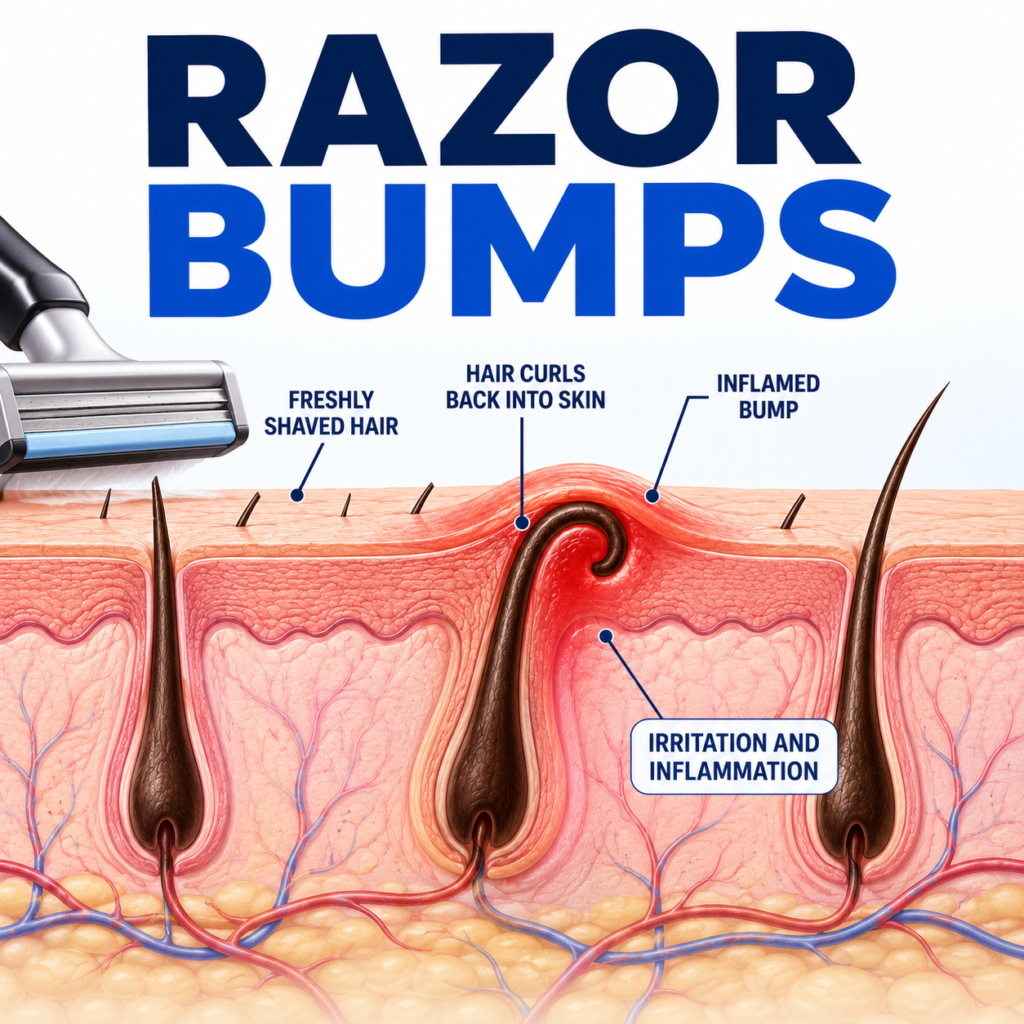
What Are Razor Bumps?
Razor bumps, also called pseudofolliculitis barbae (PFB), occur when recently shaved hairs curl back and grow into the skin.
Instead of growing outward, the sharp hair tip penetrates the surrounding skin, causing inflammation.
Although razor bumps are most common in the beard area, they can also occur on the:
- Neck
- Scalp
- Underarms
- Bikini area
- Legs
Razor bumps are different from razor burn, which is a temporary skin irritation immediately after shaving.
Common Symptoms
You may notice:
- Small, firm red or skin-colored bumps
- Ingrown hairs
- Itching
- Tenderness
- Burning after shaving
- Dark spots after the bumps heal (post-inflammatory hyperpigmentation)
Severe or long-standing cases may lead to scarring.
Razor Bumps at a Glance
| Mild Razor Bumps | More Severe Razor Bumps |
|---|---|
| A few small bumps | Numerous inflamed bumps |
| Mild itching | Painful or tender bumps |
| Improve within several days | Persistent bumps after each shave |
| No scarring | Dark spots or permanent scars may develop |
Did You Know?
Razor bumps are most common in people with coarse, tightly curled hair, particularly Black men, because curved hairs are more likely to grow back into the skin after shaving.
What Causes Razor Bumps?
Razor bumps develop when shaved hairs re-enter the skin instead of growing outward.
Several factors increase the risk:
- Shaving too closely
- Stretching the skin while shaving
- Using multiple-blade razors
- Shaving against the direction of hair growth
- Curly or coarse hair
- Frequent shaving
Who Is More Likely to Get Razor Bumps?
Your risk is higher if you:
- Have tightly curled or coarse hair
- Shave frequently
- Use a multi-blade razor
- Shave against the grain
- Have had razor bumps before
How Are Razor Bumps Treated?
Treatment depends on the severity.
| Treatment | How It Helps |
| Temporarily stopping shaving | Allows trapped hairs to grow out |
| Electric clippers (instead of close shaving) | Leaves hair slightly longer, reducing ingrown hairs |
| Benzoyl peroxide washes or gels | Reduce inflammation and bacteria |
| Topical retinoids | Help prevent ingrown hairs |
| Prescription topical antibiotics | Treat secondary bacterial infection if present |
| Topical corticosteroids (short-term) | Reduce inflammation in more severe cases |
For persistent or severe cases, a dermatologist may recommend laser hair removal or prescription medications.
How Can You Prevent Razor Bumps?
Changing your shaving routine can greatly reduce your risk.
| Prevention Tips |
| Shave after a warm shower |
| Use shaving cream or gel |
| Shave in the direction of hair growth |
| Avoid stretching the skin while shaving |
| Use a single-blade razor or electric trimmer |
| Avoid repeated passes over the same area |
| Replace razor blades regularly |
Some people experience fewer razor bumps by using electric clippers that leave a small amount of stubble instead of shaving completely smooth.
Myths vs. Facts
| Myth | Fact |
| Razor bumps are caused by dirty razors alone. | They are primarily caused by ingrown hairs. |
| Shaving closer prevents razor bumps. | Shaving too closely actually increases the risk. |
| Razor bumps are contagious. | They cannot spread from person to person. |
| Everyone who shaves gets razor bumps. | They are much more common in people with curly or coarse hair. |
When Should You See a Healthcare Provider?
Schedule an appointment if you:
- Continue developing razor bumps despite changing your shaving technique
- Notice painful or infected bumps
- Develop significant dark spots or scarring
- Experience persistent inflammation
- Are unsure whether the bumps are razor bumps or another skin condition
A dermatologist can recommend prescription treatments or laser hair removal for persistent cases.
Frequently Asked Questions
Are razor bumps the same as razor burn?
No. Razor burn is temporary skin irritation after shaving, while razor bumps are caused by ingrown hairs.
Should I stop shaving?
If possible, allowing the hair to grow out for several weeks often helps existing razor bumps heal.
Are electric razors better?
For many people, yes. Electric trimmers leave hair slightly longer, making it less likely to curl back into the skin.
Can razor bumps leave scars?
Yes. Repeated inflammation can lead to dark spots and permanent scarring if left untreated.
What Should You Do Next?
If you frequently develop razor bumps, changing your shaving technique is often the most effective first step. If symptoms continue despite proper shaving habits or you develop painful bumps or scarring, schedule an evaluation with a healthcare provider or dermatologist to discuss additional treatment options.
References
American Academy of Dermatology Association. Razor Bump Remedies for Men with Darker Skin Tones
https://www.aad.org/public/everyday-care/skin-care-basics/hair/razor-bump-remedies
Mayo Clinic. Ingrown Hair: Symptoms and Causes
https://www.mayoclinic.org/diseases-conditions/ingrown-hair/symptoms-causes/syc-20373893
Mayo Clinic. Ingrown Hair: Diagnosis and Treatment
https://www.mayoclinic.org/diseases-conditions/ingrown-hair/diagnosis-treatment/drc-20373898
Cleveland Clinic. Razor Burn vs. Razor Bumps
https://my.clevelandclinic.org/health/diseases/23583-razor-burn
Cleveland Clinic. Folliculitis (includes pseudofolliculitis barbae)
https://my.clevelandclinic.org/health/diseases/17692-folliculitis