
Poison Ivy Rash: Symptoms, Treatment, and Prevention
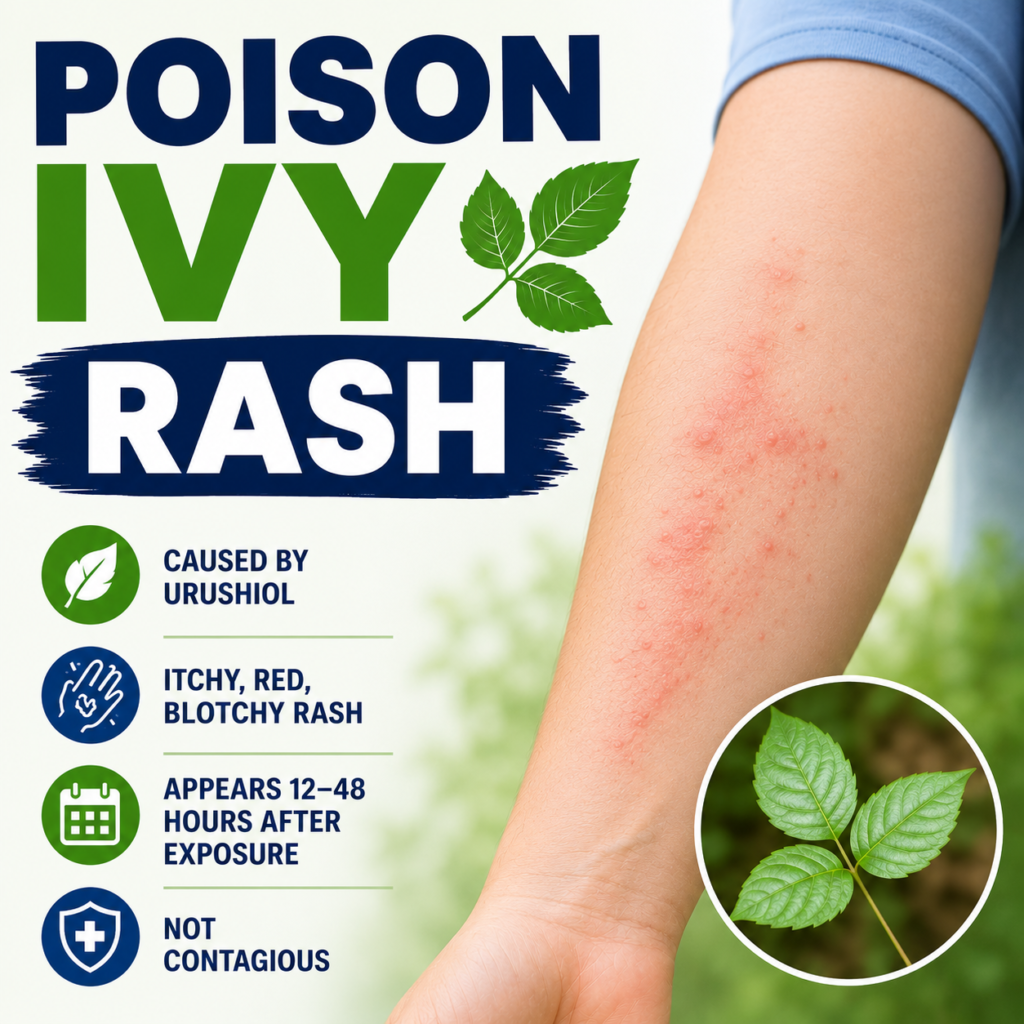
What Is Poison Ivy?
Poison ivy is a plant that contains an oily resin called urushiol.
When urushiol comes into contact with the skin, it can trigger an allergic contact dermatitis, causing redness, itching, swelling, and blisters.
The rash usually develops 12 to 48 hours after exposure and may last two to three weeks.
Common Symptoms
Symptoms may include:
- Intense itching
- Red rash
- Swelling
- Small or large blisters
- Oozing fluid from blisters
- Streaks or lines where the plant brushed against the skin
The severity of the rash depends on how much urushiol contacted the skin and how sensitive a person is to it.
Poison Ivy Rash at a Glance
| Mild Reaction | More Severe Reaction |
|---|---|
| Small itchy rash | Large areas of rash |
| Mild redness | Significant swelling |
| Few blisters | Numerous blisters |
| Improves with home care | May require prescription medication |
Did You Know?
The fluid inside poison ivy blisters does not spread the rash. New areas usually appear because they received different amounts of urushiol or because the oil remained on clothing, pets, or other objects.
How Do You Get Poison Ivy?
You can develop a rash after:
- Touching poison ivy, poison oak, or poison sumac
- Touching clothing, shoes, tools, or gloves contaminated with urushiol
- Petting an animal with urushiol on its fur
- Breathing smoke from burning poison ivy plants
The rash itself is not contagious and cannot spread from one person to another unless urushiol is still present on the skin or contaminated objects.
How Is Poison Ivy Treated?
Most mild cases improve on their own.
| Treatment | How It Helps |
| Cool compresses | Reduce itching and swelling |
| Calamine lotion | Soothes irritated skin |
| Colloidal oatmeal baths | Relieve itching |
| Oral antihistamines | Help reduce itching, especially at night |
| Prescription corticosteroids | Used for severe or widespread rashes |
Avoid scratching, as broken skin can become infected.
How Can You Prevent Poison Ivy?
You can lower your risk by:
- Learning to identify poison ivy (“Leaves of three, let it be.”)
- Wearing long sleeves, pants, gloves, and closed-toe shoes when outdoors
- Washing exposed skin with soap and water as soon as possible after exposure
- Cleaning contaminated clothing, tools, and equipment
- Bathing pets that may have contacted the plant
Urushiol can remain active on surfaces for months or even years until it is washed away.
Myths vs. Facts
| Myth | Fact |
| Poison ivy blisters spread the rash. | The rash is caused by urushiol oil, not blister fluid. |
| Scratching spreads poison ivy. | Scratching does not spread the rash but can cause infection. |
| You can only get poison ivy by touching the plant. | Urushiol can remain on clothing, tools, pets, and other objects. |
| Poison ivy is contagious. | The rash cannot spread between people unless urushiol is still present. |
When Should You See a Healthcare Provider?
Seek medical care if:
- The rash involves your face, eyes, mouth, or genitals
- The rash is widespread
- You have significant swelling
- Blisters become infected with increasing redness, warmth, or pus
- You develop a fever
- Symptoms do not improve after a few weeks
Seek emergency medical attention immediately if you have difficulty breathing after exposure, especially after inhaling smoke from burning poison ivy.
Frequently Asked Questions
How soon does the rash appear?
Most people develop symptoms within 12 to 48 hours after exposure.
Is poison ivy contagious?
No. Only the urushiol oil can cause the rash.
How long does poison ivy last?
Most rashes resolve within two to three weeks.
Should I pop the blisters?
No. Leave blisters intact whenever possible to reduce the risk of infection.
What Should You Do Next?
If you think you’ve been exposed to poison ivy, wash the affected skin with soap and water as soon as possible and clean any clothing or equipment that may have come into contact with the plant. Most rashes improve with home treatment, but severe, widespread, or facial rashes should be evaluated by a healthcare provider.
References
Mayo Clinic. Poison Ivy Rash: Symptoms and Causes
https://www.mayoclinic.org/diseases-conditions/poison-ivy/symptoms-causes/syc-20376485
Mayo Clinic. Poison Ivy Rash: Diagnosis and Treatment
https://www.mayoclinic.org/diseases-conditions/poison-ivy/diagnosis-treatment/drc-20376490
American Academy of Dermatology Association. How to Prevent a Poison Ivy Rash
https://www.aad.org/public/everyday-care/itchy-skin/poison-ivy/prevent-rash