
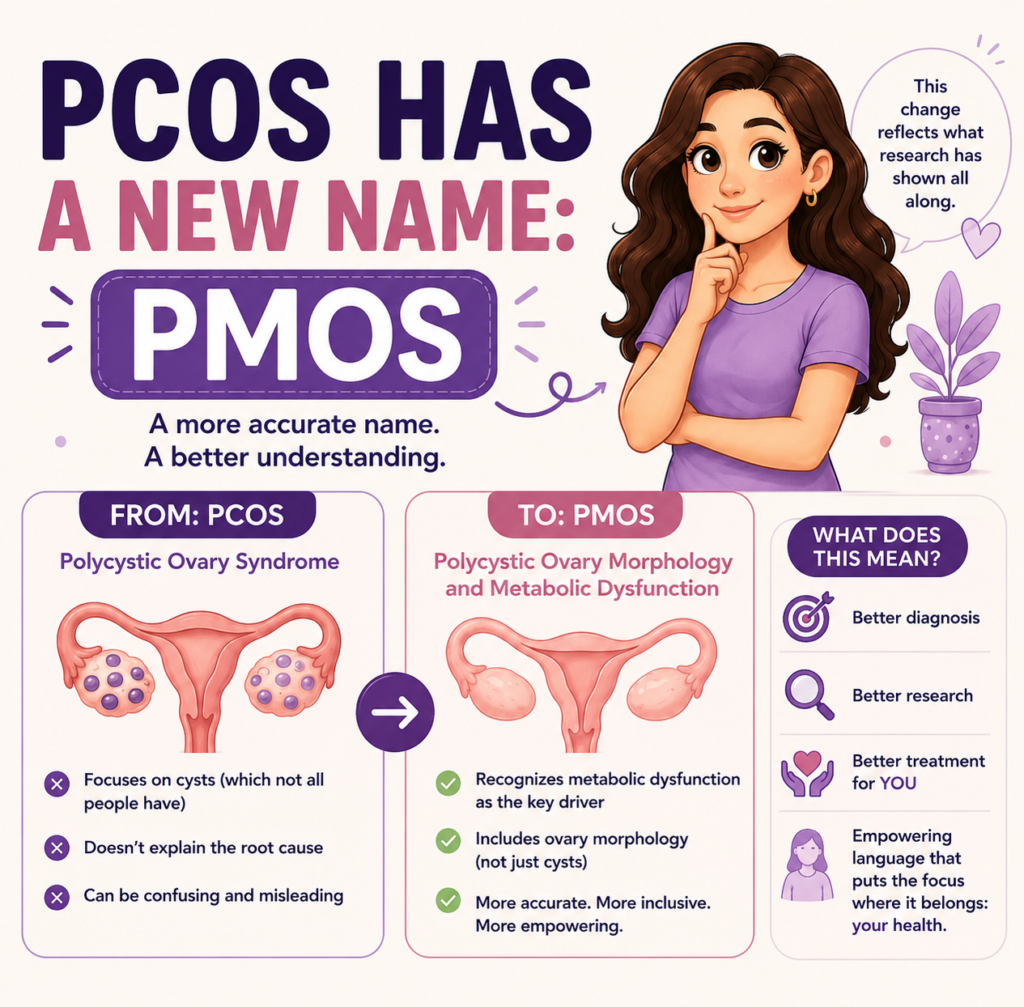
A condition previously known as polycystic ovary syndrome (PCOS) now has a new name: polyendocrine metabolic ovarian syndrome (PMOS).
The change was made by an international group of experts to better reflect what the condition actually involves.
Why Was the Name Changed?
The term “polycystic ovary syndrome” often caused confusion.
Many people assumed the condition was mainly about ovarian cysts. In reality, most women with PCOS do not have the type of ovarian cysts that require treatment or surgery. The name also failed to highlight the hormone and metabolic changes that are common in the condition.
The new name, PMOS, recognizes that this condition affects much more than the ovaries.
What Is PMOS?
PMOS is a common condition that affects hormones, metabolism, and reproductive health.
It affects about 1 in 8 women and is one of the most common hormone-related conditions in women of reproductive age.
Many women remain undiagnosed because symptoms can vary widely from person to person.
What Are Common Symptoms Of PMOS?
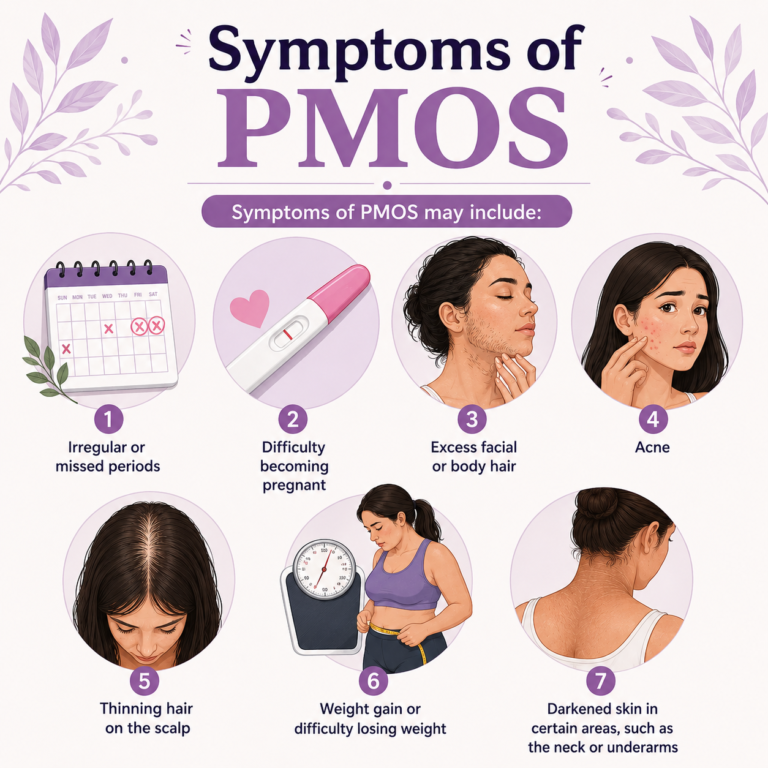
Not every woman experiences the same symptoms
The Role of Insulin Resistance
One reason for the name change is the strong connection between PMOS and insulin resistance.
Insulin is a hormone that helps move sugar from the bloodstream into the body’s cells. When the body becomes resistant to insulin, it must produce more of it to keep blood sugar levels normal.
Research shows that up to 85% of women with PMOS have some degree of insulin resistance. This can occur even in women who are not overweight.
Insulin resistance may increase the risk of:
- Prediabetes
- Type 2 diabetes
- High cholesterol
- Heart disease
How Is PMOS Diagnosed?
There is no single test for PMOS.
Healthcare professionals typically make the diagnosis after ruling out other possible causes and identifying at least two of the following:
- Signs of higher than normal male hormones
- Irregular or absent ovulation, often causing irregular periods
- Changes in the ovaries seen on ultrasound
In teenagers, ultrasound findings are generally not used because the ovaries can normally appear different during adolescence.
Can PMOS Be Treated?
There is no cure for PMOS, but treatment can help manage symptoms and reduce long-term health risks.
Treatment may include:
- Lifestyle changes such as regular exercise and healthy eating
- Medications to improve insulin sensitivity
- Hormonal birth control to regulate periods
- Fertility treatments when pregnancy is desired
- Treatments for acne or unwanted hair growth
The best treatment plan depends on a person’s symptoms and health goals.
Key Takeaway
The condition formerly known as PCOS is now called PMOS, or polyendocrine metabolic ovarian syndrome. The new name reflects what doctors have learned over the years: this condition affects hormones, metabolism, and reproductive health, not just the ovaries.
If you have irregular periods, excess hair growth, acne, fertility concerns, or a history of insulin resistance, speak with your healthcare professional. Early diagnosis and treatment can help improve symptoms and reduce future health risks.
Reference: American Academy of Family Physicians (AAFP). “PCOS Gets a New Name: Polyendocrine Metabolic Ovarian Syndrome (PMOS).” June 2026.