
Gambling is a common activity in the United States. Many people participate in lotteries, sports betting, casinos, card games, and online gambling without developing significant problems. For some individuals, however, gambling can become difficult to control and begin to affect finances, relationships, work, and mental health.
Gambling disorder is a recognized medical condition. It is classified as a behavioral addiction and shares many features with substance use disorders. Understanding the signs of gambling disorder can help people recognize when gambling has moved beyond entertainment and become a health concern.
What is Gambling Disorder?

Gambling disorder is characterized by persistent gambling behavior that causes distress or impairment in daily life. Individuals may feel a strong urge to gamble, spend increasing amounts of money, or continue gambling despite negative consequences.
The condition was previously called pathological gambling. The term was changed to gambling disorder to better reflect its classification as an addiction and to reduce stigma.
How Common is Gambling Disorder?
Gambling opportunities have expanded significantly over the past several decades. Casinos, lotteries, sports betting, online platforms, and mobile applications have made gambling more accessible than ever before
Millions of adults in the United States experience mild, moderate, or severe gambling related problems. As access to gambling continues to grow, healthcare professionals are seeing increasing concern about its impact on individuals and families.
What Are Some Risk Factors?
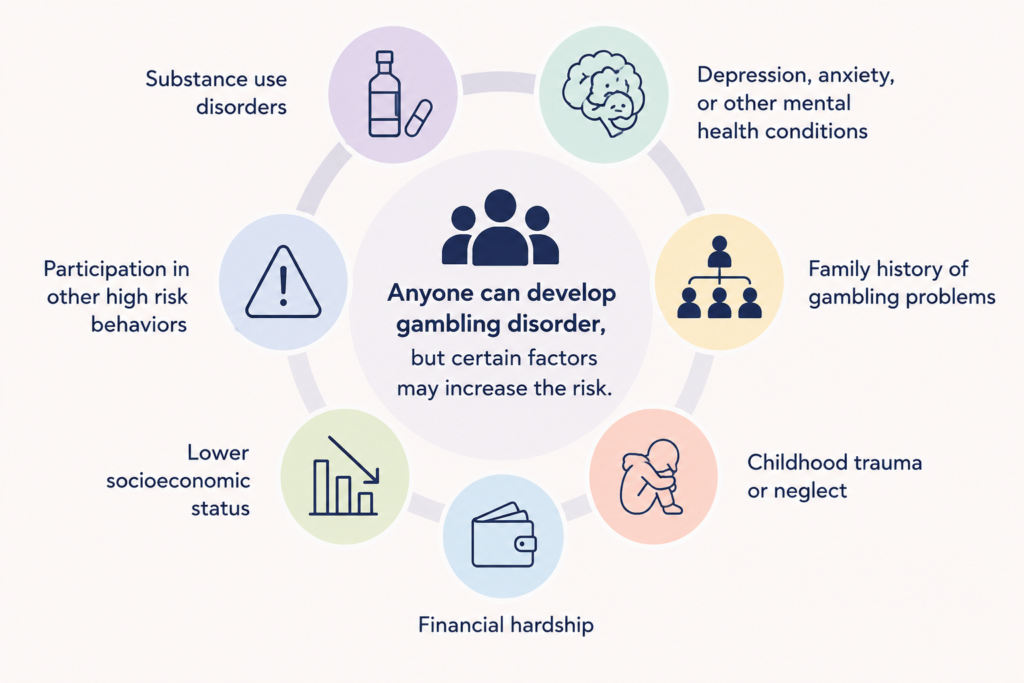
Men are diagnosed more often than women, although rates among women have increased in recent years.
What Are Common Signs and Symptoms?
Common signs of gambling disorder include:
Needing to gamble larger amounts of money to achieve the same excitement
Feeling restless or irritable when trying to cut back
Repeated unsuccessful attempts to stop gambling
Constant thoughts about gambling
Gambling during periods of stress, anxiety, guilt, or sadness
Trying to recover losses by continuing to gamble
Hiding gambling activity from others
Experiencing relationship, work, or financial problems because of gambling
Depending on others for financial assistance related to gambling losses
A healthcare professional may diagnose gambling disorder when several of these symptoms occur within a 12 month period.
Mental Health and Gambling
Gambling disorder often occurs alongside other mental health conditions.
Common coexisting conditions include:
Depression
Anxiety disorders
Bipolar disorder
Attention deficit hyperactivity disorder
Substance use disorders
Other behavioral addictions
In some cases, mental health symptoms develop before gambling problems begin. In others, the consequences of gambling contribute to emotional distress.
Because these conditions frequently occur together, treatment often works best when both issues are addressed.
What Are Common Treatment Options?
1. Cognitive Behavioral Therapy
Cognitive behavioral therapy is one of the most studied treatments for gambling disorder.
This approach helps individuals identify unhealthy thought patterns, recognize gambling triggers, and develop healthier coping strategies. Research suggests it can reduce gambling severity and financial losses for many patients.
2. Motivational Interviewing
Motivational interviewing is a counseling approach that helps people explore their reasons for change. It may help reduce gambling behavior and increase engagement in treatment.
3. Medications
There are currently no medications approved by the U.S. Food and Drug Administration specifically for gambling disorder. More research is needed to determine their long term effectiveness.
4. Support Groups
Peer support groups can provide encouragement and accountability. Organizations such as Gamblers Anonymous offer opportunities to connect with others who have experienced similar challenges. Support groups for family members are also available.
When To Seek Help?

Consider speaking with a healthcare professional if gambling is causing:
Financial stress
Relationship problems
Difficulty at work or school
Anxiety or depression
Repeated unsuccessful attempts to stop gambling
Early recognition and treatment can help reduce the personal, emotional, and financial effects of gambling disorder.
Key Takeaway
Gambling disorder is a behavioral addiction that can affect many areas of life. It is not simply a matter of willpower. Like other addictive disorders, it can involve changes in behavior, decision making, and reward pathways in the brain.
Effective treatment may include counseling, support groups, and in some cases medication. Seeking help early can improve outcomes and help individuals regain control over their finances, relationships, and well being.
Final Note
If gambling is causing stress, financial difficulties, relationship problems, or feelings of loss of control, consider speaking with a healthcare professional or mental health specialist. Gambling disorder is a treatable condition, and support is available. Seeking help early can improve both emotional well-being and quality of life.
Reference: American Academy of Family Physicians. Gambling Disorder: Diagnosis and Treatment. American Family Physician. 2026.