
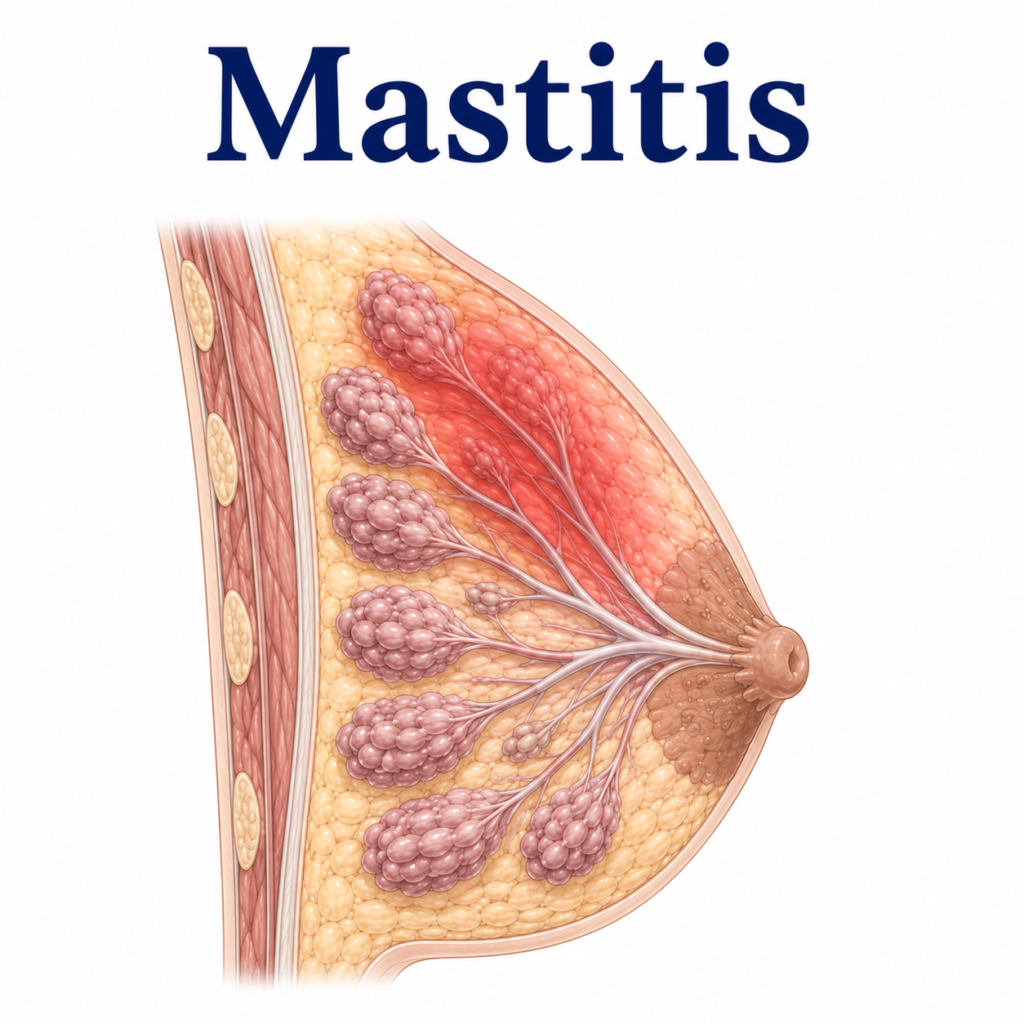
Mastitis: Symptoms, Causes, Treatment, and When to Seek Medical Care
Mastitis is an inflammation of the breast that most commonly affects people who are breastfeeding, although it can occur in anyone. It often causes a painful, red, swollen area of the breast and may be accompanied by fever, chills, and flu-like symptoms.
Fortunately, most cases improve with early treatment, continued breastfeeding or milk removal, and supportive care. Recognizing the symptoms early can help prevent complications such as a breast abscess.
What Is Mastitis?
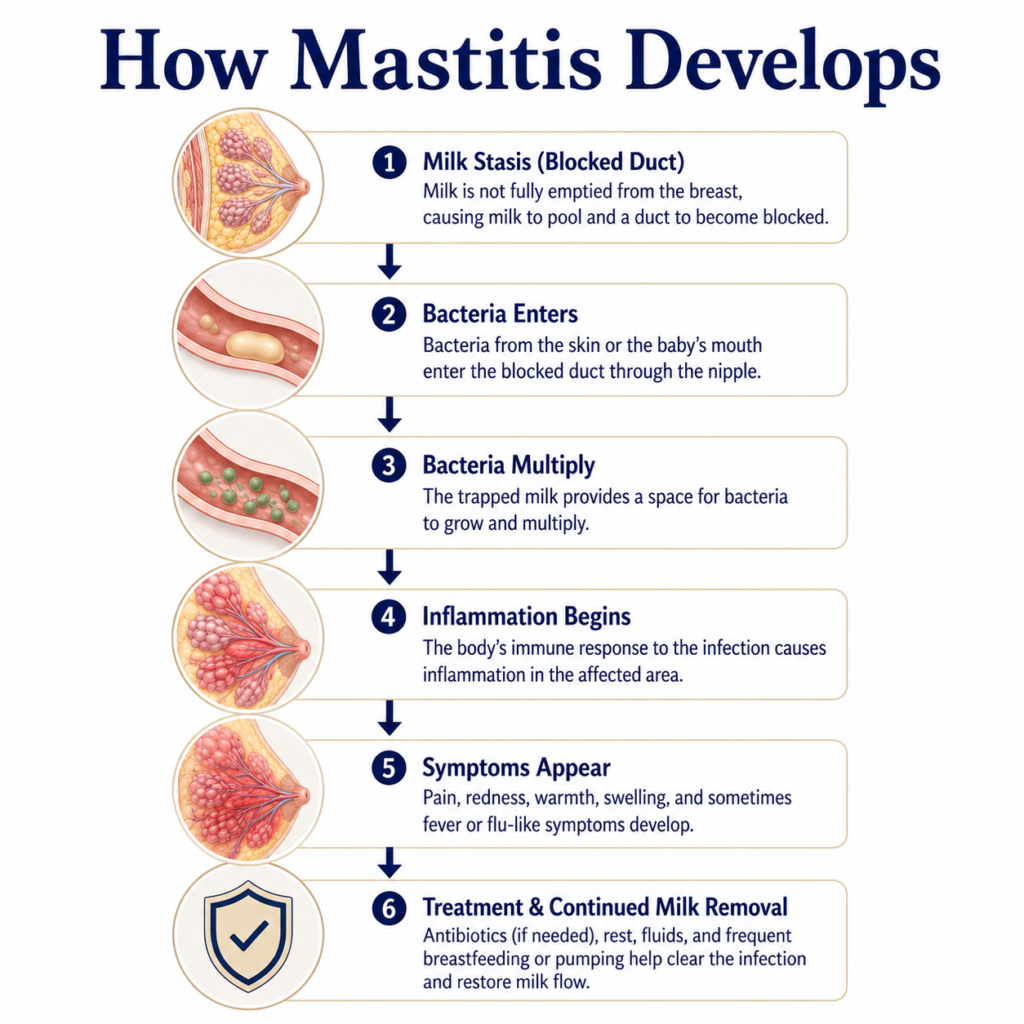
Mastitis is inflammation of the breast tissue. It most often occurs during breastfeeding (lactational mastitis) but can also develop in people who are not breastfeeding (non-lactational mastitis).
Inflammation may occur from milk buildup within the breast, and in some cases bacteria can lead to an infection. Current evidence recognizes that mastitis exists on a spectrum, and not every case requires antibiotics.
What Causes Mastitis?
1. Breastfeeding (Lactational Mastitis)
Most cases occur during the first few weeks after delivery but can happen anytime during breastfeeding.
Common contributing factors include:
- Milk that is not draining effectively
- Breast engorgement
- Oversupply of milk
- Cracked or sore nipples
- Difficulty with infant latch
- Skipping feedings
- Abrupt weaning
2. Non-Breastfeeding Mastitis
Less commonly, mastitis occurs in people who are not breastfeeding.
Possible causes include:
- Smoking
- Nipple piercing
- Diabetes
- Periductal mastitis
- Certain inflammatory breast conditions
- Rarely, inflammatory breast cancer
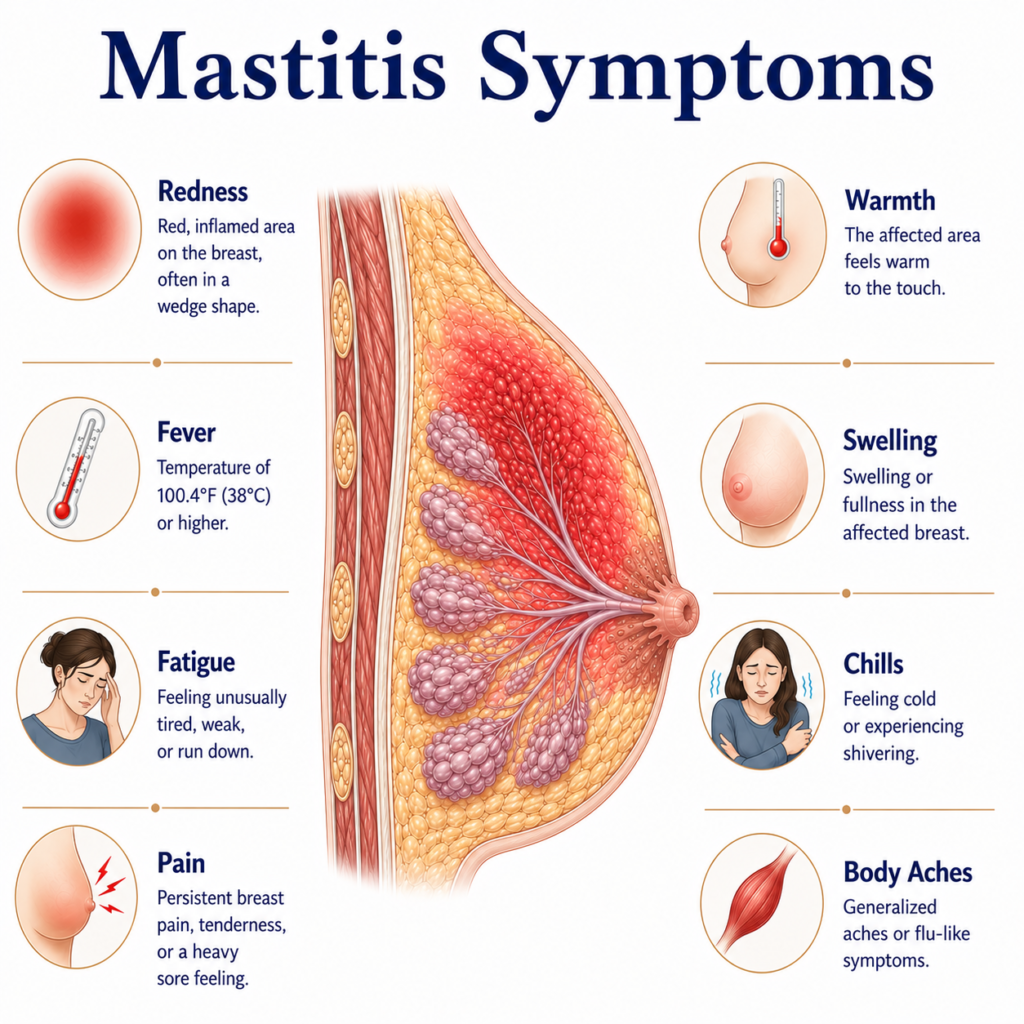
Symptoms usually develop quickly and may include:
- Breast pain
- A firm or tender lump
- Redness over part of the breast
- Warmth of the skin
- Swelling
- Fever
- Chills
- Body aches
- Fatigue
- Feeling like you have the flu
Most symptoms affect only one breast.
Who Is at Risk?
You may have a higher risk if you:
- Recently gave birth
- Are breastfeeding for the first time
- Have cracked nipples
- Experience frequent breast engorgement
- Skip feedings
- Wear tight-fitting bras that compress the breast
- Smoke (especially with non-lactational mastitis)
How Is Mastitis Diagnosed?
Most cases can be diagnosed based on your symptoms and a physical examination.
Additional testing may be recommended if:
- Symptoms do not improve after 48 hours of treatment
- A breast abscess is suspected
- Mastitis keeps returning
- You are not breastfeeding
- There is concern for another breast condition
Your healthcare provider may recommend:
- Breast ultrasound
- Milk culture (selected cases)
- Blood tests (occasionally)
How Is Mastitis Treated?
Treatment depends on the severity and whether a bacterial infection is suspected.
1. Supportive Care
Many early cases improve with:
- Continuing to breastfeed or express milk
- Feeding on your baby’s usual schedule
- Gentle milk removal without excessive pumping
- Rest
- Drinking plenty of fluids
- Ice packs between feedings
- Ibuprofen or acetaminophen for pain and fever
Current breastfeeding guidelines discourage aggressive breast massage and “pumping to empty,” as these may worsen inflammation.
2. Antibiotics
Your healthcare provider may prescribe antibiotics if:
- Symptoms are severe
- Fever is present
- Symptoms persist after 24–48 hours of supportive care
- A bacterial infection is suspected
It is important to finish the entire course of antibiotics, even if you begin feeling better.
Can You Continue Breastfeeding?
Yes.
In most cases, it is safe—and encouraged—to continue breastfeeding or expressing milk during mastitis.
Continuing to remove milk helps relieve engorgement and usually speeds recovery. The infection does not make breast milk unsafe for a healthy infant in most situations.
Possible Complications
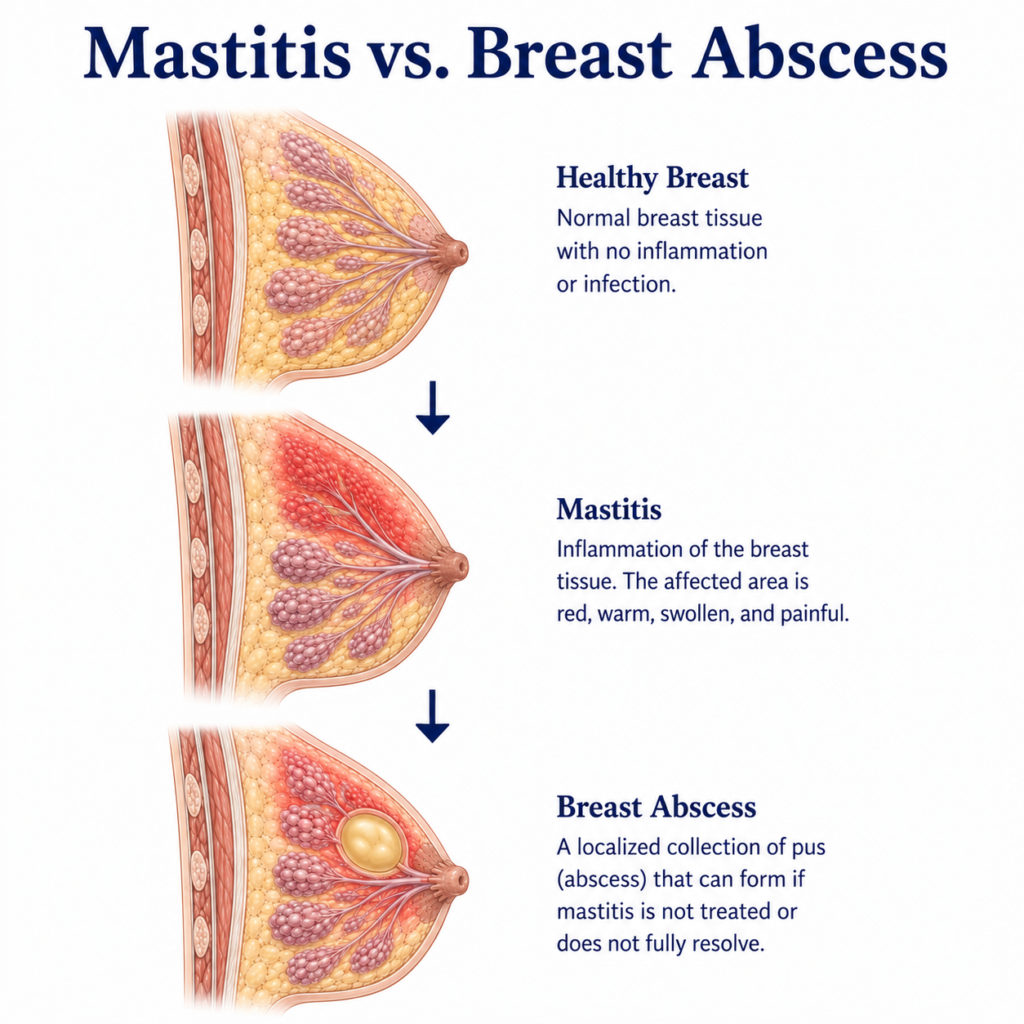
If mastitis is not treated promptly, complications can occur.
Breast Abscess
A breast abscess is a pocket of pus that may develop if mastitis does not improve.
Symptoms include:
- A painful lump that does not go away
- Persistent fever
- Worsening redness
- Fluctuant swelling
- Continued symptoms despite antibiotics
Most abscesses require drainage in addition to antibiotics.
Mastitis vs. Engorgement
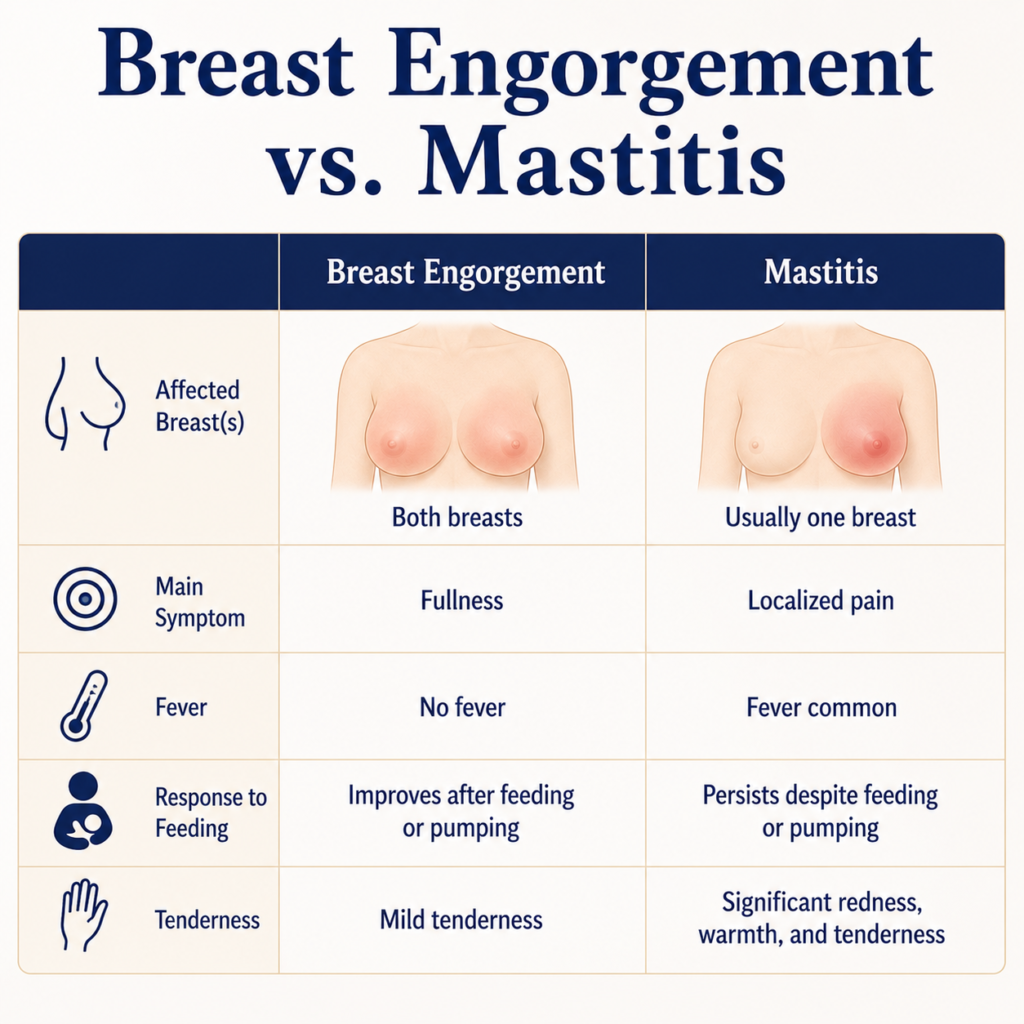
| Breast Engorgement | Mastitis |
|---|---|
| Full, swollen breasts | Painful inflamed area |
| Usually both breasts | Usually one breast |
| Mild discomfort | Moderate to severe pain |
| No fever | Fever is common |
| Improves after feeding | Often persists despite feeding |
When Should You See a Healthcare Provider?
Contact your healthcare provider if you have:
- Fever over 100.4°F (38°C)
- Increasing breast redness
- Severe breast pain
- Symptoms lasting more than 24–48 hours
- A painful lump that does not improve
- Pus draining from the nipple
- Recurrent episodes of mastitis
- Symptoms while not breastfeeding
When Is It an Emergency?
Seek immediate medical care if you develop:
- High fever with worsening breast swelling
- Rapidly spreading redness
- Severe breast pain with a large swollen area
- Confusion
- Difficulty breathing
- Signs of sepsis such as dizziness or low blood pressure
What Should You Do Next?
If you develop breast pain, redness, swelling, or fever while breastfeeding, don’t ignore your symptoms. Early treatment can help prevent complications and allow you to continue breastfeeding safely. If symptoms worsen, do not improve within 24 to 48 hours, or you develop a painful lump, contact your healthcare provider promptly for evaluation.
References
American College of Obstetricians and Gynecologists (ACOG). Breastfeeding Challenges.
https://www.acog.org/clinical/clinical-guidance/committee-opinion/articles/2021/02/breastfeeding-challenges
Academy of Breastfeeding Medicine. Clinical Protocol #36: The Mastitis Spectrum, Revised 2022.
https://abm.memberclicks.net/assets/DOCUMENTS/PROTOCOLS/36-mitchell-et-al-2022-academy-of-breastfeeding-medicine-clinical-protocol-36-the-mastitis-spectrum-revised-2022.pdf
American College of Obstetricians and Gynecologists (ACOG). Benign Breast Conditions.
https://www.acog.org/womens-health/faqs/benign-breast-problems-and-conditions
Kataria K, Srivastava A, Dhar A. Management of Lactational Mastitis and Breast Abscesses. Indian Journal of Surgery.
https://pmc.ncbi.nlm.nih.gov/articles/PMC3900741/
UpToDate. Lactational Mastitis. Wolters Kluwer.
https://www.uptodate.com
Wink A, Mitchell JA, Lam SK, Szugye H. Does Every Patient With Lactational Mastitis Require Antibiotic Treatment? Cleveland Clinic Journal of Medicine.
https://www.ccjm.org/content/91/5/283