
Emergency Contraception: What It Is, How It Works, and When to Use It
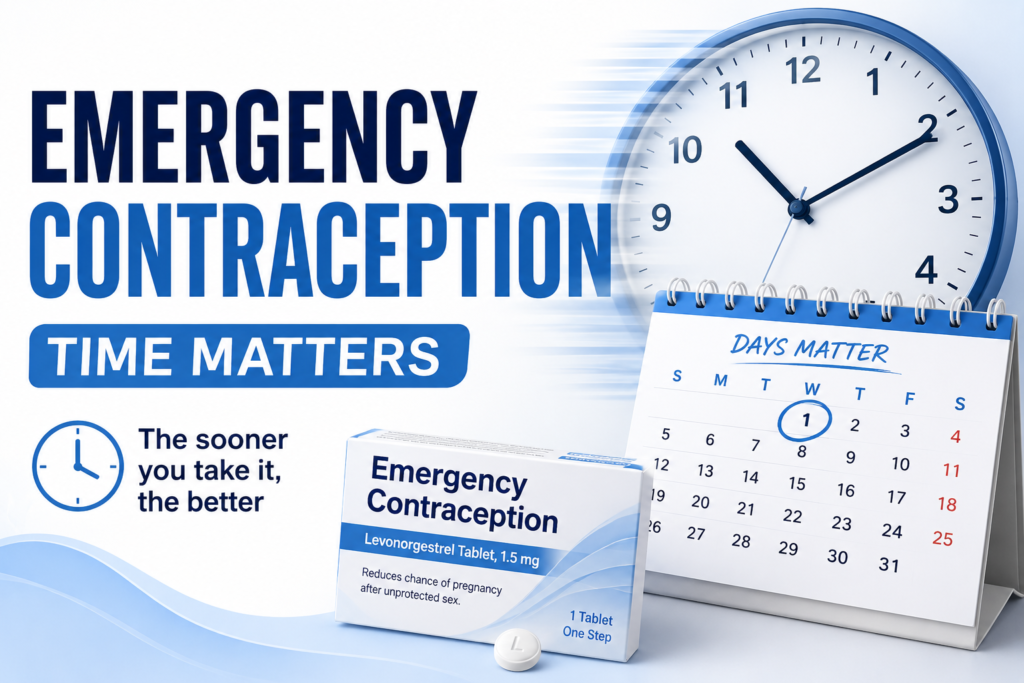
What Is Emergency Contraception?
Emergency contraception is used after unprotected sex to reduce the chance of pregnancy.
It is designed for unexpected situations, such as:
- A condom breaks or slips off
- You forgot to take your birth control pills
- You missed your birth control shot
- You had sex without using birth control
- Sexual assault
Emergency contraception is not meant to replace regular birth control.
How Does Emergency Contraception Work?
Emergency contraception works by preventing or delaying ovulation. Ovulation is when your ovary releases an egg.
If no egg is released, sperm cannot fertilize it.
Emergency contraception does not end an existing pregnancy and will not work if you are already pregnant.
Your Emergency Contraception Options
| Option | Best Time to Use | Prescription Needed? |
|---|---|---|
| Levonorgestrel (Plan B One Step® and generics) | Within 72 hours | No |
| Ulipristal (Ella®) | Within 120 hours (5 days) | Yes |
| Copper IUD | Within 120 hours (5 days) | Inserted by a healthcare provider |
The sooner emergency contraception is used, the better it works.
Which Option Is Most Effective?
| Method | Effectiveness |
| Copper IUD | Most effective |
| Ella® | Very effective up to 5 days |
| Plan B® | Most effective within the first 72 hours |
Your healthcare provider can help determine which option is best for your situation.
Did You Know?
Emergency contraception becomes less effective the longer you wait. Taking it as soon as possible gives you the best chance of preventing pregnancy.
Does Weight Matter?
Body weight may affect how well certain emergency contraceptive pills work.
Some studies suggest:
- Plan B may be less effective in people with higher body weight or BMI.
- Ella may work better than Plan B for some individuals with a higher BMI.
- A copper IUD remains highly effective regardless of body weight.
Talk with a healthcare provider if you are unsure which option is right for you.
Common Side Effects
Most people have few or only mild side effects.
You may experience:
- Nausea
- Fatigue
- Headache
- Dizziness
- Breast tenderness
- Mild abdominal cramping
- Changes in your next menstrual period
Most side effects go away within a day or two.
What Should You Expect After Taking It?
Your next period may:
- Arrive a few days early
- Arrive a few days late
- Be lighter than usual
- Be heavier than usual
These changes are common.
If your period is more than one week late, take a pregnancy test and contact your healthcare provider.
What Emergency Contraception Does Not Do
Emergency contraception does not:
| Myth | Fact |
| Cause an abortion | It prevents pregnancy before it begins. |
| Protect against sexually transmitted infections | Condoms are still recommended for STI protection. |
| Work every time | No emergency contraceptive works 100% of the time. |
| Replace regular birth control | It should only be used for emergencies. |
Can You Take It More Than Once?
Yes.
Emergency contraception can be used more than once if needed.
However, it is not intended to be your regular birth control because it is generally less effective than ongoing contraceptive methods.
If you find yourself needing emergency contraception often, talk with your healthcare provider about a regular birth control option that better fits your needs.
When Should You See a Healthcare Provider?
Seek medical care if you:
- Think you may already be pregnant
- Have severe abdominal pain after taking emergency contraception
- Do not get your period within three weeks
- Have a positive pregnancy test
- Have persistent heavy bleeding or severe pain
These symptoms do not necessarily mean something is wrong, but they should be evaluated.
Frequently Asked Questions
Is emergency contraception the same as the abortion pill?
No.
Emergency contraception works before pregnancy occurs. It does not end an existing pregnancy.
Can I still get pregnant after taking it?
Yes.
Although emergency contraception greatly lowers the risk of pregnancy, no method is 100% effective.
Can I start or restart my regular birth control afterward?
In most cases, yes. However, the timing depends on which emergency contraceptive you used. Your healthcare provider or pharmacist can tell you when to begin your regular birth control.
Will emergency contraception affect my ability to get pregnant later?
No.
Emergency contraception does not cause infertility or affect your future fertility.
References
Centers for Disease Control and Prevention. Emergency Contraception
https://www.cdc.gov/contraception/
American College of Obstetricians and Gynecologists. Emergency Contraception
https://www.acog.org/womens-health/faqs/emergency-contraception
Office on Women’s Health. Emergency Contraception
https://www.womenshealth.gov/a-z-topics/emergency-contraception
World Health Organization. Emergency Contraception
https://www.who.int/news-room/fact-sheets/detail/emergency-contraception