
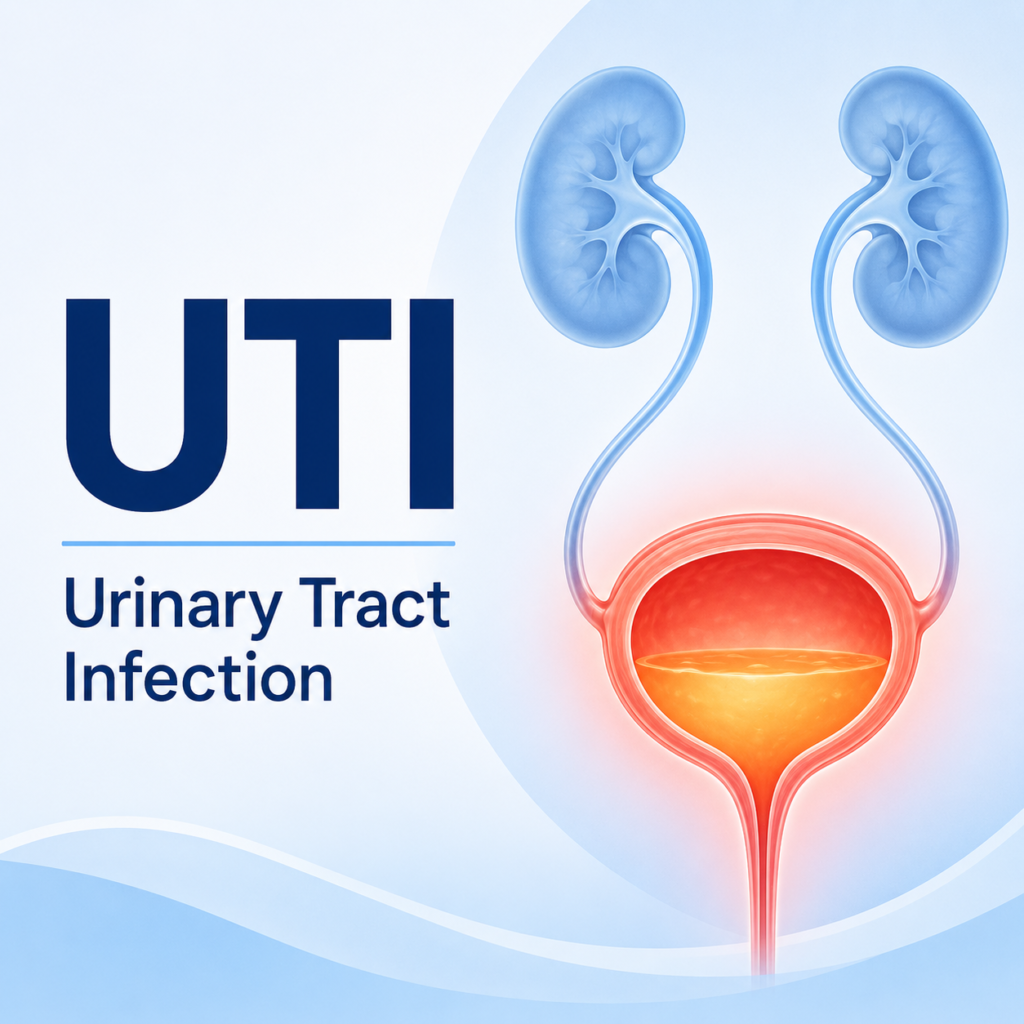
Understanding Urinary Tract Infection
Urinary tract infections (UTIs) are among the most common bacterial infections, especially in women. They occur when bacteria enter the urinary tract and multiply, leading to inflammation and symptoms such as burning with urination, frequent urination, and urinary urgency.
Although many UTIs are uncomplicated and respond well to treatment, recognizing the symptoms early is important to prevent the infection from spreading to the kidneys.
What Is a Urinary Tract Infection?
The urinary tract includes:
• Kidneys
• Ureters
• Bladder
• Urethra
A urinary tract infection develops when bacteria—most commonly Escherichia coli (E. coli) from the intestinal tract—enter the urethra and travel into the bladder.
Most infections involve the bladder (cystitis), but some may spread to the kidneys (pyelonephritis), which is a more serious infection.
Types of UTIs
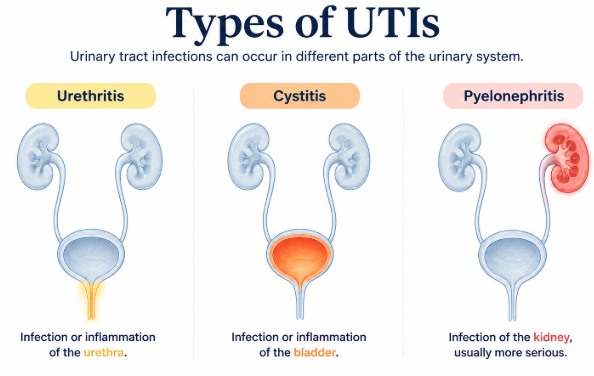
Image depicts the different types of urinary tract infections
| Type | Location | Common Symptoms |
|---|---|---|
| Urethritis | Urethra | Burning with urination, irritation |
| Cystitis | Bladder | Frequency, urgency, burning, lower abdominal discomfort |
| Pyelonephritis | Kidney | Fever, chills, flank pain, nausea, vomiting |
Common Symptoms
Symptoms often develop suddenly and may include:
• Burning or pain during urination
• Frequent urination
• Strong urge to urinate
• Passing only small amounts of urine
• Cloudy urine
• Blood in the urine
• Strong-smelling urine
• Lower abdominal or pelvic discomfort
Older adults may present with less typical symptoms, but confusion alone should not automatically be attributed to a UTI without further evaluation.
How Does a UTI Develop?
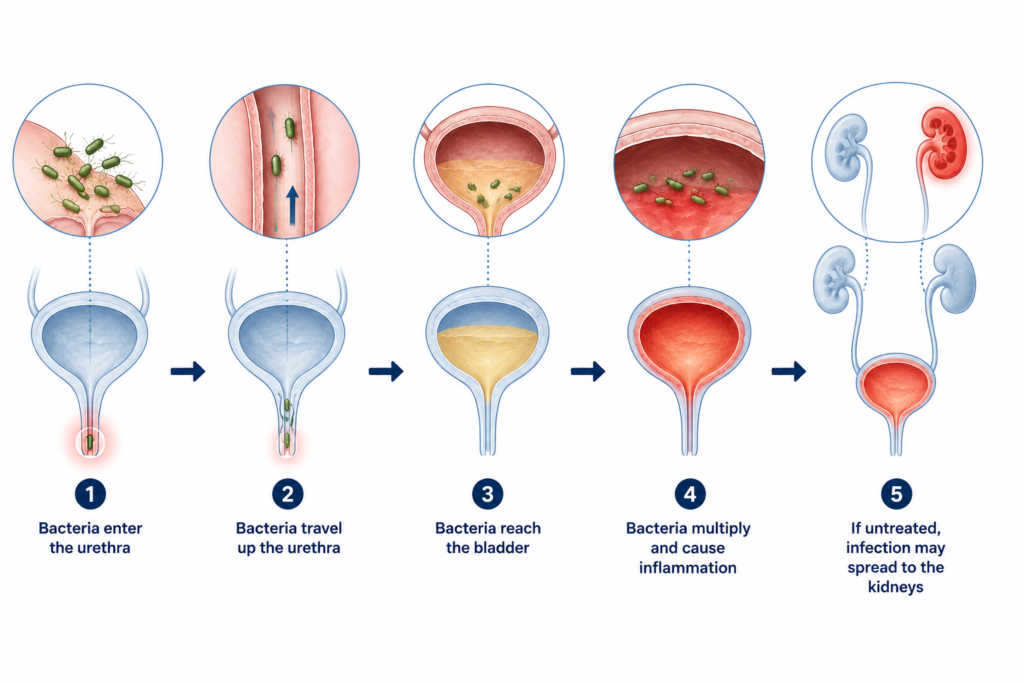
Image depicts the formation of urinary tract infections
A typical UTI develops in several steps:
- Bacteria from the skin or intestinal tract enter the urethra.
- The bacteria travel into the bladder.
- The bacteria multiply and cause inflammation.
- Symptoms such as burning, urgency, and frequent urination develop.
- If untreated, the infection may spread to the kidneys.
Who Is at Higher Risk?
Several factors increase the risk of developing a UTI:
• Female anatomy
• Sexual activity
• Pregnancy
• Menopause
• Diabetes
• Urinary tract obstruction (such as kidney stones)
• Urinary catheters
• Incomplete bladder emptying
• Previous UTIs
Common Causes
The most common bacteria causing UTIs include:
| Organism | Approximate Frequency |
| Escherichia coli (E. coli) | 75–95% |
| Klebsiella species | Less common |
| Proteus mirabilis | Less common |
| Enterococcus species | Less common |
| Staphylococcus saprophyticus | Common in some younger women |
How Is a UTI Diagnosed?
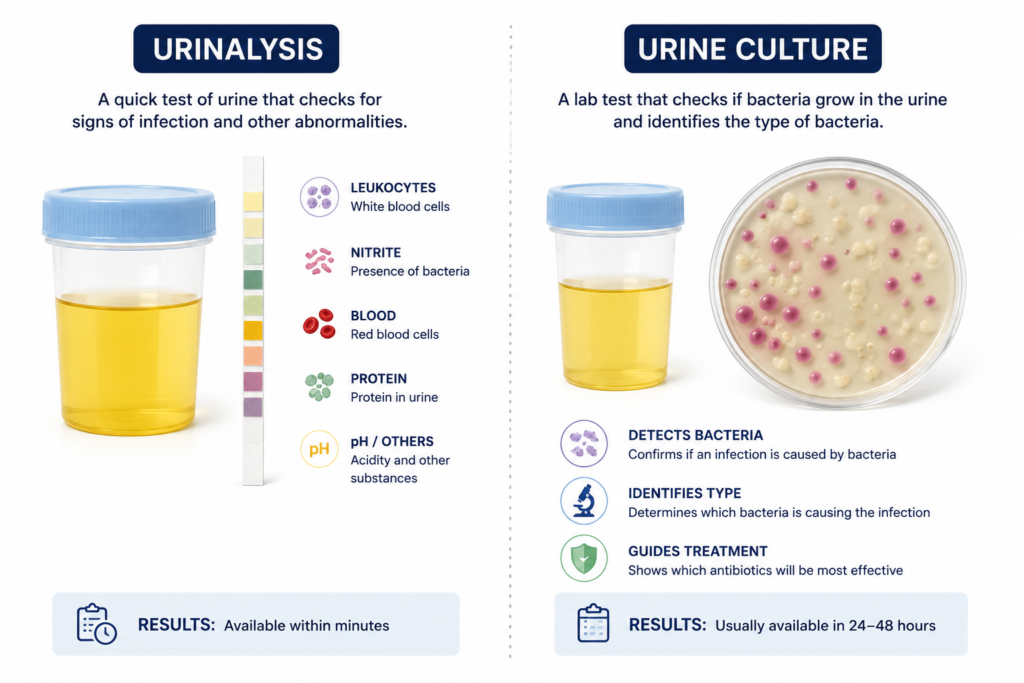
Image depicts urinalysis (left) and urine culture (right) as possible test used to diagnose urinary tract infections
A healthcare professional will review your symptoms and medical history.
Testing may include:
1. Urinalysis
A urine sample is examined for:
• White blood cells
• Nitrites
• Blood
• Bacteria
2. Urine Culture
A urine culture identifies the bacteria causing the infection and determines which antibiotics are most likely to be effective.
Cultures are particularly helpful for:
• Recurrent UTIs
• Complicated infections
• Pregnancy
• Kidney infections
• Symptoms that do not improve with treatment
How Are UTIs Treated?
Treatment depends on the type and severity of the infection.
Management may include:
• Prescription antibiotics
• Drinking adequate fluids
• Pain-relieving medications when appropriate
• Rest
Completing the entire course of antibiotics is important, even if symptoms improve before the medication is finished.
Preventing UTIs
You may be able to lower your risk by:
• Staying well hydrated
• Urinating when you feel the urge
• Urinating after sexual activity
• Wiping from front to back
• Avoiding spermicides if they contribute to recurrent infections
• Managing underlying medical conditions such as diabetes
Individuals with recurrent UTIs should discuss additional prevention strategies with their healthcare professional.
When Should You Seek Medical Attention?
Seek prompt medical evaluation if you have:
• Fever or chills
• Pain in your back or side (flank pain)
• Nausea or vomiting
• Blood in your urine
• Pregnancy with urinary symptoms
• Symptoms lasting longer than 48 hours despite treatment
• Frequent or recurrent UTIs
Key Takeaway
A urinary tract infection is a bacterial infection of the urinary system that most commonly affects the bladder. Early recognition and treatment usually lead to a full recovery, while untreated infections can spread to the kidneys and become more serious.
What Should You Do Next?
If you develop burning with urination, urinary urgency, or frequent urination, consider discussing your symptoms with a healthcare professional. Prompt evaluation can help confirm the diagnosis, identify the cause, and ensure you receive the most appropriate treatment.
References
Infectious Diseases Society of America (IDSA): Clinical Practice Guideline for Acute Uncomplicated Cystitis and Pyelonephritis in Women
American Urological Association (AUA): Recurrent Uncomplicated Urinary Tract Infections in Women Guideline
National Institute of Diabetes and Digestive and Kidney Diseases (NIDDK): Bladder Infection (Urinary Tract Infection) in Adults
Centers for Disease Control and Prevention (CDC): Urinary Tract Infection Basics
Mayo Clinic: Urinary Tract Infection (UTI) Symptoms and Causes
Cleveland Clinic: Urinary Tract Infection (UTI)