
What Is Bacterial Vaginosis?
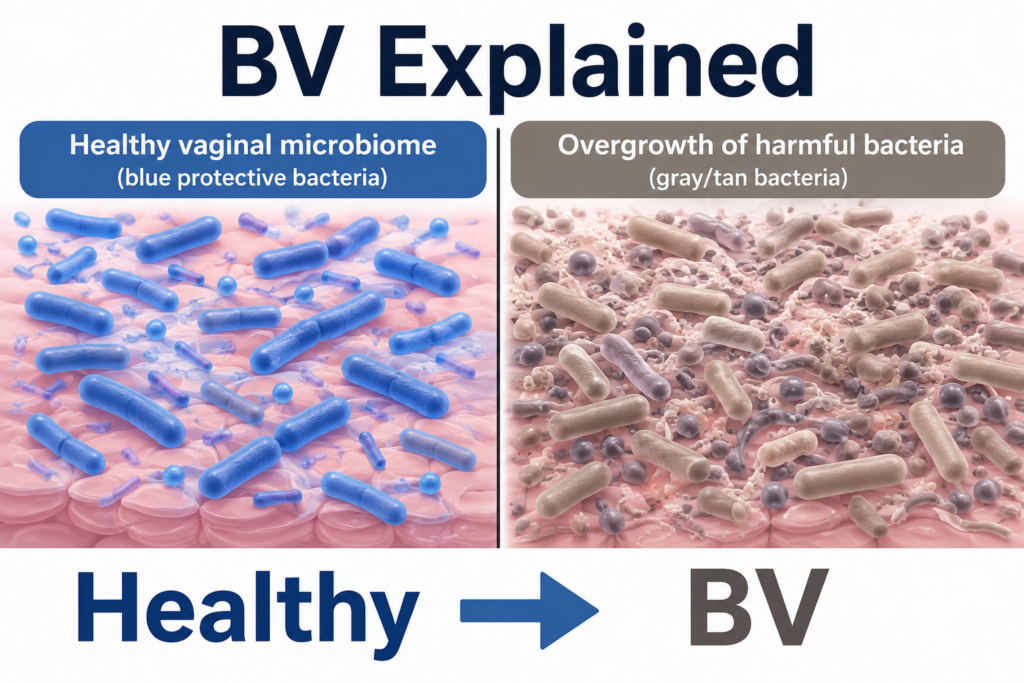
Your vagina naturally contains millions of healthy bacteria. These bacteria help keep the vagina slightly acidic, which protects against infection.
BV develops when that healthy balance changes. The protective bacteria decrease, allowing other bacteria to grow too much.
Although bacteria are involved, BV is not considered a sexually transmitted infection (STI).
Healthy vs. BV
| Healthy Vagina | Bacterial Vaginosis |
|---|---|
| Healthy bacteria are the most common | Harmful bacteria outnumber healthy bacteria |
| Mild or no odor | Fishy odor is common |
| Normal discharge | Thin gray or white discharge |
| Acidic environment protects against infection | Vaginal pH becomes less acidic |
What Are the Symptoms?
About half of women with BV have no symptoms at all.
If symptoms develop, you may notice:
| Common Symptoms |
|---|
| Thin white or gray discharge |
| Fishy vaginal odor |
| Odor that becomes stronger after sex |
| Mild itching |
| Burning during urination |
| More vaginal discharge than usual |
The fishy odor is often the symptom that brings women to their healthcare provider.
Did You Know?
Many women think they have a yeast infection when they actually have BV. The treatments are different, so getting the correct diagnosis is important.
What Causes BV?
Doctors do not know exactly why BV develops, but they do know that certain things can upset the natural balance of bacteria.
Your risk is higher if you:
| Risk Factors |
|---|
| Have a new sexual partner |
| Have multiple sexual partners |
| Douche |
| Smoke cigarettes |
| Have had BV before |
You can still develop BV even if you are not sexually active.
Poor hygiene does not cause BV.
How Do Doctors Diagnose BV?
Your healthcare provider may:
- Ask about your symptoms
- Perform a pelvic exam
- Test your vaginal discharge
- Measure your vaginal pH
- Send a sample to the laboratory if needed
Many clinics can diagnose BV during your visit.
How Is BV Treated?
BV usually requires prescription antibiotics.
Common treatments include:
| Medication | How It’s Used |
|---|---|
| Metronidazole tablets | Taken by mouth |
| Metronidazole gel | Applied inside the vagina |
| Clindamycin cream | Applied inside the vagina |
Most women start feeling better within a few days.
Even if your symptoms improve, finish all of your medication unless your healthcare provider tells you otherwise.
What Happens If BV Is Not Treated?
Some women with mild BV may not develop complications. However, untreated BV can increase the risk of:
| Possible Complications |
|---|
| Pelvic inflammatory disease (PID) |
| Getting certain sexually transmitted infections |
| Pregnancy complications, including preterm birth |
| Infection after some gynecologic procedures |
Can You Prevent BV?
There is no guaranteed way to prevent BV, but these habits may lower your risk.
| Ways to Lower Your Risk |
|---|
| Do not douche |
| Use condoms consistently |
| Limit new sexual partners |
| Avoid scented vaginal products |
| Complete your antibiotic treatment |
| See your healthcare provider if symptoms return |
Myths vs. Facts
| Myth | Fact |
|---|---|
| BV is the same as a yeast infection. | They are different conditions and require different treatments. |
| BV only happens after sex. | Women who are not sexually active can also develop BV. |
| Poor hygiene causes BV. | BV is caused by an imbalance of bacteria, not poor hygiene. |
| BV always causes symptoms. | About half of women have no symptoms. |
| Over the counter yeast medication will treat BV. | BV usually requires prescription antibiotics. |
When Should You See a Healthcare Provider?
Schedule an appointment if you have:
- A fishy vaginal odor
- New or unusual vaginal discharge
- Burning when you urinate
- Vaginal irritation that does not improve
- Symptoms that keep coming back
- Symptoms during pregnancy
Because yeast infections, sexually transmitted infections, and BV can look very similar, it is important to get the correct diagnosis before starting treatment.
Frequently Asked Questions
Can BV go away on its own?
Sometimes. However, if you have symptoms, treatment is recommended because it helps relieve symptoms and lowers the risk of complications.
Can my partner give me BV?
BV is not considered a sexually transmitted infection, but sexual activity can increase your risk of developing it.
Will probiotics cure BV?
Research is still ongoing. Some studies suggest probiotics may help reduce repeat infections, but they should not replace antibiotics when treatment is needed.
What Should You Do Next?
If you notice a fishy odor, unusual vaginal discharge, or irritation, do not assume it is a yeast infection. Bacterial vaginosis is very common and is usually easy to treat with the right medication. A healthcare provider can determine the cause of your symptoms and recommend the treatment that is best for you.
References
Centers for Disease Control and Prevention. About Bacterial Vaginosis
https://www.cdc.gov/bacterial-vaginosis/about/index.html
CDC. Sexually Transmitted Infections Treatment Guidelines: Bacterial Vaginosis
https://www.cdc.gov/std/treatment-guidelines/bv.htm
American College of Obstetricians and Gynecologists. Vaginitis FAQ
https://www.acog.org/womens-health/faqs/vaginitis