
Overactive Bladder (OAB): Symptoms, Causes, Treatment, and When to See a Doctor
Overactive bladder (OAB) is a common condition that causes a sudden, difficult-to-control urge to urinate. Some people may need to rush to the bathroom frequently, wake up multiple times at night to urinate, or experience urine leakage before reaching the toilet.
Although overactive bladder becomes more common with age, it is not a normal part of aging. Many people can significantly improve their symptoms with lifestyle changes, bladder training, medications, or other treatments.
This guide explains the symptoms, causes, diagnosis, treatment options, and when to seek medical care.
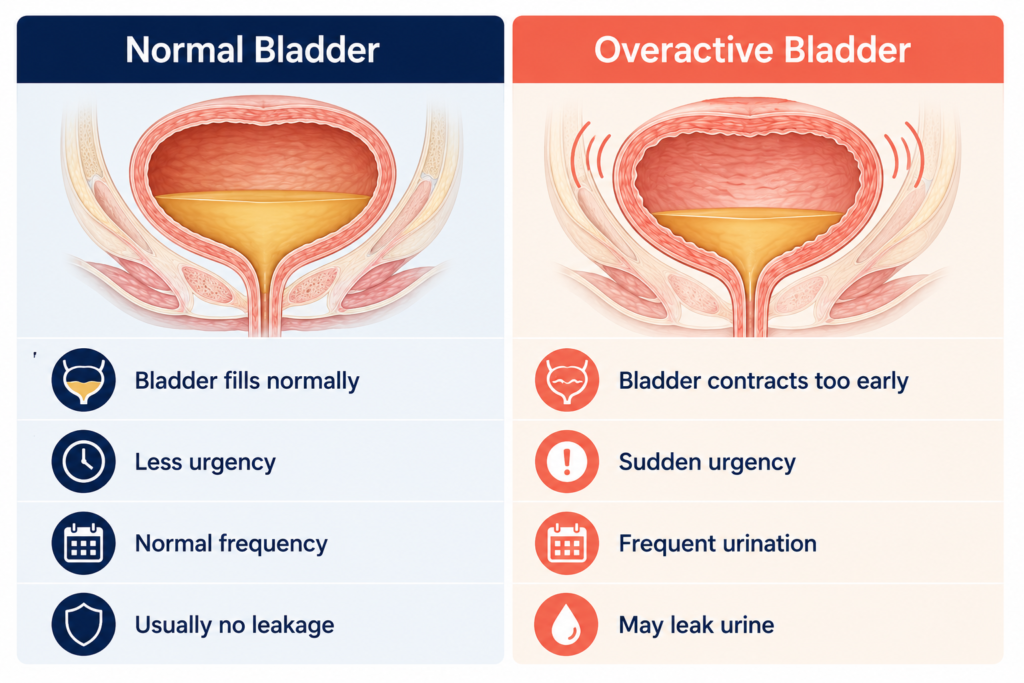
Overactive bladder is a condition in which the bladder muscle contracts unexpectedly, even when the bladder is not full.
This causes a sudden urge to urinate that may be difficult to delay.
OAB is defined by one or more of the following:
- Urinary urgency
- Frequent urination
- Urge urinary incontinence (leakage after a strong urge)
- Waking up at night to urinate (nocturia)
Not everyone with overactive bladder experiences urine leakage.
What Are the Symptoms?
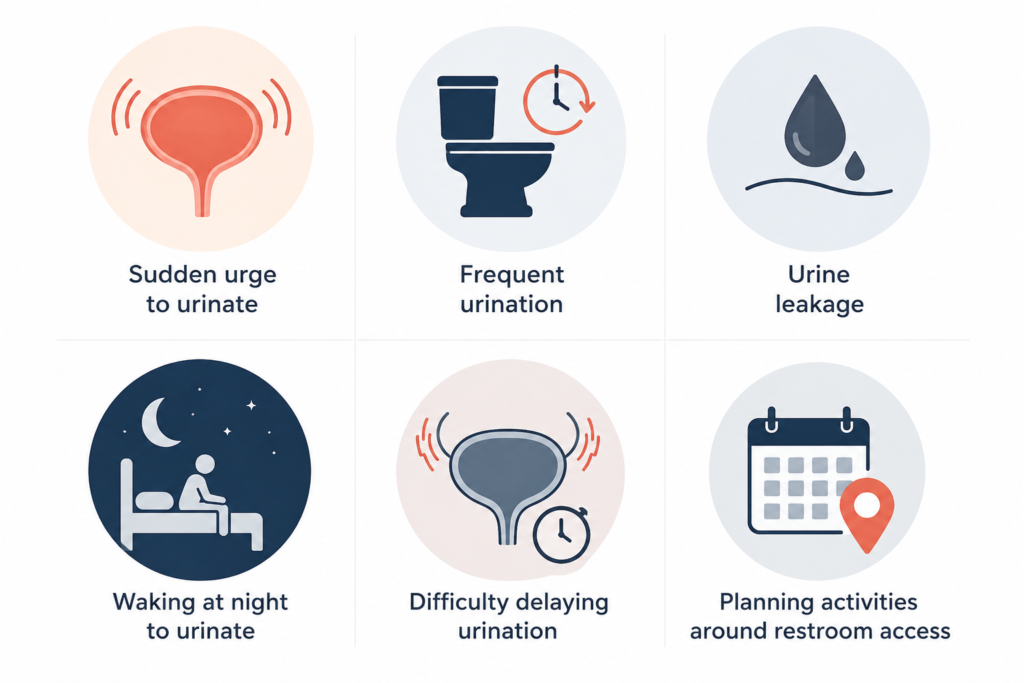
Symptoms may include:
- A sudden, strong urge to urinate
- Difficulty holding urine
- Urinating more than eight times during the day
- Waking two or more times at night to urinate
- Accidental urine leakage before reaching the bathroom
- Frequently planning activities around restroom access
Symptoms can range from mild to severe and may interfere with work, travel, exercise, and sleep.
What Causes Overactive Bladder?
Sometimes no clear cause is identified.
Possible causes include:
- Aging-related changes in bladder function
- Overactive bladder muscle (detrusor overactivity)
- Neurologic conditions such as stroke, Parkinson disease, or multiple sclerosis
- Diabetes
- Bladder irritation
- Chronic constipation
- Pelvic floor dysfunction
- Prior pelvic surgery
- Certain medications
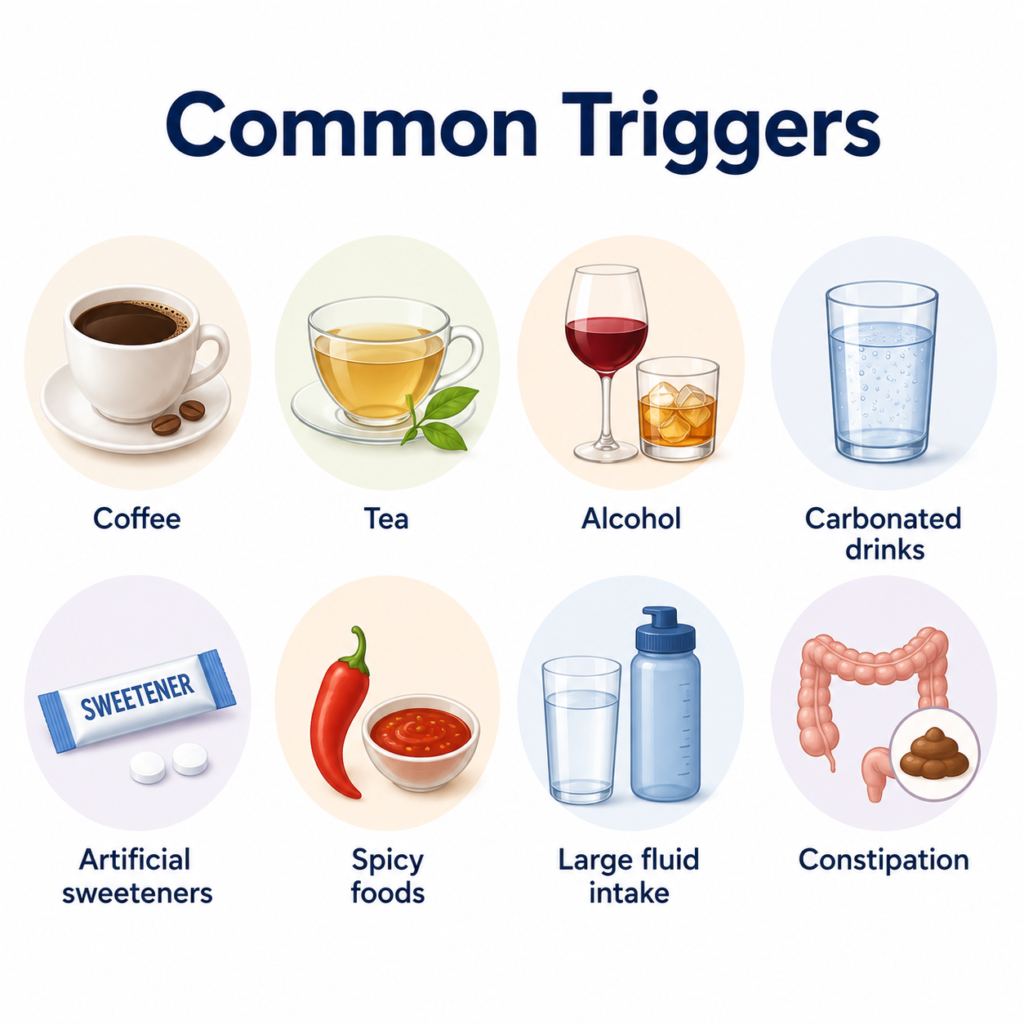
- Excess caffeine or alcohol
What Is the Difference Between Overactive Bladder and a Urinary Tract Infection?
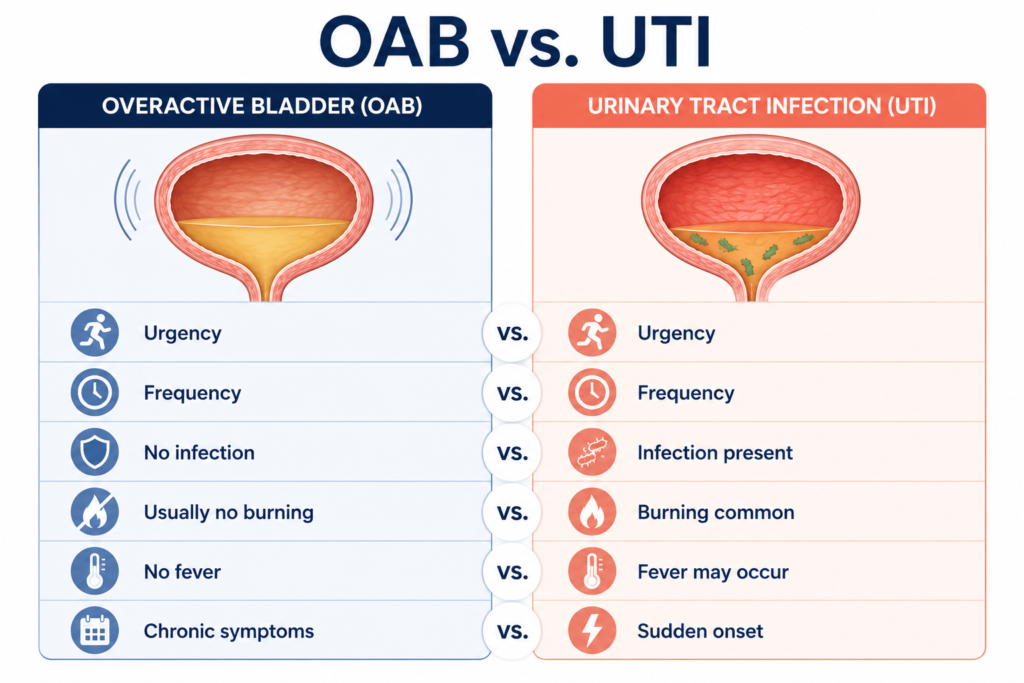
Although both conditions can cause frequent urination and urgency, they are different.
| Overactive Bladder | Urinary Tract Infection |
|---|---|
| Usually no burning | Burning with urination is common |
| No infection | Bacterial infection |
| Usually no fever | Fever may occur |
| Long-term symptoms | Symptoms often develop suddenly |
| Urine testing usually normal | Urine test shows infection |
If symptoms begin suddenly or are associated with burning, fever, or blood in the urine, evaluation for a urinary tract infection is important.
Who Is at Risk?
- Increasing age
- Female sex
- Menopause
- Pregnancy and childbirth
- Enlarged prostate (in men)
- Diabetes
- Obesity
- Neurologic disorders
- Chronic constipation
- Smoking
How Is Overactive Bladder Diagnosed?
Your healthcare provider may ask about:
- How often you urinate
- Whether leakage occurs
- Fluid intake
- Medications
- Medical history
Testing may include:
- Physical examination
- Urinalysis
- Urine culture (if infection is suspected)
- Bladder diary
- Measurement of post-void residual urine (selected patients)
- Urodynamic testing (selected cases)
How Is Overactive Bladder Treated?
Treatment usually begins with lifestyle changes before medications are considered.
1.Lifestyle Changes
Many people improve with simple changes such as:
- Limiting caffeine
- Reducing alcohol intake
- Maintaining a healthy weight
- Avoiding excessive evening fluids
- Treating constipation
- Stopping smoking
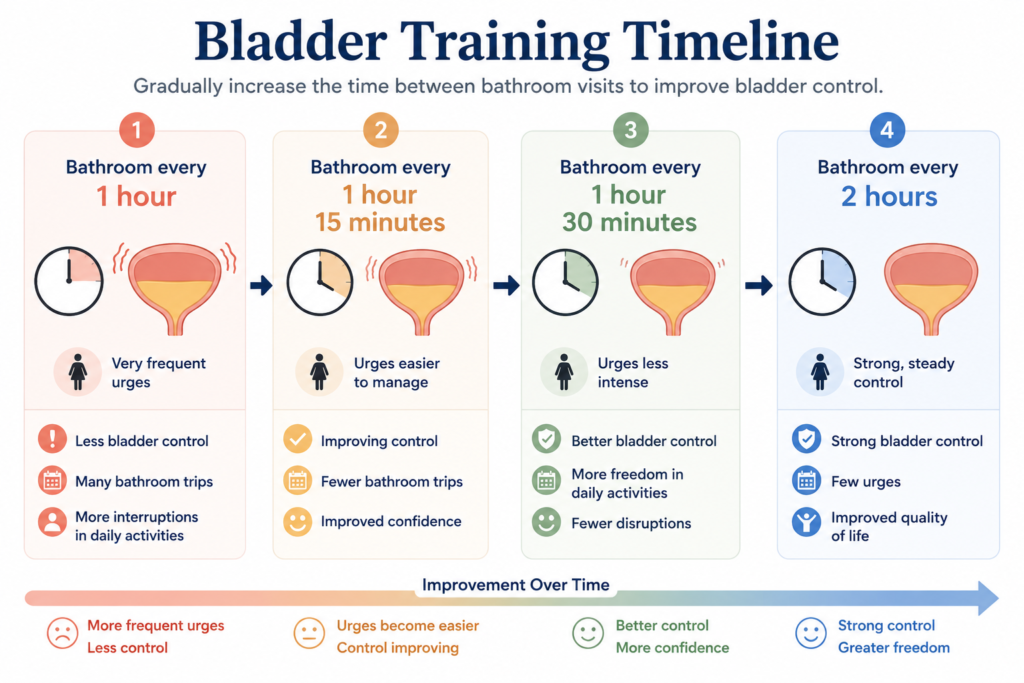
2.Bladder Training
Bladder training helps gradually increase the amount of time between bathroom visits.
This may include:
- Scheduled bathroom trips
- Delaying urination by a few minutes
- Gradually increasing the interval between voids
Over time, many people notice fewer urgent episodes.
3.Pelvic Floor Exercises
Pelvic floor muscle exercises (Kegel exercises) strengthen the muscles that help control urination.
Working with a pelvic floor physical therapist may improve results.
4.Medications
If symptoms persist, your healthcare provider may prescribe medication.
Common options include:
- Antimuscarinic medications
- Beta-3 adrenergic agonists
Your provider will discuss potential benefits and side effects to determine the best option for you.
5.Advanced Treatments
If symptoms do not improve with conservative treatment, additional options include:
- Botulinum toxin (Botox®) injections into the bladder
- Sacral neuromodulation
- Percutaneous tibial nerve stimulation (PTNS)
These treatments are generally performed by a urologist or urogynecologist.
Can Overactive Bladder Be Prevented?
Not every case can be prevented, but healthy habits may reduce symptoms.
Helpful habits include:
- Maintaining a healthy weight
- Limiting bladder irritants
- Treating constipation
- Performing pelvic floor exercises
- Staying physically active
- Managing diabetes
Possible Complications
- Sleep disruption
- Anxiety
- Depression
- Social isolation
- Falls in older adults due to rushing to the bathroom
- Skin irritation from urine leakage
- Reduced quality of life
When Should You See a Healthcare Provider?
Schedule an appointment if you experience:
- Frequent urgency
- Urinating more than eight times per day
- Leakage associated with urgency
- Waking frequently to urinate
- Symptoms interfering with daily life
- New urinary symptoms
Many treatments are available and can significantly improve symptoms.
When Is It an Emergency?
Seek immediate medical care if you develop:
- Fever with urinary symptoms
- Severe back or side pain
- Inability to urinate
- Large amounts of blood in the urine
- Sudden leg weakness or numbness with bladder problems
- New loss of bowel and bladder control
These symptoms may indicate a more serious condition requiring urgent evaluation.
What Should You Do Next?
If you are frequently rushing to the bathroom, waking up multiple times each night to urinate, or experiencing urine leakage, don’t assume it’s simply part of aging. Overactive bladder is a common and treatable condition. Schedule an appointment with your healthcare provider to determine the cause of your symptoms and discuss the treatment options that are right for you.
References
American Urological Association (AUA) & Society of Urodynamics, Female Pelvic Medicine & Urogenital Reconstruction (SUFU). Diagnosis and Treatment of Idiopathic Overactive Bladder Guideline.
https://www.auanet.org/guidelines-and-quality/guidelines/idiopathic-overactive-bladder
American Urogynecologic Society (AUGS). Overactive Bladder Patient Fact Sheet.
https://www.voicesforpfd.org/about/patient-fact-sheets/overactive-bladder/
National Institute of Diabetes and Digestive and Kidney Diseases (NIDDK). Treatment of Bladder Control Problems (Urinary Incontinence).
https://www.niddk.nih.gov/health-information/urologic-diseases/bladder-control-problems/treatment
Mayo Clinic. Overactive Bladder.
https://www.mayoclinic.org/diseases-conditions/overactive-bladder/symptoms-causes/syc-20355715
UpToDate. Overactive Bladder (Urgency Urinary Incontinence) in Adults. Wolters Kluwer.
https://www.uptodate.com