
Urinary Incontinence in Women: Types, Causes, Treatment, and When to Seek Help
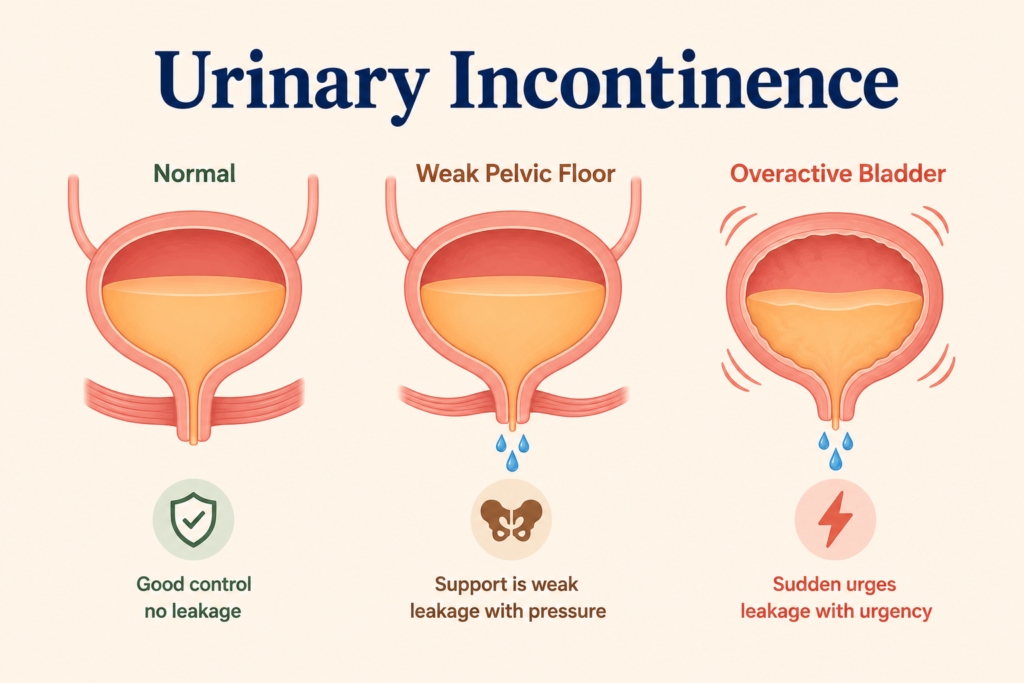
Urinary incontinence—the unintentional leakage of urine—is a common condition that affects millions of women. While it becomes more common with age, urinary incontinence is not a normal part of aging and should not be considered something you simply have to live with.
Many women experience urine leakage during activities such as coughing, laughing, sneezing, or exercising, while others may have a sudden, overwhelming urge to urinate that leads to leakage before they can reach the bathroom. Fortunately, effective treatments are available for most types of urinary incontinence.
This guide explains the different types of urinary incontinence, common causes, treatment options, and when to seek medical care.
What Is Urinary Incontinence?
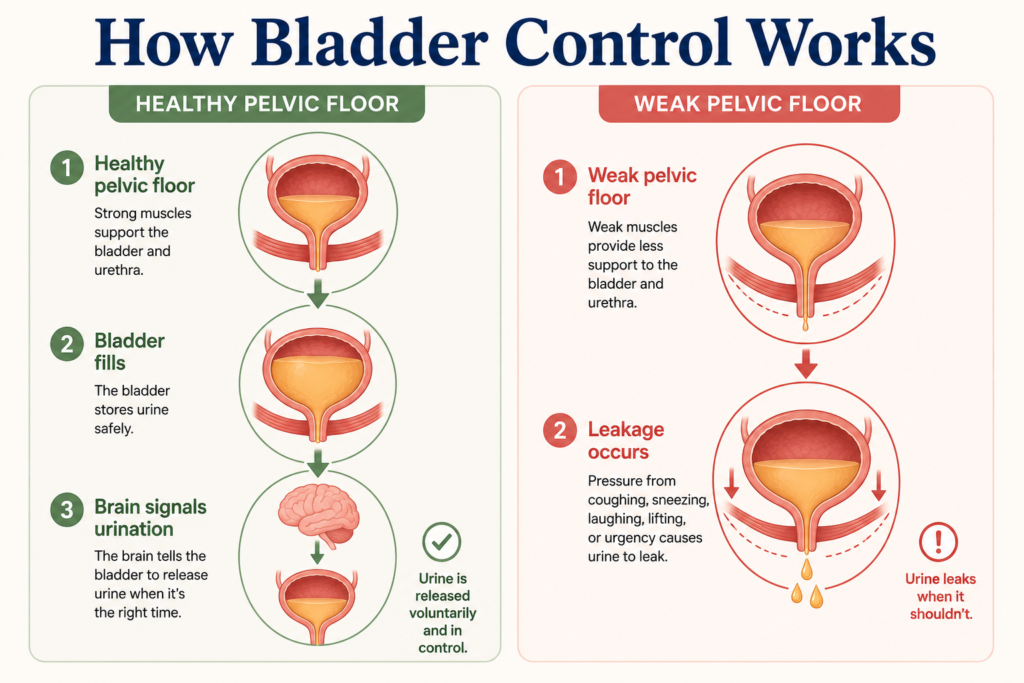
Urinary incontinence is the accidental leakage of urine due to loss of bladder control.
The amount of leakage can range from a few drops to complete emptying of the bladder.
Urinary incontinence is a symptom rather than a disease itself, and identifying the underlying cause is the first step toward effective treatment.
Types of Urinary Incontinence
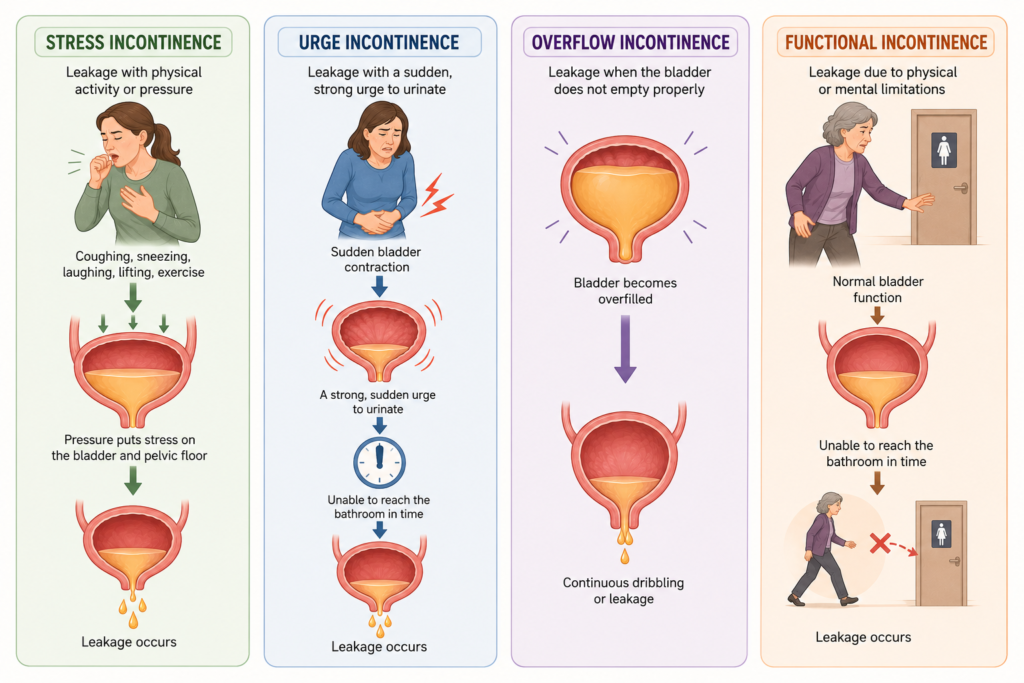
1. Stress Urinary Incontinence
Stress incontinence occurs when pressure inside the abdomen increases and urine leaks because the pelvic floor muscles or urethral support are weakened.
Common triggers include:
- Coughing
- Sneezing
- Laughing
- Running
- Jumping
- Heavy lifting
- Exercise
This is the most common type of urinary incontinence in younger and middle-aged women.
2. Urge Urinary Incontinence
Urge incontinence occurs when a sudden, intense urge to urinate is followed by urine leakage before reaching the bathroom.
It is commonly caused by overactive bladder (OAB).
Women often describe:
- “I can’t hold it.”
- “When I have to go, I have to go immediately.”
3. Mixed Urinary Incontinence
Mixed incontinence combines features of both stress and urge incontinence.
Women may leak urine:
- When coughing or exercising
- After a sudden urge to urinate
This is very common after menopause.
4. Overflow Incontinence
Overflow incontinence occurs when the bladder does not empty completely.
Symptoms include:
- Frequent dribbling
- Difficulty emptying the bladder
- Weak urine stream
- Feeling that the bladder is never completely empty
Although less common in women, it can occur due to certain neurologic conditions or bladder outlet obstruction.
5. Functional Incontinence
The bladder functions normally, but another condition prevents someone from reaching the bathroom in time.
Examples include:
- Arthritis
- Mobility problems
- Stroke
- Dementia
What Causes Urinary Incontinence?
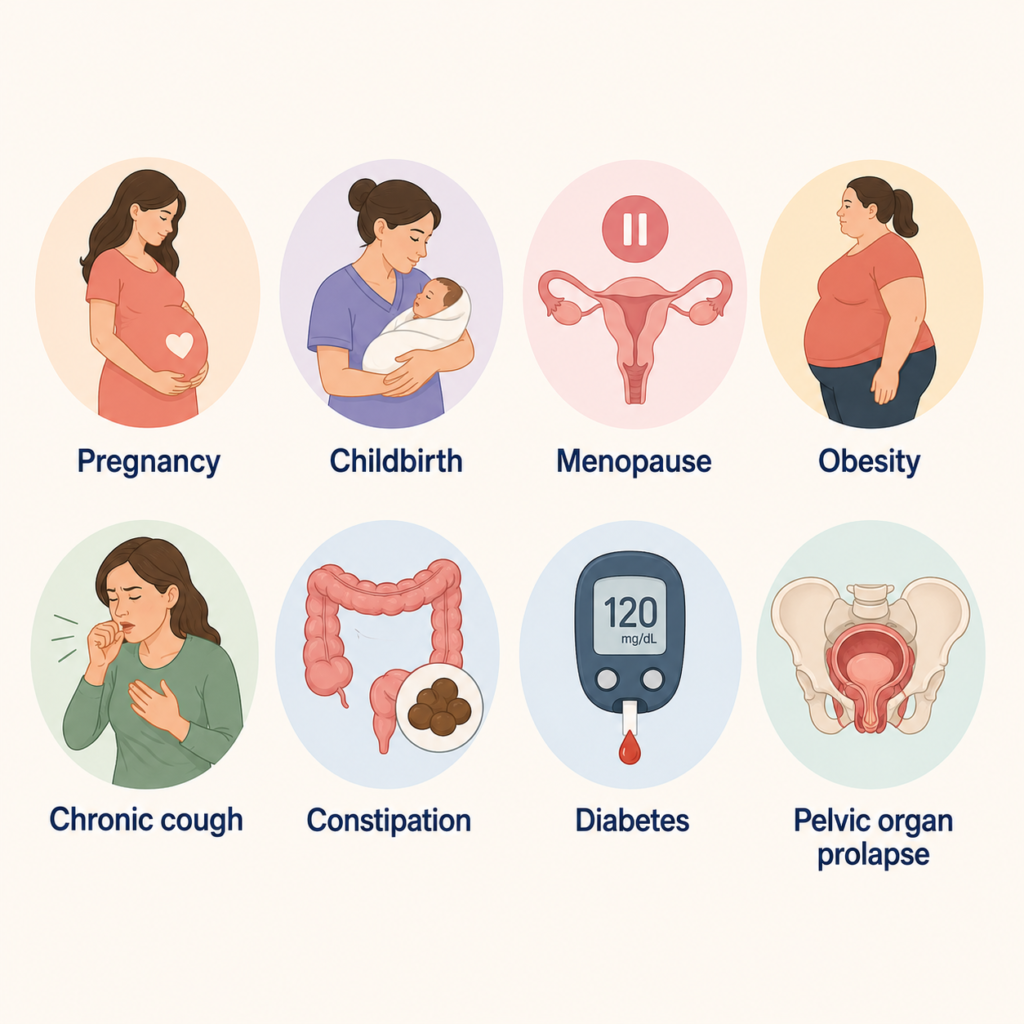
Several factors can contribute to urinary incontinence.
Common causes include:
- Pregnancy
- Vaginal childbirth
- Menopause
- Aging
- Obesity
- Chronic coughing
- Constipation
- Overactive bladder
- Diabetes
- Neurologic disorders
- Pelvic organ prolapse
- Certain medications
Sometimes more than one factor is involved.
Who Is at Risk?
Risk factors include:
- Increasing age
- Pregnancy
- Multiple vaginal deliveries
- Menopause
- Obesity
- Smoking
- Chronic constipation
- Chronic lung disease with frequent coughing
- Family history
- Previous pelvic surgery
How Is Urinary Incontinence Diagnosed?
Your healthcare provider will ask questions about:
- When leakage occurs
- How often it happens
- How much urine leaks
- Fluid intake
- Medications
- Medical history
Evaluation may include:
- Physical examination
- Pelvic examination
- Urinalysis
- Urine culture (if infection is suspected)
- Bladder diary
- Post-void residual measurement
- Urodynamic testing (selected patients)
- Cystoscopy (selected cases)
How Is Urinary Incontinence Treated?
Treatment depends on the type and underlying cause.
Lifestyle Changes
Many women improve with simple lifestyle changes.
These include:
- Weight loss if overweight
- Limiting caffeine
- Limiting alcohol
- Treating constipation
- Quitting smoking
- Managing diabetes
- Avoiding excessive evening fluids
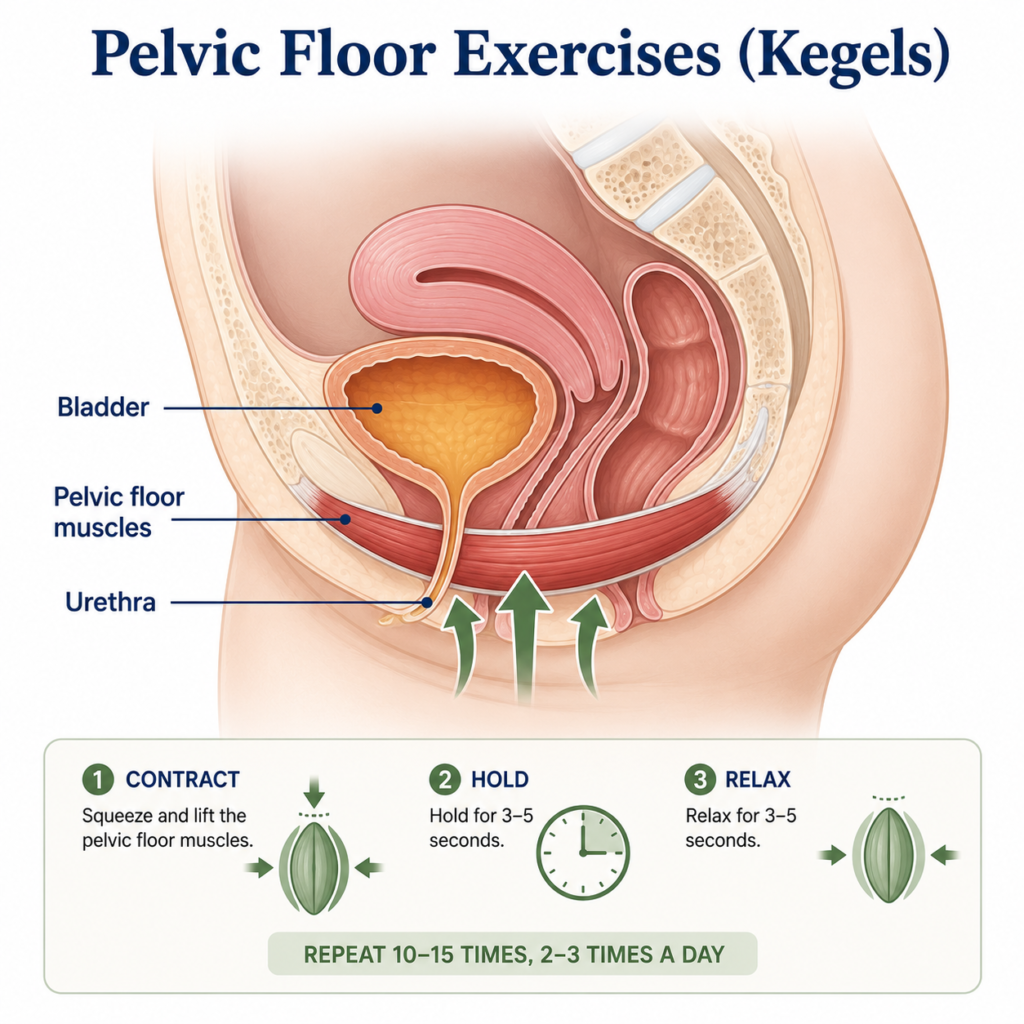
Pelvic Floor Muscle Exercises
Kegel exercises strengthen the muscles that support the bladder and urethra.
Pelvic floor physical therapy may improve symptoms, especially for stress incontinence.
Bladder Training
Bladder training is particularly helpful for urge incontinence and overactive bladder.
It involves:
- Scheduled bathroom visits
- Delaying urination gradually
- Increasing the time between voids
Medications
Medications are most commonly used for urge urinary incontinence caused by overactive bladder.
Options include:
- Antimuscarinic medications
- Beta-3 adrenergic agonists
These medications are generally not effective for stress urinary incontinence.
Medical Devices
Some women benefit from:
- Vaginal pessaries
- Urethral inserts (selected cases)
These devices can help reduce stress incontinence.
Surgery
Surgery may be considered when conservative treatments fail, especially for stress urinary incontinence.
Common procedures include:
- Midurethral sling surgery
- Urethral bulking injections
- Colposuspension
Your healthcare provider or urogynecologist can discuss the most appropriate option based on your symptoms.
Can Urinary Incontinence Be Prevented?
Not every case can be prevented, but healthy habits may reduce your risk.
Helpful strategies include:
- Maintaining a healthy weight
- Performing pelvic floor exercises
- Avoiding smoking
- Preventing constipation
- Staying physically active
- Managing chronic medical conditions
Possible Complications
Untreated urinary incontinence may lead to:
- Skin irritation
- Recurrent urinary tract infections
- Sleep disruption
- Social isolation
- Anxiety
- Depression
- Reduced physical activity
- Decreased quality of life
When Should You See a Healthcare Provider?
Schedule an appointment if you experience:
- Urine leakage that affects your daily life
- Leakage during exercise or coughing
- Frequent urgency
- Frequent nighttime urination
- Difficulty emptying your bladder
- Recurrent urinary tract infections
- New urinary symptoms
Treatment can often significantly improve or even eliminate symptoms.
When Is It an Emergency?
Seek immediate medical care if you have:
- Inability to urinate
- Fever with urinary symptoms
- Severe back pain with urinary retention
- Blood in the urine with severe pain
- New weakness or numbness in the legs
- Sudden loss of bowel and bladder control
These symptoms may indicate a serious neurologic or urinary condition.
What Should You Do Next?
Urinary incontinence is common, but it is not something you have to simply accept. If urine leakage is interfering with your daily activities, exercise, sleep, or quality of life, schedule an appointment with your healthcare provider. A proper evaluation can identify the type of incontinence you have and help determine the most effective treatment plan for your needs.
References
American Urological Association (AUA). Stress Urinary Incontinence Guideline.
https://www.auanet.org/guidelines-and-quality/guidelines/stress-urinary-incontinence-(sui)-guideline
American Urological Association (AUA) & Society of Urodynamics, Female Pelvic Medicine & Urogenital Reconstruction (SUFU). Diagnosis and Treatment of Idiopathic Overactive Bladder Guideline.
https://www.auanet.org/guidelines-and-quality/guidelines/idiopathic-overactive-bladder
American Urogynecologic Society (AUGS). Urinary Incontinence Patient Fact Sheet.
https://www.voicesforpfd.org/about/patient-fact-sheets/urinary-incontinence/
National Institute of Diabetes and Digestive and Kidney Diseases (NIDDK). Bladder Control Problems (Urinary Incontinence) in Women.
https://www.niddk.nih.gov/health-information/urologic-diseases/bladder-control-problems-women
UpToDate. Urinary Incontinence in Adult Women: Evaluation and Management. Wolters Kluwer.
https://www.uptodate.com