

Nipple Discharge: Causes, When to Worry, and When to See a Doctor
Nipple discharge can be surprising and sometimes alarming, especially if it occurs unexpectedly. While many cases are caused by harmless conditions, certain types of nipple discharge may signal an underlying medical problem that requires prompt evaluation.
The color, consistency, whether it occurs in one or both breasts, and whether it happens on its own or only when the nipple is squeezed can all provide important clues about the cause.
This guide explains the most common causes of nipple discharge, when it is considered normal, and when you should seek medical attention.
What Is Nipple Discharge?
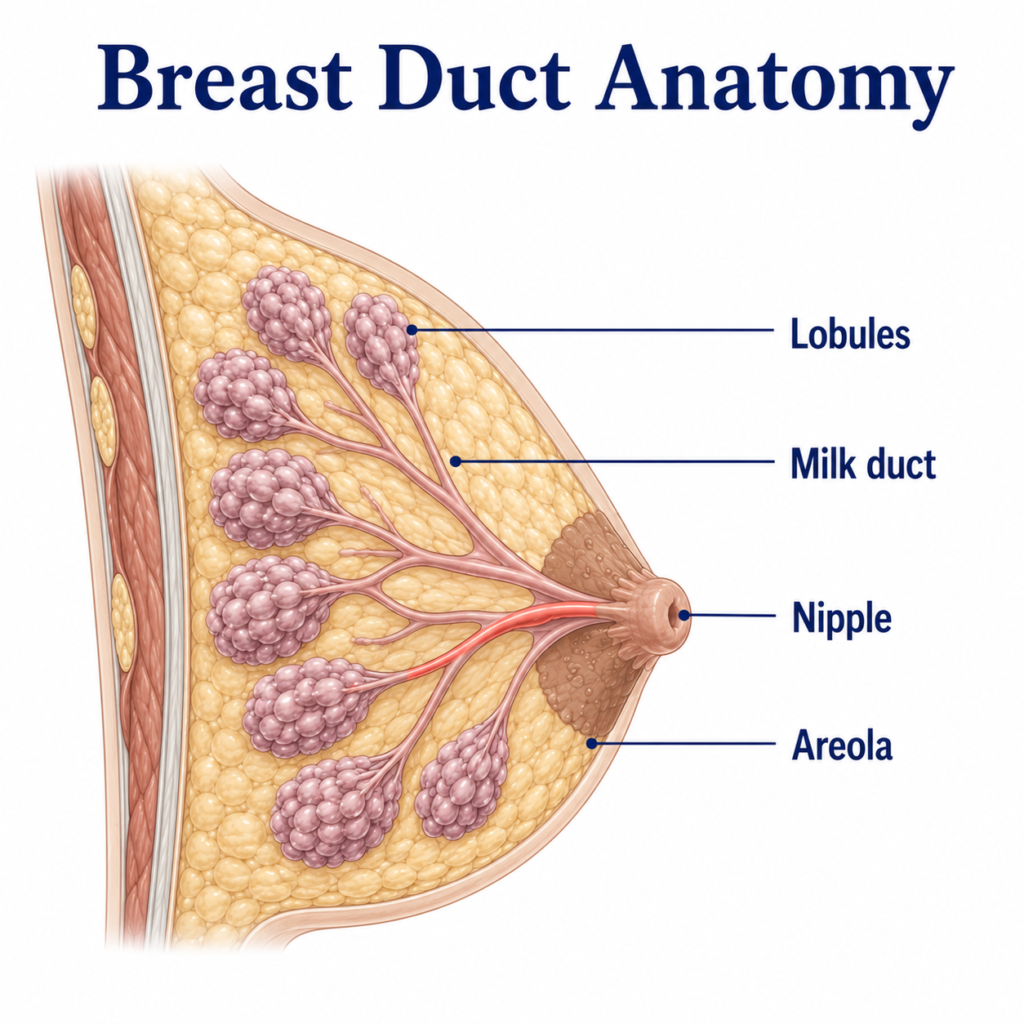
Nipple discharge is any fluid that comes out of one or both nipples.
The discharge may be:
- Milky
- Clear
- White
- Yellow
- Green
- Brown
- Bloody
Some discharge is completely normal, while other types deserve further evaluation.
Is Nipple Discharge Normal?
It can be.
Nipple discharge is often considered physiologic (normal) when it:
- Occurs from both breasts
- Comes from multiple milk ducts
- Happens only when the nipple is squeezed
- Is milky, white, yellow, or green
- Occurs during pregnancy or breastfeeding
It is more concerning when it:
- Happens spontaneously without squeezing
- Comes from only one breast
- Comes from a single duct
- Is bloody or clear
- Is associated with a breast lump or skin changes
Common Causes of Nipple Discharge
1. Pregnancy and Breastfeeding
The most common cause of nipple discharge is pregnancy and breastfeeding.
Milk production may begin during pregnancy and can continue for months after breastfeeding has stopped.
2. Hormonal Changes
Hormonal fluctuations may stimulate milk production even in women who are not pregnant.
Possible causes include:
- Menstrual cycle changes
- Menopause
- Elevated prolactin levels
- Pituitary gland disorders
3. Medications
Several medications can increase prolactin levels and cause milky nipple discharge.
Examples include:
- Certain antidepressants
- Antipsychotic medications
- Birth control pills
- Blood pressure medications
- Opioids
4. Intraductal Papilloma
An intraductal papilloma is a small, noncancerous growth inside a milk duct.
It commonly causes:
- Bloody discharge
- Clear discharge
- Discharge from one breast
- Spontaneous discharge
Although benign, it often requires imaging and sometimes surgical removal.
5. Duct Ectasia
As women approach menopause, milk ducts can widen and become blocked.
Symptoms may include:
- Thick green discharge
- Brown discharge
- Sticky discharge
- Tenderness behind the nipple
This condition is benign but can occasionally become infected.
6. Breast Infection (Mastitis)
Breast infections are most common during breastfeeding but can occur at other times.
Symptoms include:
- Redness
- Swelling
- Breast pain
- Fever
- Thick yellow or pus-like discharge
Prompt treatment is often needed.
7. Breast Cancer
Although most nipple discharge is not caused by breast cancer, certain features increase concern.
Possible warning signs include:
- Bloody discharge
- Clear watery discharge
- One-sided discharge
- Spontaneous discharge
- New breast lump
- Skin dimpling
- Nipple inversion
- Enlarged lymph nodes
Further evaluation is recommended if these symptoms occur.
Does the Color Matter?
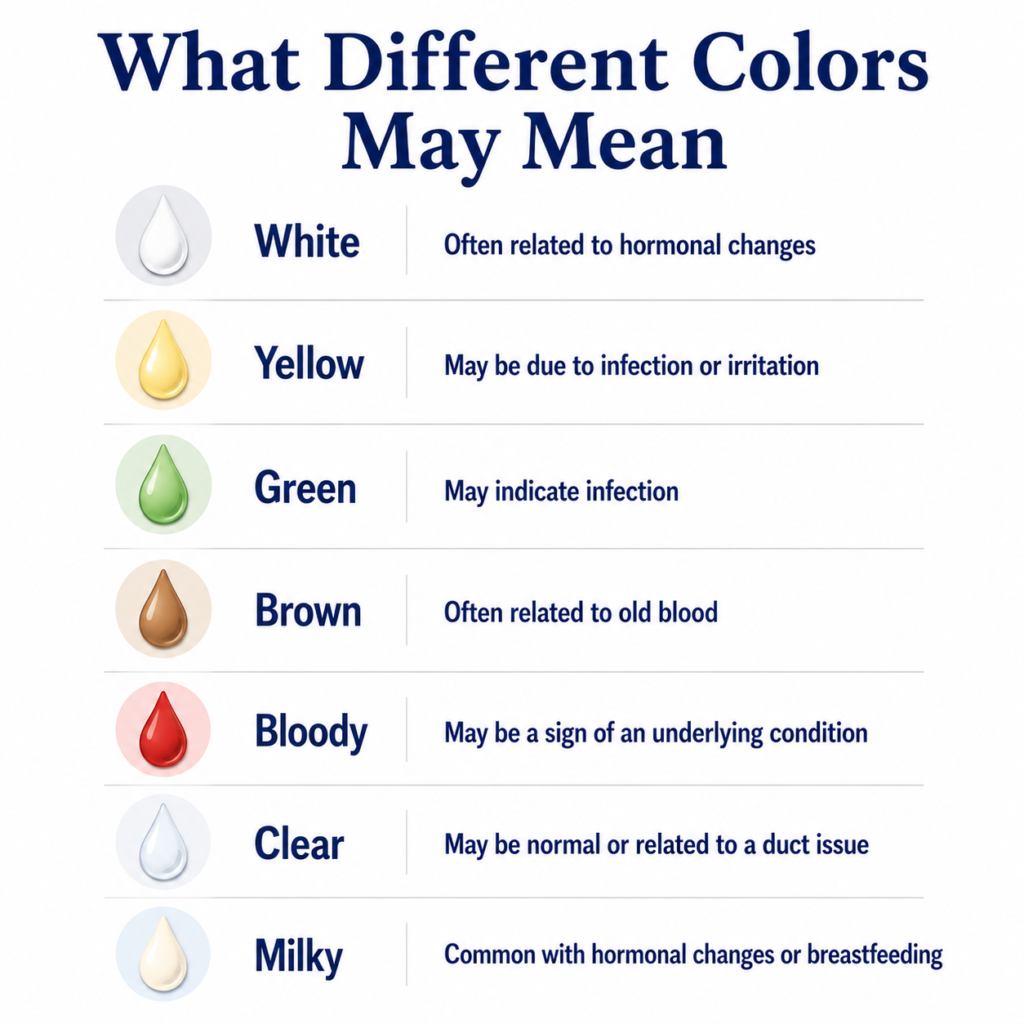
Yes. The color can sometimes help identify the cause.
| Color | Possible Causes |
|---|---|
| Milky | Pregnancy, breastfeeding, hormonal changes, elevated prolactin |
| White | Normal secretions, hormonal causes |
| Yellow | Benign secretions, infection |
| Green | Duct ectasia or infection |
| Brown | Older blood, duct ectasia |
| Clear | Can be benign but should be evaluated if spontaneous and one-sided |
| Bloody | Intraductal papilloma, trauma, infection, or breast cancer |
Color alone cannot determine the diagnosis.
How Is Nipple Discharge Evaluated?
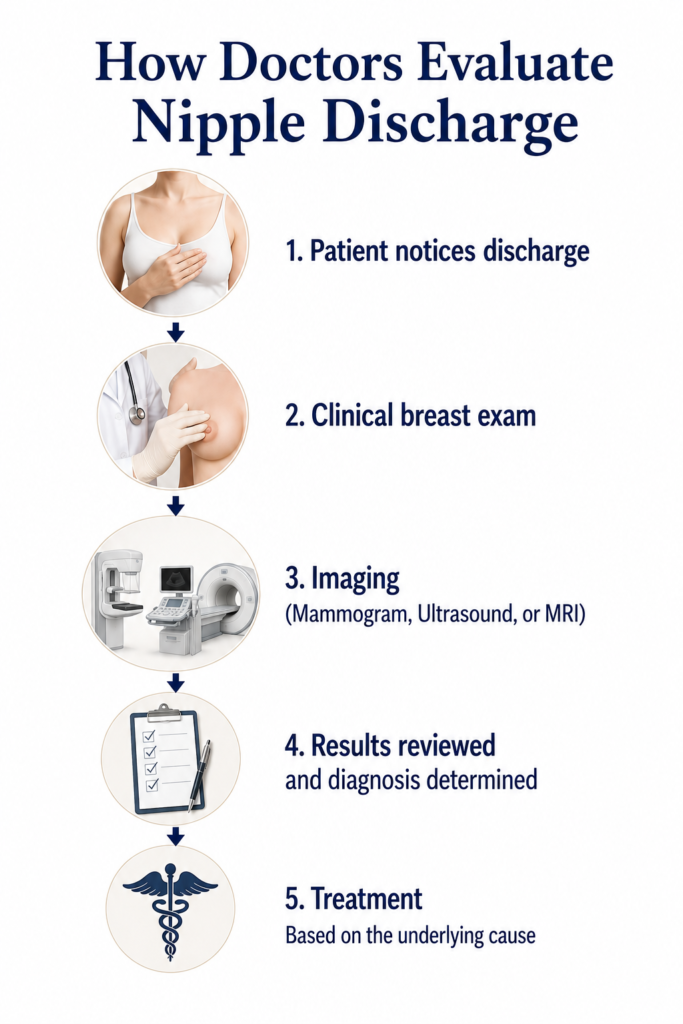
Your healthcare provider may ask:
- Which breast is affected?
- Is the discharge spontaneous?
- What color is it?
- Is it coming from one duct or several?
- Is there a lump?
- Are you pregnant?
- Are you breastfeeding?
- What medications do you take?
Depending on your symptoms, testing may include:
- Clinical breast exam
- Mammogram
- Breast ultrasound
- Breast MRI (selected cases)
- Blood tests
- Pregnancy test
- Prolactin level
- Thyroid testing
When Should You See a Healthcare Provider?
You should schedule an appointment if you notice:
- Bloody nipple discharge
- Clear discharge from one breast
- Spontaneous discharge
- A new breast lump
- Persistent one-sided discharge
- New nipple inversion
- Skin dimpling
- Breast redness that does not improve
- Fever with breast pain
- Persistent discharge after breastfeeding has ended
When Is It an Emergency?
Seek immediate medical care if you have:
- High fever with worsening breast redness and swelling
- Rapidly spreading breast infection
- Severe breast pain with pus drainage
- Significant breast trauma with bleeding
- Symptoms of sepsis such as confusion, difficulty breathing, or low blood pressure
What Should You Do Next?
Most nipple discharge is not caused by breast cancer, but certain features—such as bloody, clear, spontaneous, or one-sided discharge—should never be ignored. If you notice persistent nipple discharge or any new breast changes, schedule an appointment with your healthcare provider for an evaluation. Early assessment can help identify the cause and determine whether additional testing or treatment is needed.
References
American College of Radiology (ACR). Appropriateness Criteria®: Evaluation of Nipple Discharge.
https://acsearch.acr.org/docs/3099312/Narrative/
American College of Obstetricians and Gynecologists (ACOG). Diagnosis and Management of Benign Breast Disorders.
https://www.acog.org/clinical/clinical-guidance/practice-bulletin/articles/2016/06/diagnosis-and-management-of-benign-breast-disorders
American Cancer Society. Breast Cancer Signs and Symptoms.
https://www.cancer.org/cancer/types/breast-cancer/about/breast-cancer-signs-and-symptoms.html
National Comprehensive Cancer Network (NCCN). NCCN Guidelines for Patients®: Breast Cancer Screening and Diagnosis.
https://www.nccn.org/patients/guidelines/content/PDF/breast-screening-patient.pdf
UpToDate. Evaluation of Nipple Discharge. Wolters Kluwer.
https://www.uptodate.com