
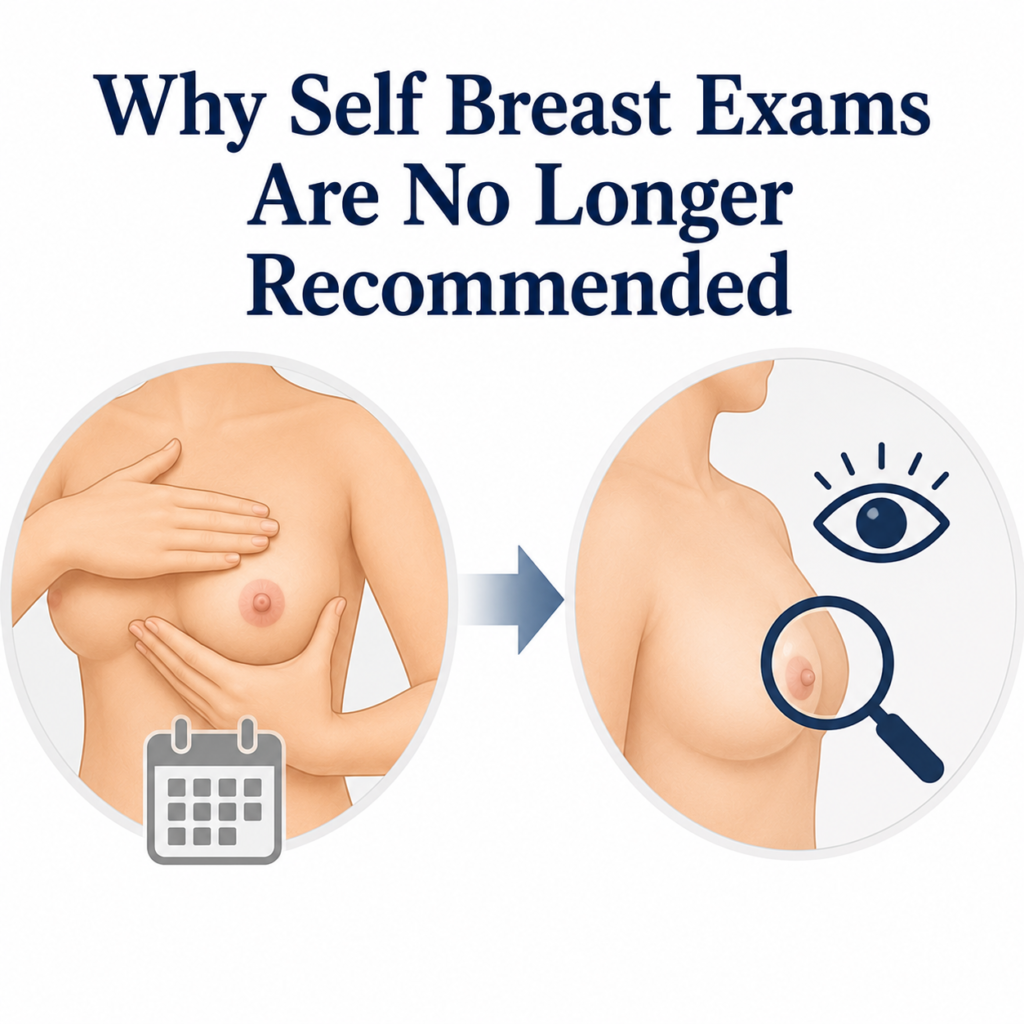
Why Self Breast Exams Are No Longer Routinely Recommended
Breast cancer remains one of the most common cancers affecting women worldwide. For many years, women were encouraged to perform a monthly breast self-exam (BSE) to look for lumps or other changes. However, recommendations have changed over time, leading many people to wonder: Why are self breast exams no longer recommended?
The answer is more nuanced than many realize. Health experts are not saying women should ignore their breasts. Instead, research has shown that scheduled monthly self-exams do not reduce deaths from breast cancer and may lead to unnecessary anxiety, additional imaging, and biopsies. Today, experts recommend a different approach called breast self-awareness.
What Was a Breast Self-Exam?
A breast self-exam involved carefully examining your breasts once every month using a specific technique to look and feel for:
- New lumps
- Thickened areas
- Skin changes
- Nipple discharge
- Changes in breast shape
The goal was to detect breast cancer as early as possible.
Why Did the Recommendations Change?
Large clinical studies involving hundreds of thousands of women found that routine monthly breast self-exams did not lower the risk of dying from breast cancer.
Instead, women performing formal self-exams were more likely to experience:
- False alarms
- Additional imaging tests
- Unnecessary biopsies
- Increased anxiety
Many lumps found during self-exams turned out to be harmless conditions such as cysts or normal breast tissue.
Because there was no proven survival benefit and there were more unnecessary procedures, several major medical organizations stopped recommending routine monthly breast self-exams for women at average risk.
What Is Breast Self-Awareness?
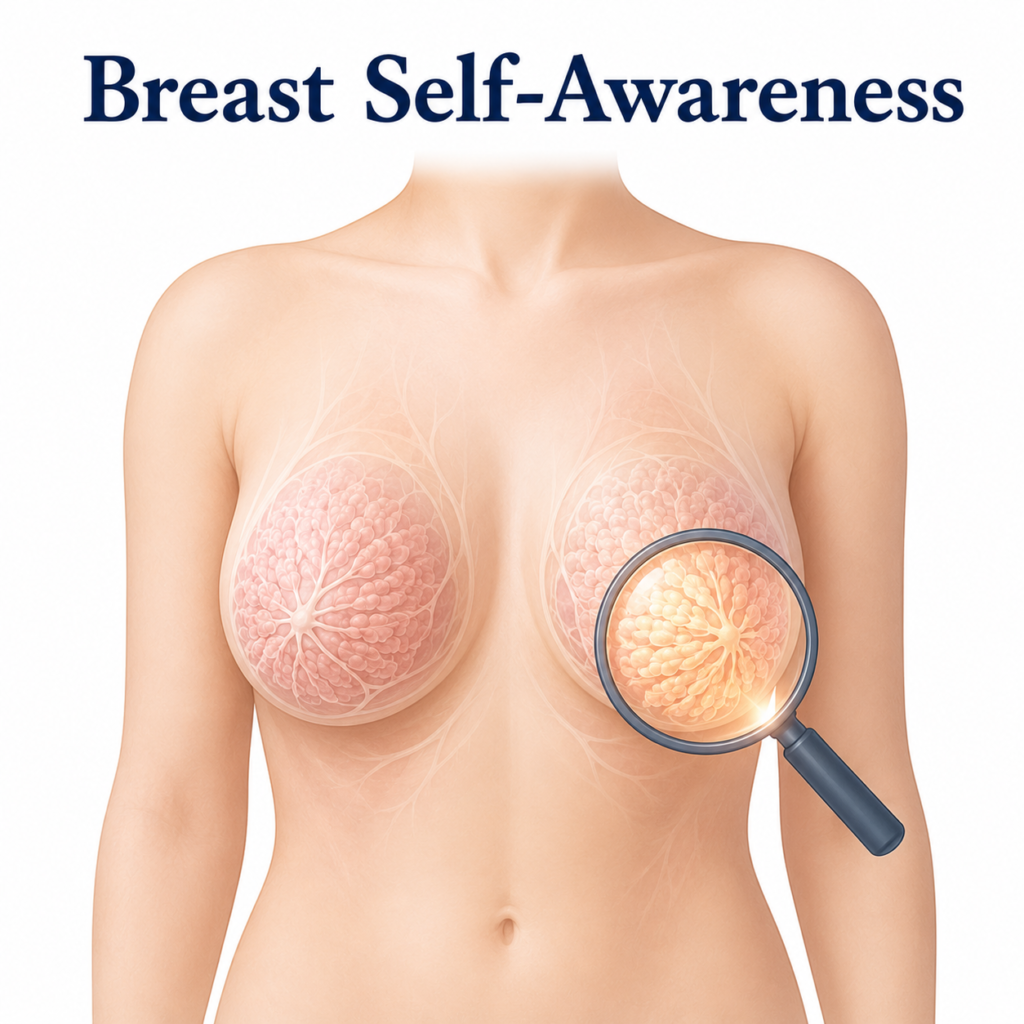
Rather than performing a structured monthly examination, experts now encourage breast self-awareness.
Breast self-awareness means becoming familiar with how your breasts normally look and feel so you can recognize when something changes.
There is no required schedule or specific examination technique. Instead, simply pay attention to your breasts during normal daily activities such as:
- Showering
- Getting dressed
- Applying lotion
- Looking in the mirror
Knowing what is normal for your body helps you recognize changes sooner.
What Breast Changes Should You Watch For?
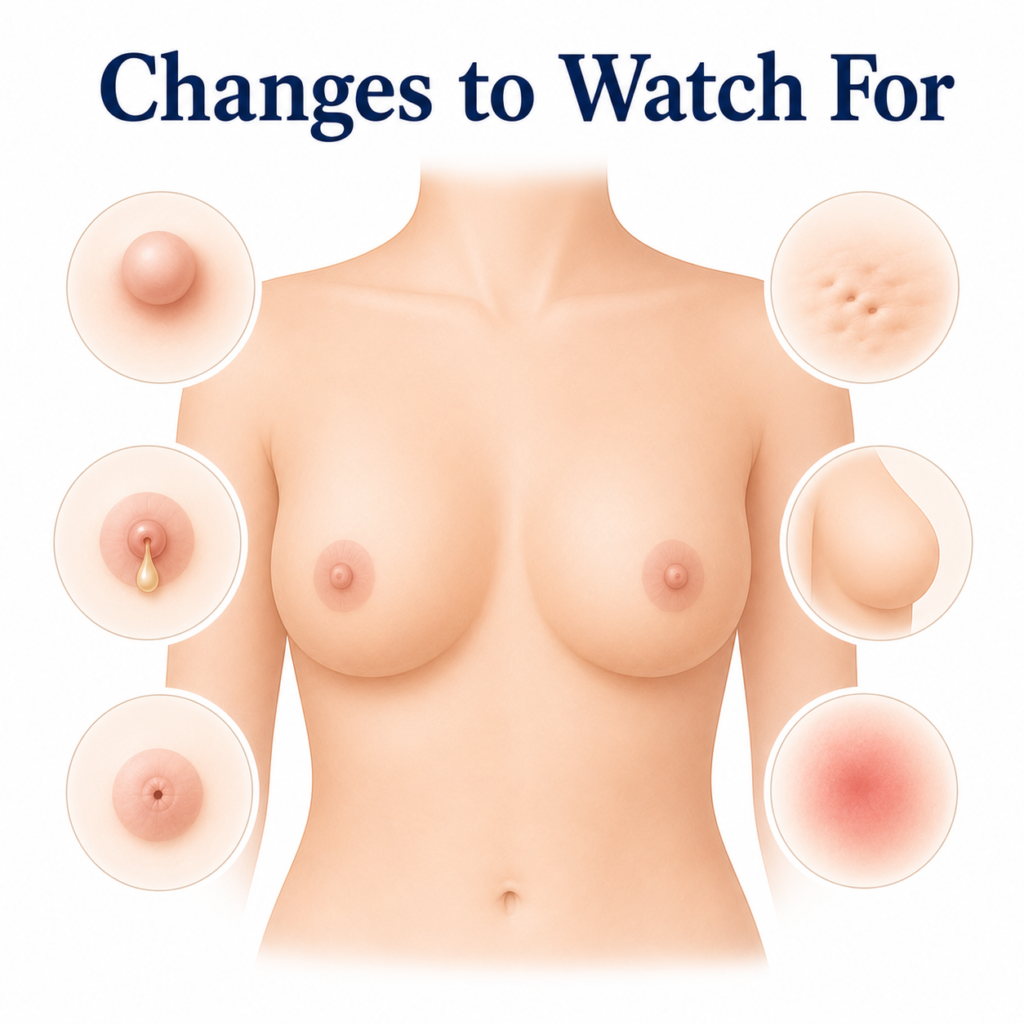
While most breast changes are not cancer, any new or persistent change should be evaluated by a healthcare provider.
Watch for:
- A new lump or thickened area
- Swelling of part or all of the breast
- Persistent breast pain in one location
- Skin dimpling or puckering
- Redness or warmth that does not improve
- A nipple turning inward (new inversion)
- Bloody or spontaneous nipple discharge
- Rash around the nipple
- Changes in breast size or shape
- Enlarged lymph nodes under the arm or near the collarbone
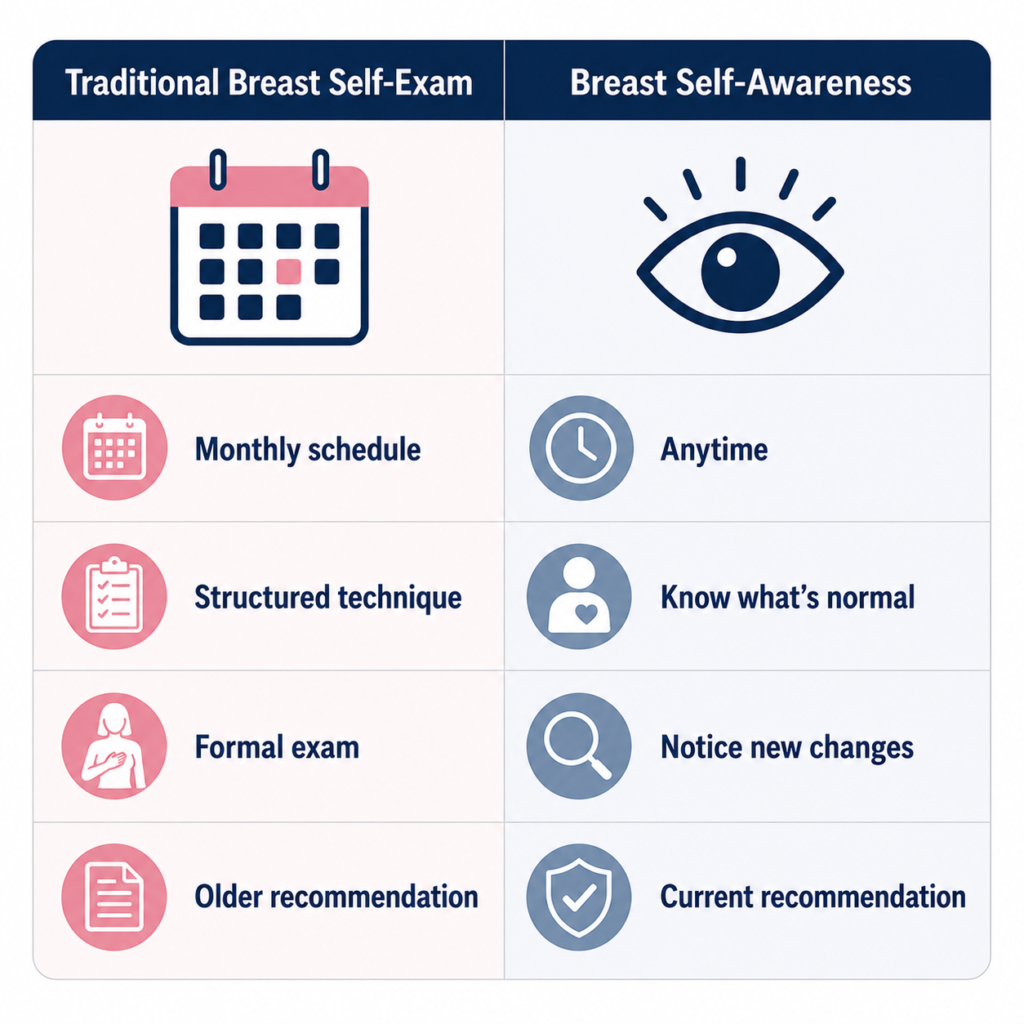
Does This Mean You Should Never Check Your Breasts?
No.
You should absolutely remain familiar with your breasts.
The difference is that healthcare organizations no longer recommend performing a formal, scheduled monthly self-exam using a strict technique.
Instead:
- Know what is normal for your breasts.
- Report any new changes promptly.
- Keep up with recommended breast cancer screening.
Mammograms Are Still the Best Screening Tool
For women at average risk, mammograms remain the most effective screening test for detecting breast cancer before it causes symptoms.
Mammograms can often detect cancers years before they become large enough to feel.
Even women who perform breast self-awareness should continue routine mammography according to their healthcare provider’s recommendations.
What If You Are at High Risk?
Women at higher risk for breast cancer may need a different screening plan.
Risk factors include:
- A strong family history of breast cancer
- A known BRCA1 or BRCA2 gene mutation
- Previous chest radiation at a young age
- Certain inherited genetic syndromes
- A personal history of breast cancer
- Certain high-risk breast biopsy findings
These women may require:
- Earlier mammograms
- Annual breast MRI
- More frequent clinical breast exams
- Consultation with a breast specialist or genetic counselor
When Should You Contact Your Healthcare Provider?

Schedule an appointment if you notice:
- A new breast lump
- Persistent breast pain in one area
- Bloody nipple discharge
- Skin dimpling or thickening
- New nipple inversion
- Swelling that does not improve
- Redness lasting more than a few days
- Any breast change that concerns you
Most changes are not cancer, but they deserve proper evaluation.
What Should You Do Next?
Although routine monthly breast self-exams are no longer recommended for most women, paying attention to your breasts remains important. Practice breast self-awareness by becoming familiar with how your breasts normally look and feel, report any new changes promptly, and stay up to date with recommended mammograms and routine healthcare visits.
If you have a family history of breast cancer or other risk factors, speak with your healthcare provider about whether you need earlier or additional screening.
Add Your Heading Text Here
References
U.S. Preventive Services Task Force. Breast Cancer: Screening. https://www.uspreventiveservicestaskforce.org/uspstf/recommendation/breast-cancer-screening
American Cancer Society. Breast Cancer Screening Guidelines. https://www.cancer.org/cancer/types/breast-cancer/screening-tests-and-early-detection.html
American College of Obstetricians and Gynecologists. Breast Cancer Risk Assessment and Screening in Average-Risk Women. https://www.acog.org/clinical
American Society of Breast Surgeons. Consensus Guideline on Screening Mammography. https://www.breastsurgeons.org
National Comprehensive Cancer Network (NCCN). Breast Cancer Screening and Diagnosis. https://www.nccn.org/patients