
Phimosis: Causes, Symptoms, Treatment, and When to Seek Medical Care
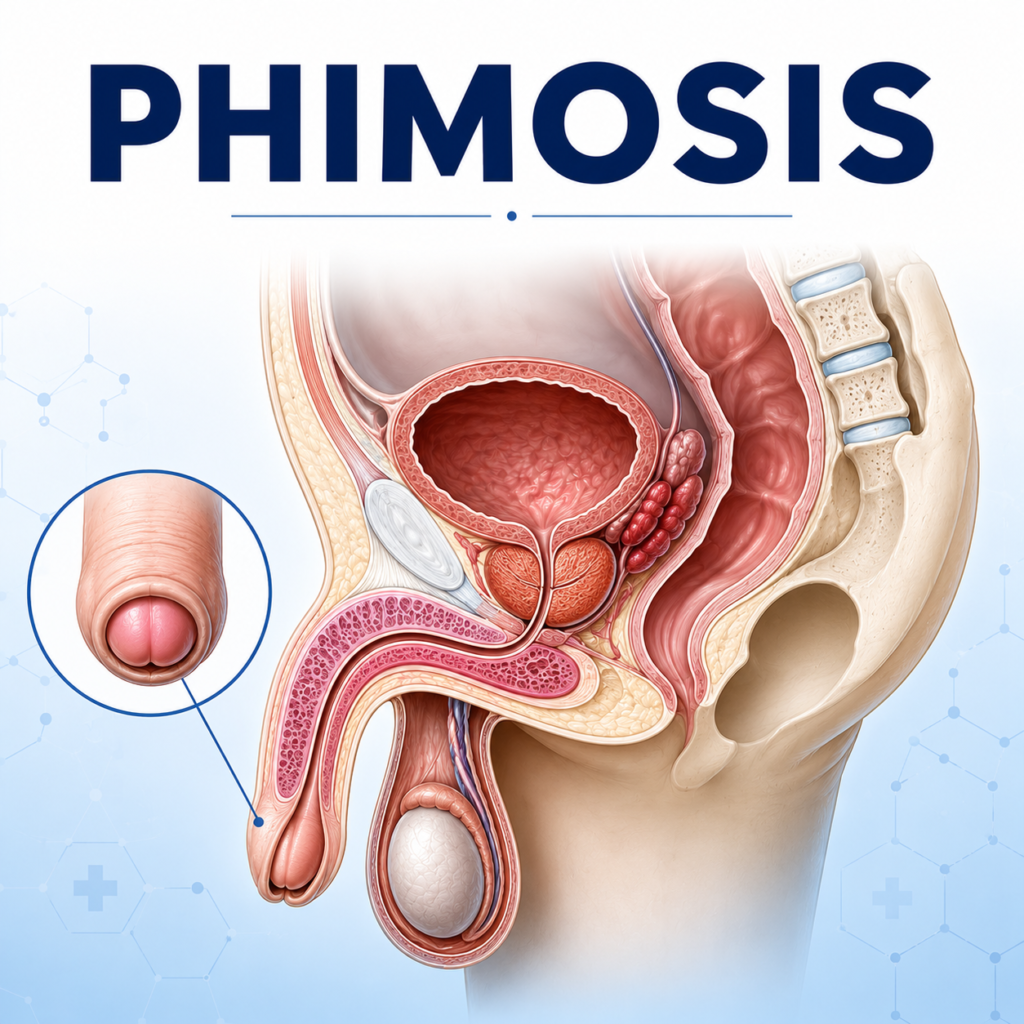
Phimosis is a condition in which the foreskin cannot be fully retracted over the head (glans) of the penis. In young boys, this is often a normal part of development. In adolescents and adults, however, persistent or newly developed phimosis may result from inflammation, scarring, infection, or certain medical conditions.
While many cases are mild, severe phimosis can cause pain, difficulty with hygiene, urinary problems, and complications if left untreated.
What Is Phimosis?
The foreskin is a fold of skin that covers the glans of the penis.
Phimosis occurs when the opening of the foreskin is too tight to allow comfortable retraction.
There are two main types:
1. Physiologic Phimosis
Normal in infants and young boys.
The foreskin naturally separates from the glans over time and usually does not require treatment.
2. Pathologic Phimosis
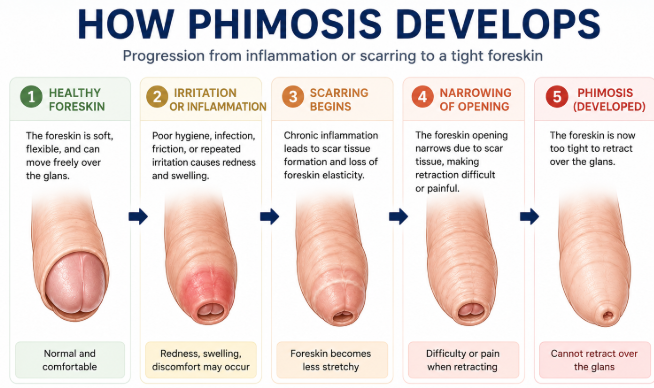
Occurs when the foreskin becomes scarred, inflamed, or abnormally tight.
This is more common in adolescents and adults.
Common Causes
Adult phimosis may develop because of:
- Recurrent balanitis
- Balanoposthitis
- Poor hygiene
- Repeated trauma from forceful retraction
- Diabetes
- Lichen sclerosus (balanitis xerotica obliterans)
- Chronic skin inflammation
- Aging
Symptoms
Symptoms may include:
- Tight foreskin
- Difficulty retracting the foreskin
- Pain during erections
- Pain during sexual activity
- Painful urination
- Ballooning of the foreskin during urination
- Redness
- Swelling
- Cracking of the foreskin
- Recurrent infections
- Unpleasant odor
Possible Complications
Untreated phimosis may lead to:
- Recurrent balanitis
- Urinary tract infections
- Painful intercourse
- Difficulty maintaining hygiene
- Paraphimosis (medical emergency)
- Rarely, increased risk of penile cancer
How Is Phimosis Diagnosed?
Diagnosis is usually made during a physical examination.
Your healthcare provider may also evaluate for:
- Diabetes
- Skin disorders
- Infection
- Lichen sclerosus
Additional testing is rarely necessary unless another condition is suspected.
Treatment Options
Treatment depends on severity and the underlying cause.
1. Conservative Treatment
May include:
- Gentle foreskin stretching
- Topical corticosteroid cream
- Improved hygiene
- Treatment of infections
Many mild cases improve without surgery.
2. Surgical Treatment
When conservative treatment is unsuccessful, options include:
- Circumcision
- Preputioplasty (foreskin-preserving surgery in selected patients)
What Is Paraphimosis?
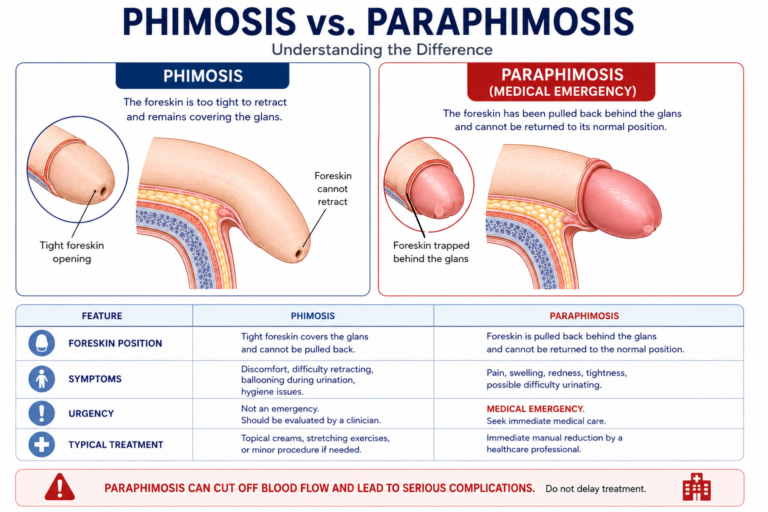
Paraphimosis occurs when a retracted foreskin becomes trapped behind the glans and cannot be returned to its normal position.
This can reduce blood flow to the penis and is considered a medical emergency.
Symptoms include:
- Severe swelling
- Pain
- Tight band behind the glans
- Purple or dark discoloration
Immediate medical treatment is required.
Prevention
You may reduce the risk of adult phimosis by:
- Practicing good genital hygiene
- Gently retracting (never forcefully) the foreskin during cleaning if it retracts comfortably
- Treating infections promptly
- Keeping diabetes well controlled
- Seeking medical care for persistent irritation or scarring
Frequently Asked Questions
Is phimosis normal?
In infants and young boys, yes. In adults, persistent or newly developed phimosis should be evaluated by a healthcare provider.
Can phimosis go away without surgery?
Yes. Many mild cases improve with topical steroid creams and gentle stretching exercises under medical supervision.
Is circumcision always necessary?
No. Surgery is generally reserved for persistent, severe, or recurrent cases that do not respond to conservative treatment.
Is phimosis painful?
It can be. Some men experience pain during erections, sexual activity, urination, or attempts to retract the foreskin.
Prognosis
Most adults with phimosis have excellent outcomes with appropriate treatment. Mild cases often respond well to topical medications and stretching, while surgery is highly effective for persistent or severe cases. Early treatment can help prevent infections, discomfort, and complications.
What Should You Do Next?
If you have difficulty retracting your foreskin, pain during erections, recurrent infections, or swelling of the foreskin, schedule an evaluation with a healthcare provider. Seek emergency medical care immediately if the foreskin becomes trapped behind the head of the penis and cannot be returned to its normal position, as this may be paraphimosis.
References
American Urological Association. Urologic Conditions and Adult Circumcision Resources.
https://www.auanet.org/guidelines
European Association of Urology. EAU Guidelines on Penile Disorders.
https://uroweb.org/guidelines
Mayo Clinic. Phimosis and Paraphimosis.
https://www.mayoclinic.org/
Cleveland Clinic. Phimosis.
https://my.clevelandclinic.org/health/diseases/phimosis
Merck Manual Consumer Version. Disorders of the Penis.
https://www.merckmanuals.com/home
BMJ Best Practice. Phimosis and Paraphimosis.
https://bestpractice.bmj.com/