
Priapism: Causes, Symptoms, and Why an Erection Lasting More Than 4 Hours Is a Medical Emergency
Priapism is a prolonged erection that lasts longer than four hours and occurs without sexual stimulation or continues after sexual activity has ended. Although it may seem harmless at first, priapism is a true medical emergency in many cases. Without prompt treatment, reduced blood flow to the penis can lead to permanent tissue damage and long-term erectile dysfunction.
Recognizing the symptoms early and seeking immediate medical care can help prevent serious complications.
What Is Priapism?
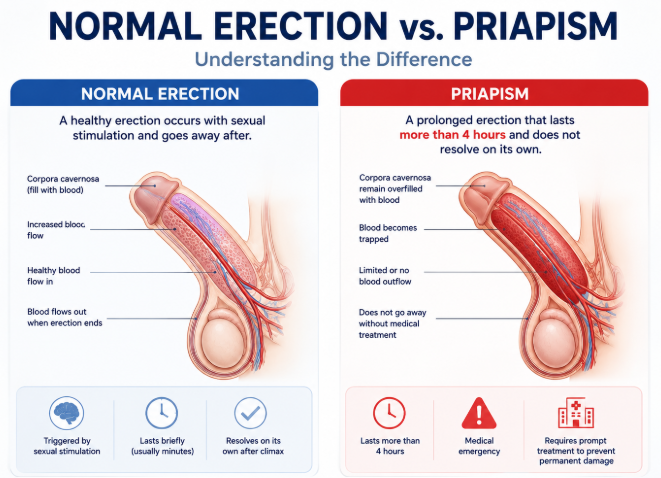
Priapism is a persistent erection that does not go away on its own. Unlike a normal erection, priapism is unrelated to sexual desire and does not resolve after orgasm.
There are two main types:
1. Ischemic (Low-Flow) Priapism
This is the most common type and is considered a medical emergency.
Blood becomes trapped within the erectile tissue and cannot drain normally.
Symptoms include:
- Erection lasting more than four hours
- Painful, rigid shaft
- Soft tip (glans) in many cases
- Increasing discomfort over time
Without treatment, permanent tissue damage can begin within hours.
2. Non-Ischemic (High-Flow) Priapism
This less common type usually occurs after an injury to the penis or pelvis.
Symptoms may include:
- Prolonged erection
- Usually less painful
- Penis may not be fully rigid
Although not usually an emergency, it should still be evaluated promptly.
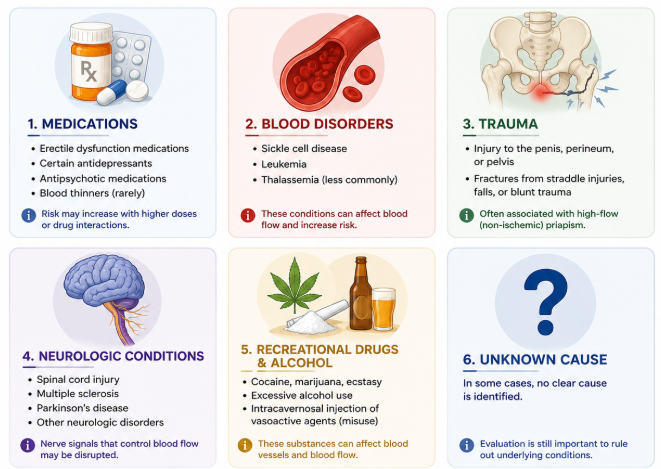
Common Causes of Priapism
Symptoms
Symptoms may include:
- Erection lasting more than four hours
- Penile pain (especially ischemic priapism)
- Firm shaft with a softer tip
- Swelling
- Tenderness
When Is Priapism an Emergency?
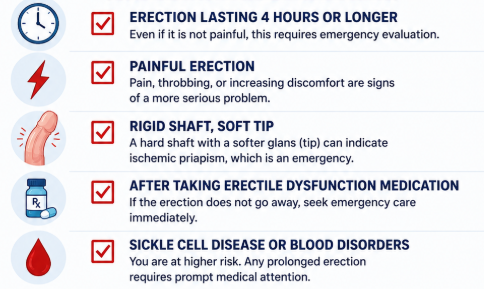
Seek immediate emergency care if:
- An erection lasts 4 hours or longer
- The erection becomes increasingly painful
- You have sickle cell disease and develop a prolonged erection
- The erection occurs after taking medication for erectile dysfunction and does not resolve
Do not wait to see if it improves on its own.
How Is Priapism Diagnosed?
Your healthcare provider may perform:
- Medical history
- Physical examination
- Blood tests
- Blood gas testing from the penis (to determine the type of priapism)
- Penile Doppler ultrasound
- Additional testing based on the suspected cause
Treatment Depends on the Type
Ischemic Priapism
Treatment may include:
- Removing trapped blood (aspiration)
- Injection of medications that restore blood flow
- Surgery if other treatments are unsuccessful
Prompt treatment offers the best chance of preserving erectile function.
Non-Ischemic Priapism
Treatment may include:
- Observation
- Ice packs in selected cases
- Treatment of the underlying injury
- Selective embolization if persistent
Possible Complications
Without prompt treatment, ischemic priapism can lead to:
- Permanent erectile dysfunction
- Scarring of penile tissue
- Penile shortening
- Recurrent priapism
Can Priapism Be Prevented?
Prevention depends on the underlying cause.
Your healthcare provider may recommend:
- Managing blood disorders
- Reviewing medications
- Using erectile dysfunction medications exactly as prescribed
- Prompt treatment of recurrent episodes
Frequently Asked Questions
Can priapism go away on its own?
Sometimes, but an erection lasting four hours or longer should never be ignored.
Is priapism always painful?
No. Ischemic priapism is usually painful, while non-ischemic priapism is often painless or only mildly uncomfortable.
Can erectile dysfunction medications cause priapism?
Yes. Although uncommon, medications used to treat erectile dysfunction can occasionally cause priapism, particularly if taken incorrectly or at higher-than-prescribed doses.
Will priapism cause permanent damage?
It can. Delayed treatment increases the risk of permanent erectile dysfunction.
Prognosis
Most men recover well when treatment is received promptly. The outcome depends largely on the type of priapism, how long the erection lasts before treatment, and the underlying cause. Early intervention significantly reduces the risk of long-term complications.
What Should You Do Next?
If you have an erection that lasts 4 hours or longer, seek emergency medical care immediately—even if it is not painful. Early treatment can restore normal blood flow and greatly reduce the risk of permanent damage. If you experience recurrent episodes or have an underlying medical condition that increases your risk, discuss preventive strategies with your healthcare provider.
References
American Urological Association. Diagnosis and Management of Priapism.
https://www.auanet.org/guidelines
European Association of Urology. EAU Guidelines on Sexual and Reproductive Health (Priapism).
https://uroweb.org/guidelines
Mayo Clinic. Priapism: Symptoms and Causes.
https://www.mayoclinic.org/diseases-conditions/priapism
Cleveland Clinic. Priapism.
https://my.clevelandclinic.org/health/diseases/10042-priapism
National Organization for Rare Disorders (NORD). Priapism.
https://rarediseases.org/
Merck Manual Consumer Version. Priapism.
https://www.merckmanuals.com/home