
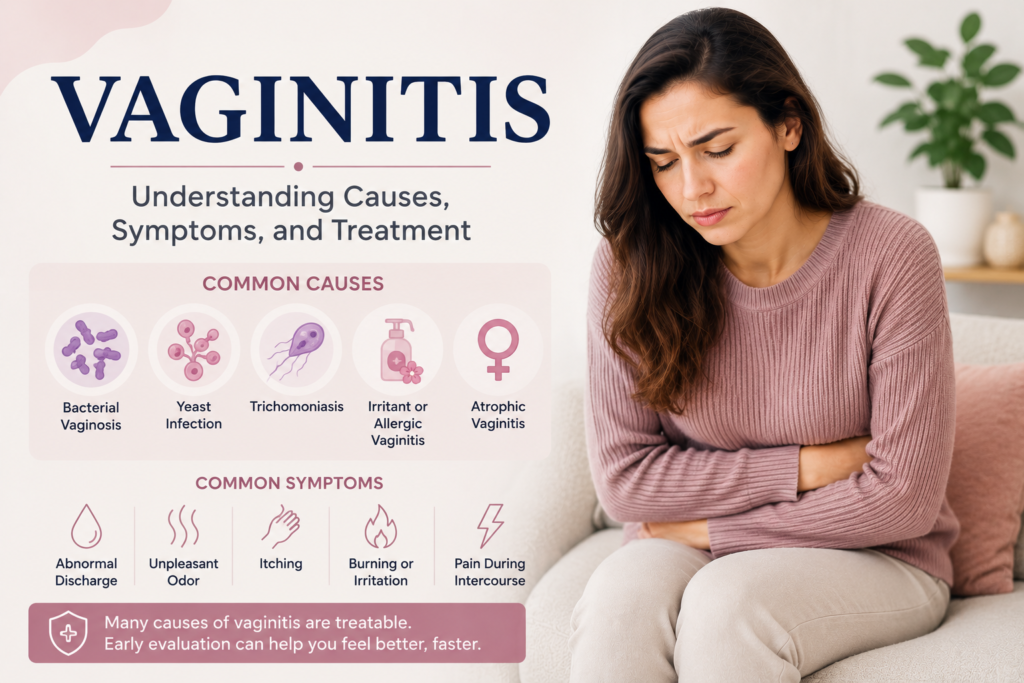
Vaginitis: Understanding Causes, Symptoms, and Treatment
Vaginitis is a common condition that refers to inflammation or irritation of the vagina. It can cause symptoms such as itching, burning, abnormal discharge, odor, or discomfort. While vaginitis is often caused by an infection, noninfectious causes such as irritation from products or hormonal changes can also contribute.
Because different types of vaginitis can cause similar symptoms, it is important to understand the potential causes and when medical evaluation may be needed.
What Is Vaginitis?
Vaginitis is a general term used to describe inflammation of the vagina. It is not a specific diagnosis but rather a group of conditions that can produce similar symptoms.
Common types of vaginitis include:
• Bacterial vaginosis (BV)
• Yeast infections
• Trichomoniasis
• Irritant or allergic vaginitis
• Atrophic vaginitis associated with menopause
Common Symptoms of Vaginitis
| Symptom | Description |
|---|---|
| Itching | Irritation of the vaginal or vulvar area |
| Burning | Stinging or discomfort |
| Discharge | Change in color, amount, or consistency |
| Odor | New or unusual vaginal smell |
| Pain with sex | Discomfort during intercourse |
| Urinary symptoms | Burning or irritation when urinating |
Common Causes of Vaginitis
1. Bacterial Vaginosis (BV)
Bacterial vaginosis occurs when the normal balance of bacteria within the vagina becomes disrupted.
Common symptoms include:
• Fishy odor
• Thin gray or white discharge
• Mild irritation
BV is one of the most common causes of vaginal symptoms in reproductive-age women.
2. Yeast Infection
Yeast infections occur when Candida, a naturally occurring fungus, grows excessively.
Common symptoms include:
• Intense itching
• Thick white discharge
• Burning
• Redness and irritation
Yeast infections usually do not cause a strong odor.
3. Trichomoniasis
Trichomoniasis is a sexually transmitted infection caused by a parasite.
Symptoms may include:
• Vaginal irritation
• Strong odor
• Yellow-green discharge
• Burning with urination
Some individuals have no symptoms at all.
4. Irritant or Allergic Vaginitis
Certain products may irritate vaginal tissues.
Examples include:
• Scented soaps
• Bubble baths
• Douches
• Feminine sprays
• Laundry detergents
• Scented pads or liners
Symptoms often include burning, irritation, and redness.
5. Atrophic Vaginitis
After menopause, declining estrogen levels can cause thinning and dryness of vaginal tissues.
Symptoms may include:
• Vaginal dryness
• Burning
• Irritation
• Pain during intercourse
• Recurrent urinary symptoms
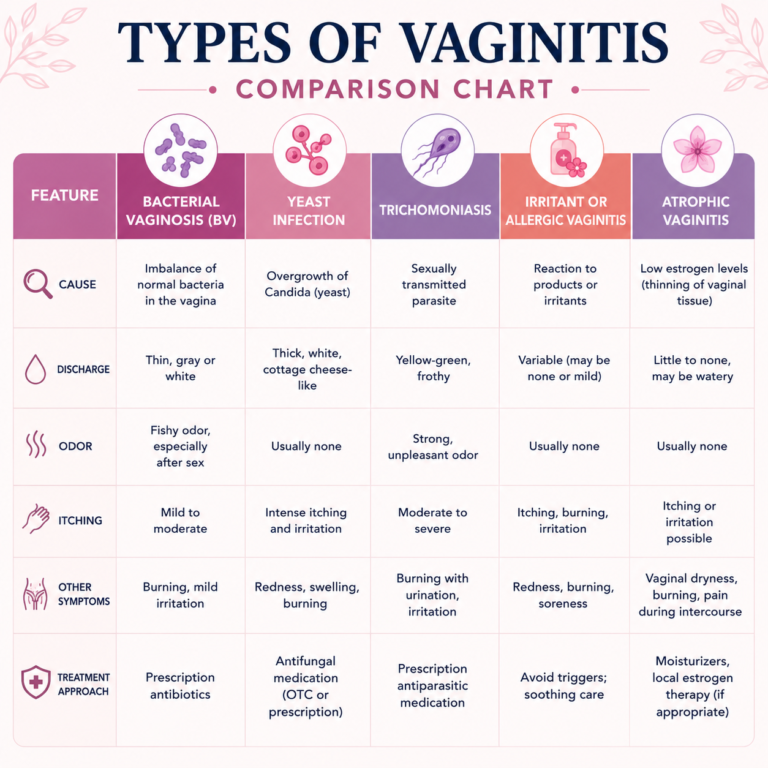
Comparing Common Types of Vaginitis
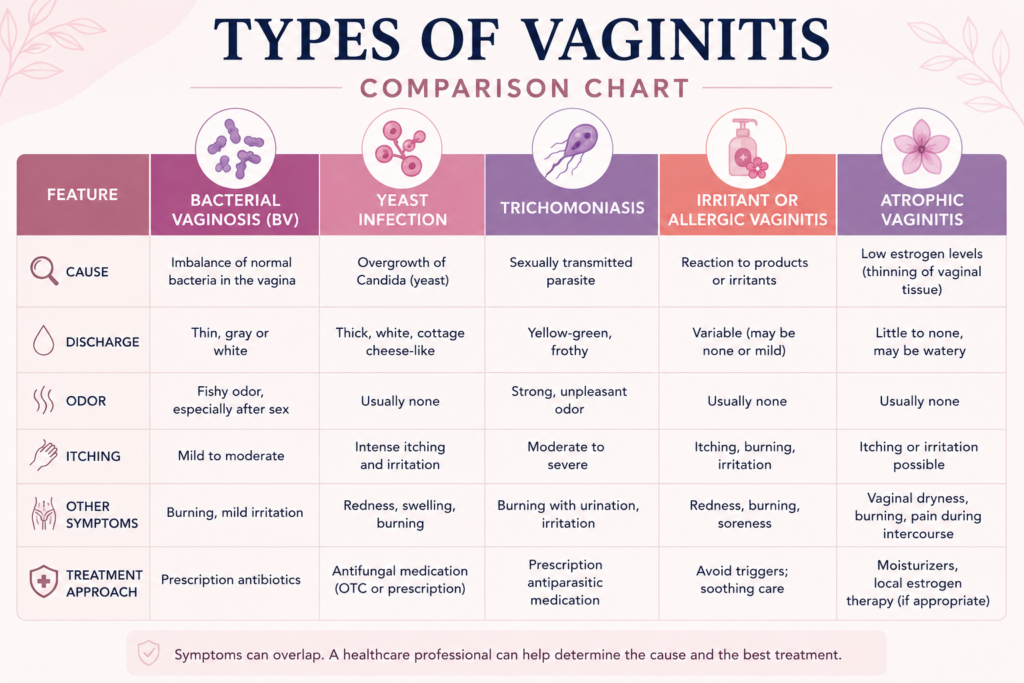
Risk Factors for Vaginitis
Factors that may increase the risk include:
• Recent antibiotic use
• Pregnancy
• Diabetes
• Hormonal changes
• Menopause
• Sexual activity
• Douching
• Use of irritating products
• Weakened immune system
How Is Vaginitis Evaluated?
A healthcare professional may review your symptoms, medical history, and perform an examination when appropriate.
Depending on the situation, testing may include:
• Vaginal pH testing
• Microscopic examination of vaginal secretions
• Testing for yeast or bacterial infections
• Testing for sexually transmitted infections
The goal is to identify the underlying cause and guide appropriate treatment.
How Is Vaginitis Treated?
Treatment depends on the specific cause.
Examples include:
| Cause | Common Treatment Approach |
| Bacterial vaginosis | Prescription antibiotics |
| Yeast infection | Antifungal medications |
| Trichomoniasis | Prescription antiparasitic medication |
| Irritant vaginitis | Avoidance of triggers |
| Atrophic vaginitis | Moisturizers or hormonal therapy when appropriate |
Can Vaginitis Be Prevented?
Some preventive measures may include:
• Avoiding douching
• Wearing breathable cotton underwear
• Changing out of wet clothing promptly
• Avoiding scented feminine products
• Following treatment recommendations for vaginal infections
• Managing underlying medical conditions when appropriate
When Should You Seek Medical Attention?
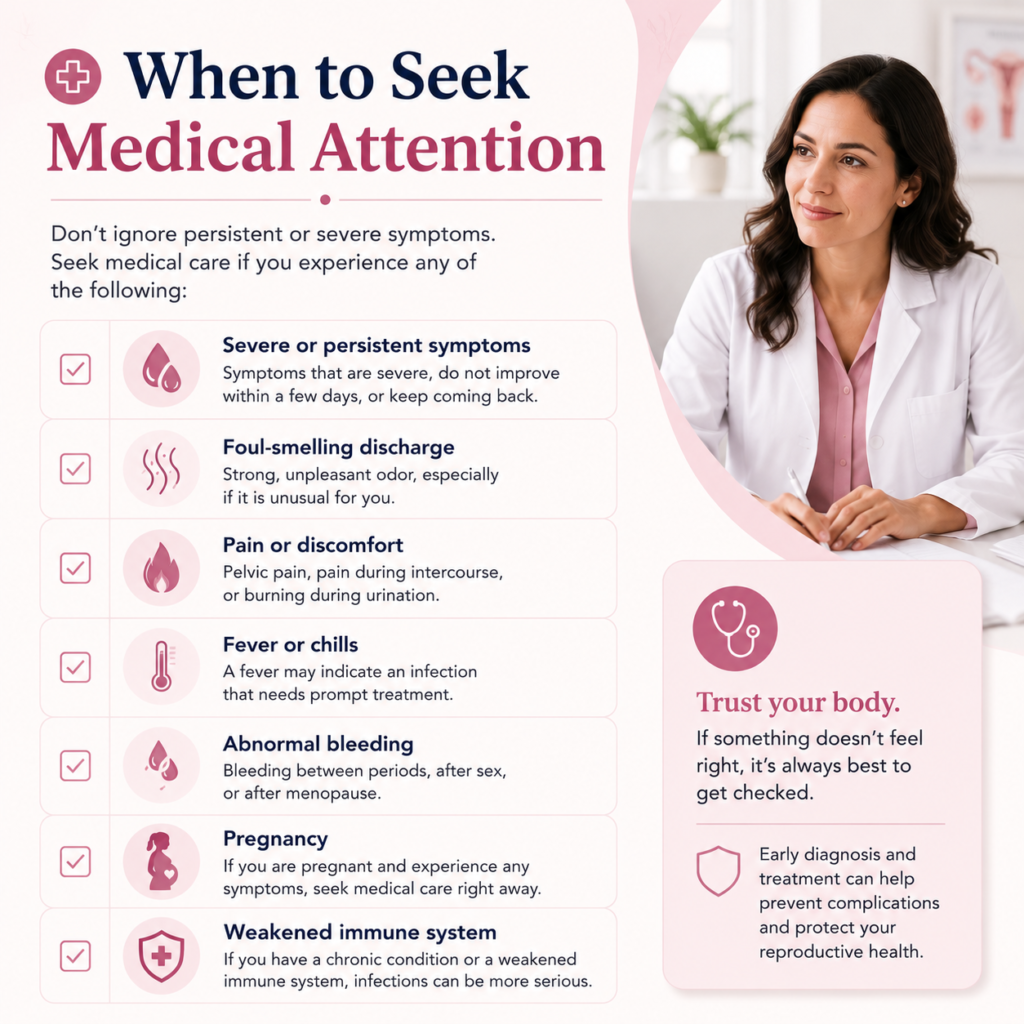
Consider medical evaluation if symptoms are new or persistent, you develop abnormal discharge, experience significant itching or burning, symptoms recur frequently, you develop pelvic pain or fever or you are unsure of the cause of your symptoms
Key Takeaway
Vaginitis is a common condition that can cause itching, burning, discharge, odor, and discomfort. Because several different conditions can cause similar symptoms, identifying the underlying cause is important for effective treatment. Fortunately, most causes of vaginitis can be successfully managed once properly diagnosed.
What Should You Do Next?
If you are experiencing vaginal itching, burning, unusual discharge, or odor, consider discussing your symptoms with a healthcare professional. Proper evaluation can help determine the underlying cause and ensure you receive the most appropriate treatment.
References
- American College of Obstetricians and Gynecologists (ACOG) Vaginitis FAQ
- Centers for Disease Control and Prevention (CDC) Bacterial Vaginosis
- Centers for Disease Control and Prevention (CDC) Vulvovaginal Candidiasis (Yeast Infection)
- Centers for Disease Control and Prevention (CDC) Trichomoniasis
- Office on Women’s Health: Vaginal Infections
- Mayo Clinic: Vaginitis Symptoms and Causes
- Cleveland Clinic: Vaginitis