
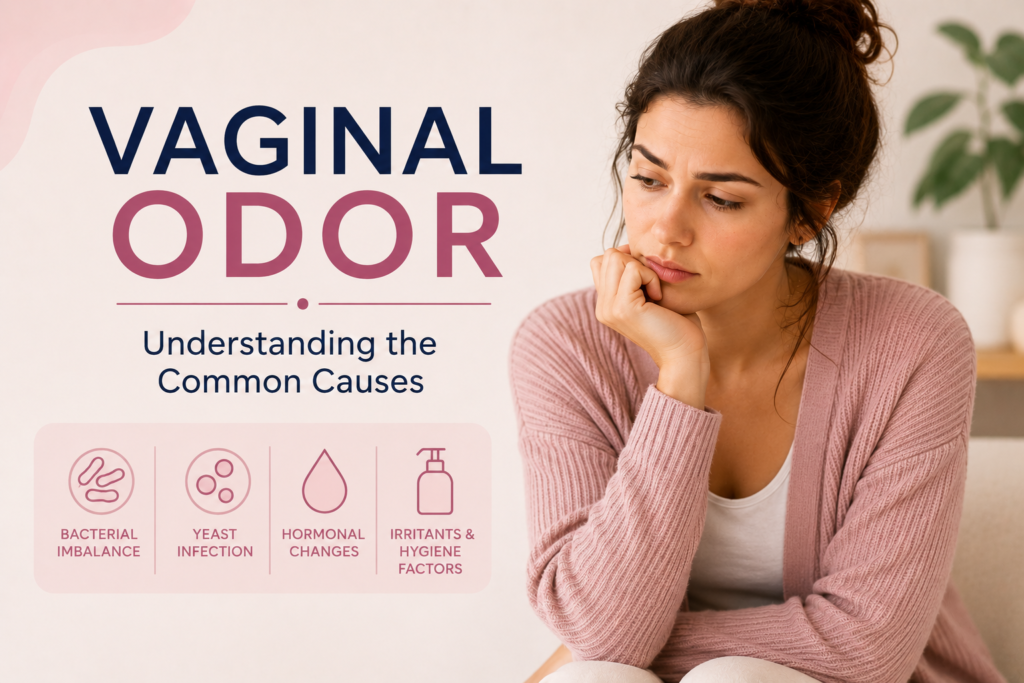
Vaginal Odor: Understanding the Common Causes
Many women notice changes in vaginal odor at some point in their lives. In many cases, a mild vaginal odor is completely normal and reflects the natural balance of bacteria within the vagina. However, a new, strong, or unpleasant odor may sometimes indicate an underlying condition that warrants medical attention.
This guide explains what is considered normal, common causes of vaginal odor, and when it may be time to seek medical evaluation.
Is Vaginal Odor Normal?
Yes.
The vagina naturally contains a variety of healthy bacteria that help maintain a balanced environment. Because of this, a mild odor is normal and may vary throughout the menstrual cycle.
Normal vaginal odor may be described as:
• Mild
• Musky
• Slightly tangy
• Slightly acidic
The exact scent can change with menstruation, exercise, sexual activity, and hormonal fluctuations.
When Is Vaginal Odor a Concern?
A vaginal odor may warrant evaluation if it is:
• New or significantly different
• Strong or persistent
• Accompanied by abnormal discharge
• Associated with itching, burning, irritation, or pain
• Associated with bleeding outside of normal menstruation
Common Causes of Vaginal Odor
Bacterial Vaginosis (BV)
Bacterial vaginosis is one of the most common causes of abnormal vaginal odor.
BV occurs when the normal balance of vaginal bacteria becomes disrupted.
Common symptoms include:
• Fishy odor
• Thin gray or white discharge
• Odor that may become more noticeable after sex
Some women experience odor without significant irritation or itching.
Yeast Infection
Yeast infections do not typically cause a strong odor, but they can sometimes alter the normal scent of vaginal secretions.
Symptoms may include:
• Intense itching
• Thick white discharge
• Burning
• Irritation
Trichomoniasis
Trichomoniasis is a sexually transmitted infection that may cause:
• Strong vaginal odor
• Yellow-green discharge
• Itching
• Burning with urination
Forgotten Tampon or Foreign Object
A retained tampon is an important cause of sudden, strong, unpleasant vaginal odor.
Other symptoms may include:
• Abnormal discharge
• Pelvic discomfort
• Spotting
Sweating and Exercise
The groin area contains sweat glands that can contribute to odor, particularly after exercise, hot weather, or prolonged moisture exposure.
This type of odor typically improves with hygiene measures.
Hormonal Changes
Changes in hormone levels during:
• Menstruation
• Pregnancy
• Perimenopause
• Menopause
can affect vaginal secretions and alter odor.
Sexual Activity
Semen has a different pH than the vagina. After intercourse, some women may notice a temporary change in vaginal odor that resolves naturally.
Common Causes at a Glance
| Cause | Typical Odor | Other Common Symptoms |
|---|---|---|
| Normal vaginal flora | Mild or musky | No symptoms |
| Bacterial vaginosis | Fishy | Thin gray discharge |
| Yeast infection | Usually minimal odor | Itching, thick white discharge |
| Trichomoniasis | Strong or unpleasant | Yellow-green discharge, irritation |
| Retained tampon | Strong, foul odor | Abnormal discharge, spotting |
| Sweat | Body odor-like | Worse after exercise |
| Hormonal changes | Variable | Changes in cycle or menopause symptoms |
What Does Vaginal Odor Not Mean?
A change in vaginal odor does not automatically mean:
• Poor hygiene
• A sexually transmitted infection
• A serious disease
• That cleansing or douching is necessary
In fact, douching can disrupt the natural vaginal environment and may increase the risk of infections such as bacterial vaginosis.
How Is Vaginal Odor Evaluated?
If vaginal odor becomes persistent or is accompanied by other symptoms, a healthcare professional may review your medical history, symptoms, and perform an examination when appropriate.
Depending on the situation, testing may include evaluation for:
• Bacterial vaginosis
• Yeast infection
• Sexually transmitted infections
• Other vaginal conditions
The goal is to identify the underlying cause and determine whether treatment is needed.
Can Vaginal Odor Be Prevented?
While not all causes are preventable, healthy habits may help support normal vaginal health.
These include:
• Avoiding douching
• Wearing breathable cotton underwear
• Changing out of wet clothing promptly
• Practicing good hygiene
• Following treatment recommendations for vaginal infections
When Should You Seek Medical Attention?
Consider seeking medical evaluation if:
• Vaginal odor is new or persistent
• The odor is strong or unpleasant
• You develop abnormal discharge
• You experience itching, burning, or pain
• You have pelvic pain or fever
• You suspect a retained tampon
Key Takeaway
A mild vaginal odor is usually normal and can vary throughout the menstrual cycle. However, a new, strong, or persistent odor may sometimes signal an underlying condition such as bacterial vaginosis, an infection, or a retained foreign object. Understanding the possible causes can help determine when medical evaluation may be appropriate.
References
American College of Obstetricians and Gynecologists (ACOG) Vaginitis FAQ
Centers for Disease Control and Prevention (CDC) Bacterial Vaginosis
Centers for Disease Control and Prevention (CDC) Trichomoniasis
Office on Women’s Health: Vaginal Infections
Mayo Clinic: Bacterial Vaginosis Symptoms and Causes
Cleveland Clinic: Vaginal Odor