
Swimmer's Ear: Symptoms, Causes, Treatment, and Prevention
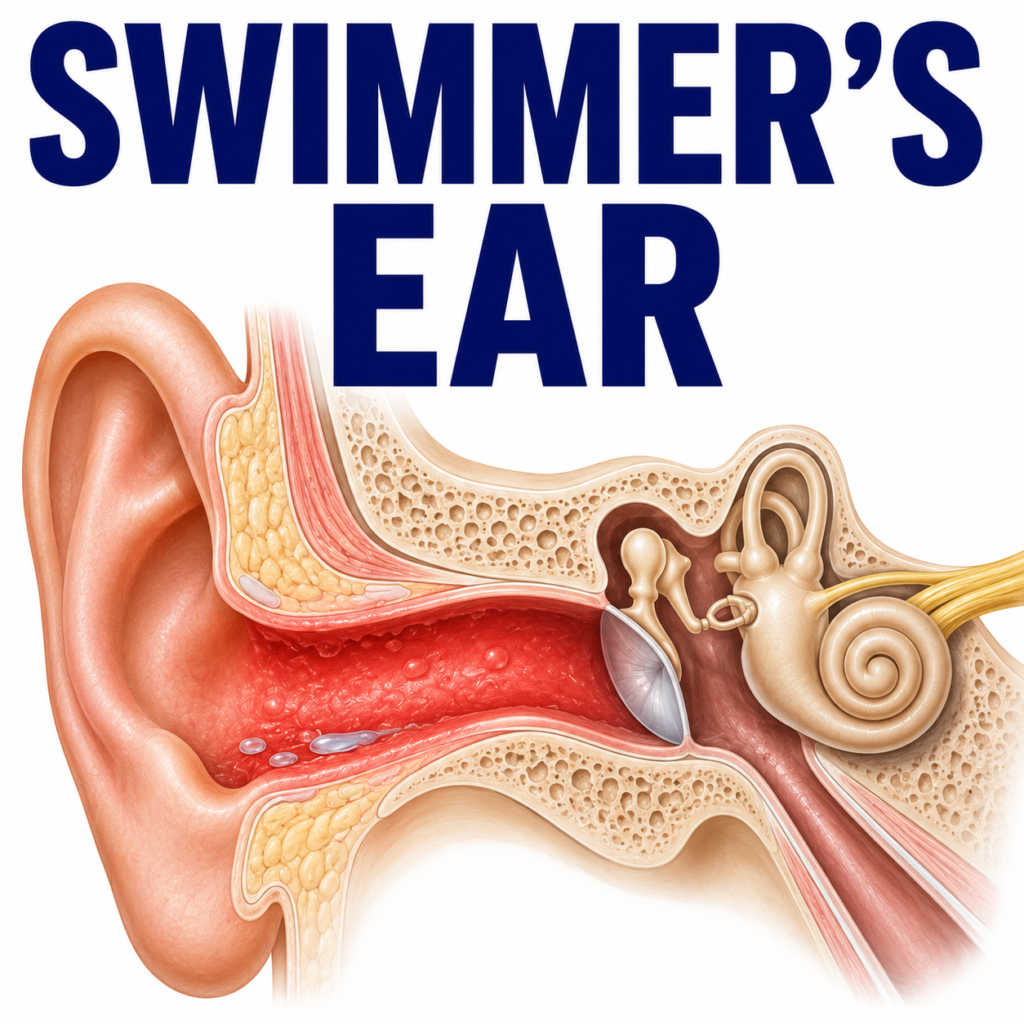
What Is Swimmer’s Ear?
Swimmer’s ear is an infection of the outer ear canal, the passage between the outside of the ear and the eardrum.
Most cases are caused by bacteria, although fungi can occasionally be responsible. Water trapped in the ear softens the skin lining the ear canal, making it easier for germs to enter and cause infection.
Common Symptoms
Symptoms often begin gradually and may worsen over several days.
Common symptoms include:
- Ear itching
- Ear pain that worsens when pulling on the ear or pressing on the small flap in front of the ear (tragus)
- Redness or swelling of the ear canal
- Feeling of fullness in the ear
- Muffled hearing
- Drainage of clear, yellow, or pus-like fluid
- Severe pain in more advanced infections
- Fever in severe cases
Swimmer’s Ear at a Glance
| Mild Infection | More Severe Infection |
|---|---|
| Mild itching | Severe ear pain |
| Slight redness | Significant swelling of the ear canal |
| Mild discomfort | Hearing becomes muffled |
| Small amount of drainage | Fever or swollen lymph nodes |
Did You Know?
Swimmer’s ear is not contagious. You cannot catch it from another person. It develops when moisture and irritation allow bacteria to grow inside the ear canal.
What Causes Swimmer’s Ear?
The most common causes include:
- Water trapped in the ear after swimming or bathing
- Humid weather
- Cleaning the ears with cotton swabs
- Scratching the ear canal with fingernails
- Earbuds or hearing aids that irritate the skin
- Eczema or other skin conditions affecting the ear
- Swimming in contaminated water
Who Is More Likely to Get Swimmer’s Ear?
Your risk is higher if you:
- Swim frequently
- Have narrow ear canals
- Have eczema or psoriasis
- Frequently use earbuds or hearing aids
- Clean your ears with cotton swabs
- Live in a warm, humid climate
Children are affected more often than adults, but swimmer’s ear can occur at any age.
How Is Swimmer’s Ear Treated?
Most cases require prescription ear drops.
| Treatment | How It Helps |
| Antibiotic ear drops | Eliminate bacterial infection |
| Ear drops containing steroids | Reduce swelling and inflammation |
| Antifungal ear drops | Treat fungal infections when present |
| Pain relievers | Reduce discomfort |
| Keeping the ear dry | Promotes healing |
Most people begin feeling better within 48 to 72 hours after starting treatment, although the full course of medication should always be completed.
How Can You Help Prevent Swimmer’s Ear?
| Prevention Tips |
| Dry your ears thoroughly after swimming or bathing |
| Tilt your head to allow water to drain |
| Avoid putting cotton swabs or other objects into your ears |
| Wear ear plugs if recommended by your healthcare provider |
| Avoid swimming in contaminated water |
| Manage eczema or other skin conditions affecting the ears |
Keeping the ear canal dry is one of the most effective ways to prevent swimmer’s ear.
Myths vs. Facts
| Myth | Fact |
| Only swimmers get swimmer’s ear. | Anyone can develop swimmer’s ear after water exposure or irritation of the ear canal. |
| Cotton swabs help prevent ear infections. | Cotton swabs can damage the skin inside the ear canal and increase the risk of infection. |
| Swimmer’s ear is contagious. | It cannot spread from person to person. |
| Water alone causes swimmer’s ear. | Water creates conditions that allow bacteria or fungi to grow, leading to infection. |
When Should You See a Healthcare Provider?
Schedule an appointment if you have:
- Ear pain that lasts more than one day
- Ear drainage
- Decreased hearing
- Increasing redness or swelling
- Symptoms after swimming that continue to worsen
Seek urgent medical care if you develop:
- Severe ear pain
- Fever
- Swelling spreading outside the ear
- Severe redness of the outer ear
- Diabetes or a weakened immune system along with ear pain, as swimmer’s ear can occasionally become a serious infection in these individuals.
Frequently Asked Questions
Can swimmer’s ear go away on its own?
Mild cases occasionally improve, but most bacterial infections require prescription ear drops to prevent worsening.
Can I keep swimming?
It is generally recommended to avoid swimming until treatment is complete and your healthcare provider says it is safe to return.
Should I use cotton swabs to dry my ears?
No. Cotton swabs can injure the ear canal and increase your risk of infection.
Can I use over the counter ear drops?
Over the counter drying drops may help prevent swimmer’s ear in some people, but they are not a substitute for prescription treatment once an infection develops.
What Should You Do Next?
If you develop ear pain, itching, or drainage after swimming or getting water in your ears, schedule an evaluation promptly. Early treatment with prescription ear drops usually leads to rapid improvement and helps prevent complications. To reduce future infections, keep your ears dry after water activities and avoid inserting cotton swabs or other objects into your ear canals.
References
Mayo Clinic. Swimmer’s Ear: Symptoms and Causes
https://www.mayoclinic.org/diseases-conditions/swimmers-ear/symptoms-causes/syc-20351682
Mayo Clinic. Swimmer’s Ear: Diagnosis and Treatment
https://www.mayoclinic.org/diseases-conditions/swimmers-ear/diagnosis-treatment/drc-20351688
Centers for Disease Control and Prevention. Preventing Swimmer’s Ear
https://www.cdc.gov/healthy-swimming/prevention/preventing-swimmers-ear.html
Cleveland Clinic. Swimmer’s Ear (Otitis Externa)
https://my.clevelandclinic.org/health/diseases/8381-swimmers-ear-otitis-externa
American Academy of Otolaryngology–Head and Neck Surgery. Swimmer’s Ear (Otitis Externa)
https://www.enthealth.org/conditions/swimmers-ear-otitis-externa/