
Influenza Exposure: What to Do After Being Exposed to the Flu
What Is Influenza Exposure?
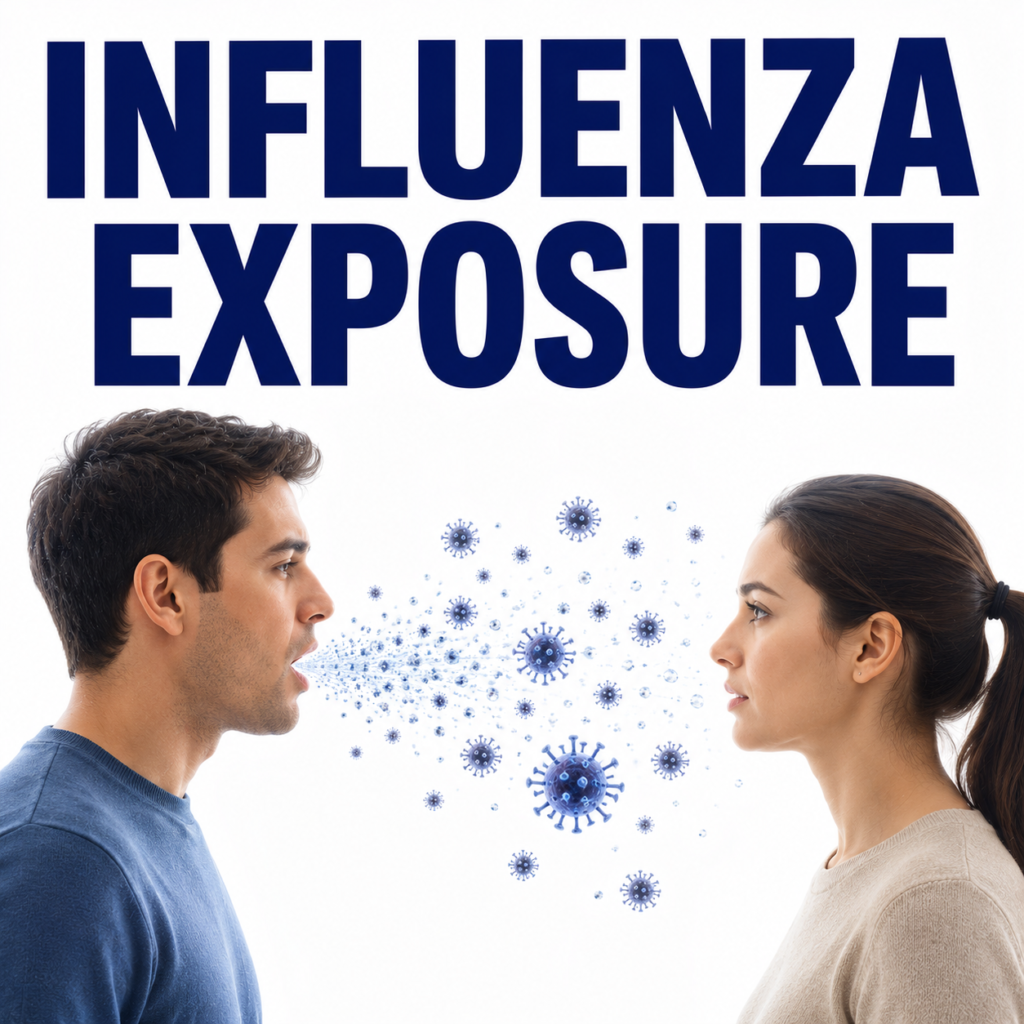
Influenza exposure means you have had close contact with someone who has the flu, increasing your chance of becoming infected.
Examples of close exposure include:
- Living in the same household
- Caring for someone with influenza
- Spending prolonged time in close contact with an infected person
- Direct exposure to respiratory droplets from coughing or sneezing
Most people who become infected develop symptoms 1 to 4 days after exposure, with an average incubation period of about 2 days.
What Symptoms Should You Watch For?
Monitor yourself for symptoms over the next several days.
Common symptoms include:
- Fever or chills
- Cough
- Sore throat
- Runny or stuffy nose
- Muscle aches
- Headache
- Fatigue
- Some people may also have nausea, vomiting, or diarrhea
Symptoms usually begin suddenly rather than gradually.
Influenza Exposure at a Glance
| Lower Risk | Higher Risk |
|---|---|
| Healthy adult with brief exposure | Household contact with someone who has influenza |
| Mild or no symptoms | Age 65 or older |
| Up to date on flu vaccination | Pregnancy |
| No chronic medical conditions | Chronic heart, lung, kidney, liver, neurologic disease, diabetes, or weakened immune system |
Did You Know?
People with influenza can spread the virus about one day before symptoms begin and remain contagious for approximately 5 to 7 days after becoming sick. This means someone may spread influenza before they realize they are ill.
What Should You Do After Being Exposed?
Most healthy adults do not need medication after exposure.
Instead:
- Monitor for symptoms for several days
- Wash your hands frequently
- Avoid touching your eyes, nose, and mouth
- Stay up to date with your annual influenza vaccine
- Consider wearing a mask if you are caring for someone with influenza or are at high risk for complications
If you develop symptoms, contact your healthcare provider promptly because antiviral medication works best when started within 48 hours after symptoms begin.
Who May Need Preventive Antiviral Medication?
Preventive antiviral medication, called post exposure prophylaxis, is not routinely recommended for most healthy people.
However, your healthcare provider may recommend it if you:
- Are at high risk for severe influenza complications
- Live with someone at very high risk for complications
- Live in a nursing home or another institutional setting during an influenza outbreak
- Have certain medical conditions that make influenza especially dangerous
When recommended, preventive antiviral medication should generally be started within 48 hours of exposure.
How Is Influenza Treated?
If you become sick with influenza, treatment depends on your age, overall health, and risk factors.
| Treatment | How It Helps |
| Rest | Supports recovery |
| Fluids | Prevent dehydration |
| Acetaminophen or ibuprofen | Helps reduce fever and body aches |
| Prescription antiviral medication | Can shorten illness and reduce complications when started early |
| Isolation at home | Helps prevent spreading influenza to others |
Antibiotics do not treat influenza because it is caused by a virus.
How Can You Help Prevent Influenza?
| Prevention Tips |
| Receive your annual influenza vaccine |
| Wash your hands often |
| Cover coughs and sneezes |
| Avoid close contact with people who are sick |
| Stay home if you develop influenza symptoms |
| Clean frequently touched surfaces |
Annual vaccination remains the best way to reduce your risk of influenza and its complications.
Myths vs. Facts
| Myth | Fact |
| Everyone exposed to influenza will get sick. | Many exposed people never develop influenza, especially if they have immunity from vaccination or prior infection. |
| Antibiotics prevent influenza after exposure. | Antibiotics do not work against influenza viruses. |
| If I feel fine after one day, I won’t get the flu. | Symptoms can develop up to 4 days after exposure. |
| Antiviral medication is recommended for everyone after exposure. | Preventive antiviral medication is reserved for selected high risk individuals. |
When Should You See a Healthcare Provider?
Schedule an appointment if you:
- Develop influenza symptoms after a known exposure
- Are pregnant and develop symptoms
- Are age 65 or older and develop symptoms
- Have chronic medical conditions and develop symptoms
- Have a weakened immune system
- Think you may benefit from antiviral medication
Seek emergency medical care immediately if you develop:
- Difficulty breathing
- Chest pain
- Confusion
- Persistent dizziness
- Severe dehydration
- Bluish lips or face
- Symptoms that improve and then suddenly worsen
Frequently Asked Questions
How soon will I know if I caught the flu?
Most people who become infected develop symptoms within 1 to 4 days after exposure.
Should I take Tamiflu after being exposed?
Most healthy adults do not need preventive antiviral medication. Your healthcare provider may recommend it if you are at high risk for serious influenza complications or have certain high risk exposures.
Can I go to work after being exposed?
If you feel well and have no symptoms, you can usually continue your normal activities while monitoring for symptoms. Follow your workplace’s policies if you work in healthcare or another high risk setting.
Does the flu vaccine still help if I’ve already been exposed?
The influenza vaccine is designed to prevent future infections during the flu season. It does not treat an exposure that has already occurred, but staying vaccinated remains the best long term protection against influenza.
What Should You Do Next?
If you have been exposed to someone with influenza, monitor yourself closely for symptoms over the next several days. Stay hydrated, practice good hand hygiene, and contact your healthcare provider promptly if you develop flu symptoms, especially if you are pregnant, age 65 or older, have chronic medical conditions, or a weakened immune system. Early antiviral treatment may reduce the severity of illness and lower the risk of complications.
References
-
Centers for Disease Control and Prevention. Treatment of Flu
https://www.cdc.gov/flu/treatment/
-
Centers for Disease Control and Prevention. Influenza Antiviral Medications: Summary for Clinicians
https://www.cdc.gov/flu/hcp/antivirals/summary-clinicians.html
-
Centers for Disease Control and Prevention. Influenza (Flu): Yellow Book
https://www.cdc.gov/yellow-book/hcp/travel-associated-infections-diseases/influenza.html
-
Mayo Clinic. Influenza (Flu): Symptoms and Causes
https://www.mayoclinic.org/diseases-conditions/flu/symptoms-causes/syc-20351719
-
Cleveland Clinic. Influenza (Flu)
https://my.clevelandclinic.org/health/diseases/4335-influenza-flu