
Ringworm: Symptoms, Causes, Treatment, and Prevention
What Is Ringworm?
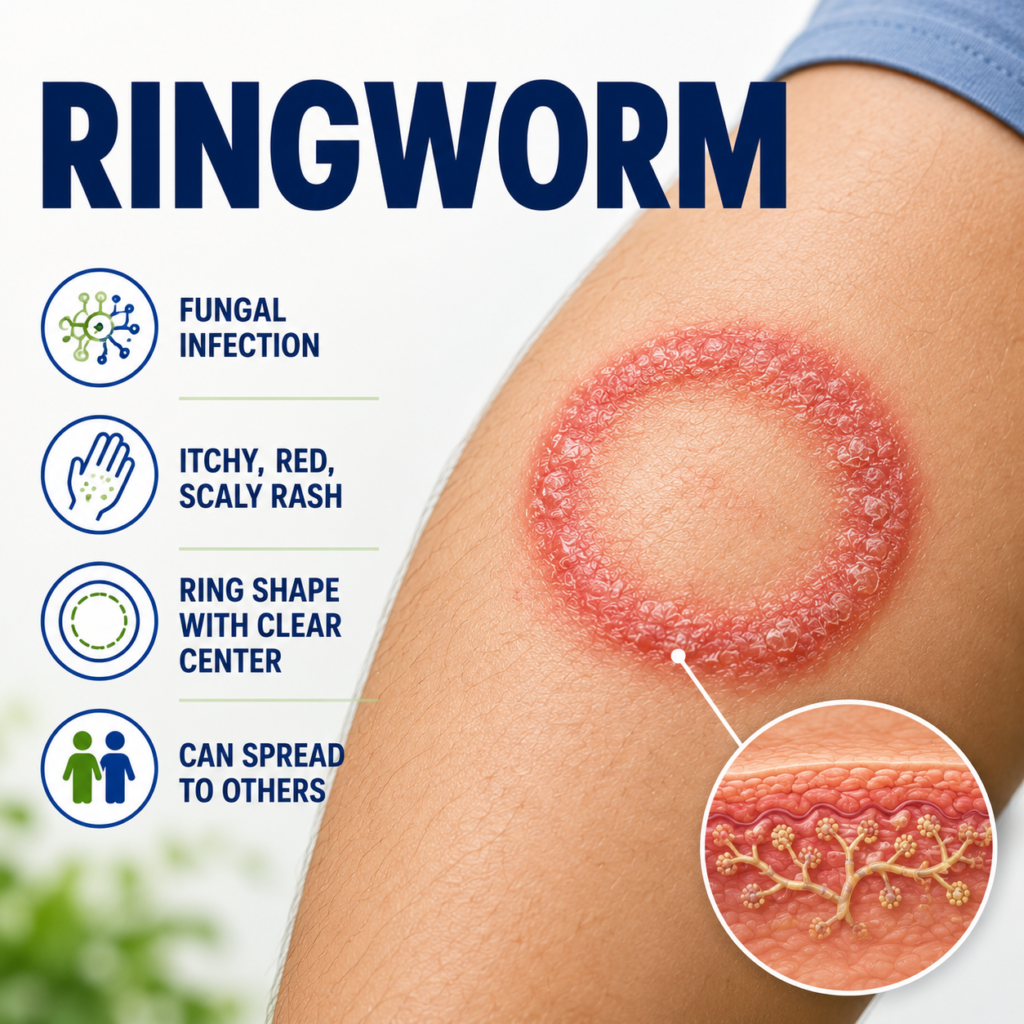
Ringworm, also called tinea corporis, is a fungal infection of the skin caused by dermatophytes.
The infection can occur almost anywhere on the body, including the:
- Arms
- Legs
- Chest
- Back
- Neck
- Face
Different types of ringworm affect other parts of the body, such as the scalp (tinea capitis), feet (athlete’s foot), groin (jock itch), and nails (onychomycosis).
Common Symptoms
You may notice:
- A round or oval rash
- A raised, scaly border
- Clearer skin in the center of the rash
- Itching
- Slowly enlarging patches
- One or multiple rings
Some people develop several patches at the same time, especially if the infection spreads.
Ringworm at a Glance
| Mild Ringworm | More Extensive Ringworm |
|---|---|
| One or two small patches | Multiple patches |
| Mild itching | More intense itching |
| Responds to topical antifungals | May require oral medication |
| Limited area of skin | Large areas or widespread infection |
Did You Know?
Despite the name, ringworm has nothing to do with worms. The name comes from the ring-shaped appearance of the rash caused by a fungal infection.
How Does Ringworm Spread?
Ringworm spreads through direct or indirect contact with fungi.
Common sources include:
- Skin-to-skin contact with an infected person
- Contact with infected pets, especially kittens and puppies
- Sharing towels, clothing, hats, or sports equipment
- Walking barefoot in shared locker rooms
- Contact with contaminated surfaces
The fungus thrives in warm, moist environments.
Who Is More Likely to Get Ringworm?
Your risk is higher if you:
- Participate in contact sports
- Sweat heavily
- Live in warm or humid climates
- Have close contact with infected pets
- Share personal items
- Have a weakened immune system
How Is Ringworm Treated?
Most mild cases respond well to topical antifungal medications.
| Treatment | How It Helps |
| Terbinafine cream | Kills the fungus |
| Clotrimazole cream | Treats superficial fungal infections |
| Miconazole cream | Treats mild infections |
| Butenafine cream | Effective for many dermatophyte infections |
| Oral antifungal medication | Used for widespread, recurrent, or severe infections |
Continue treatment for the full recommended course, even if the rash begins to improve. Stopping treatment too early may allow the infection to return.
How Can You Prevent Ringworm?
Good hygiene can help reduce your risk.
| Prevention Tips |
| Wash your hands regularly |
| Keep your skin clean and dry |
| Avoid sharing towels, clothing, or razors |
| Wear sandals in public locker rooms and showers |
| Treat athlete’s foot promptly |
| Wash sports equipment and uniforms regularly |
| Have pets evaluated if they develop patches of hair loss |
Myths vs. Facts
| Myth | Fact |
| Ringworm is caused by worms. | It is caused by a fungal infection. |
| Only children get ringworm. | Anyone can develop ringworm. |
| Ringworm is caused by poor hygiene. | Good hygiene helps reduce risk, but anyone can become infected after exposure. |
| Once the rash disappears, treatment can stop immediately. | Completing the full treatment helps prevent recurrence. |
When Should You See a Healthcare Provider?
Schedule an appointment if you:
- The rash continues to spread
- Multiple areas become involved
- The rash affects your scalp, beard, or nails
- You have diabetes or a weakened immune system
- Over-the-counter antifungal creams do not improve the rash after two weeks
- The rash becomes painful, swollen, or drains pus
Your healthcare provider may examine the rash or perform a simple skin scraping to confirm the diagnosis.
Frequently Asked Questions
Is ringworm contagious?
Yes. Ringworm spreads through direct skin contact, contaminated objects, and infected animals.
How long does ringworm take to heal?
Most mild infections improve within two to four weeks with appropriate treatment.
Can I go to work or school?
Usually yes, once treatment has started, but avoid sharing personal items and follow your school’s or workplace’s recommendations.
Can my pet give me ringworm?
Yes. Cats, dogs, and other animals can carry the fungus and spread it to people.
What Should You Do Next?
If you notice a ring-shaped, itchy rash, begin treatment with an over-the-counter antifungal cream and keep the affected area clean and dry. If the rash spreads, involves the scalp or nails, or does not improve after two weeks of treatment, schedule an evaluation with a healthcare provider. Early treatment can help prevent the infection from spreading to other parts of your body or to others.
References
-
Centers for Disease Control and Prevention. Symptoms of Ringworm
https://www.cdc.gov/ringworm/signs-symptoms/index.html
-
American Academy of Dermatology Association. Ringworm: Overview
https://www.aad.org/public/diseases/a-z/ringworm-overview
-
DermNet NZ. Tinea Corporis
https://dermnetnz.org/topics/tinea-corporis
-
Merck Manual Consumer Version. Body Ringworm (Tinea Corporis)
https://www.merckmanuals.com/home/skin-disorders/fungal-skin-infections/body-ringworm-tinea-corporis
-
American Academy of Family Physicians. Diagnosis and Management of Tinea Infections
https://www.aafp.org/pubs/afp/issues/2014/1115/p702.html