
Scrotal Pain: Possible Causes, Symptoms, and When to Seek Emergency Care
Scrotal pain can range from mild discomfort that resolves on its own to a medical emergency requiring immediate treatment. The pain may develop suddenly or gradually and can affect one or both sides of the scrotum. While many causes are not life-threatening, some conditions—such as testicular torsion—can permanently damage the testicle if not treated promptly.
Because the causes of scrotal pain vary widely, it is important not to ignore persistent, severe, or sudden symptoms. Understanding the possible causes and knowing when to seek medical attention can help you receive timely care.
What Is Scrotal Pain?
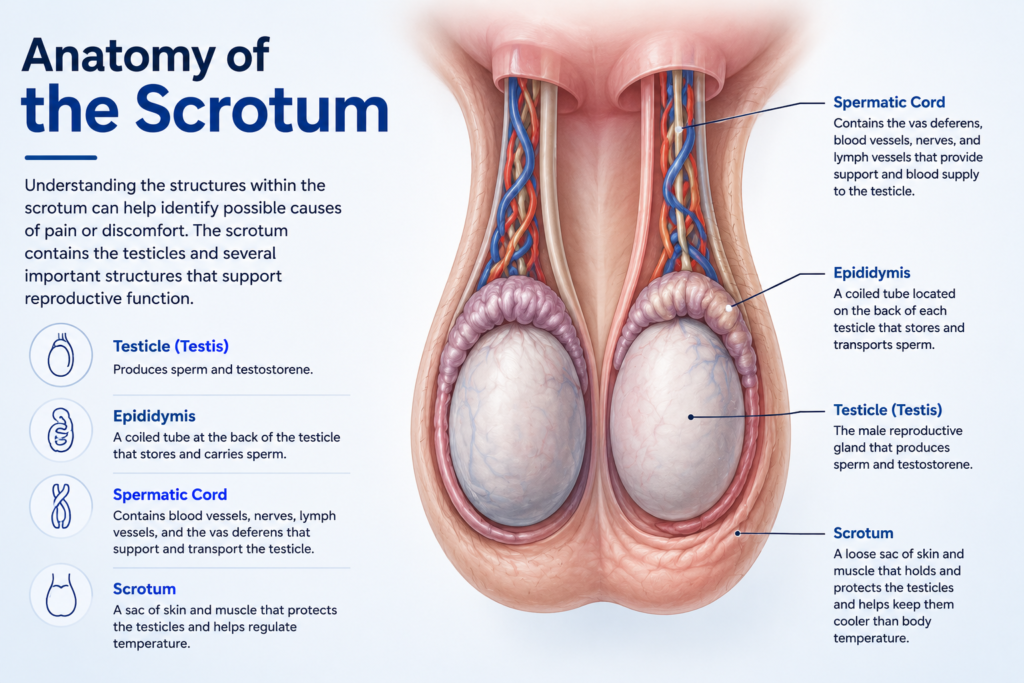
The scrotum is the pouch of skin that holds the testicles outside the body. In addition to the testicles, it contains the epididymis, blood vessels, nerves, and portions of the spermatic cord.
Pain can originate from any of these structures or may be referred from nearby organs, including the kidneys, ureters, bladder, or groin.
Scrotal pain may be:
- Sudden or gradual
- Mild or severe
- Constant or intermittent
- Sharp, aching, or throbbing
- Limited to one side or affect both sides
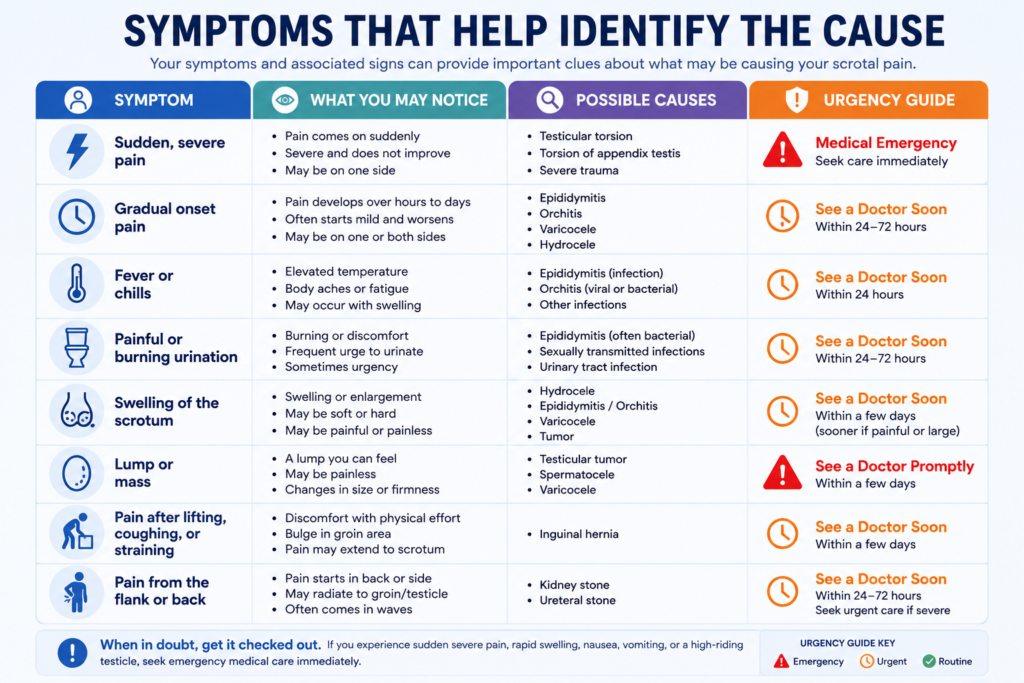
Associated symptoms often provide important clues about the underlying cause.
Common Causes of Scrotal Pain
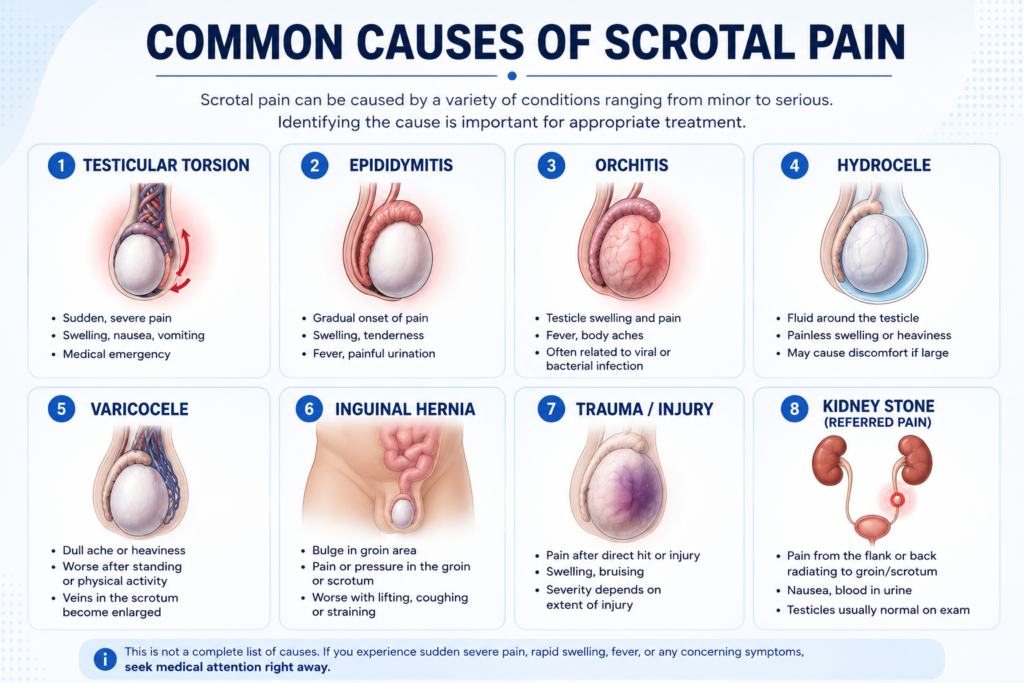
1. Testicular Torsion (Medical Emergency)
Testicular torsion occurs when the spermatic cord twists, cutting off blood flow to the testicle.
Symptoms often include:
- Sudden severe pain
- Rapid swelling
- High-riding testicle
- Nausea or vomiting
- Abdominal pain
Without prompt treatment, permanent damage to the testicle can occur within hours.
2. Epididymitis
Epididymitis is inflammation of the epididymis, the tube that stores and carries sperm.
Symptoms may include:
- Gradually worsening pain
- Swelling
- Tenderness
- Fever
- Painful urination
- Urinary frequency
- Penile discharge (sometimes)
It is commonly caused by bacterial infections or sexually transmitted infections in younger men.
3. Orchitis
Orchitis is inflammation of one or both testicles.
It may occur from:
- Viral infections (including mumps)
- Bacterial infections
- Epididymitis that spreads to the testicle
Symptoms include:
- Swelling
- Tenderness
- Fever
- General illness
4. Hydrocele
A hydrocele is a collection of fluid surrounding the testicle.
Most hydroceles cause:
- Painless swelling
- Feeling of heaviness
- Mild discomfort if large
They usually do not cause severe pain.
5. Varicocele
A varicocele is enlargement of the veins within the scrotum.
Symptoms may include:
- Dull aching pain
- Heaviness
- Symptoms that worsen after standing
- Relief when lying down
Some men have no symptoms at all.
6. Inguinal Hernia
An inguinal hernia occurs when abdominal tissue pushes through a weak area of the groin.
Symptoms include:
- Groin bulge
- Pain with lifting or coughing
- Pressure in the groin
- Pain extending into the scrotum
7. Trauma
Sports injuries, falls, or direct blows may cause:
- Bruising
- Swelling
- Tenderness
- Temporary pain
Severe injuries may require emergency evaluation.
8. Kidney Stones
Pain from a kidney stone may travel into the groin or testicle.
Symptoms often include:
- Severe flank pain
- Groin pain
- Blood in the urine
- Nausea
- Vomiting
The testicle itself is usually normal.
9. Testicular Tumor
Most testicular cancers do not cause pain.
However, some men experience:
- Mild aching
- Feeling of heaviness
- Firm lump
- Swelling
Any new testicular lump should be evaluated promptly.
10. Post-Vasectomy Pain Syndrome
A small percentage of men develop chronic discomfort after a vasectomy.
Symptoms may include:
- Intermittent aching
- Pain during ejaculation
- Tenderness
11. Chronic or Idiopathic Scrotal Pain
Sometimes no clear cause can be identified despite a thorough evaluation.
Pain lasting longer than three months is considered chronic scrotal pain.
When Should You Seek Emergency Care?
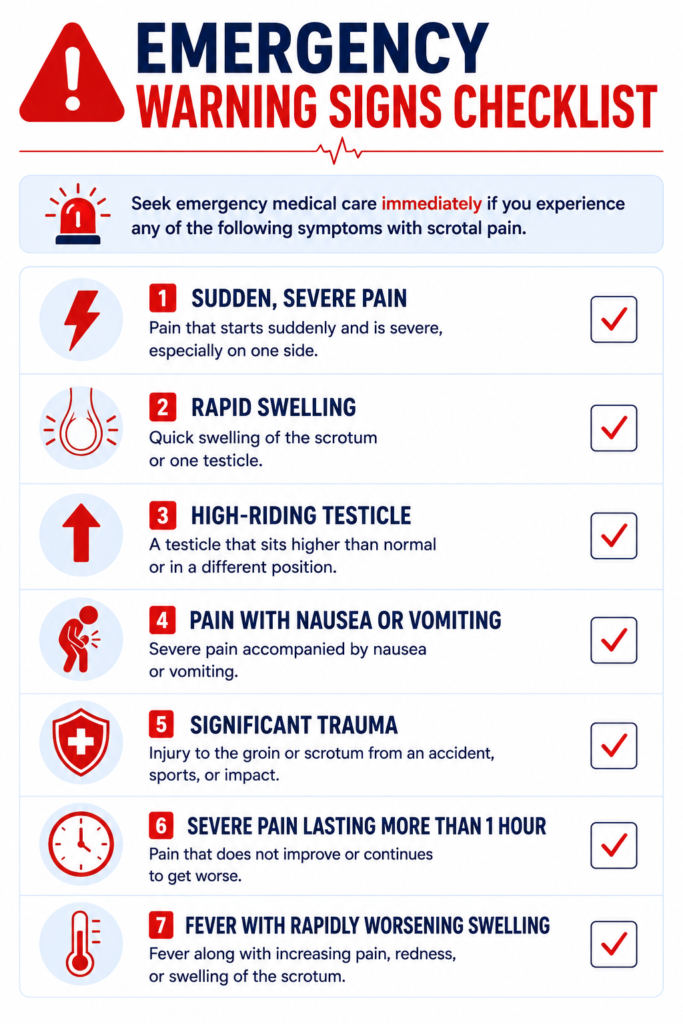
Seek immediate medical attention if you develop:
- Sudden severe testicular or scrotal pain
- Rapid swelling
- A high-riding or twisted-appearing testicle
- Severe pain with nausea or vomiting
- Significant injury to the scrotum
- Severe pain that lasts longer than one hour
- Severe pain with fever and rapidly worsening swelling
These symptoms may indicate testicular torsion or another condition requiring urgent treatment.
How Is Scrotal Pain Evaluated?
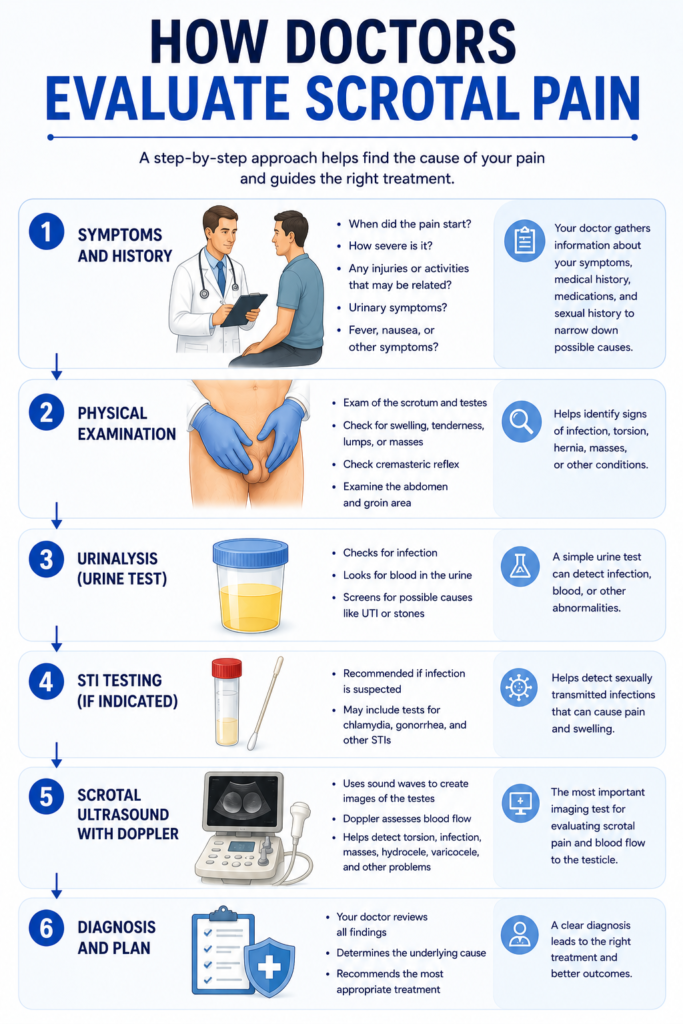
Your healthcare provider will ask about:
- When the pain started
- Sudden versus gradual onset
- Location of the pain
- Recent injury
- Urinary symptoms
- Sexual history
- Fever
- Previous surgeries
The physical examination may include evaluation of the:
- Testicles
- Epididymis
- Scrotum
- Groin
- Abdomen
Additional testing may include:
- Urinalysis
- Urine culture
- STI testing
- Scrotal ultrasound with Doppler
- Blood tests when appropriate
Ultrasound is often the most useful imaging study because it evaluates blood flow to the testicles and helps identify many common causes.
Treatment Depends on the Cause
Treatment is based on the underlying diagnosis.
Examples include:
Testicular torsion
- Emergency surgery
Epididymitis
- Antibiotics (when bacterial)
- Rest
- Scrotal support
- Anti-inflammatory medication
Hydrocele
- Observation or surgery if bothersome
Varicocele
- Observation or surgical repair in selected cases
Hernia
- Surgical repair
Trauma
- Ice
- Rest
- Scrotal support
- Pain medication
Frequently Asked Questions
Can Scrotal Pain Go Away on Its Own?
Some mild injuries or temporary irritation may improve with rest and supportive care.
However, sudden, severe, persistent, or worsening pain should never be ignored. Early evaluation helps identify serious conditions before complications develop.
Is scrotal pain always an emergency?
No. Many causes are not emergencies, but sudden severe pain should always be evaluated immediately.
Can sitting too long cause scrotal pain?
Prolonged sitting may contribute to temporary discomfort in some men, particularly those with varicoceles or chronic pelvic pain. Persistent pain should still be evaluated.
Can kidney stones cause testicular pain?
Yes. Kidney stones may cause pain that radiates into the groin or testicle even though the testicle itself is normal.
Can a hernia cause scrotal pain?
Yes. An inguinal hernia may extend into the scrotum and cause pain or swelling.
Is testicular cancer usually painful?
Most testicular cancers are painless, but some men notice aching, heaviness, or mild discomfort. Any new lump should be examined by a healthcare provider.
Prognosis
Most causes of scrotal pain are treatable, especially when diagnosed early. Prompt evaluation is particularly important for conditions that affect blood flow to the testicle, as delayed treatment can increase the risk of permanent damage. If you experience persistent, worsening, or sudden scrotal pain, seeking medical care can help identify the cause and guide appropriate treatment.
What Should You Do Next?
Scrotal pain should never be ignored, especially if it develops suddenly or is accompanied by swelling, nausea, vomiting, fever, or a new lump. While many causes are treatable and not emergencies, others require immediate medical attention. If you’re unsure what’s causing your symptoms, schedule an evaluation with a healthcare provider. Early diagnosis can help prevent complications and ensure you receive the most appropriate treatment.
References
American Urological Association. Diagnosis and Management of the Acute Scrotum.
https://www.auanet.org/guidelines
European Association of Urology. EAU Guidelines on Urological Infections and Acute Scrotal Pain.
https://uroweb.org/guidelines
UpToDate. Evaluation of Scrotal Pain in Adults. (Subscription required.)
https://www.uptodate.com
Mayo Clinic. Testicular Pain: Symptoms and Causes.
https://www.mayoclinic.org/diseases-conditions/testicle-pain
Cleveland Clinic. Testicular Pain.
https://my.clevelandclinic.org/health/symptoms/16292-testicular-pain
American Academy of Family Physicians. Evaluation of Scrotal Masses.
https://www.aafp.org/pubs/afp.html