
Male Pattern Baldness: Causes, Treatment, and What You Can Expect
What Is Male Pattern Baldness?
Male pattern baldness, also called androgenetic alopecia, is the most common type of hair loss in men.
It usually begins with:
- A receding hairline
- Thinning at the crown of the head
- Gradual loss of hair density
Over time, these areas may enlarge and eventually join together.
Hair loss often develops slowly over several years.
Why Does It Happen?
Male pattern baldness is caused by a combination of genetics and a hormone called dihydrotestosterone (DHT).
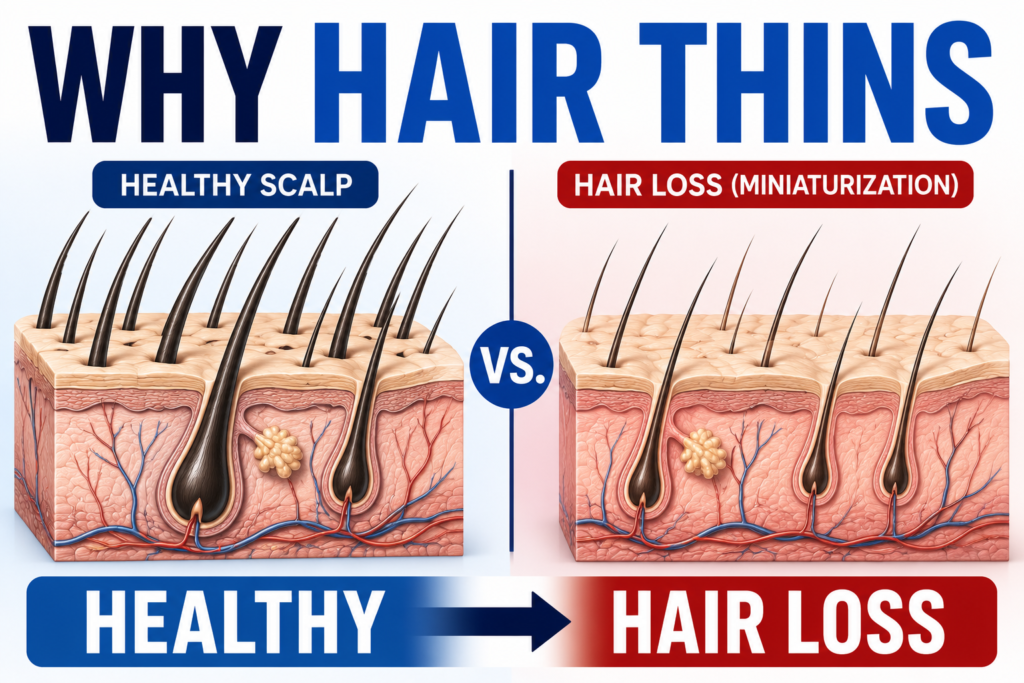
DHT causes susceptible hair follicles to gradually shrink.
As the follicles become smaller:
- Hair becomes thinner
- Hair grows more slowly
- Hair becomes shorter
- Eventually, some follicles stop producing visible hair
Common Signs
You may notice:
- A receding hairline
- Thinning at the top or crown of the scalp
- More hair in the shower or on your pillow
- A widening area of visible scalp
- Hair that becomes finer over time
Most men do not experience itching, pain, or scalp irritation from male pattern baldness.
Male Pattern Baldness at a Glance
| Early Changes | More Advanced Changes |
|---|---|
| Slight recession at the temples | Larger receding hairline |
| Mild thinning at the crown | Significant thinning over the top of the scalp |
| Hair appears less dense | Larger areas of visible scalp |
| Hair becomes finer | Hair follicles may stop producing visible hair |
Did You Know?
Treatment works best when started early. Once a hair follicle has stopped producing hair for a long time, regrowth becomes much less likely.
Who Is More Likely to Develop It?
Your risk is higher if you:
- Have a family history of male pattern baldness
- Are getting older
- Have close relatives with hair loss on either side of your family
Although age increases the likelihood of hair loss, some men begin noticing changes in their late teens or twenties.
How Is Male Pattern Baldness Diagnosed?
A healthcare provider can often diagnose male pattern baldness by:
- Reviewing your medical history
- Examining your scalp
- Looking at the pattern of hair loss
Sometimes additional testing is recommended if another cause of hair loss is suspected.
This may include blood tests or, less commonly, a scalp biopsy.
How Is Male Pattern Baldness Treated?
Several treatments can slow hair loss or encourage regrowth.
| Treatment | How It Works |
| Minoxidil (topical) | Helps stimulate hair growth and prolongs the growth phase of hair |
| Finasteride (oral) | Lowers DHT levels to slow hair follicle shrinkage |
| Hair transplant surgery | Moves healthy hair follicles to thinning areas |
| Low level laser therapy | May improve hair growth in some individuals |
Treatment often needs to be continued to maintain results.
If treatment is stopped, hair loss usually resumes over time.
What Results Can You Expect?
Everyone responds differently.
In general:
| Treatment Goal | Typical Outcome |
| Slow hair loss | Common |
| Maintain existing hair | Common |
| Moderate regrowth | Possible |
| Complete restoration of hair | Uncommon |
Visible improvement often takes three to six months, and maximum results may take up to one year.
Healthy Hair Habits
Healthy habits will not cure male pattern baldness but may support overall hair health.
These include:
- Eating a balanced diet
- Getting enough protein
- Managing stress
- Avoiding smoking
- Using gentle hair care practices
Myths vs. Facts
| Myth | Fact |
| Wearing hats causes baldness. | Hats do not cause male pattern baldness. |
| Shampoo causes permanent hair loss. | Normal shampooing does not cause androgenetic alopecia. |
| Hair loss only comes from your mother’s side of the family. | Genes from both parents influence your risk. |
| Cutting your hair shorter makes it grow back thicker. | Haircuts do not change the size or number of hair follicles. |
When Should You See a Healthcare Provider?
Schedule an appointment if you:
- Develop sudden hair loss
- Lose hair in round patches
- Have scalp redness, pain, or scaling
- Notice hair loss along with fatigue or unexplained weight changes
- Want to discuss treatment options early
These symptoms may suggest a different type of hair loss that requires further evaluation.
Frequently Asked Questions
Is male pattern baldness reversible?
Treatments can often slow hair loss and promote some regrowth, especially when started early. Complete reversal is uncommon.
Does shaving my head make my hair grow back thicker?
No. Shaving changes the appearance of the hair but does not affect the hair follicle.
Will stress cause male pattern baldness?
Stress alone does not cause male pattern baldness, but it can contribute to other types of temporary hair loss.
How long do medications take to work?
Most treatments require at least three to six months before noticeable improvement is seen.
What Should You Do Next?
If you have noticed a receding hairline or thinning hair, do not wait until significant hair loss has occurred. Early treatment offers the best chance of slowing progression and preserving existing hair. A healthcare provider can confirm the diagnosis, discuss your treatment options, and help you choose the approach that best fits your goals.
References
American Academy of Dermatology Association. What is male pattern hair loss, and can it be treated?
https://www.aad.org/public/diseases/hair-loss/treatment/male-pattern-hair-loss-treatment
MedlinePlus Medical Encyclopedia. Male Pattern Baldness
https://medlineplus.gov/ency/article/001177.htm
MedlinePlus Genetics. Androgenetic Alopecia
https://medlineplus.gov/genetics/condition/androgenetic-alopecia/
Cleveland Clinic. Male Pattern Baldness (Androgenic Alopecia)
https://my.clevelandclinic.org/health/diseases/24515-male-pattern-baldness-androgenic-alopecia