
Lichen Sclerosus: Symptoms, Causes, Diagnosis, and Treatment
Persistent vulvar itching, white patches of skin, or pain during sex are symptoms that many women mistakenly attribute to a yeast infection or menopause. However, these symptoms may be caused by lichen sclerosus, a chronic inflammatory skin condition that most commonly affects the vulva.
Although lichen sclerosus is not contagious or sexually transmitted, it can cause significant discomfort and permanent skin changes if left untreated. The good news is that early diagnosis and appropriate treatment can effectively control symptoms and help prevent complications.
This guide explains what lichen sclerosus is, its symptoms, causes, treatment options, and when to seek medical attention.
What Is Lichen Sclerosus?
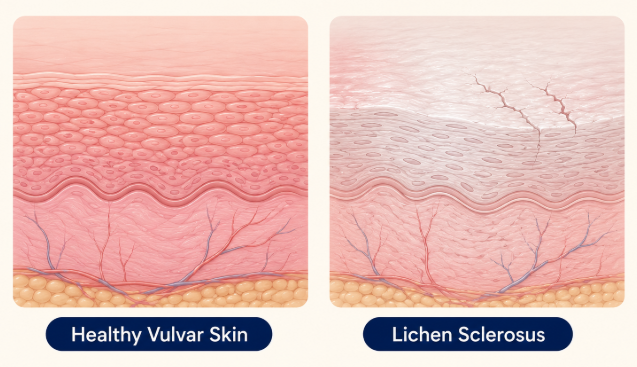
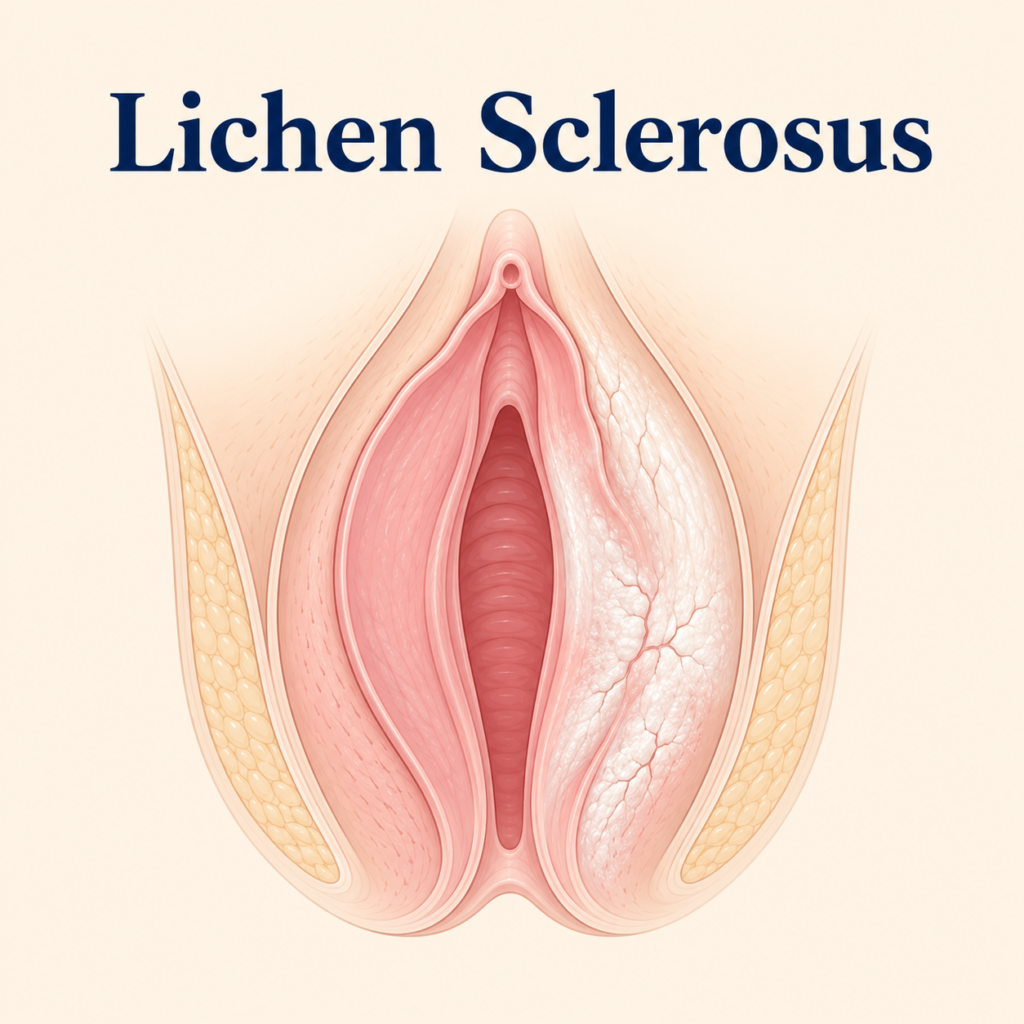
Lichen sclerosus is a chronic inflammatory skin disorder that most often affects the vulva and the skin around the anus. Less commonly, it can occur in other areas of the body.
The condition causes the skin to become:
• Thin
• White or ivory-colored
• Fragile
• Itchy
• Easily torn
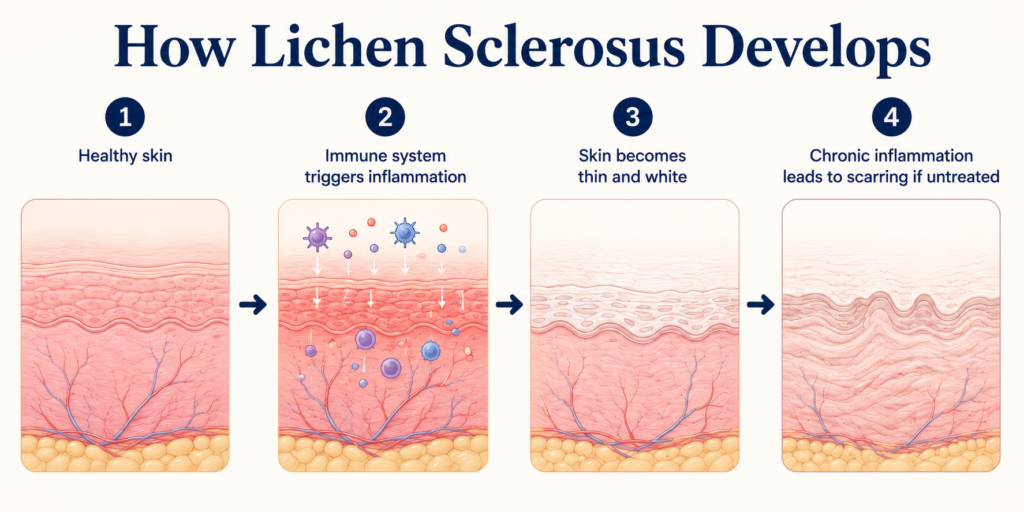
Without treatment, the skin may gradually scar, leading to changes in the normal anatomy of the vulva.
Although it can occur at any age, it is most common in postmenopausal women.
What Causes Lichen Sclerosus?
The exact cause remains unknown, but experts believe several factors contribute.
Possible causes include:
• An overactive immune system (autoimmune process)
• Genetic predisposition
• Hormonal influences
• Previous skin injury or chronic irritation
Lichen sclerosus is not:
• A sexually transmitted infection
• Caused by poor hygiene
• Contagious
Who Is at Risk?
Risk factors include:
• Female sex
• Postmenopausal age
• Personal or family history of autoimmune disease
• Thyroid disease
• Vitiligo
• Alopecia areata
Although less common, children and men can also develop lichen sclerosus.
Common Symptoms
Symptoms may develop gradually or suddenly.
Common symptoms include:
• Severe itching, especially at night
• Smooth white patches of skin
• Burning
• Soreness
• Pain during sexual intercourse
• Pain with urination if urine contacts irritated skin
• Small skin tears or cracks
• Easy bruising
• Bleeding after scratching
Some women have very few symptoms despite significant skin changes.
What Does Lichen Sclerosus Look Like?
Typical findings include:
• Thin white plaques
• Wrinkled or shiny skin
• Figure-eight pattern around the vulva and anus
• Small fissures
• Purplish bruising
• Loss of normal vulvar architecture in advanced disease
Because several skin conditions can look similar, an examination by a healthcare professional is important.
How Is It Diagnosed?
Diagnosis usually begins with a medical history and physical examination.
Sometimes a biopsy is recommended, especially if:
• The diagnosis is uncertain
• Symptoms do not improve with treatment
• There is concern for precancerous or cancerous changes
Treatment Options
Treatment focuses on controlling inflammation, relieving symptoms, and preventing scarring.
High-Potency Topical Corticosteroids
The first-line treatment is a prescription high-potency corticosteroid ointment, usually applied according to a gradually decreasing schedule directed by a healthcare professional.
Most women notice significant improvement within several weeks.
Gentle Skin Care
Helpful measures include:
• Avoid scented soaps and feminine hygiene products
• Use fragrance-free moisturizers or emollients
• Wear loose-fitting cotton underwear
• Avoid scratching
• Use lubricants during intercourse if needed
Long-Term Follow-Up
Even after symptoms improve, periodic follow-up is important because lichen sclerosus is a chronic condition that may recur.
Possible Complications
Without treatment, lichen sclerosus can lead to:
• Permanent scarring
• Narrowing of the vaginal opening
• Painful intercourse
• Difficulty urinating
• Fusion of vulvar tissues
• Reduced quality of life
There is also a small but real increased risk of vulvar squamous cell carcinoma, making regular follow-up important.

Frequently Asked Questions
1. Can It Be Cured?
There is currently no cure.
However, most people achieve excellent symptom control with proper treatment and ongoing monitoring.
Early treatment greatly reduces the risk of permanent scarring.
2. Is lichen sclerosus cancer?
No. It is a benign skin condition, but it slightly increases the risk of vulvar skin cancer, which is why regular follow-up is recommended.
3. Can I still have sex?
Yes. Many women continue to have healthy sexual relationships. Treatment often reduces discomfort during intercourse.
4. Will it keep coming back?
Lichen sclerosus is usually a lifelong condition, but symptoms can often be well controlled with maintenance treatment.
5. Is a biopsy always necessary?
No. Many cases are diagnosed based on appearance alone. A biopsy is typically reserved for uncertain cases or when cancer is a concern.
When Should You Seek Medical Attention?
Schedule an evaluation if you experience:
• Persistent vulvar itching
• White patches of skin
• Pain during sex
• Burning or soreness
• Cracks or bleeding of the vulvar skin
• A lump, ulcer, or sore that does not heal
Seek prompt medical evaluation if you notice a new persistent growth, non-healing ulcer, or worsening pain despite treatment.
What Should You Do Next?
Persistent vulvar itching is not something you should ignore or simply treat repeatedly with over-the-counter antifungal medications. If your symptoms continue, recur frequently, or are accompanied by white patches or changes in the appearance of the skin, schedule an evaluation with a healthcare professional. Early diagnosis and treatment can relieve symptoms, prevent permanent scarring, and reduce the risk of long-term complications.
References
American College of Obstetricians and Gynecologists (ACOG). Practice Bulletin: Diagnosis and Management of Vulvar Skin Disorders.
International Society for the Study of Vulvovaginal Disease (ISSVD). Vulvar Lichen Sclerosus Clinical Guidance.
Mayo Clinic. Lichen sclerosus.
UpToDate. Clinical manifestations and diagnosis of vulvar lichen sclerosus.
Lee A, Fischer G. Diagnosis and Treatment of Vulvar Lichen Sclerosus: An Update for Dermatologists. American Journal of Clinical Dermatology.