
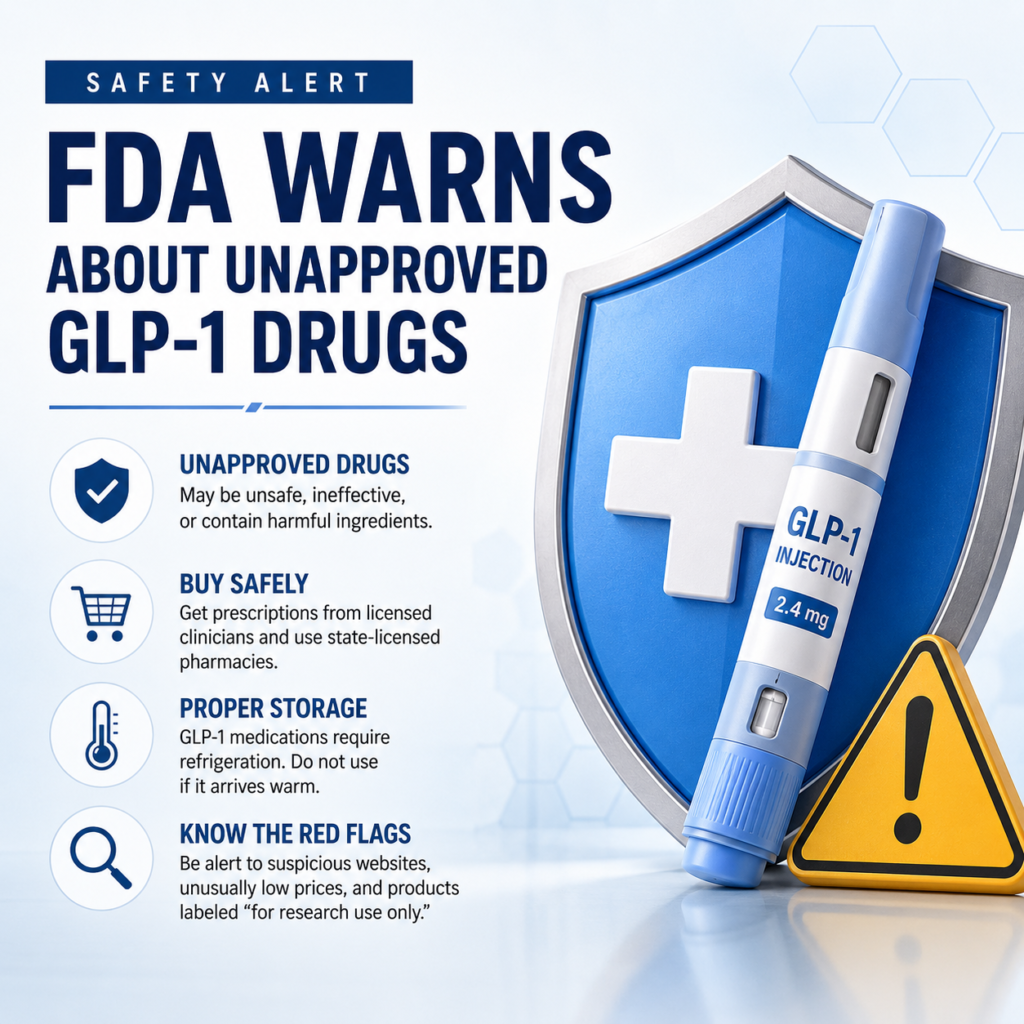
FDA Warns About Unapproved GLP-1 Weight Loss Drugs: What Patients Need to Know
Published: June 2026
The U.S. Food and Drug Administration (FDA) has issued an updated safety communication warning consumers about the growing number of unapproved GLP-1 medications being sold for weight loss. While medications such as semaglutide and tirzepatide have transformed the treatment of obesity and type 2 diabetes, the FDA is increasingly concerned about compounded, counterfeit, and illegally marketed versions that may place patients at risk.
Here’s what the latest FDA update means for patients.
Why Is the FDA Concerned?
FDA-approved GLP-1 medications undergo extensive testing before they reach the market. They are carefully evaluated for:
- Safety
- Effectiveness
- Manufacturing quality
- Sterility
- Proper dosing
In contrast, unapproved compounded or illegally marketed GLP-1 products do not go through the FDA approval process. As a result, patients cannot be certain they are receiving medication that is safe, effective, or even contains the correct ingredients.
What Are Compounded GLP-1 Medications?
Compounded medications are custom-made by specialized pharmacies to meet an individual patient’s medical needs.
Compounding may be appropriate in limited situations, such as:
- A patient is allergic to an ingredient in the FDA-approved product.
- A commercially available medication is temporarily unavailable.
- A physician determines a customized formulation is medically necessary.
Compounded medications are not FDA approved, and the FDA does not verify their safety, quality, or effectiveness before they are sold.
FDA Identifies Multiple Safety Concerns
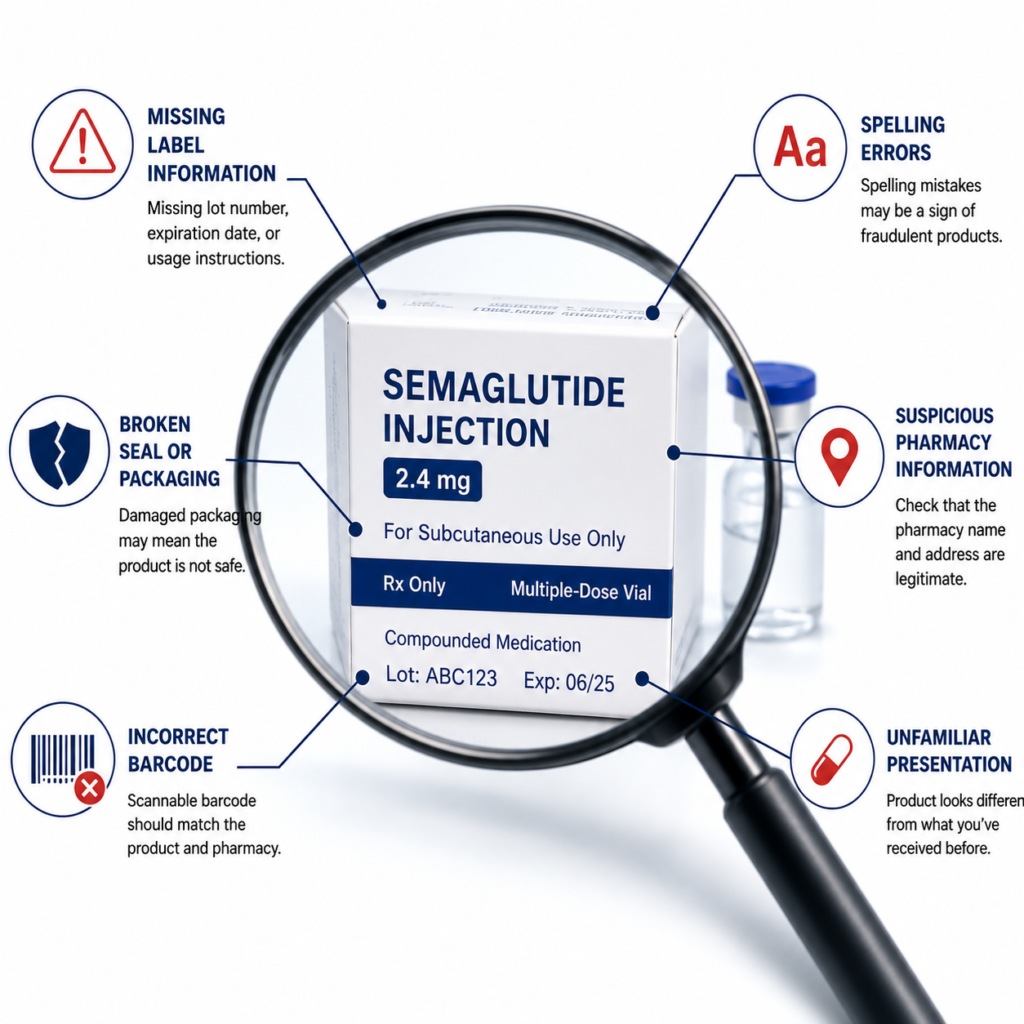
Image shows the safety concerns of compounded GLP-1 medication identified by the FDA
The FDA highlighted several issues involving compounded GLP-1 medications.
Dosing Errors
Many compounded products require patients to measure doses themselves using syringes rather than prefilled injection pens.
This increases the risk of:
- Taking too much medication
- Taking too little medication
- Incorrect dose calculations
- Faster-than-recommended dose increases
Some dosing errors have resulted in emergency medical treatment and hospitalization.
Reported symptoms include:
- Severe nausea
- Vomiting
- Diarrhea
- Constipation
- Abdominal pain
Improper Shipping and Storage
GLP-1 medications require refrigeration.
The FDA has received reports of compounded injectable medications arriving:
- Warm
- With melted ice packs
- Without adequate temperature protection
Improper storage can reduce medication quality and effectiveness.
Patients should not use injectable GLP-1 medications that arrive warm or improperly refrigerated.
Fraudulent Products
The FDA has identified counterfeit compounded semaglutide and tirzepatide products with fake labels.
In some cases:
- The listed pharmacy did not exist.
- Legitimate pharmacies were falsely listed on product labels.
- Products contained misleading or inaccurate information.
One reported patient experienced injection site redness, swelling, pain, and a persistent lump after using a fraudulent product.
Counterfeit Ozempic
The FDA continues to investigate counterfeit versions of Ozempic® being sold in the United States.
Counterfeit medications may contain:
- Incorrect ingredients
- Too much active medication
- Too little medication
- No active medication
- Harmful contaminants
Because counterfeit drugs cannot be reliably identified by appearance alone, purchasing medications from trusted, licensed pharmacies is essential.
Certain Drugs Cannot Be Compounded
The FDA specifically states that retatrutide and cagrilintide cannot legally be used in pharmacy compounding.
These medications:
- Are not FDA approved.
- Have not been established as safe or effective.
- Should not be sold for patient use.
The FDA has already taken enforcement action against companies marketing these products directly to consumers.
Problems With "Research Use Only" Products
Some companies sell semaglutide, tirzepatide, or retatrutide labeled as:
- “Research Use Only”
- “Not For Human Consumption”
Despite these labels, some companies include dosing instructions intended for people.
The FDA warns consumers not to purchase these products, as their quality, purity, and contents are unknown.
Online Telehealth Red Flags
The FDA encourages consumers to be cautious when purchasing GLP-1 medications online.
Warning signs include companies that:
- Claim compounded drugs are identical to FDA-approved medications.
- Offer prices that seem unusually low.
- Do not require an evaluation by a licensed healthcare professional.
- Ship medication without clear instructions.
- Have obvious spelling mistakes or suspicious pharmacy information.
- Do not provide access to a licensed clinician for questions after treatment begins.
Semaglutide Salt Forms Raise Additional Concerns
The FDA has also warned against compounded products made with semaglutide sodium or semaglutide acetate.
These are different chemical compounds than the active ingredient used in FDA-approved semaglutide medications.
The FDA states there is currently no established legal or scientific basis for using these salt forms in compounded products.
Reported Adverse Events Continue to Increase
As of May 31, 2026, the FDA has received reports of:
- 990 adverse events associated with compounded semaglutide.
- More than 730 adverse events associated with compounded tirzepatide.
Reported events range from mild gastrointestinal symptoms to serious complications requiring hospitalization.
Because many state-licensed compounding pharmacies are not required to report adverse events, the FDA believes these numbers likely underestimate the true number of cases.
How Patients Can Protect Themselves
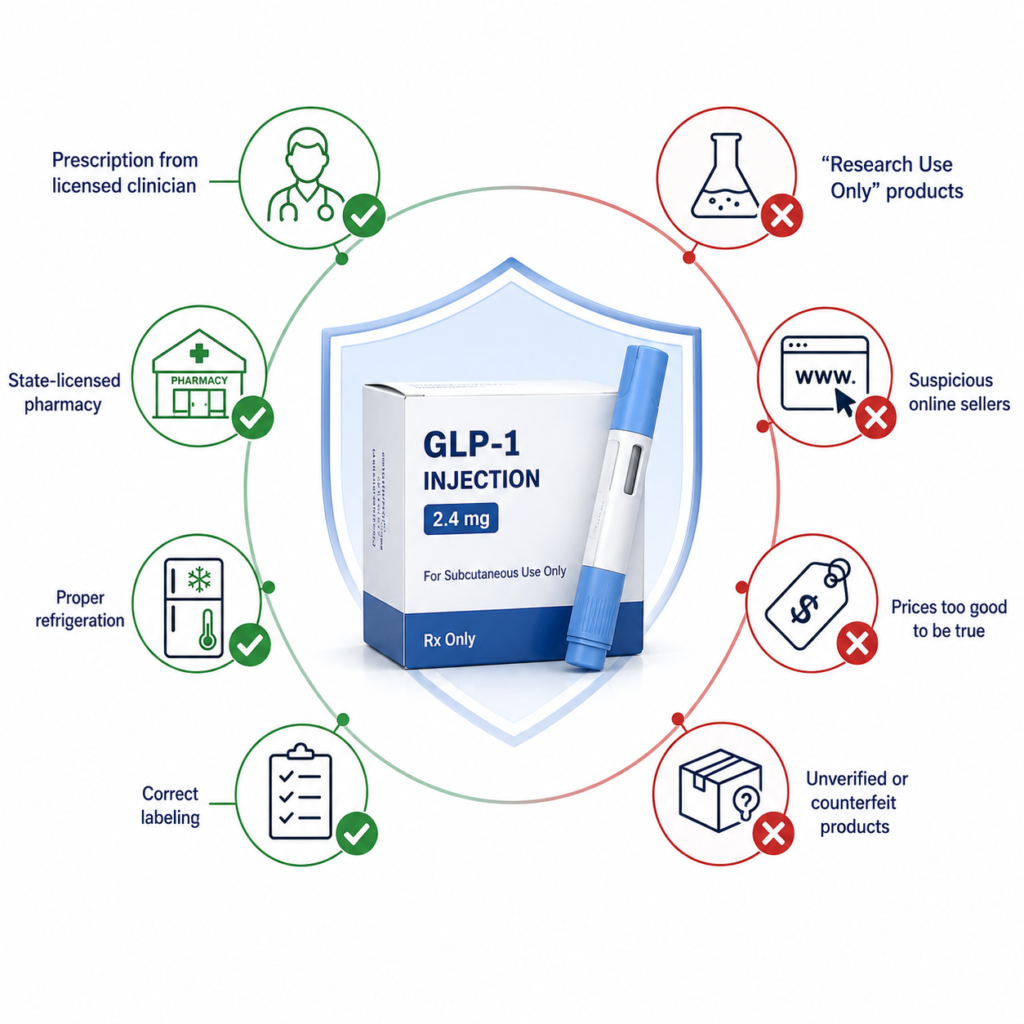
Image shows recommendation to reduce risk when purchasing medication online
The FDA recommends several steps to reduce risk:
- Obtain a prescription from a licensed healthcare professional.
- Fill prescriptions through a state-licensed pharmacy.
- Avoid medications sold without a medical evaluation.
- Be cautious of unusually low prices.
- Inspect packaging for damage or suspicious labeling.
- Do not use injectable medications that arrive warm.
- Ask your healthcare provider or pharmacist if you have questions about your medication.
Patients purchasing medications online can also use the FDA’s BeSafeRx resources to verify legitimate online pharmacies.
What This Means
GLP-1 medications have become an important tool for treating obesity and diabetes, but increasing demand has led to a surge in compounded and illegally marketed products.
While compounding may be appropriate in certain medical situations, patients should understand that compounded medications are not reviewed by the FDA for safety, effectiveness, or quality before they reach the market.
If you are considering a GLP-1 medication, speak with your healthcare provider about the safest treatment options and only obtain medications from reputable, licensed pharmacies.